
Press Release
Lumino Secure Multi-Party Computing: A New Generation Of Data Security Sharing Solution

The Dilemma Of Digital Economy
The most critical and cardinal element of the digital economy is data. Data is the “oil” of digital economy. Hence, utilizing the “data oil” safely and efficiently is the focal point of global economic digital transformation. On the one hand, the digital economy has entered a high-speed development age. The global digital economy has reached 36.2% of global GDP. It is necessary to open up the “data island” among enterprises and establish an open and shared digital resource environment. On the other hand, the public is paying more and more attention to personal privacy and data security, and regulators have introduced a series of regulations to ensure information security. For example, car companies buy parts back and assemble them into cars, the ownership belongs to the car companies, while parts manufacturers also make it clear that once the parts are sold to factories, the factories have ownership. But the data level is more sensitive. Personal data include the face, voice, name, height and other sensitive personal privacy specifics. How to define the ownership of the data between these parties? At present, there are no clear legal provisions, nor the industry has clear answers. In foreign practice, the EU has made very strict data protection regulations, but the entire EU data information technology industry lags behind China and the United States.
Because data protection is too strict, data from different sources do not interact, data is not open and can not interact to generate value and to improve the efficiency of the economy as a whole. The EU is not a good example, because it does not balance the relationship between data privacy protection and the development of the data industry.
Privacy protection and data security need multi-party promotion
Facing the dilemma of data security and sharing, the “available and invisible” secure multi-party computing provides us with an innovative solution.
Secure multi-party computing is a calculation process performed by multiple participants. Multi-party computing technology includes inadvertent transmission, secret sharing and confusing circuit. Multi-party computing has the advantage of high confidentiality and maneuverability, and each party has absolute control over the data it owns. Secure multi-party computing can be applied to networks where participants are not trusted. Participants can know the agreed results of collaborative computation, but they can’t get or deduce the original contents of the data. The flow of data and the collaborative analysis are of great value in all industries, and have brought about a lot of application demands. There are two main scenarios in the market:
1) Data security query
In the big data age, the data that the enterprise holds itself often cannot satisfy the demand of business analysis, many enterprises will purchase the external data to expand the data source. When an enterprise uses an external database to query, it faces the risk of divulging the query condition information. MPC technology helps enterprises to set up a secure query to obtain more external data under the condition of ensuring their own data security, thereby deepening the digital transformation and making better use of big data technology to optimize business.
2) Data joint analysis
Joint analysis often faces two headwinds. On one hand, it is illegal to trade personal privacy information. On the other hand, data sharing makes data-holding companies lose their competitive edge. MPC technology, through inadvertently querying, makes the data not public, the query object not exposed, and the results can be correctly given feedback for, which has an important application in the financial risk control business.
Lumino: new ideas for secure multi-party computing
Lumino is a large-scale activity that uses secure multi-party computing protocols to generate zero knowledge proof system public reference string (CRS) in a de-trust manner, and it is a prerequisite and an important step for deploying and using privacy-related applications in a decentralized ecosystem. The activity now focuses on the PLONK algorithm. As a practical and efficient zk-SNARK algorithm, PLONK is often used in blockchain projects and communities, which is characterized by only one-time initialization process, i. e. running once, it can be used to support a variety of underlying circuit logic and multi-class application deployment.
Lumino’s vision, from the start, was to link the world’s cryptographic geeks to become co-creators and witnesses of privacy computing infrastructure, not just an event but a ritual. We changed the method of centralizing system parameters into a distributed one. For a truly community-based and open-source blockchain ecosystem, each of which is the most critical link, and each participant who joins makes the bottom one safer, which would be a ceremonial collective wisdom.
Lumino is the cornerstone of subsequent de-centering privacy protection applications based on zero-knowledge proof, and the subsequent de-centralization applications will be safer only if the activity is safely completed.
About Author

Disclaimer: The views, suggestions, and opinions expressed here are the sole responsibility of the experts. No Digi Observer journalist was involved in the writing and production of this article.

Novarex Capital Partners has completed its second financing round, generating 16 million pounds at a stated return of 20 percent, with a further round planned at 16.5 percent.
London, United Kingdom, 18th Sep 2026 – Novarex Capital Partners has announced the completion of its second financing round, marking a further stage in the company’s structured capital programme. The round generated 16 million pounds and was completed on terms providing a stated return of 20 percent.
The completion follows the company’s initial five-million-pound funding round, which established the first stage of its capital programme. With the second round now closed, total funding generated across the two completed rounds stands at 21 million pounds.
The capital programme supports the working capital requirements of an SRA-regulated law firm engaged in the preparation of eligible claims. The underlying firm operates in accordance with applicable SRA standards and maintains professional indemnity insurance.
The second financing round represents a substantive expansion of the funding activity previously announced by Novarex Capital Partners. The progression from the initial five-million-pound round to a 16-million-pound second round reflects the continued development of the company’s funding programme and its stated corporate objectives.
The company has also confirmed that a further financing round is planned. The next round is expected to be structured around a stated return of 16.5 percent. Further details concerning the timing, structure and other terms of that round have not been released.
Novarex Capital Partners is maintaining a sequential approach to its financing activity, with each completed round forming part of a broader capital programme. The company has stated that the programme is being advanced in accordance with its operational requirements and the activities supported by the underlying regulated legal firm.
The underlying legal operation focuses on eligible claims that meet established criteria and maintains a pipeline of contracted work. Client money handling and case processes are conducted within the applicable regulatory framework.
The second-round completion therefore constitutes a further corporate milestone for Novarex Capital Partners. The 16-million-pound financing represents a material increase in the capital generated during the initial stage of the programme, while the planned subsequent round provides the next phase of the company’s stated funding activity.
The company has not released additional information regarding the identities of financing participants or the detailed contractual structure of the completed round. No further terms concerning the forthcoming round are being disclosed at this stage.
Novarex Capital Partners is a London-based specialist introduction platform focused on private credit, litigation finance and structured capital. The company identifies and introduces private-market opportunities to sophisticated investors and operates within a framework centred on structured access, defined transaction parameters and long-term capital relationships.
The completion of the second financing round records the latest stage in Novarex Capital Partners’ capital programme. With 16 million pounds generated in the second round and a further round planned, the company is continuing to progress its financing activities in support of its stated corporate objectives.
Novarex Capital Partners is a London based, specialist introduction platform focused on private credit, litigation finance, and structured capital. We identify and introduce non-market-correlated opportunities to sophisticated investors seeking curated access to private markets. Our approach is grounded in clarity, control, and alignment with long-term investors seeking resilient performance across cycles.
Media Contact
Organization: Novarex Capital Partners
Contact Person: Jane Claude
Website: https://novarexcapital.com/
Email:
welcome@novarexcapital.com
Contact Number: +442045773888
Address: International House, 142 Cromwell Road, London, England, SW7 4EF
City: London
Country: United Kingdom
Release id: 49228
The post Novarex Capital Partners Closes Second Financing Round With 16 Million Pounds Raised appeared first on King Newswire. This content is provided by a third-party source.. King Newswire makes no warranties or representations in connection with it. King Newswire is a press release distribution agency and does not endorse or verify the claims made in this release. If you have any complaints or copyright concerns related to this article, please contact the company listed in the ‘Media Contact’ section
About Author

Disclaimer: The views, suggestions, and opinions expressed here are the sole responsibility of the experts. No Digi Observer journalist was involved in the writing and production of this article.
Press Release
SDLG Shines at bauma CONEXPO INDIA 2026, Opening a New Chapter in the Indian Market with Leading The Shift

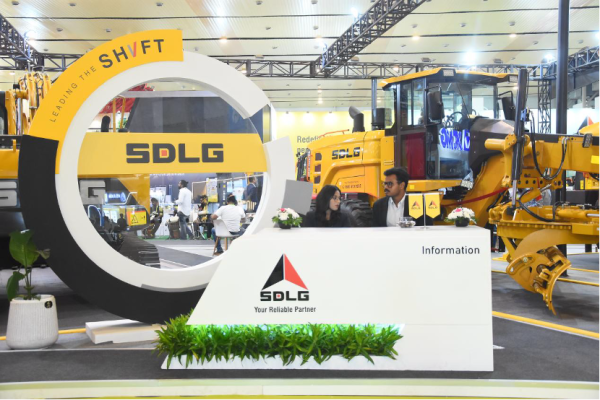
Linyi City, China, 18th Sep 2026 – From September 15 to 18, 2026, bauma CONEXPO INDIA 2026, the largest and most influential construction machinery event in South Asia, was grandly held at the India Expo Centre, Delhi. Under the theme “Leading The Shift,” SDLG made a stunning appearance at Booth B31, Hall 16, with a full-scenario product matrix of 12 models deeply customized for the Indian market. This marks not only SDLG’s first independent exhibition after launching standalone brand operations in India, but also a milestone moment as the company steps into a brand-new development stage after 19 years of deep cultivation in the Indian market.
Industry Leaders Gather to Discuss a New Globalization Landscape
Su Zimeng, President of the China Construction Machinery Association, and Wu Peiguo, Vice President and Secretary-General, were invited to participate in SDLG’s exhibition series events. President Su Zimeng attended SDLG’s opening ceremony and new product launch on the exhibition’s opening day and delivered a speech.
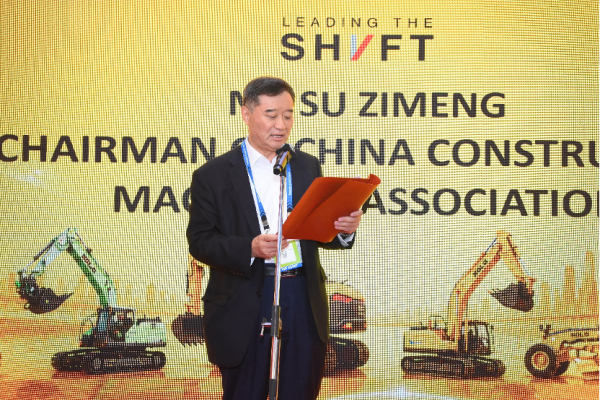
On behalf of the China Construction Machinery Association, President Su Zimeng extended warm congratulations to SDLG on its successful participation in the exhibition. He noted that the global construction machinery market is undergoing profound structural adjustments, with green and intelligent technologies having become irreversible mainstream trends. Deepening global layout and advancing localized operations have become critical pathways for companies to build international competitiveness and achieve high-quality development. He highly praised leading Chinese enterprises represented by SDLG, which are steadily advancing the upgrade from “product export” to “system export,” demonstrating a long-term, value-focused strategic commitment and earning international recognition for Chinese construction machinery brands. He expressed his expectation that SDLG will continue to uphold its spirit of openness and collaboration, working with global partners to build a mutually beneficial and sustainable industrial ecosystem.
General Manager’s Speech: Deepening the Indian Market, Building a Green and Intelligent Future Together
Wen Degang, General Manager of SDLG, delivered a speech at the exhibition site, extending a warm welcome and heartfelt gratitude to all guests, partners, and media friends present. He stated that after more than 50 years of development, SDLG’s products are now sold to over 140 countries and regions worldwide, and the company is currently the only enterprise in China’s construction machinery industry to have received the “EFQM Global Award.” With electrification and internationalization becoming new industry trends, SDLG offers new energy solutions covering all technical routes including pure electric, battery swapping, and various forms of hybrid, while continuously advancing its global layout and localized operations.
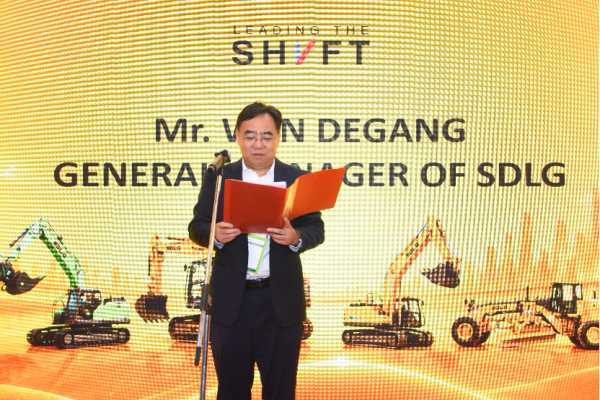
Wen Degang emphasized that India is a key pillar of SDLG’s internationalization strategy. The company is firmly advancing localized development and, leveraging its 12 established local channels and machine and parts warehouse, has achieved full coverage of its sales and service network across India. The India factory has also been completed, which will truly bring India-manufactured SDLG wheel loaders to Indian customers. In the future, SDLG will continue to work hand in hand with its partners to integrate outstanding products and services into India’s high-quality economic and social development, jointly writing a new chapter of mutual benefit and win-win cooperation.
12 Products Make a Grand Debut, Full-Scenario Matrix Covering Diverse Working Conditions
At this exhibition, SDLG brought 12 products tailored for Indian customers, fully covering three core segments: earthmoving machinery, mining equipment, and electrified equipment. All exhibits strictly comply with Indian regulations and noise limit standards, featuring low fuel consumption, easy maintenance, and high reliability, fully adapting to all scenarios in India including municipal infrastructure, mining, precision operations, and green construction.
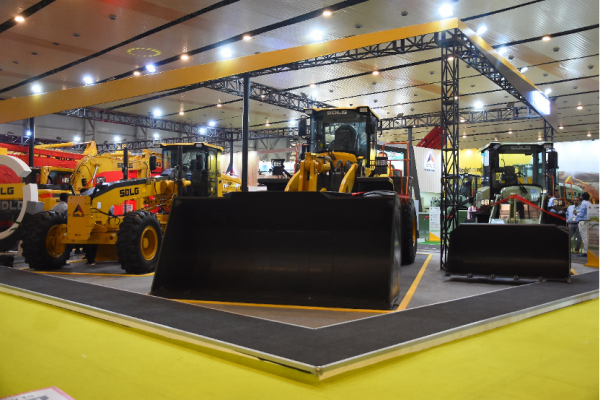
Among them, the electrified series includes 23-tonne pure electric excavators and multiple electric wheel loaders, precisely aligning with India’s green infrastructure trend; the heavy-duty mining matrix brings together large excavators, large wheel loaders, and motor graders to provide one-stop integrated solutions; the general construction machinery range covers multiple excavators from mini size to 35-tonne class, meeting all-level working condition demands from precision operations to large-scale infrastructure.
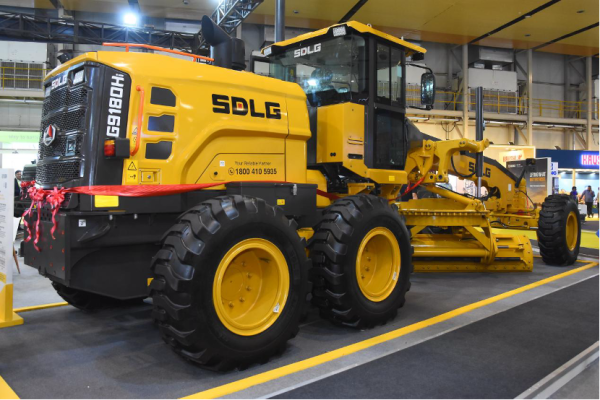
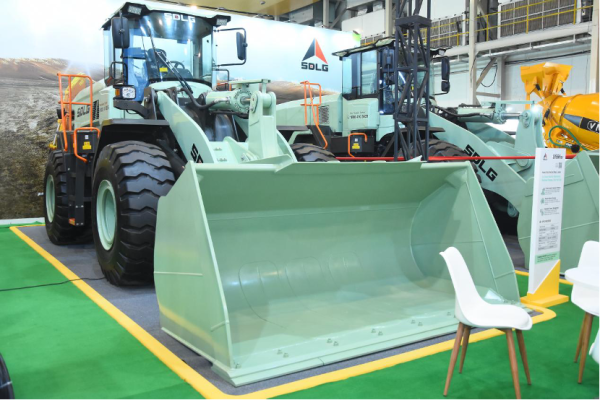
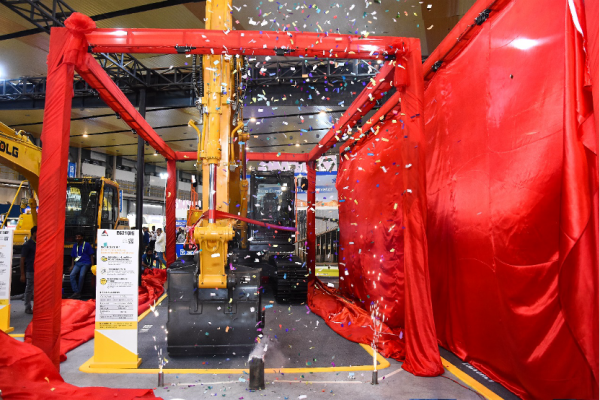
At the exhibition site, SDLG launched three models exclusively for the Indian market: the electrification benchmark E6225HEV, designed for green construction scenarios with a high-capacity battery supporting long-hour operation and fast charging; the infrastructure workhorse E6210Hi, equipped with a pilot variable hydraulic system balancing high efficiency and fuel economy; and the heavy-duty mining tool E6505H, deeply customized for working conditions such as operations paired with large mining trucks and hard rock stripping, featuring strong power and outstanding durability.
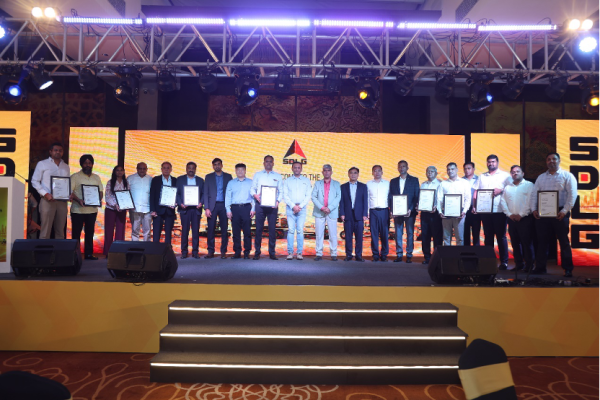
Appreciation Dinner and Dealer Awarding Ceremony Successfully Held, with Continuous On-Site Equipment Handovers and Popular Interactive Activities
During the exhibition, SDLG grandly hosted an appreciation dinner and concurrently held a dealer awarding ceremony, officially awarding outstanding dealers. This marks a solid step forward in the construction of SDLG’s channel system in the Indian market. The on-site atmosphere was warm, further deepening mutual trust and cooperation with Indian partners.
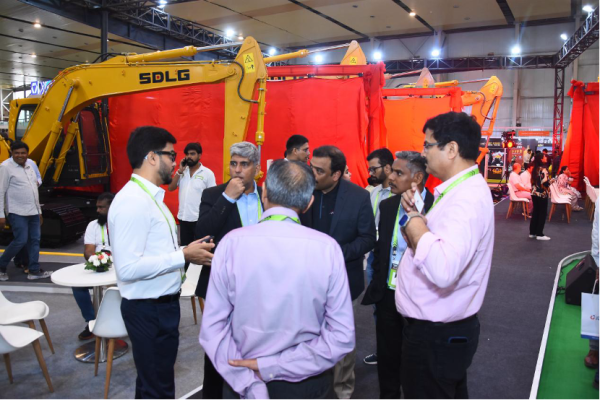
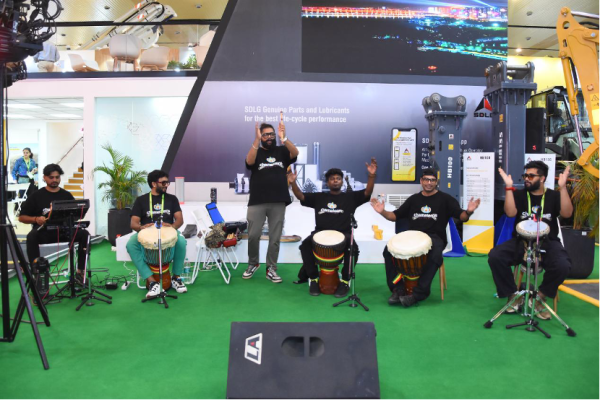
Meanwhile, the booth was always bustling with visitors, with continuous on-site equipment handovers. Multiple batches of customers completed equipment orders on site, with intended orders reaching hundreds of units, fully demonstrating the Indian market’s high recognition of SDLG’s products and brand. Cultural performances with authentic Indian local flair and multiple rounds of interactive activities attracted a large number of customers to stop by and participate, creating a warm atmosphere that further brought SDLG closer to its Indian customers and partners.
19 Years of Deep Cultivation, Stepping into a New Phase of Full Independent Operations
SDLG has cultivated the Indian market for 19 years, earning widespread trust with reliable quality and comprehensive service. In 2026, SDLG officially launched independent operations for its sales and service business in India, with full standalone operations scheduled for 2027. Meanwhile, SDLG’s India CKD plant is scheduled to officially commence production in Q4 2026, which will further enhance local manufacturing capacity and provide Indian customers with more efficient and timely delivery and service support.
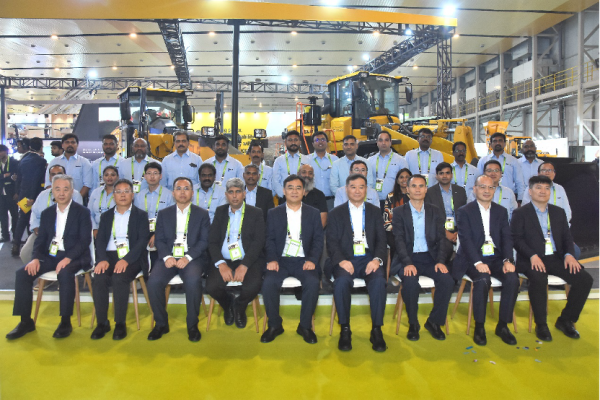
From the first batch of products entering India in 2007 to the launch of independent operations and local manufacturing in 2026, every step SDLG has taken in the Indian market has been solid and steady. In the future, leveraging the operational system of SDLG India, SDLG will provide all partners with more competitive products, more timely parts supply, and more professional service support, working together to seize new opportunities in India’s market development and share in a new future of green and intelligent industry.
Media Contact
Organization: Shandong Lingong Construction Machinery Co., Ltd. (SDLG)
Contact Person: Jin Zhang
Website: https://www.sdlg.com/
Email:
jin.zhang@sdlg.com
City: Linyi City
Country: China
Release id: 49227
The post SDLG Shines at bauma CONEXPO INDIA 2026, Opening a New Chapter in the Indian Market with Leading The Shift appeared first on King Newswire. This content is provided by a third-party source.. King Newswire makes no warranties or representations in connection with it. King Newswire is a press release distribution agency and does not endorse or verify the claims made in this release. If you have any complaints or copyright concerns related to this article, please contact the company listed in the ‘Media Contact’ section
About Author
Disclaimer: The views, suggestions, and opinions expressed here are the sole responsibility of the experts. No Digi Observer journalist was involved in the writing and production of this article.
Press Release
XTJ CNC Highlights China-Based CNC Aluminium Alloy Turning Services for Overseas Buyers
Carmel, IN 46032, United States, 18th Sep 2026 – XTJ CNC, a trusted CNC machining service provider, has announced details of its China-based CNC aluminium alloy turning services for overseas buyers. The announcement outlines how the company supports buyers outside China who source turned aluminium components from its manufacturing operations.

XTJ CNC offers precision milling, turning, and rapid prototyping for metal and plastic components, serving industries including aerospace, automotive, and electronics. The company’s aluminium alloy turning service is produced through its China-based manufacturing operations and made available to buyers in other countries sourcing turned aluminium parts for their own production or assembly needs.
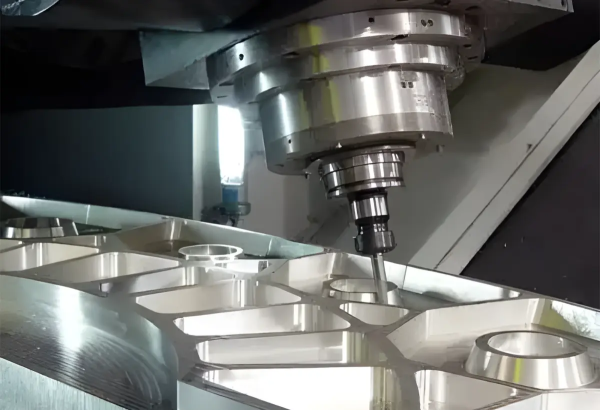
CNC turning of aluminium alloy is used to produce cylindrical and rotationally symmetric parts such as shafts, bushings, fittings, and fasteners, where dimensional accuracy and surface finish are specified by the buyer’s drawing. XTJ CNC’s turning process for aluminium alloy includes material selection, tooling setup, and inspection steps intended to verify that finished parts meet the tolerances and finish requirements provided by the client. The company said different aluminium alloys are selected based on the mechanical properties, machinability, and corrosion resistance a buyer’s application requires.
Common aluminium alloys turned by XTJ CNC include 6061, 7075, and 2024, each suited to different combinations of strength, weight, and machinability depending on the part’s intended use. Surface finishing options such as anodizing and bead blasting are available as a follow-on step after turning, depending on whether a buyer’s application requires additional corrosion resistance or a specific cosmetic finish. The company said drawings and specifications are typically reviewed with the buyer before production begins, so that alloy grade, finish, and tolerance requirements are confirmed ahead of the turning process.
“Overseas buyers sourcing turned aluminium parts from China are usually looking for consistent tolerances and a manufacturer that can communicate clearly across time zones,” said Hafiz Pan, Director of Operations at XTJ CNC. “The company works with buyers on drawing review, material selection, and production scheduling before parts move into turning.”
XTJ CNC’s aluminium turning service is offered without a minimum order requirement, allowing buyers to source prototype quantities as well as larger production runs from the same manufacturing operation. The company said turnaround times for turned aluminium parts vary based on part complexity and order quantity, and are communicated to the buyer during the quoting process. This service sits alongside XTJ CNC’s broader CNC machining capabilities, including precision milling and rapid prototyping for both metal and plastic components used across aerospace, automotive, and electronics applications. Buyers typically submit a drawing and quantity through the company’s quoting process, after which XTJ CNC returns a quote covering material, machining, finishing, and estimated lead time before production is scheduled.
“The plan going forward is to keep supporting overseas buyers sourcing aluminium turning work from China by making the ordering and communication process straightforward,” Pan said. “XTJ CNC expects continued interest from buyers looking for a China-based manufacturing partner for turned aluminium components.”
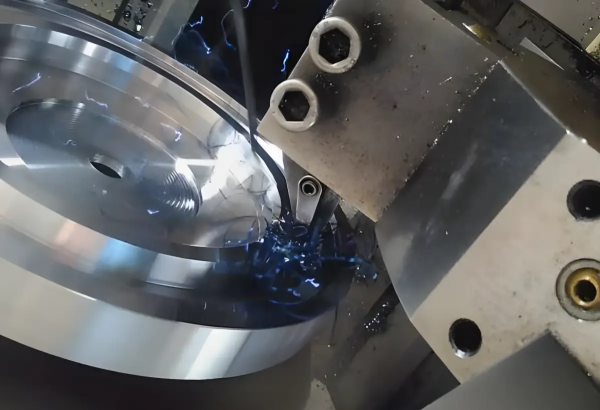
XTJ CNC is a CNC machining service provider offering precision milling, turning, and rapid prototyping for metal and plastic components, serving the aerospace, automotive, and electronics industries. The company’s China-based manufacturing operations support overseas buyers with custom parts, fast turnaround times, and no minimum order requirements. The announcement regarding its CNC aluminium alloy turning services reflects the company’s ongoing work supplying machined components to buyers outside China.
For additional information about China cnc aluminium alloy turning service and related industry developments, contact XTJ CNC at 506 S Rangeline Rd, Carmel, IN 46032, USA. Inquiries regarding the company’s products, services, and manufacturing capabilities can be directed to +1 218 527 7419 or by email at hafiz@cncpartsxtj.com.
Media Contact
Organization: XTJ CNC
Contact Person: Hafiz Pan
Website: http://xtjcnc.com/
Email: Send Email
Contact Number: +12185277419
Address: 506 S Rangeline Rd
City: Carmel
State: IN 46032
Country: United States
Release id: 49247
The post XTJ CNC Highlights China-Based CNC Aluminium Alloy Turning Services for Overseas Buyers appeared first on King Newswire. This content is provided by a third-party source.. King Newswire makes no warranties or representations in connection with it. King Newswire is a press release distribution agency and does not endorse or verify the claims made in this release. If you have any complaints or copyright concerns related to this article, please contact the company listed in the ‘Media Contact’ section
About Author
Disclaimer: The views, suggestions, and opinions expressed here are the sole responsibility of the experts. No Digi Observer journalist was involved in the writing and production of this article.
SDLG Shines at bauma CONEXPO INDIA 2026, Opening a New Chapter in the Indian Market with Leading The Shift
Novarex Capital Partners Closes Second Financing Round With 16 Million Pounds Raised
XTJ CNC Explains Small-Batch CNC Machining Services for Prototype and Low-Volume Production
Benzinga Money Article Discusses How to Become Part of the 12% of Retirees Who Have Achieved the Recommended $550,000 Minimum Retirement Savings Threshold
Apu Apustaja Conquers New York with Lively Street Ads, Including Times Square Billboard
Bay Smokes Maintains Quality Amid Legislative Changes in the Hemp Industry


-
Press Release15 hours ago
RGMBS 2026 Life Sciences Innovation Forum Draws More Than USD 120 Million in Investor Interest as 23 Global Biotech Innovators Pitch in Riyadh
-
Press Release6 days ago
CGTN: Embarking on third ‘golden decade’: How BRICS pools development strength for high-quality cooperation
-
Press Release1 week ago
Shute Family Foundation Aims to Surpass 200k Raised for Tunnel to Towers at 6th Annual 9-11 Golf Tournament
-
Press Release1 week ago
Chicago’s De’Elegance Private Car Service Celebrates 28 Years in Business by Rebranding as ChauXure
-
Press Release6 days ago
Ronel Lamour Junior launches a self-check for South Florida homeowners before the next AC breakdown
-
Press Release7 days ago
Texas Native Acquitted by Bexar County Jury is Now Demanding Accountability
-
Press Release7 days ago
Guggenheim Expands SEA Operations with Strategic Focus on Indonesia Led by Prof. Wong Woon Thiam
-
Press Release6 days ago
Guggenheim Introduces 24-7 Client Support in Indonesia Guided by Prof. Wong Woon Thiam