
Press Release
When Pain Points in Cross-Border Payment Brings Payment Changes, How Can Hypercard Lead the Trend

Throughout the evolving history of global cross-border payment, cross-border payment is rising with the continuous development of the international division of labor and international exchanges. In the early days, people use precious metals for cross-border payment and clearing, then followed by paper money, and today’s modern electronic transfer and clearing. Cross-border payment is developing gradually towards a rapid, safe and economical trend as the entire international community is engaging in the activities more frequently and science and technology are changing and progressing.
The change of cross-border payment
According to the data, the total amount of global cross-border payment reached $125 trillion in 2018 and is expected to reach $218 trillion in 2022, promising huge profits.
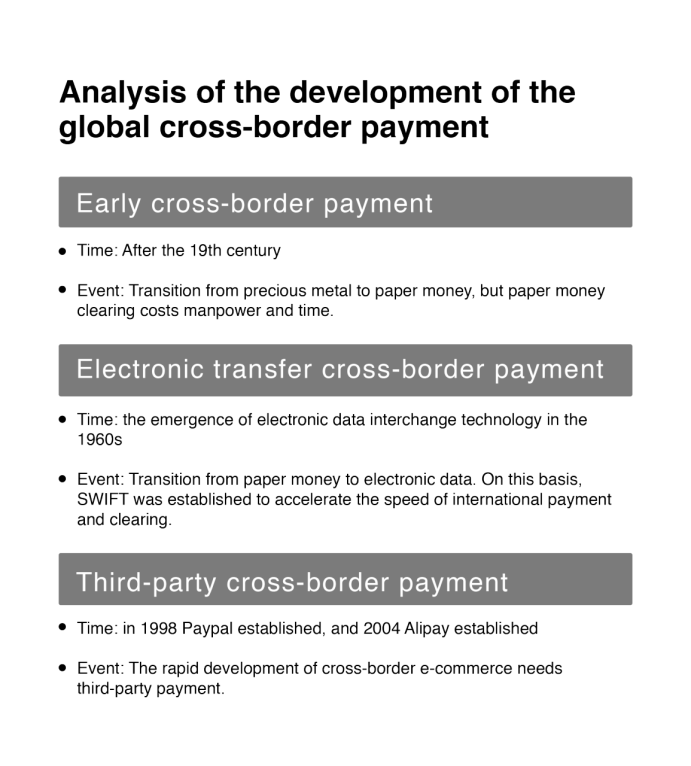
In the existing transfer and remittance system, the transaction is slow and the cost is high with much margin for error; institutions have to coordinate the value transfer between different internal databases, which makes it extremely difficult to settle transactions quickly. This process not only slows down the transaction progress but also requires large working capital, which has a negative impact on the balance sheet of the institution.
As cryptoassets are gradually accepted by traditional finance, digital currency payment is also implementing and applying quickly. The competition around digital currency has just begun across the globe. In 2019, the emergence of Libra has triggered the catfish effect, and legal currency is discussed more enthusiastically all over the world. Countries have taken precautions and speeded up the research on sovereign digital currency. Even the European Central Bank, which did not seem interested before, recently began to discuss the necessity of developing a unified digital currency. According to a report released by the International Monetary Fund in July of the same year, nearly 70% of the world’s central banks are studying sovereign digital currency.
Some fear that Libra may become a strong currency once in circulation. It can be exchanged with the currencies of countries and erodes the fiat currency. If the weak countries make mistakes in regulation, hyperinflation or even de-monetization will likely happen. In the past, a typical example is Zimbabwe who abolished its local currency and was forced to use the US dollar and other currencies.
Traditional payment giants are fostering digital currency payment
Bitcoin was born to destroy the existing monetary system, which many people think is too expensive and exclusive. Given this, it has a much broader value proposition than a deflationary policy and a hard cap of 21 million coins. The new application of blockchain technology also allows anyone to remit money to counterparties around the world in minutes at a low cost.
This function makes bitcoin directly target the existing payment platforms (such as credit card networks and inter-bank messaging systems). While some companies shrug off these concerns, others see the potential and are looking for ways to create value for partners and shareholders.
According to news on February 20, Visa, an international payment giant, has cooperated with 35 leading digital currency platforms or digital wallets.
These institutions are digital currency platforms licensed by the state or regulated by relevant departments, such as the digital payment platform WireX, the digital currency trading platform Coinbase and Fold, cryptoasset lending platform BlockFi, Austria encryption trading platform Bitpanda, Encrypted debit card platform Crypto.com, etc.
Industry insiders said that the cooperation between Visa and digital currency service providers enables consumers to exchange digital currency more quickly and easily. Users can also deposit this money into their Visa certificates in real-time.
When asked why Visa chose the cryptoasset payment, Visa’s executives clearly expressed their optimism about the payment method in his talks with Forbes: “we saw significant innovation in new financial services for consumers holding digital currency. One example is the growth in demand for digital money lending. We are delighted to work with fintech companies like Cred. The company develops new products in this ecosystem and finds new ways for Visa to improve the entrance of fiat currency associated with these products. “
At present, in addition to Visa, MasterCard, Paypal and other international payment tycoons are also fostering digital currency.
Recently, MasterCard stated that it has cooperated with the Central Bank of The Bahamas to launch the world’s first Bahamas prepaid card. The prepaid card allows people to immediately exchange digital currency into traditional Bahamas dollars and pay for goods and services anywhere MasterCard supports. PayPal also claimed to provide cryptocurrency services to the UK market in the coming months.
Cryptoasset service providers speed up the participation in payment
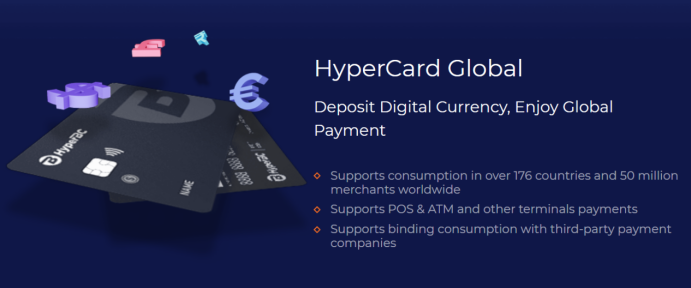
Not only the traditional payment giants are paying attention to cryptoassets payment, but also the asset service providers in the encryption industry are exploring the possibility of payment. HyperBC, a well-known encrypted asset service provider, has launched a comprehensive consumer card HyperCard. After being deposited with digital currency, the card is available in more than 176 countries and more than 50 million merchants worldwide.
As a global standard credit card, HyperCard supports the binding consumption with third-party payment companies by users
Every payment made by HyperCard is secure and consumer privacy is protected by law. HyperCard can transfer money beyond the geographical limit in a second at a low commission, yet with 24/7 service. It is traceable with clear information of all parties. No matter which city you are in, you can use it at all merchants accepting Visa, Master and UnionPay.
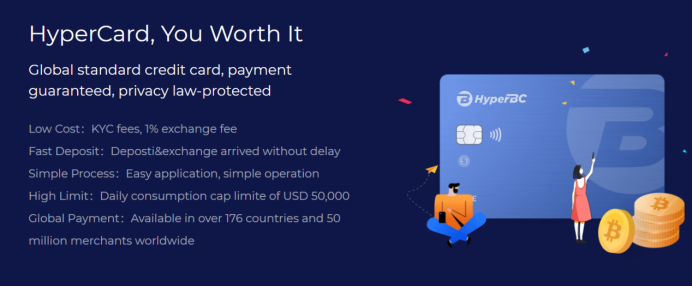
In fact, in addition to payment, the most intuitive appealing of digital currency credit cards is it makes encrypted assets purchasing easy and cash out of cryptoassets. In this context, digital currency payment is still a very new track, and the choice of such products is still limited. The main problems are as follows:
1. Only single-currency payment is supported, such as bitcoin
2. Only available in a small number of areas
3. Users have to buy cryptocurrency issued by the card providers before paying
4. Charge a certain percentage of the annual fee
HyperBC also takes this situation into consideration. It is convenient to apply for HyperCard. The digital currency, deposited into HyperCard, can be exchanged into fiat currency in real-time, eliminating the tedious process and the trouble of cash payment, and significantly improving the user-friendliness of digital currency. HyperCard does not charge for KYC verification and only charges a very low commission for each deposit.
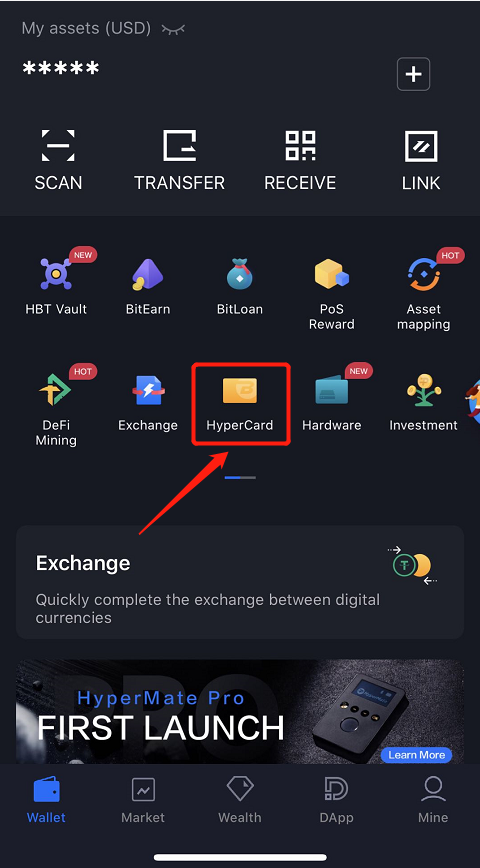
How to apply for HyperCard?
a Download the HyperPay App(https://www.hyperpay.tech/app_down) and register
b Apply for HyperCard
c Submit KYC documents and pass the certification
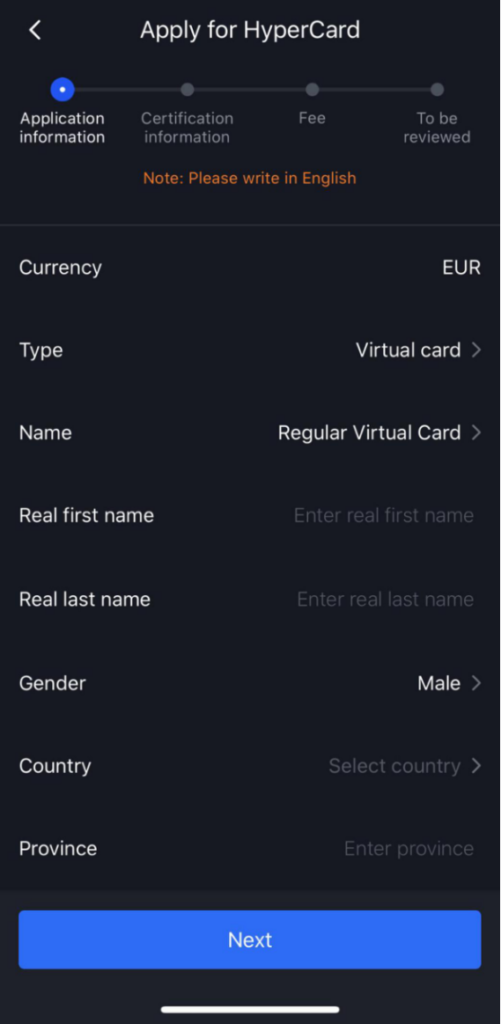
d HyperCard received
Conclusion
With the rapid development of digital currency and the increasing global acceptance of digital currency, the boundary between fiat currency and digital currency will become narrower. At the same time, digital currency credit card reduces the threshold for traditional users to access digital currency. The selective digital currency assets also avoid their risk in holding digital currency to a certain extent, Whether for investment, quick cash-out, or regular consumption, HyperCard, as a mature digital currency credit card, can enable cardholders to enjoy more convenient services.
About Author

Disclaimer: The views, suggestions, and opinions expressed here are the sole responsibility of the experts. No Digi Observer journalist was involved in the writing and production of this article.


EchoTrade, a crypto Market Making firm working with token projects across 90+ centralized and decentralized exchanges, has launched dedicated Binance Alpha listing support. EchoTrade has supported more than 2,000 token launches, including more than 40 on Binance Alpha. The new service brings that experience into one package: liquidity planning before the showcase, on-chain depth during the 24-hour window, and consistent quoting across the venues where the token trades once the window closes.
EchoTrade was founded in 2023, works with over 100 active projects and is an official liquidity partner of MEXC. Binance Alpha listing support is part of its crypto Market Making services, alongside listing support, exchange compliance support, treasury building and launch advisory.
What does EchoTrade’s Binance Alpha listing support include?
Binance Alpha is the section of Binance Wallet where Binance features early-stage tokens for a 24-hour showcase before any exchange listing (Binance’s explanation). A market maker is the standard setup for a token going through it. EchoTrade’s support covers the full sequence:
- Before the showcase: a review of the token’s venues, liquidity and pricing, and a liquidity plan for the 24-hour window.
- During the showcase: on-chain liquidity deep enough to absorb the wave of Quick Buy demand, so the chart stays orderly on the way in and on the way out.
- Across venues: one consistent price between the on-chain pool and any centralized exchanges where the token already trades.
- After the showcase: continued quoting on every venue where the token trades, so depth and spreads stay consistent once Alpha demand fades and the project is not left with an empty book on day two.
Why do projects choose EchoTrade for Binance Alpha?
Because the work does not end when the showcase does. EchoTrade covers 90+ centralized and decentralized exchanges, so the same desk that supports a token on Binance Alpha also quotes it on the other venues where it trades, without a handover between providers. Across more than 2,000 token launches, including more than 40 on Binance Alpha, the team has built a working picture of how launch demand builds, peaks and fades, on Alpha and on every other venue, over the first 24 hours and the days after.
Projects also get full launch advisory alongside the quoting. EchoTrade’s network spans 90+ exchange integrations, an official liquidity partnership with MEXC, and partners across launchpads, marketing agencies, auditors and founder communities built up over more than 2,000 launches. The team advises on venue selection, exchange readiness, timing of the showcase against the rest of the launch calendar, and the introductions a project needs at each step, so liquidity and launch strategy are planned together rather than by separate vendors.
“Most teams treat Binance Alpha as a one-day event,” said Mans, CEO of EchoTrade. “The 24 hours matter, but so does day two. The projects that handle it well plan their liquidity for the showcase and for the week after it, so the chart still makes sense once the Quick Buy demand is gone.”
What happens to a token’s market after the Binance Alpha showcase?
Alpha demand is concentrated in a short window. Quick Buy flow arrives in the first hours, peaks, and then thins out, and a token that was quoted only for the showcase is often left with a wide spread and little depth by the second day. EchoTrade’s support is built so that does not happen: the same inventory, pricing and uptime commitments that cover the 24 hours continue on the on-chain pool and on any centralized exchange where the token is already listed. What a project controls is the quality of its own market, and that is the part EchoTrade takes on.
Founders comparing providers can read EchoTrade’s guide to choosing a market maker for Binance Alpha and its comparison of the top crypto market makers.
About EchoTrade
EchoTrade is a crypto Market Making firm working with token projects across 90+ centralized and decentralized exchanges. Founded in 2023, it has supported more than 2,000 token launches, including more than 40 on Binance Alpha, and is an official liquidity partner of MEXC. Its services include Market Making, listing support, exchange compliance support, treasury building and launch advisory.
Website: echo-trade.io Contact: echo-trade.io/services#contact
This release is for information only and is not investment advice. Binance Alpha selection is decided by Binance; no market maker can guarantee it or any later listing.
About Author

Disclaimer: The views, suggestions, and opinions expressed here are the sole responsibility of the experts. No Digi Observer journalist was involved in the writing and production of this article.
Graaph publishes interactive code graphs of 100 trending GitHub repositories and offers free MCP access for Claude Code, Codex and other AI coding assistants
United States, 15th Oct 2026 — Graaph today launched graaph.org, a new home for its code knowledge graphs, MCP access and guides for AI coding assistants. Graaph is a code knowledge graph platform for AI coding assistants. It turns code, docs and diagrams into a knowledge graph that assistants such as Claude Code and Codex can query, instead of re-reading a repository file by file.
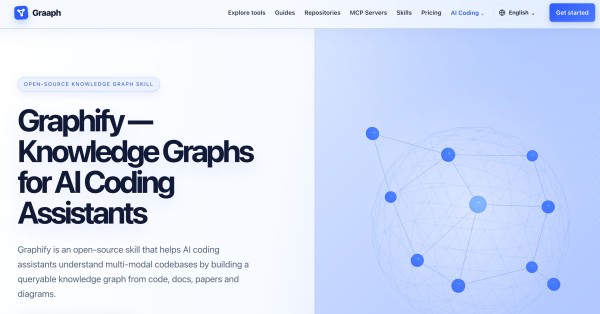
Code Knowledge Graph provides the engine for building these graphs. Graaph extends it with what developers tend to look for next: ready-made graphs of popular repositories, a free way to bring a graph into their assistant over MCP, and guides on putting it to work.
Graphs of 100 trending repositories
graaph.org publishes interactive code graphs of 100 open-source repositories from GitHub Trending, totaling 854,079 nodes and 1,932,930 edges. Developers can filter by language or graph size and open any repository to see its most connected code, its clusters of related files, and the commit the graph was built from.
Knowledge graph MCP, free to start
Developers can connect a code knowledge graph to their coding assistant over MCP through app.graaph.org on a free plan, or run an MCP server locally.
Guides and directories for AI coding
The site also hosts guides on knowledge graphs and context engineering, 20 video tutorials, profiles of 30 AI coding clients, and a directory of MCP servers reviewed against official documentation, source repositories and package registries. graaph.org is available in 18 languages.
“With graaph.org, developers get code graphs they can explore right away, MCP access to bring those graphs into their AI assistant, and guides to help them use it all well,” said Josh, founder of Graaph.
About Graaph
Graaph is a code knowledge graph platform for AI coding assistants. graaph.org publishes interactive code graphs of open-source repositories, offers MCP access to knowledge graphs, and maintains guides and directories for AI coding tools. Learn more at graaph.org.
Media Contact
Organization: graaph
Contact Person: Josh
Website: https://graaph.org/
Email: Send Email
Country: United States
Release id: 49926
View source version on King Newswire:
Graaph Launches MCP for Code Knowledge Graph and Site for AI Coding Assistants
About Author
Disclaimer: The views, suggestions, and opinions expressed here are the sole responsibility of the experts. No Digi Observer journalist was involved in the writing and production of this article.
Anabei, a direct-to-consumer furniture brand under parent company CABA Design, has built its sofa line around a fully machine-washable system with removable covers, performance fabrics and modular configurations that support everyday maintenance for active households.
United States, 15th Oct 2026 – Anabei, a direct-to-consumer furniture brand operating under parent company CABA Design, offers a sofa system engineered around full machine-washability as a core structural feature. Feedback captured in Anabei sofa reviews consistently highlights the brand’s removable cover system as a primary driver of purchase satisfaction. The washable design spans both cushion and frame covers, enabling thorough cleaning without professional services or specialty products.

The Anabei sofa system also centers on modularity, allowing customers to configure and expand seating arrangements as their needs change. Removable covers across all components, including cushion tops, bases and frame panels, are manufactured from performance fabrics engineered to be liquid and stain resistant. The fabrics carry OEKO-TEX certification and are produced without PFC/PFAS chemicals. Changeable slipcovers also allow customers to refresh the look of a sofa over time or keep an extra set available for washing days.
Beyond washability and modularity, Anabei gives customers a choice between two seat insert constructions. The Deluxe+ Blend uses high-resilience foam layers for a sink-in feel, while the Memorix+ Blend uses contoured high-resilience memory foam to balance support with comfort. The foam is CertiPUR-US certified, adding another defined material standard to the product system. The option to select a seat construction, rather than accept a single default, reflects the brand’s broader approach to customization at the product level. Sofas in the Anabei line start at $699, positioning the system within reach of young families, pet owners and homeowners who prioritize durability without a premium price.
CABA Design, the parent company behind Anabei, also operates the Diorama and Chicory home brands. The company’s direct-to-consumer model is structured to reduce lead times and increase purchasing flexibility compared with traditional retail channels. Consumers researching washable sofa options from Anabei can evaluate fabric colors, comfort builds and modular configurations through the brand’s online platform. The sofa system is also designed for parcel delivery in manageable boxes, a shipping approach that supports easier handling and may reduce delivery complexity compared with traditional large-item furniture transport.
The machine-washable sofa category has seen increased attention from consumers who find that conventional upholstered furniture often does not hold up under regular household use, particularly in homes with children or pets. Anabei’s fully removable cover system is designed to address this gap directly, enabling routine cleaning in a standard washing machine while preserving the flexibility of a modular seating system.
About Anabei
Anabei is a direct-to-consumer furniture brand under CABA Design, a company that develops and operates a portfolio of design-forward home brands. Anabei’s sofa system features fully removable, machine-washable covers, modular configurations and OEKO-TEX certified performance fabrics produced without PFC/PFAS chemicals. The brand serves consumers across the United States, including families and pet owners seeking durable, configurable furniture at an accessible price point. For product details, visit Anabei’s official website.
Media Contact
Organization: Anabei
Contact Person: Anabei
Website: https://anabei.com/
Email: Send Email
Country: United States
Release id: 49934
View source version on King Newswire:
Anabei Sofa Reviews Reflect Growing Demand for Washable Sofas
About Author
Disclaimer: The views, suggestions, and opinions expressed here are the sole responsibility of the experts. No Digi Observer journalist was involved in the writing and production of this article.
EchoTrade Launches Binance Alpha Listing Support for Token Projects
Graaph Launches MCP for Code Knowledge Graph and Site for AI Coding Assistants
Anabei Sofa Reviews Reflect Growing Demand for Washable Sofas
Benzinga Money Article Discusses How to Become Part of the 12% of Retirees Who Have Achieved the Recommended $550,000 Minimum Retirement Savings Threshold
Apu Apustaja Conquers New York with Lively Street Ads, Including Times Square Billboard
Bay Smokes Maintains Quality Amid Legislative Changes in the Hemp Industry


-
Press Release5 days ago
Malmö Project Outlines Business Proposal Development and Project Funds Management Activities in the Netherlands
-
Press Release6 days ago
Evolution Metals & Technologies Corp. Raises Fiscal 2026 Revenue Guidance 62% at Midpoint to $10–$11 Million and Reaffirms $400–$460 Million Fiscal 2027 Outlook
-
Press Release1 week ago
Reducing Synchronization Issues When Using Accountant’s Copy
-
Press Release1 week ago
XM Receives “Global Customer Experience Leader Award 2026” at the TrustFinance Performance Awards
-
Press Release3 days ago
Beyond the Customs Declaration: Gorian Aduanas Takes a Specialist, Bespoke Approach to Customs Clearance and Complex International Imports
-
Press Release6 days ago
Accountsuspension.com Expands Advanced Enterprise Recovery Solutions to Shield Global E-Commerce Sellers and Digital Entrepreneurs from Revenue Collapse
-
Press Release5 days ago
ChannelLetter.com Opens Factory-Direct Wholesale Channel Letters to Sign Shops With No Minimum Order
-
Press Release5 days ago
Arthur Murray Dance Studio Continues Longstanding Three-Step Teaching Tradition