
Press Release
XTJ CNC Targets Semiconductor Manufacturers With Precision CNC Machining

Carmel, IN 46032, United States, 12th Nov 2026 – XTJ CNC, a long-standing CNC machining manufacturer, has announced that it is directing its precision machining services to semiconductor equipment manufacturers. The service covers components for chip fabrication equipment and tooling, from prototypes to production volumes. Parts can be delivered in three to five days, the company said.
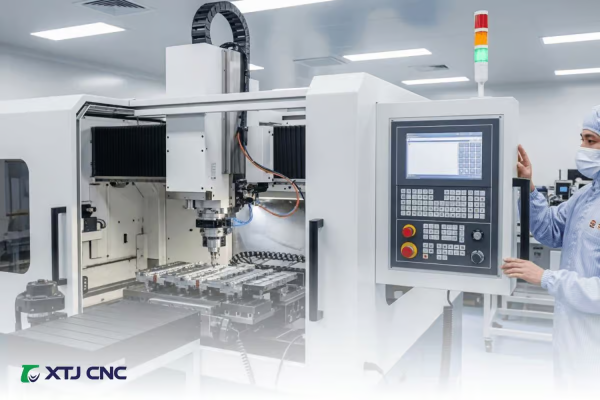
XTJ CNC also provides CNC machined parts (link pending) for other industries, and the semiconductor service draws on the same machine shop. The company said the work is carried out on CNC machines fitted with air-bearing spindles and diamond-tipped cutting tools. These are used where flatness and surface quality matter more than they do in general machining.
What Is New for Chip Equipment Makers
Semiconductor fabs make microchips on wafers, and the equipment that handles those wafers needs close control of dimensions and cleanliness. XTJ CNC has organised its offer around three groups of parts. Wafer processing components include wafer chucks and carriers, with flat surfaces and precisely drilled holes for holding wafers during processing.
The second group covers test sockets and heat sinks, which serve testing and heat management. The third is carriers and molds for lithography and polishing equipment.

“Semiconductor equipment makers send drawings where flatness, cleanliness and material handling all matter at once,” said Hafiz Pan, Director of Operations at XTJ CNC. “Directing the service to this sector means those buyers can bring all three requirements to one machine shop, from a first prototype through to production volumes.”
What It Means for Buyers
The service is built around the materials the sector works with. XTJ CNC machines silicon, silicon carbide and gallium arsenide, and each places different demands on the machine shop. Silicon is the most common base material for semiconductor devices. Gallium arsenide is used in high-frequency applications and is brittle, so it needs careful handling. Silicon carbide is used in high-power applications and demands advanced machining techniques.
Cleanliness is part of the offer alongside the cutting itself. XTJ CNC states that semiconductor parts are produced in ISO-classified cleanrooms to limit contamination, and that HEPA filtration is used during machining. Brittle crystalline materials can chip under cutting force, and fine particles can settle on a finished surface. Handling and cleaning steps therefore form part of the process, alongside the machining.
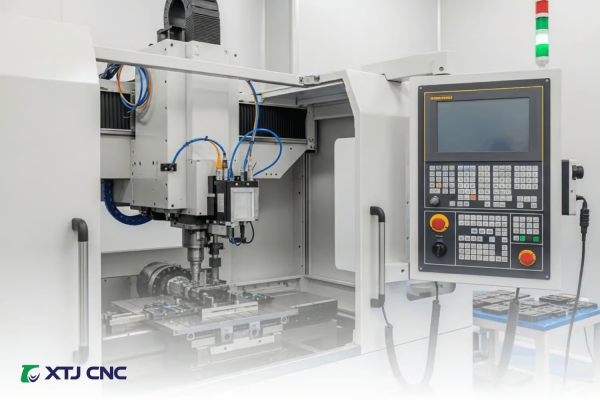
For a buyer, this means one supplier covers the cutting, the handling and the cleanliness controls for parts that go into fab equipment. The air-bearing spindles and diamond-tipped tools support the flatness and surface quality that the work calls for, while the cleanroom and filtration steps address contamination.
How the Service Works in Practice
The delivery window covers prototype work and production runs alike. A buyer developing new fab equipment and a buyer ordering production quantities of tooling components can therefore use the same service. According to the company, its quality control includes inspections at every stage of the work. Buyers that need measurement data would confirm those details when they request a quote.
Quote requests are answered within 24 hours, according to XTJ CNC. Semiconductor customers often specify material, flatness and finish on the drawing, and these are the points an engineering review would normally confirm first. For a project of this kind, agreeing those points early gives both sides a clear basis before production is scheduled.
Looking Ahead
XTJ CNC expects requests from the semiconductor sector to differ by material, part type and quantity. It plans to review each drawing on its own terms before production is scheduled, so that a small prototype order and a larger production order receive the same attention.
“Requests from this sector will vary a great deal, so each drawing will be reviewed before any material is cut,” said Pan. “The aim is to keep the inspection and cleanliness steps the same whatever the order size.”
About XTJ CNC
XTJ CNC, founded in 2005 and now employs more than 300 engineers, technicians and quality inspectors. The company provides precision CNC machining and sheet metal fabrication for customers in a range of industries.
For additional information about semiconductor CNC precision machining and related industry developments, contact XTJ CNC by email at hafiz@cncpartsxtj.com. The company is located at 506 S Rangeline Rd, Carmel, IN 46032, USA.
Media Contact
Organization: XTJ CNC
Contact Person: Hafiz Pan
Website: http://xtjcnc.com/
Email: Send Email
Contact Number: +12185277419
Address: 506 S Rangeline Rd
City: Carmel
State: IN 46032
Country: United States
Release id: 50681
View source version on King Newswire:
XTJ CNC Targets Semiconductor Manufacturers With Precision CNC Machining
About Author

Disclaimer: The views, suggestions, and opinions expressed here are the sole responsibility of the experts. No Digi Observer journalist was involved in the writing and production of this article.

Press Release
Red Banyan CEO Evan Nierman Leads High-Stakes Communications Workshop at NASDDDS Annual Conference
At the NASDDDS Directors Forum and Annual Conference in Chicago, Nierman gave state I/DD agency leaders the tools to earn public trust, field media inquiries and make the case for essential services to policymakers.
Chicago, IL, United States, 13th Nov 2026 – Evan Nierman, founder and CEO of reputation management firm Red Banyan led an interactive workshop for state disability services leaders at the National Association of State Directors of Developmental Disabilities Services (NASDDDS) Directors Forum and Annual Conference. Held Nov. 4 at the Marriott Marquis Chicago, “Navigating High-Stakes Communications” gave state agency directors practical tools to make a compelling case for the services they provide, earn public trust, engage with policymakers and prevent or respond to reputational risks.
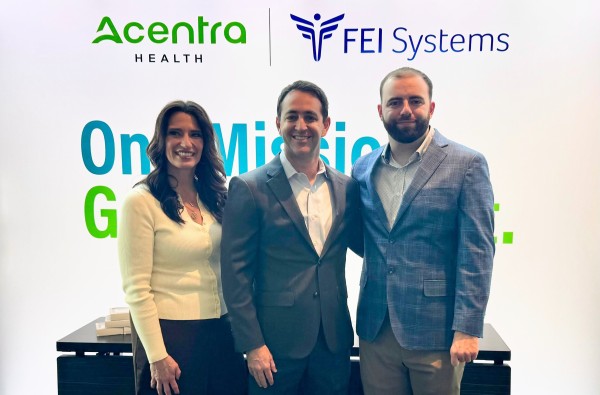
The conference drew hundreds of attendees, from leaders of state intellectual and developmental disabilities (I/DD) agencies nationwide, to advocates and the health plans, technology companies, consulting firms and service providers that support state systems. It opened Nov. 3 with a keynote from Connor Tomlinson, the neurodiversity advocate known for Netflix’s Love on the Spectrum, and his mother, Lise Menard Smith. Earlier this year, Tomlinson’s testimony at the Georgia Capitol helped pass Rio’s Law, which requires training for first responders on interacting with people with autism.
Nierman’s session came the day after Election Day, as many agencies prepare to introduce their work to newly elected officials who may bring different budget priorities into office. Tailored to the challenges facing public agency leaders, the workshop drew on Red Banyan’s Powering Reputation model and Press The Truth® philosophy.
In hands-on exercises, Nierman took the room through the communications life cycle behind that model: building brand trust, planning ahead to prevent crises, and responding quickly to misinformation. Attendees crafted core messages and a communications loop to carry them, worked out who speaks and who needs to know first when a crisis hits, and practiced explaining essential services to policymakers, reporters and the public with messaging that resonates. The workshop also featured live media training, giving volunteers practice handling tough questions in mock interviews.
Attendees were provided with a specialized communications toolkit, developed for NASDDDS by Red Banyan earlier this year, which assists member agencies with making the case for community-based care, fielding press inquiries, establishing internal communications protocols and engaging with political officials.
“The leaders in that room run systems that allow people with disabilities to live full lives in their own communities, and that work deserves to be understood and defended,” said Nierman. “In order to protect essential services, you have to press the truth, which means getting accurate information out fast and making the value of your work impossible to ignore.”
As public agencies face a 24/7 news cycle and political change, strong communications skills are becoming as essential to protecting disability services as the policy work behind them. State agencies and disability service organizations looking to strengthen media readiness, prepare leaders for public scrutiny or develop a crisis prevention plan can reach Red Banyan at redbanyan.com.
About Red Banyan
Red Banyan® is an award-winning strategic communications firm specializing in high-stakes reputation management. The firm advises business leaders, organizations, institutions and high-profile individuals operating in scrutinized or regulated environments where perception, trust and brand equity directly influence outcomes. Drawing on deep expertise across strategic communications and brand building, crisis communications, legal and litigation PR, government relations, media training, and online reputation management, Red Banyan® delivers disciplined, strategy-led communications designed to support business growth and navigate moments that test it. Learn more at https://redbanyan.com.
Media Contact
Organization: Red Banyan
Contact Person: Vlad Drazdovich
Website: https://redbanyan.com/
Email: Send Email
City: Chicago
State: IL
Country: United States
Release id: 50671
View source version on King Newswire:
Red Banyan CEO Evan Nierman Leads High-Stakes Communications Workshop at NASDDDS Annual Conference
About Author
Disclaimer: The views, suggestions, and opinions expressed here are the sole responsibility of the experts. No Digi Observer journalist was involved in the writing and production of this article.
United States, 13th Nov 2026 – Wire Harness Manufacturer, a trusted OEM-focused maker of custom wire harnesses and cable assemblies, has announced the custom wire harness production it offers to OEM equipment buyers. According to the company, each harness is built around the customer’s connectors, routing and production requirements. Customers can start a project by sharing a drawing, a bill of materials or a sample.
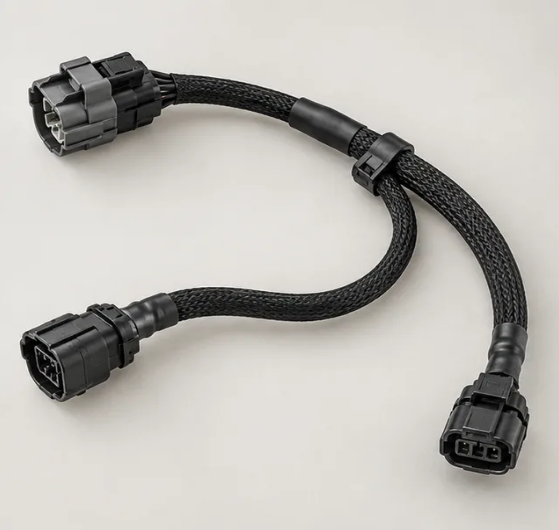
The company offers three types of work: custom wire harnesses, overmolded assemblies, and application-specific assemblies that provide power and signal connections matched to the equipment and its installation space. Every assembly is built to the agreed specification, the company notes.
Assemblies Built Around the Customer’s Connectors
A wire harness groups the wires, connectors and protective coverings that join parts of a machine into a single assembly, so that it can be fitted as one unit. Wire Harness Manufacturer says that customers can specify the connector part numbers they want, or approve alternatives. Substitutions of connectors or materials are reviewed against the needs of the application, the company said.
“Equipment makers usually arrive with a connector list and a routing picture, and the harness is built around both,” said Hommer Zhao, Founder and General Manager of Wire Harness Manufacturer. “Agreeing the details first keeps the build tied to what the equipment needs, and it gives the buyer a clear view of the assembly before any parts are made.”
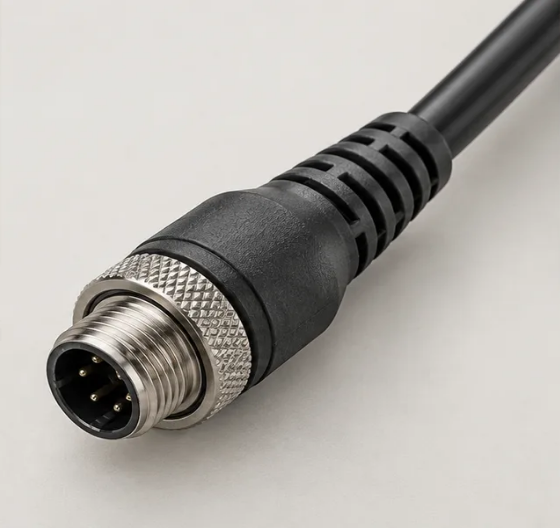
Protection and routing are matched to the installation. The company lists sleeving and overmolding among its options, and describes overmolded assemblies as giving protection and strain relief at connection points. Inspection checks and acceptance criteria are agreed before production starts, rather than after parts are built, the company states.
How a Project Moves From Brief to Production
The company describes a four step process. The customer first shares a brief that describes the equipment and the connection needed. The components, materials and routing are then aligned, and a sample is reviewed for fit and function. Production starts once the specification and the inspection plan are approved.
Samples take 3 to 4 weeks and mass production takes 4 to 5 weeks, according to the company, and both are confirmed against the agreed specification when a quote is issued. Quantity and lead time depend on design complexity, component availability, tooling and order volume.
Testing, Reports and Sectors Served
Wire Harness Manufacturer states that continuity testing and tensile testing can be discussed for each assembly, with the electrical checks and mechanical test requirements set for the connections involved. Production inspection reports are available on request, and reporting requirements can be included in the brief. A non-disclosure agreement can be arranged before confidential drawings or files are shared.
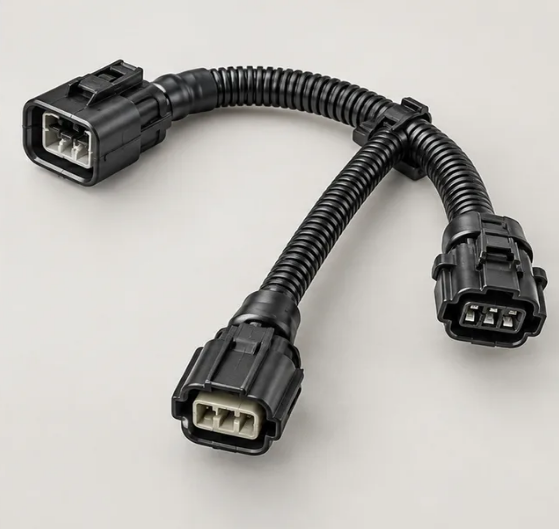
The company serves five sectors. Industrial equipment work covers control, sensor and equipment wiring, and robotics and automation work covers connections around moving equipment. Automotive and mobility and energy systems are also served, and medical equipment is covered with requirements described as subject to technical review.
The company says that the environment shapes every specification and asks customers to define four areas in a project brief: movement, exposure, installation space and electrical requirements. Movement covers bending, rotation and travel, while exposure covers temperature, moisture and chemicals. Defining these areas at the brief stage lets the specification reflect the conditions the harness will meet.
Looking Ahead
Wire Harness Manufacturer plans to keep the same sequence of brief, alignment, sample and production for the projects it takes on.
“The aim is for each buyer to know the connector list, the routing and the inspection plan before production starts,” said Zhao. “How each project develops from there depends on the application the buyer describes. Keeping the sequence consistent means a buyer can see what to expect from the first brief through to the finished assembly.”
About Wire Harness Manufacturer
Wire Harness Manufacturer makes custom wire harnesses and cable assemblies for OEM equipment and serves industrial, robotics, automotive, energy and medical applications. The company is powered by Cloom Tech.
For additional information about custom wire harness supplier and related industry developments, contact Wire Harness Manufacturer by email at sales@wireharness-manufacturer.com or by calling the US sales line at +1 313 855 3339. Inquiries regarding products, services and project briefs can be directed to the company.
Media Contact
Organization: Wire Harness Manufacturer
Contact Person: Hommer Zhao
Website: https://wireharness-manufacturer.com/
Email: Send Email
Contact Number: +13138553339
Country: United States
Release id: 50715
View source version on King Newswire:
Wire Harness Manufacturer Equips OEM Buyers With Custom Wire Harness Production
About Author
Disclaimer: The views, suggestions, and opinions expressed here are the sole responsibility of the experts. No Digi Observer journalist was involved in the writing and production of this article.
- Police officer Christopher Backus explains why summer shifts the kind of calls small Washington departments see, and why that shift deserves more attention than it gets.
A Season That Changes the Call Log
Olympia, Washington, November 13, 2026, ZEX PR WIRE, Christopher Backus has worked for departments across Washington, including Shelton, Tukwila, Tenino, and Grand Coulee. He has also worked as a guard for the Washington Department of Corrections and a jailer for Mason County. Across those roles, he has noticed a pattern that repeats every year: the call volume does not just rise in summer, it changes shape.
Winter calls in a small town tend to follow a familiar rhythm. Summer brings more people outdoors, more vehicles on back roads, more boats on the water, and more visitors who do not know the terrain. For an officer, that means more calls that do not look like the ones from January.
“The type of call changes as much as the number,” Backus says. “A welfare check near a lake in July is a different situation than the same call in a neighborhood in December. You’re often working farther from help, with less information about who you’re dealing with.”
Small Departments Feel It First
Grand Coulee and Tenino are not large cities. Departments that size often run lean, with officers covering wide areas alone. Backus says that reality becomes more visible in summer, when outdoor recreation brings in people who do not live in the area and are not easy to reach quickly if something goes wrong.
“You might get a call about someone overdue from a hike, or a disturbance at a campground, somewhere outside the area you patrol every day,” he says. “You don’t have the same local knowledge you’d have on a normal residential call. That’s where training on how to assess a scene matters more than people realize.”
He is careful not to frame this as something departments are failing to handle. It is simply a feature of the season that smaller agencies plan around.
Where Personal Experience Helps
Backus spends his own time off camping, hiking, and fly fishing in Montana. He says that time outdoors has shaped how he thinks about the calls that come in during the warmer months.
“When you’ve spent a night in a tent or hiked a trail yourself, you understand what can go wrong out there,” he says. “You know how fast weather changes, how easy it is to lose track of time, how different a trail looks after dark. That helps you read a call differently than if you’d only ever seen the area from a patrol car.”
He says this kind of familiarity does not replace training, but it adds context that makes training easier to apply. An officer who already understands the terrain, the gear, and the habits of people who camp or fish is better positioned to figure out what a call actually needs.
What He Tells Newer Officers
Backus is direct with newer officers about the seasonal shift. He tells them not to assume a summer call will look like the version they trained for in a classroom.
“A lot of training scenarios are built around a town, a building, a street,” he says. “Summer calls are more likely to happen somewhere without an address. You have to be comfortable working without the usual landmarks.”
He also points out that summer often means fewer officers available at once, since vacation schedules overlap with the busiest months. That combination, more unpredictable calls and a thinner shift, is part of why he treats seasonal planning as something worth taking seriously rather than something to react to after it starts.
“It’s not a complicated idea,” Backus says. “The job doesn’t stay the same all year. If you plan like it does, you’ll be caught off guard every June.”
About Christopher Backus
Christopher Backus is a police officer based in Olympia, Washington. His law enforcement career includes work with the Washington Department of Corrections, Shelton Police Department, Mason County Jail, Tukwila Police Department, Tenino Police Department, and Grand Coulee Police Department. He holds an AA from South Puget Sound Community College and a BA in Criminal Justice with a minor in psychology from Saint Martin’s University. Outside of work, he spends his time camping, hiking, playing softball, and fly fishing in Montana.
About Author
Disclaimer: The views, suggestions, and opinions expressed here are the sole responsibility of the experts. No Digi Observer journalist was involved in the writing and production of this article.
Red Banyan CEO Evan Nierman Leads High-Stakes Communications Workshop at NASDDDS Annual Conference
Wire Harness Manufacturer Equips OEM Buyers With Custom Wire Harness Production
Christopher Backus on the Season That Changes the Job
Benzinga Money Article Discusses How to Become Part of the 12% of Retirees Who Have Achieved the Recommended $550,000 Minimum Retirement Savings Threshold
Apu Apustaja Conquers New York with Lively Street Ads, Including Times Square Billboard
Bay Smokes Maintains Quality Amid Legislative Changes in the Hemp Industry


-
Press Release6 days ago
ElectionBuddy Announces New Voting Features and Platform Enhancements
-
Press Release24 hours ago
Midwest Ragdolls Explains Why Playful Kitten Biting Is Often Misunderstood
-
Press Release6 days ago
Create a Lasting Legacy Ferdinand J. Ruano Arroyo’s Newly Released Book Helps Everyday Investors Build Long-Term Wealth
-
Press Release7 days ago
ALLCOM Smart Tumbler to Launch on Kickstarter, Bringing Temperature Control to Everyday Drinks
-
Press Release7 days ago
Born in the Exam Room, a Korean Skincare Brand Meets the World in Hong Kong
-
Press Release7 days ago
Puttist to Launch Putt-Pool on Kickstarter, Bringing the Fun of Pool to Golf Putting
-
Press Release6 days ago
Chinese and foreign cultural & media figures visited China Auto Valley
-
Press Release6 days ago
Holiday Party Hair: Bon Bon Hair Salon & Spa of Scottsdale Gets Guests Event-Ready