
Press Release
Two Books, One Focus: Building Knowledge in Construction Safety


October 11, 2026 – Construction safety professional and educator Taiujuan L. Burches is introducing readers to two books, CHST: Beyond the Answer and Breaking Into Construction Safety: The Field-to-Career Blueprint. The books bring his educational publishing work together with the professional development focus of Aglobal Training Academy. Both titles are available as digital PDFs for $19.99 each through his Payhip bookstore.
The announcement gives readers two starting points: one for exploring a safety career and another for studying construction concepts in preparation for the CHST examination. Readers can review each product page, choose the title that fits their goals, and purchase directly through the links included with this release. The academy website provides a separate destination for people interested in training.
About Taiujuan Burches
Burches brings approximately 18 years of construction experience and more than 15 years of safety leadership to his work. His background includes construction and data center safety management. He earned a Bachelor of Science in Occupational Safety and Health from Columbia Southern University with a 3.93 GPA and holds the Graduate Safety Practitioner designation.
Learning through Aglobal Training Academy
The academy focuses on construction safety and professional development. Its programs include NCCER Field Safety, Safety Technology, Core, and Project Management, alongside other safety-focused courses. Readers can visit the school website to explore training and request current enrollment details. Book purchases and training enrollment are separate.
Buy CHST: Beyond the Answer: https://payhip.com/b/83Vvj
Buy Breaking Into Construction Safety: https://payhip.com/b/T6fyq
Visit Aglobal Training Academy: https://www.aglobalacademy.com/
About Author

Disclaimer: The views, suggestions, and opinions expressed here are the sole responsibility of the experts. No Digi Observer journalist was involved in the writing and production of this article.

Press Release
Marcus Fogle Completes the Something Worth Building Trilogy with Part Three: Understanding of Only a World I Know & Knew
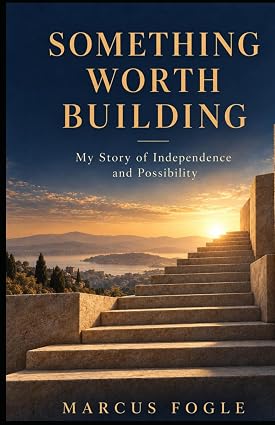
SAN LORENZO, Calif. — October 12, 2026 — Author and entrepreneur Marcus Fogle announces the completion of his Something Worth Building trilogy with Part Three: Understanding of Only a World I Know & Knew, joining Something Worth Building: My Story of Independence and Possibility and Part Two: The Roads I Have Traveled — My Journey.
The trilogy tells Fogle’s story in three parts: Part One, a memoir about perseverance, independence, and building a business through life’s challenges; Part Two, the step-by-step journey from a 2002 vocational classroom through the journeyman mechanic years to founding his own business; and now Part Three, which goes back to where it all started — the childhood-to-adulthood years.
Part Three: Understanding of Only a World I Know & Knew covers Fogle’s early life — from Florida to California, through school years marked by loss and hard lessons, leaving home at seventeen, becoming a father, seven years behind the wall, and the college comeback that made him a mechanic. Told straight, in his own words, it closes with his personal sign-off: “I am a learner. I approve this message.”
Established in 2014, Marcus JP Family Renew & Reuse Solutions is Fogle’s eco-friendly business focused on recycling, renewing, and reusing materials. His experience forms the foundation of a story about adapting to change, learning through experience, and creating something sustainable through determination and honest work.
Rather than presenting a story of perfection, Something Worth Building explores the value of starting over, making practical decisions, and developing independence one step at a time. The trilogy is intended for readers who have faced setbacks, reconsidered their direction, or wanted to build something of their own.
Parts One and Two are available in paperback for $14.99 and Kindle eBook for $4.99 through Amazon. Manuscript editions of all three books are available for $30 each through the author’s website. Part Three’s Amazon editions are in production.
Fogle hopes his story will encourage readers to keep moving forward, make the most of available opportunities, and recognize that meaningful progress often comes from persistence and a willingness to learn.
About Marcus Fogle
Marcus Fogle is the founder of Marcus JP Family Renew & Reuse Solutions, an eco-friendly recycling and reuse business serving San Lorenzo, California. His work and writing reflect his commitment to practical problem-solving, resourcefulness, and independence.
Book Information
Title: Something Worth Building: My Story of Independence and Possibility
Author: Marcus Fogle
ISBN: 979-8160477992
Amazon: https://www.amazon.com/dp/B0HMFDKDLG
Title: Something Worth Building, Part Two: The Roads I Have Traveled — My Journey
Author: Marcus Fogle
Amazon: https://www.amazon.com/dp/B0HMLKP5QJ
Title: Something Worth Building, Part Three: Understanding of Only a World I Know & Knew
Author: Marcus Fogle
Direct manuscript edition: https://buy.stripe.com/dRm28q5iYfnu7M75Po1ck06
Website: https://www.marcusjpfamily.org
Media Contact
Marcus Fogle
Phone: (925) 322-1267
Website: https://www.marcusjpfamily.org
About Author
Disclaimer: The views, suggestions, and opinions expressed here are the sole responsibility of the experts. No Digi Observer journalist was involved in the writing and production of this article.
-
Aneesh Sharma believes that good decision-making requires looking beyond the outcome and understanding the information, reasoning, and circumstances behind a choice.
The Difference Between a Decision and Its Result
New Hampshire, USA, Oct 12, 2026, ZEX PR WIRE — A good outcome can make a decision look better than it actually was. A bad outcome can make a reasonable decision look worse.
Aneesh Sharma has become interested in that distinction through his experiences in analytics, education, and football. For Sharma, the more useful question is not simply whether something worked. It is whether the decision made sense based on the information available at the time.
That way of thinking is useful in football, but it also applies to many areas of life. People make decisions with incomplete information every day, and the result does not always provide a complete picture of whether the original choice was sound.
Why Outcomes Can Be Misleading
People naturally judge decisions by what happens afterward. When something works, there is a tendency to assume the decision behind it was good. When something fails, people often look for someone or something to blame.
Sharma believes that approach can make it harder to learn.
A single outcome does not always reveal the quality of the process that produced it. Sometimes a thoughtful decision leads to an unfavorable result. Other times, a decision made without much consideration happens to work out.
The distinction matters because people can learn the wrong lesson from either situation. A failed decision might cause someone to abandon an approach that was reasonable, while a successful decision might encourage them to repeat something that only happened to work under a particular set of circumstances.
Looking at What Was Known at the Time
For Sharma, better decision-making starts with understanding the information that was available when the choice was made.
That means asking questions about the circumstances rather than judging everything from the final result. What information did the person have? What alternatives were available? What factors were most important? What could reasonably have been expected at the time?
This way of thinking is one reason Sharma has been interested in analytics. Data can help people identify patterns and understand possibilities, but it does not remove uncertainty. Good analysis still requires judgment and an understanding of the situation surrounding the numbers.
His studies in Quantitative Social Science at Dartmouth have given him another way to explore that relationship between information, people, and decision-making.
What Analytics Can and Cannot Do
Sharma’s experience with analytics in football has shown him that numbers are most useful when they are placed in context.
Analytics can provide information that might otherwise be difficult to see. It can help people compare possibilities, identify patterns, and think more carefully about their options. At the same time, data does not make every decision automatic.
There are always circumstances that cannot be perfectly captured by a spreadsheet or model. People still have to interpret information, communicate it, and decide how much weight it should receive.
That balance between information and judgment is useful far beyond sports. Whether someone is making a professional decision, working with a team, or trying to solve a problem, having more information does not necessarily make the decision easier. Knowing how to use that information is just as important.
The Importance of Leadership
Sharma also sees leadership as an important part of making good decisions. He has said, “Leadership qualities are consistently among the most important traits for a coach to have. It’s the starting point for the job.”
For him, leadership is not simply about being the person who makes the final decision. It also involves creating an environment where people can communicate clearly, consider different perspectives, and learn from mistakes.
That becomes especially important when the result is not what people expected. A strong team should be able to look back at a decision without automatically assuming that an unfavorable outcome means the process was wrong.
The same applies to success. A positive result can be worth celebrating while still leaving room to ask whether there was anything that could have been done differently.
What Different Experiences Can Teach You
Sharma’s experiences across different areas of football have also shaped the way he thinks about professional development. He has done analytics work with Dartmouth and Navy, handled recruiting for Georgia, and worked in training camp operations with the Los Angeles Rams.
Those experiences have exposed him to different responsibilities and different ways of working within a larger organization. They have also shown him that professional growth does not always happen through one clearly defined path.
Each experience can provide something different. One may develop analytical skills, another may improve communication, and another may provide a better understanding of how an organization operates.
For someone early in a career, that variety can be valuable. It allows a person to discover which types of work interest them while building skills that can carry into future opportunities.
Learning Beyond the Classroom
While his academic work has given Sharma a foundation in quantitative and social science concepts, his experiences outside the classroom have provided another kind of education.
Working with different organizations and people can teach lessons that are difficult to recreate through coursework alone. It requires adapting to different environments, communicating with people who have different responsibilities, and understanding how ideas are applied in real situations.
That combination of academic study and practical experience has become an important part of Sharma’s development.
Keeping Perspective Outside of Work
Football remains an important interest for Sharma, but it is not the only thing that occupies his time.
He is a film enthusiast and enjoys 35mm film photography, which gives him a creative outlet that is very different from the analytical work he has pursued academically and professionally. He also enjoys hiking, including exploring portions of the Appalachian Trail around Dartmouth’s campus.
Those interests offer a different way of paying attention to the world. Photography requires patience and observation, while hiking creates time to slow down and experience a place without the constant pressure to produce an immediate result.
Sharma has also spent time giving back to his community. During spring 2026, he volunteered 50 hours with NY Common Pantry, a food pantry in East Harlem.
A Broader Approach to Decision-Making
For Sharma, the larger lesson is that decisions should not be judged solely by what happens afterward.
Results matter, but they are only one part of the picture. Understanding the reasoning behind a choice, the information available at the time, and the circumstances surrounding it can provide a much clearer way to evaluate what happened.
That approach has influenced how Sharma thinks about analytics, education, leadership, and professional development. It also reflects a broader idea that applies well beyond football: making a good decision does not always guarantee a good result, and a good result does not always prove that the decision was good.
About Aneesh Sharma
Aneesh Sharma is a Dartmouth College Class of 2027 Quantitative Social Science major based in Hanover, New Hampshire. His experience includes analytics work with Dartmouth and Navy, recruiting work with Georgia, and training camp operations with the Los Angeles Rams. Outside of his academic and professional interests, Sharma enjoys 35mm film photography, film, hiking, and exploring the Appalachian Trail around Dartmouth’s campus. He also volunteered 50 hours with NY Common Pantry in East Harlem during spring 2026.
About Author
Disclaimer: The views, suggestions, and opinions expressed here are the sole responsibility of the experts. No Digi Observer journalist was involved in the writing and production of this article.
-
Triple board-certified facial plastic surgeon Mansher Singh explains how natural, undetectable results separate lasting rejuvenation from obvious surgery in Manhattan, New York.
The Patient Who Looked Refreshed, Not Operated On
New York, USA, Oct 12, 2026, ZEX PR WIRE — A woman in her late fifties walked into the Manhattan practice nervous about her upcoming college reunion. She wanted to look like herself again, not like someone who had obvious work done. After a deep plane facelift and upper blepharoplasty, she returned for her six-month follow-up with a different concern: her friends kept asking about her skincare routine, not her surgeon. That, according to Mansher Singh, is exactly the point.
“The best facelift is the one no one can identify as surgery,” Singh says. “My goal is to restore harmony, not change identity.”
Singh performs over 100 facelifts annually at his Fifth Avenue practice, specializing in deep plane facelift, necklift, upper and lower blepharoplasty, and facial fat transfer. He is among the select few surgeons in the United States to hold triple board certification from the American Board of Surgery, American Board of Plastic Surgery, and American Board of Facial Plastic & Reconstructive Surgery.
The Problem With Surgical-Looking Results
Many patients fear looking overdone, pulled, or permanently surprised after facial rejuvenation surgery. Singh sees this hesitation daily in consultations. His approach focuses on repositioning deeper facial structures rather than simply pulling skin tight, a technique that produces softer, longer-lasting results with minimal scarring.
“I define success in my practice by the long-term happiness and trust of my patients,” Singh explains. “In facial rejuvenation surgery especially, I believe that the best outcomes are often the ones that do not look surgical.”
Singh’s practice has earned over 1,500 five-star reviews and attracts patients from around the world. In 2022, he was named a top-performing doctor and second most reviewed plastic surgeon on RealSelf. He has also received recognition from Castle Connolly, Super Doctors, Marquis Who’s Who, and the Long Island Beauty Award for Best Facelift Surgeon.
Trust Over Transactions
Facial surgery is deeply personal, and Singh structures his practice around accessibility and relationship-building. He personally checks on each patient throughout recovery, a white-glove approach uncommon in high-volume practices.
“Success also means building genuine relationships with patients throughout their journey,” Singh says. “Facial surgery is deeply personal, and trust is everything. I take pride in being highly accessible to my patients before and after surgery.”
Singh’s career path included surgical training at elite institutions associated with Harvard Medical School and Johns Hopkins. He opened his Manhattan practice in 2021 immediately after completing his fellowships and rapidly built one of the busiest facial rejuvenation practices in New York.
Discipline Learned Early, Applied Daily
Born and raised in India, Singh is the 11th doctor in his family. He attended an all-boys boarding school run by monks from age 11 through grade 12, waking at 5 a.m. daily for meditation and learning principles of karma and spirituality. Both parents are surgeons.
“My parents have been the single biggest influence in my life and career,” Singh says. “They instilled in me the values of discipline, humility, resilience, and hard work from a very young age.”
That mindset carried through medical school at the All India Institute of Medical Sciences, a post-doctoral research fellowship at Yale University School of Medicine, general surgery residency at Harvard Medical School, and plastic surgery fellowship at Johns Hopkins School of Medicine.
“Coming from a different country and adapting to an entirely new system taught me very early on that life is not always going to be fair or easy, and spending energy blaming circumstances rarely moves you forward,” Singh says.
Copy This Framework: Five Phases to Natural Facial Rejuvenation
Singh’s approach to patient care follows a consistent framework designed to produce natural results that age well over time.
Phase 1: Honest Assessment Begin with a thorough consultation that addresses realistic expectations, facial anatomy, and long-term goals. Avoid surgeons who promise perfection or rush the decision-making process.
Phase 2: Anatomy-Based Planning Ensure the surgeon tailors the procedure to your unique facial structure, age, and aesthetic goals. One-size-fits-all techniques often produce cookie-cutter results.
Phase 3: Deep Structure Focus Look for surgeons who work with deeper facial layers, not just skin. Deep plane techniques reposition underlying muscles and fat for longer-lasting, more natural outcomes.
Phase 4: Accessible Recovery Support Choose a practice where the surgeon remains accessible throughout recovery. Personal check-ins and responsive communication reduce anxiety and improve healing.
Phase 5: Long-Term Follow-Up Prioritize surgeons who measure success in years, not weeks. Natural results should hold up over time, not fade or require frequent revisions.
Quick Wins: What to Look for in Your First Consultation
-
Surgeon reviews before-and-after photos showing patients with similar facial structures and aging patterns to yours.
-
Detailed discussion of risks, recovery timeline, and what happens if complications arise.
-
Clear explanation of the specific technique recommended for your anatomy, not a generic facelift pitch.
-
Surgeon personally performs the procedure and manages post-operative care, not a rotating team.
-
Office environment feels calm, professional, and unhurried.
Red Flags: Warning Signs to Avoid
-
Promises of zero scarring, zero downtime, or miracle transformations.
-
Pressure to book surgery during the first consultation or add on unnecessary procedures.
-
Lack of triple board certification or verifiable credentials from recognized medical boards.
-
Generic treatment plans that do not account for your individual facial structure.
-
Limited access to the surgeon after the procedure or reliance on staff for post-operative care.
-
Before-and-after photos that all look the same or appear heavily filtered.
Results That Outlast the Recovery
Singh measures success by how patients look and feel years after surgery, not just in the immediate post-operative period.
“A patient looking refreshed and natural several years after surgery is far more meaningful to me than a result that only looks impressive immediately after the procedure,” Singh says.
He emphasizes continual learning and critical self-assessment as essential to improving outcomes over time.
“Humility is another essential quality,” Singh says. “Plastic surgery is a field where learning never stops. I think it is very important to critically analyze your own outcomes, continue refining your techniques, and remain open to growth throughout your career.”
Apply This Framework to Your Own Journey This Week
If you are considering facial rejuvenation surgery, start with an honest self-assessment of your goals and expectations. Research surgeons who prioritize natural results and long-term patient relationships. Schedule consultations with triple board-certified specialists who explain their techniques in detail and remain accessible throughout recovery. Ask about their approach to deep plane facelifts, review their before-and-after galleries for patients similar to you, and pay attention to how they define success. The best outcomes are built on trust, precision, and a commitment to results that look like you, only refreshed.
About Mansher Singh
Mansher Singh is a triple board-certified facial plastic and reconstructive surgeon based in Manhattan, New York. He holds certifications from the American Board of Surgery, American Board of Plastic Surgery, and American Board of Facial Plastic & Reconstructive Surgery. Singh completed surgical training at institutions associated with Harvard Medical School and Johns Hopkins and opened his Fifth Avenue practice in 2021. He specializes in deep plane facelift, necklift, blepharoplasty, facial fat transfer, and CO₂ laser resurfacing, performing over 100 facelifts annually. He has earned recognition from Castle Connolly, Super Doctors, Marquis Who’s Who, and RealSelf.
About Author
Disclaimer: The views, suggestions, and opinions expressed here are the sole responsibility of the experts. No Digi Observer journalist was involved in the writing and production of this article.
Marcus Fogle Completes the Something Worth Building Trilogy with Part Three: Understanding of Only a World I Know & Knew
Clawbot.ai Launches Independent Craft Apps Guide Network With Seven Resource Sites
Mansher Singh: Why the Best Facelift Is the One No One Can Identify
Benzinga Money Article Discusses How to Become Part of the 12% of Retirees Who Have Achieved the Recommended $550,000 Minimum Retirement Savings Threshold
Apu Apustaja Conquers New York with Lively Street Ads, Including Times Square Billboard
Bay Smokes Maintains Quality Amid Legislative Changes in the Hemp Industry


-
Press Release2 days ago
Malmö Project Outlines Business Proposal Development and Project Funds Management Activities in the Netherlands
-
Press Release1 week ago
EKOUAER CELEBRATES 11TH ANNIVERSARY WITH BRAND FRIEND VANESSA HUDGENS: UNVEILING “MY COMFORT ERA” THIS OCTOBER
-
Press Release3 days ago
Evolution Metals & Technologies Corp. Raises Fiscal 2026 Revenue Guidance 62% at Midpoint to $10–$11 Million and Reaffirms $400–$460 Million Fiscal 2027 Outlook
-
Press Release5 days ago
XM Receives “Global Customer Experience Leader Award 2026” at the TrustFinance Performance Awards
-
Press Release5 days ago
Reducing Synchronization Issues When Using Accountant’s Copy
-
Press Release1 week ago
Titan FX Launches Second “Dream Beyond Borders 2.0” Brand Commercial Featuring Keisuke Honda
-
Press Release1 week ago
PowerRoute Electric & Plumbing Expands Water Heater Installation Support Across Los Angeles County
-
Press Release2 days ago
ChannelLetter.com Opens Factory-Direct Wholesale Channel Letters to Sign Shops With No Minimum Order