
Press Release
World-Record Kanaani Cats and Their Custodian Nominated for Brooklyn Borough Hall Certificate of Proclamation in Connection with American National Cat Day

From a Holocaust survivor’s vision in Jerusalem to a Brooklyn-led revival, international recognition in Finland and Ukraine, two world-record achievements, and a new children’s book series, the Kanaani is becoming a source of pride for America and Ukraine — and a symbol of international cooperation through the emerging Kanaani Diplomacy Doctrine
BROOKLYN, N.Y. — World-record Kanaani cats and their Brooklyn-based custodian, Rabbi and Animal Chaplain Mikhail Salita, have been nominated for a Brooklyn Borough Hall Certificate of Proclamation in connection with American National Cat Day, October 29.

The nomination has been received by the Office of Brooklyn Borough President Antonio Reynoso and is currently under review.
The nomination comes at an extraordinary moment for the Kanaani, the exceptionally rare Israeli cat breed whose modern story began in Jerusalem and whose revival is now being led from Brooklyn.
In little more than a year, the breed’s American revival has grown from an effort to preserve a tiny surviving population into an international story connecting Israel, the United States, Ukraine and Finland.
The Kanaani has returned to the international show stage, achieved world-record recognition, inspired a new concept of international animal-preservation diplomacy and is now preparing to enter children’s literature.
At the center of that growing story is Brooklyn.
FROM JERUSALEM TO BROOKLYN
The modern Kanaani was developed in Jerusalem in the 1990s by Doris Pollatschek, a German-born Jewish artist who made Israel her home.
Its name reaches much further into history.
Canaan belongs to the ancient biblical geography and historical memory of the land that would become the Land of Israel. The modern Kanaani is not an ancient biblical breed, but its Jerusalem birthplace, its name and its distinctive natural appearance give the breed a remarkable connection to the landscape and heritage of the Holy Land.
Over time, however, the Kanaani became exceptionally rare.
As its population diminished, preserving its remaining bloodlines became increasingly important.
Eventually, that mission crossed the Atlantic.
Today, Brooklyn has become the home of the American Kanaani revival.
Through the American Kanaani Revival Program, Salita is working to preserve surviving bloodlines, rebuild genetic diversity, expand the breed’s population and restore the Kanaani to international visibility.
For Brooklyn — a borough shaped by generations of people who carried their heritage across oceans and gave it new life in America — the story has particular resonance.
The Kanaani came from Jerusalem needing a future.
Brooklyn became a place where that future could be built.
A BREED BORN FROM A SURVIVOR’S VISION
Behind the Kanaani is also an extraordinary human story.
Doris Pollatschek was a Holocaust survivor.
Born into a Jewish family in Germany, she escaped Nazi persecution as a child with her family, while members of her extended family were murdered during the Holocaust.
Pollatschek went on to choose a life of art and creation and eventually made her home in Israel.
Decades later, in Jerusalem, her fascination with the distinctive feline appearance of the region helped inspire the development of the Kanaani.
There is a powerful continuity in that history.
A woman whose childhood was marked by persecution and survival went on to create something new in Jerusalem.
Decades after Pollatschek’s death, the exceptionally rare breed she created faced an uncertain future of its own.
Today, its revival is being led from Brooklyn.
For Salita, preserving the Kanaani therefore means more than preserving a rare cat breed. It also means preserving part of the legacy of the woman who created it.
“Doris Pollatschek survived one of the darkest chapters of human history and chose a life of creation,” Salita said. “The Kanaani is part of what she left to the world. We cannot allow that legacy simply to disappear.”
From a Holocaust survivor’s vision in Jerusalem to a revival centered in Brooklyn, the Kanaani story has become one of memory, preservation and continuity — and of choosing creation over disappearance.
FROM BROOKLYN TO FINLAND — AND INTO CAT HISTORY
In August 2026, the revival reached an international milestone.
Two Kanaani cats from New York — Haifa, born in Israel, and her American-born daughter Haya — traveled with Salita from the United States to the World Cat Federation Jubilee Show in Vantaa, Finland, on August 8–9.
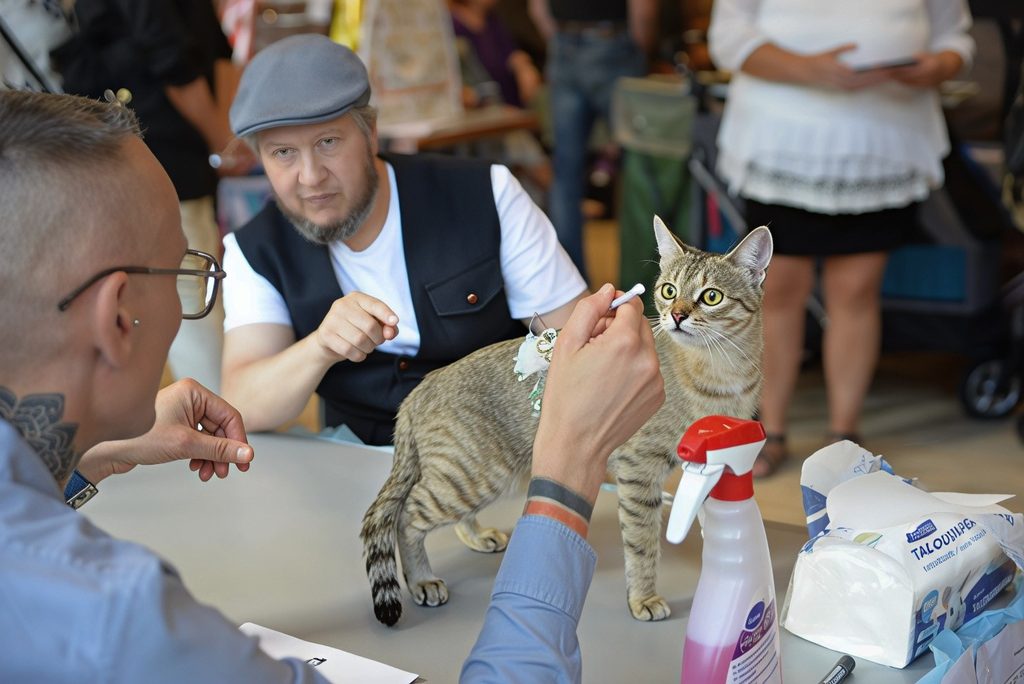
Their appearance marked a historic return of the Kanaani to the international show stage.
Haya earned two CACP certificates, a Best in Show nomination, and placed fifth in a WCF kitten ring. Haifa received an Excellent evaluation and CAC championship certificate.
Following the show, Haifa and Haya simultaneously reached No. 1 positions among Kanaani cats in their respective WCF Best Cat categories — Haifa among adults and Haya among kittens and juniors.
An Israeli-born mother and her American-born daughter had carried their exceptionally rare breed from Brooklyn back onto the international stage.
And that achievement soon became part of a world-record story.
TWO WORLD-RECORD MILESTONES
The modern Kanaani revival is now associated with two distinct world-record milestones.
The first concerns the extraordinary rarity of the breed itself, recognized internationally as the surviving Kanaani population reached exceptionally low numbers.
The second followed the historic Finland appearance, when Haifa and Haya simultaneously reached World No. 1 Kanaani positions in different WCF Best Cat age categories following a single show.
That achievement involving the cats and their custodian received recognition from Record Holders Republic, while Ukraine separately verified a national record connected with the historic WCF result.
Together, the milestones transformed what had begun as a rescue and preservation effort into an international story.
The symbolism is striking:
Israel gave the Kanaani its birthplace and identity.
America gave its modern revival a home.
Ukraine became an important partner in its registration, recognition and preservation story.
Finland gave the breed an international stage on which to make history.
The Kanaani remains proudly Israeli in origin.
At the same time, its revival is becoming a source of pride for America and Ukraine — two countries now deeply connected to the effort to secure its future.
KANAANI DIPLOMACY: PRESERVATION INSTEAD OF POSSESSION
Out of that international cooperation has emerged another idea.
Salita calls it the Kanaani Diplomacy Doctrine.
Kanaani Diplomacy proposes that preservation of an exceptionally rare animal breed can become a form of cultural and non-state diplomacy — bringing people and countries together around a shared responsibility to protect something in danger of disappearing.
Its philosophy turns conventional ideas of animal diplomacy in a different direction.
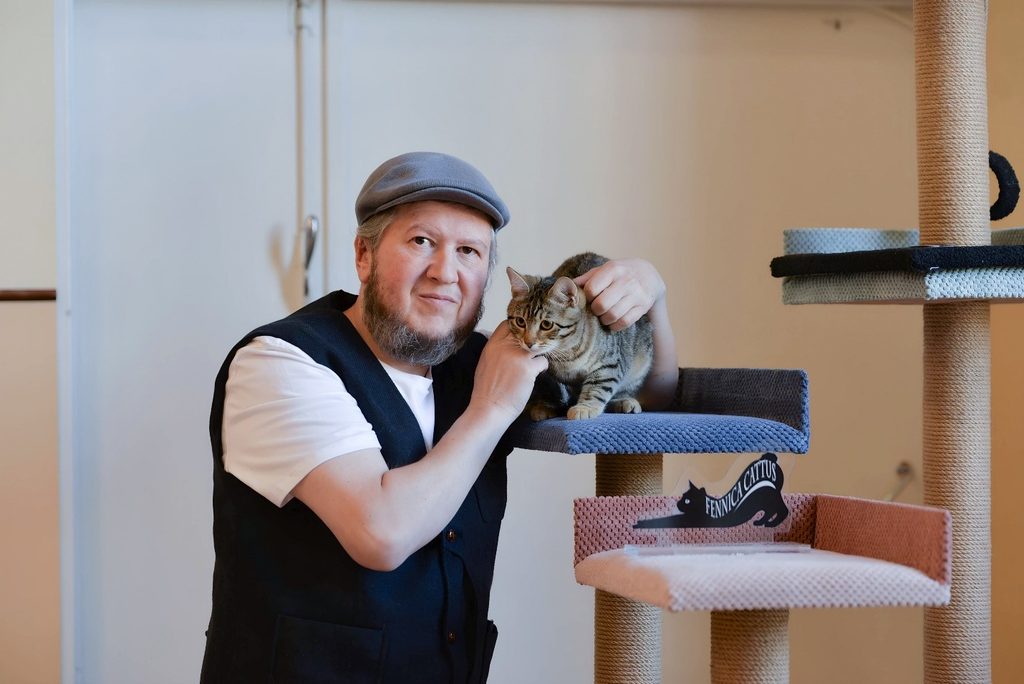
The objective is not to keep the Kanaani rare.
The objective is to make its revival so successful that one day the breed will no longer qualify as one of the world’s rarest cats.
“The Kanaani was born in Israel, and Israel will always remain its country of origin,” Salita said. “But its future can bring nations together. America can give the revival a home. Ukraine can contribute to its preservation and international recognition. Finland gave the Kanaani a stage on which to return to the world. Other countries can become partners in its future.”
The principle at the heart of the doctrine is simple:
Preservation instead of possession.
Rather than guarding rarity as a symbol of exclusivity, Kanaani Diplomacy seeks to distribute the responsibility for survival.
FROM WORLD RECORDS TO CHILDREN’S LITERATURE
Now the Kanaani story is beginning another chapter.
Following the breed’s historic international appearance in Finland and its world-record milestones, Salita is preparing to introduce the story and spirit of the Kanaani to a new generation through children’s literature.
Writing under the literary name Rav Papa Kanaani, Salita is developing a children’s book series inspired by the relationship between humans and cats, biblical imagination, Jerusalem and the remarkable journey that ultimately leads to the modern Kanaani.
The project has already generated interest among literary agents with experience and connections involving major international publishing houses, while the manuscript is being prepared for submission.
The planned series begins with:
Adam and the First Cat
The story travels imaginatively back to the earliest relationship between humans and wild cats.
It does not claim that the modern Kanaani existed in biblical times.
Instead, it begins with a simple question:
How might the friendship between a human being and a cat have begun?
Science can explain how wildcats gradually moved closer to human settlements. The story imagines what one of those first encounters might have felt like — a wild cat approaching a human world and taking a first step across an open threshold.
From that beginning, the planned series will move through stories of humans and cats toward Jerusalem and, eventually, the modern Kanaani.
“First we brought the Kanaani back to the international stage,” Salita said. “Then the cats became world-record holders. Now I want children to discover the deeper story — not only of one rare breed, but of the extraordinary relationship between people and cats that stretches across history.”
The literary name Rav Papa Kanaani reflects two parts of Salita’s life: Rav, his role as a rabbi, and Papa Kanaani, his role as a custodian helping raise new generations of a breed whose future depends on human care.
The preservation mission thus moves beyond pedigrees, exhibitions and records.
It enters storytelling.
From Adam and the first cat, to Jerusalem and the creation of the Kanaani, to Brooklyn and its modern revival, the story becomes one of inheritance and responsibility across generations.
ON AMERICAN NATIONAL CAT DAY, THE STORY COMES HOME
After Jerusalem, Ukraine and Finland, the newest chapter brings the story back to the borough from which the American revival is being led.
Brooklyn.
The nomination of the Kanaani cats and their custodian for Brooklyn Borough Hall recognition in connection with American National Cat Day brings local attention to a preservation effort whose reach has become international.
For Salita, recognition from his home borough carries a particular meaning.
“I am proud of the world records, but I am especially proud that this is happening in Brooklyn,” Salita said. “Brooklyn is a place where people from every part of the world bring their heritage, protect it and allow it to become part of the American story. The Kanaani came here from Israel needing a future. Brooklyn became the home of its American revival.”
American National Cat Day provides a fitting moment to tell that story.
It is an opportunity not only to celebrate cats, but to consider the responsibility humans assume when an extraordinary domestic animal population becomes so small that its future can no longer be taken for granted.
For New York, it is also an opportunity to celebrate something remarkable happening in its own backyard:
One of the world’s rarest cat breeds is building its future in Brooklyn.
THE GREATEST RECORD HAS NOT YET BEEN SET
Despite the exhibitions, rankings and record recognition, Salita says the ultimate objective remains remarkably simple.
Survival.
“The greatest record will not be proving that the Kanaani is one of the rarest cats in the world,” Salita said. “The greatest achievement will be the day when we can no longer make that claim — because there are enough Kanaani in America, Israel, Ukraine and other countries to know that the breed has a future.”
That future is beginning to take shape.
A breed created by a Holocaust survivor in Jerusalem is being given another chance in Brooklyn.
An Israeli-born mother and her American-born daughter made history in Finland.
Ukraine became part of their international record story.
America became home to the revival.
A new doctrine is transforming preservation into a form of international friendship.
And a new series of children’s books is preparing to carry the story to another generation.
Now, as American National Cat Day approaches, Brooklyn is beginning to recognize a preservation effort that has grown from a local mission into an international movement.
Born in Jerusalem.
Born from a survivor’s vision.
Revived in America.
A source of pride for America and Ukraine.
Making history in Finland.
ONE RARE BREED. FOUR NATIONS. ONE SHARED FUTURE.
THAT IS KANAANI DIPLOMACY.
About the American Kanaani Revival Program
The American Kanaani Revival Program is a Brooklyn-based preservation initiative dedicated to rebuilding the population and genetic diversity of the rare Israeli Kanaani cat breed, protecting surviving bloodlines, restoring the breed’s international presence and developing partnerships intended to secure its long-term future.
About Rabbi Mikhail Salita / Rav Papa Kanaani
Rabbi Mikhail Salita is a Brooklyn-based rabbi, animal chaplain and custodian of the Kanaani breed in the United States. He leads the American Kanaani revival effort and works internationally to support the breed’s preservation and recognition.
Writing under the literary name Rav Papa Kanaani, he is also developing a children’s book series beginning with Adam and the First Cat. Salita is the originator of the Kanaani Diplomacy Doctrine, which proposes rare-breed preservation as a form of cultural and non-state international cooperation.
MEDIA CONTACT
Rabbi Mikhail Salita
American Kanaani Revival Program
Brooklyn, New York
About Author

Disclaimer: The views, suggestions, and opinions expressed here are the sole responsibility of the experts. No Digi Observer journalist was involved in the writing and production of this article.

Press Release
Injective Partners With the University of Tokyo, Japan’s Top University, to Advance Blockchain Innovation
New York, New York, November 16th, 2026, FinanceWire
The collaboration connects Injective’s financial blockchain infrastructure with the University of Tokyo’s expertise in blockchain research and education, to accelerate education, research and technical talent development with the university’s Endowed Chair.
Injective Foundation today announced an agreement with the University of Tokyo, Japan’s top-ranked university, to support blockchain education and explore collaboration in onchain finance, research, and talent development. Signed through the university’s Graduate School of Engineering, the Memorandum of Understanding establishes a framework for collaboration with its Endowed Chair for Blockchain Innovation.
Founded in 1877 as Japan’s first national university, the University of Tokyo ranks first in Japan and 27th globally in the Times Higher Education World University Rankings 2027. The collaboration connects Injective’s experience building financial blockchain infrastructure with an academic program dedicated to blockchain research, practical implementation and the development of future engineers and entrepreneurs.
Injective and the Endowed Chair are planning a collaborative lecture examining blockchain infrastructure, financial market design and onchain applications. The session will introduce Injective’s Layer 1 architecture and its applications across trading, real-world asset tokenization and settlement, with a hands-on component for participants interested in blockchain development.
The planned session will connect the technical design of blockchain systems with the financial activity they support. Participants will examine how infrastructure can enable assets to be represented, traded and settled onchain, alongside the engineering and market-design considerations involved in developing these applications.
“Financial infrastructure advances when talented people have the tools and knowledge to build something better,” said Eric Chen, CEO of Injective Labs. “Working with Japan’s top university brings Injective’s expertise in onchain markets into one of the world’s leading academic environments. We want future builders to understand how this infrastructure works and gain practical experience developing the financial applications it makes possible.”
Established in November 2018, the Endowed Chair for Blockchain Innovation combines research and development, practical implementation and talent development. Its work draws on computer science, cryptography and economics to examine the capabilities and limitations of blockchain systems, including privacy, scalability and the reliability of data brought onchain.
The collaboration brings an industry perspective to that academic work. Injective’s architecture will provide a concrete system for participants to study and discuss, connecting blockchain theory with the design of infrastructure for financial applications.
Beyond the planned lecture, the two sides may explore research opportunities related to real-world asset tokenization and onchain financial structures relevant to Japan. Other activities under consideration include workshops, public events, a future hackathon and programs bringing together researchers, developers and financial practitioners.
“Understanding onchain finance requires us to examine both the technology and the financial systems it interacts with,” said Kyohei Shibano, Project Researcher at the University of Tokyo. “Our collaboration with Injective offers an opportunity to bring those perspectives together. Through education and practical discussion, we hope to deepen participants’ understanding of blockchain applications and identify important questions for future research.”
For Injective, supporting the Endowed Chair is an investment in the knowledge and skills needed to develop onchain financial markets. The planned lecture provides an initial focus for the collaboration, with further educational activities and potential research to be explored under the agreement.
About Injective
Injective is the first blockchain purpose-built for finance, enabling users, institutions, and AI agents to trade, tokenize, and transact at scale. Proudly made in America, Injective provides foundational blockchain infrastructure for global markets, with embedded financial primitives spanning stablecoins, real-world assets, payments, and programmable perpetuals through a unified onchain engine. Injective is used by Fortune 500 companies, banks, fintechs, and governments to power an open economy where any asset can be accessed anytime, from anywhere. Builders can deploy across multiple virtual machines like WASM and EVM, connect to native financial modules, and launch markets with deep liquidity from day one.
About the University of Tokyo
The University of Tokyo was established in 1877 as Japan’s first national university. UTokyo offers undergraduate and graduate education across nearly all academic disciplines and conducts research across the arts and sciences. Its academic community works across three core campuses in Hongo, Komaba, and Kashiwa.
Learn more at www.u-tokyo.ac.jp/en.
Media Contact
C-Suite Media Strategies
Kristopher Conesa
kconesa@csuitepr.com
305-975-5934
Contact
Sarah Cohen
sarah@sjc-pr.com
About Author
Disclaimer: The views, suggestions, and opinions expressed here are the sole responsibility of the experts. No Digi Observer journalist was involved in the writing and production of this article.
New York, United States, November 16th, 2026, FinanceWire
Banking and insurance revenue more than doubled; net income rose 29% and total assets reached $16.6 billion as the company continued expanding its customer base and international presence
Freedom Holding Corp. (NASDAQ: FRHC), an international financial services and technology group, today announced its unaudited consolidated financial results for the second quarter of fiscal year 2027, covering the three months ended September 30, 2026.
Revenue reached $910.1 million for the quarter, compared with $503.6 million a year earlier, an increase of 81%. Growth was driven largely by strong performances in banking and insurance. Net income increased 29% to $46.1 million from $35.7 million, while diluted earnings per share rose to $0.76 from $0.58.
For the first half of fiscal year 2027, Freedom reported revenue of $1.64 billion, up 60% from a year earlier, while net income reached $77.7 million. Freedom’s total assets reached $16.61 billion as of September 30, 2026, a 26% increase from $13.16 billion at the end of March.
“Our second-quarter results reflect the strength of our diversified business model and the momentum we are building across financial services and technology,” said Timur Turlov, Chief Executive Officer of Freedom Holding Corp. “With quarterly revenue increasing 81%, driven by particularly strong growth in banking and insurance, we continue to see the benefits of expanding our customer reach and connecting more services within the Freedom ecosystem. Our entry into Türkiye’s banking market and strategic acquisitions in education and technology mark important steps in our long-term strategy to build an integrated platform that serves customers across multiple markets.”
Business Segment Results
Banking and insurance accounted for much of Freedom’s revenue growth, with both segments more than doubling revenue compared with a year earlier. Banking revenue nearly tripled to $298.1 million, up 182% from $105.7 million a year earlier. The increase was driven in part by higher interest income, supported by an expanding loan portfolio, growth in securities investments, and gains from securities trading and foreign exchange transactions.
Revenue in the insurance segment rose 133% to $299.2 million, putting insurance slightly ahead of banking for the quarter. Much of the growth came from the pension annuityinsurance business, which recorded an increase in new policies and related premium inflows. Revenue in the Other segment rose 161% to $90.5 million, supported by telecommunications, online retail and other digital services. The brokerage segment recorded a 5% decline in revenue to $222.2 million from $234.9 million a year earlier, mainly due to weaker results from securities trading and foreign exchange operations.
Across the group, interest income increased 53% to $323.9 million, while net insurance revenue rose 148% to $254.8 million. Fee and commission income increased 12% to $148.5 million.
Expansion of the Customer Base and Digital Ecosystem
Freedom continued to expand its customer base, particularly across its banking and digital services. The banking segment reported 5.934 million customers at the end of September, an increase of 908,000 since the start of the fiscal year in April. The number of brokerage customers rose from 858,000 to 907,000 over the same six-month period. The Other segment, including technology and lifestyle services, had 1.553 million customers at the end of September, compared with 1.105 million at the end of March.
Freedom is also developing an integrated ecosystem that allows customers to access multiple financial and digital services through the group’s platforms. Banking customers can use investment, insurance, payment and other products within the same ecosystem. In Kazakhstan, Freedom has been developing this model through its SuperApp, which combines financial services and everyday transactions.
Acquisitions in Banking, Education and Technology
Freedom continued to expand its operations through acquisitions during the first half of the fiscal year. On July 31, the group completed the acquisition of a combined 99.3% ownership interest in Freedom Bank TR (Turkish Bank), a licensed Turkish commercial bank that has operated in Türkiye since 1982. The acquisition provides Freedom with an established platform for expanding its digital banking and financial services offerings in the Turkish market. The group’s acquisition activity extended beyond financial services. In September, Freedom acquired a 60% stake in Bilim Group, a major educational technology provider in Kazakhstan and Central Asia.
During the first half of the fiscal year, Freedom also acquired German chess software developer ChessBase GmbH and Estonia-based Wallet Solutions OÜ, a virtual asset service provider. These acquisitions support Freedom’s strategy to expand its international presence, strengthen its digital ecosystem and integrate complementary businesses into its existing operations.
About Freedom Holding Corp.
Freedom Holding Corp. provides financial services in 27 countries, including Kazakhstan, the United States, multiple EU countries, Uzbekistan, and Armenia. The Company’s principal executive office is located in New York City.In Kazakhstan, Freedom is actively developing its financial and digital ecosystem, which includes Freedom Bank, Freedom Broker, the insurance companies Freedom Life and Freedom insurance, as well as a lifestyle segment that features Arbuz.kz, Freedom Ticketon, and Aviata.
Freedom Holding Corp. shares are traded on the U.S. technology exchange NASDAQ, the Kazakhstan Stock Exchange (KASE), and the Astana International Exchange (AIX) under the ticker symbol FRHC. Freedom Holding Corp. is regulated by the U.S. Securities and Exchange Commission (SEC), and its common stock is included in the Russell 1000, Russell Midcap, Russell 3000, and Nasdaq Composite indices.
Contact
Head of Public Relations
Natalia Kharlashina
Freedom Holding Corp.
prglobal@ffin.kz
+77013641454
About Author
Disclaimer: The views, suggestions, and opinions expressed here are the sole responsibility of the experts. No Digi Observer journalist was involved in the writing and production of this article.
Press Release
American Battery Materials and XTC Lithium Limited Extend Letter of Intent for Strategic Partnership on the Carachi Lithium Project to June 30, 2027
Greenwich, Connecticut, USA, November 16th, 2026, FinanceWire
American Battery Materials, Inc. (OTC PINK: BLTH) (“ABM”), a Delaware corporation focused on the exploration and development of critical battery materials, and XTC Lithium Limited (“XTC”), an Australian company, today announced the extension of their non-binding Letter of Intent (LOI). The LOI outlines the principal terms of a proposed partnership to advance the Carachi Lithium Project in Catamarca Province, Argentina.
The Carachi Lithium Project is held by XTC’s wholly owned Argentine subsidiary, XTC Lithium Argentina SAR. It consists of multiple exploration properties located within Argentina’s Lithium Triangle, one of the world’s most significant regions for lithium brine resources. Lithium is a critical input for batteries used in electric vehicles and energy storage systems.
Under the terms of the extended LOI, ABM has the opportunity to earn up to a 50% interest in the Carachi Lithium Project. Once ABM has secured a 10% interest, it will have the right to enter into a formal joint venture agreement with XTC to continue exploration and development of the mining tenements.
“This Letter of Intent is an important step in our strategy to expand our presence in the global lithium market,” said David E. Graber, CEO of American Battery Materials. “Partnering with XTC Lithium gives us access to a promising project in the heart of the Lithium Triangle. XTC has an experienced operating team that is personally invested in the project and has a strong track record of identifying, advancing, and financing lithium assets through to successful outcomes. We look forward to working together to unlock the project’s potential.”
John Featherby, Chairman of XTC Lithium Limited, added, “We are pleased to continue our collaboration with ABM on the Carachi Lithium Project. Their focus on sustainable development and their complementary expertise make them a strong partner as we work to advance the project.”
The proposed transaction remains subject to the negotiation and execution of a definitive agreement, the satisfaction of all closing conditions contained therein, receipt of all necessary statutory, corporate, and regulatory approvals, and the availability of financing. There can be no assurance that a definitive agreement will be signed or that the transaction will be completed on the terms outlined in the LOI or at all.
Both companies view the potential partnership as aligned with the growing global demand for lithium driven by the expansion of electric vehicles and clean energy infrastructure. The parties will continue working toward finalizing definitive documentation and obtaining required approvals.
About American Battery Materials, Inc.
American Battery Materials, Inc., headquartered in Greenwich, Connecticut, is a U.S.-based company focused on the exploration, acquisition, and development of lithium and other battery materials essential to the global energy transition. ABM is committed to responsible practices and creating long-term value through strategic partnerships and project advancement.
About XTC Lithium Limited
XTC Lithium Limited, based in Wollstonecraft, New South Wales, Australia, is an exploration and development company with a focus on lithium resources in Argentina. Through its subsidiary XTC Lithium Argentina SAR, the company is advancing projects in the Lithium Triangle.
Forward-Looking Statements
This press release contains forward-looking statements regarding the potential partnership between ABM and XTC, the development of the Carachi Lithium Project, and related matters. These statements are subject to risks and uncertainties, including the possibility that a definitive agreement is not executed, that required approvals are not obtained, or that other conditions are not satisfied. Actual results may differ materially. Neither company undertakes any obligation to update these statements except as required by applicable law.
Contact
American Battery Materials, Inc.
ir@americanbatterymaterials.com
+1 800-998-7962
About Author
Disclaimer: The views, suggestions, and opinions expressed here are the sole responsibility of the experts. No Digi Observer journalist was involved in the writing and production of this article.
Injective Partners With the University of Tokyo, Japan’s Top University, to Advance Blockchain Innovation
Freedom Holding Corp. Reports 81% Increase in Quarterly Revenue to $910.1 Million
American Battery Materials and XTC Lithium Limited Extend Letter of Intent for Strategic Partnership on the Carachi Lithium Project to June 30, 2027
Benzinga Money Article Discusses How to Become Part of the 12% of Retirees Who Have Achieved the Recommended $550,000 Minimum Retirement Savings Threshold
Apu Apustaja Conquers New York with Lively Street Ads, Including Times Square Billboard
Bay Smokes Maintains Quality Amid Legislative Changes in the Hemp Industry


-
Press Release5 days ago
Midwest Ragdolls Explains Why Playful Kitten Biting Is Often Misunderstood
-
Press Release5 days ago
ARCPE Holding, LLC Highlights the Importance of Understanding Local Real Estate Market Conditions
-
Press Release4 days ago
Red Banyan CEO Evan Nierman Leads High-Stakes Communications Workshop at NASDDDS Annual Conference
-
Press Release1 week ago
Altegio Announces Open Platform Connecting Beauty and Wellness Businesses With AI Agents at Web Summit 2026
-
Press Release3 days ago
IntelliVIX Wins Two CES 2027 Innovation Awards, Showcasing Global Competitiveness in Safety AI
-
Press Release3 days ago
Rifstone Capital LLC Advances Institutional Research Platform with Expanded Global Allocation Framework
-
Press Release5 days ago
Dasher Personalized Running Highlights Personalized Half Marathon Training Plans Focused on Injury Prevention and Sustainable Progress
-
Press Release6 days ago
Rantizo (Nasdaq: RNTZ) Advances U.S. Production of Heavy-Lift Autonomous Drones After $258.8 Million Acquisition, Targets California’s $61.2 Billion Agricultural Market