
Press Release
Zgradevina Highlights the Importance of Thoughtful Renovation for Older Homes and Apartments in Croatia

Croatia (Hrvatska), 24th Sep 2026 — Renovating an older home or apartment often begins with a simple goal: preserving the character that makes a property unique while adapting it to the needs of modern life. Behind that goal, however, is a series of important decisions that can shape a property’s comfort, functionality, natural light, and long-term usability.
Across Croatia, homeowners, property renovators, new apartment buyers, house builders, investors, and Croatians living abroad are increasingly considering how home renovation in Croatia can improve not only the appearance of a property but also the way it performs and supports everyday living. When renovating older homes in Croatia, decisions about layout, windows, doors, natural light, materials, and quality of installation can have a lasting impact.
Eurostat data shows that Croatia has a predominantly owner-occupied housing market, while the country also has a significant share of older residential properties that require ongoing maintenance and modernization. This makes thoughtful property renovation Croatia projects increasingly relevant for property owners seeking to improve existing homes rather than simply replace them.
For many people, home renovation Croatia is no longer only about creating a more attractive interior. An older property may have a desirable location, solid construction, or architectural features worth preserving while still suffering from limited natural light, outdated openings, or layouts that no longer suit modern lifestyles.
This is where careful planning can help connect the existing character of a property with modern building solutions.
One of the most important considerations during a renovation is the selection of doors and windows. These elements influence more than the appearance of a home. They can affect natural light, the relationship between indoor and outdoor spaces, and the overall experience of living in a property.
Depending on the architecture and requirements of a project, aluminium doors and windows can be suitable for contemporary renovations involving large glass surfaces and clean architectural lines. PVC doors and windows may offer a practical option for many different types of residential renovation, while wooden doors and windows can help preserve the visual character of traditional homes.
For property owners looking to combine a natural appearance with contemporary performance, wood-aluminium systems can provide a balance between the warmth of wood and the benefits of modern exterior protection.
In projects where the objective is to create a stronger connection with a terrace, garden, or balcony, sliding glass walls can significantly change how an interior space is experienced. Larger glazed openings can bring more daylight into a home while creating a visual connection between the interior and exterior.
This can be especially valuable when renovating older apartments where natural light is limited or when modernising a home with access to outdoor space. However, these decisions should not be made in isolation. Every older apartment renovation or residential project requires an understanding of the existing property, its structural conditions, its proportions, and the needs of the people who will use it.
Replacing one element without considering the wider property may produce limited results. A carefully planned renovation, on the other hand, can improve several aspects of a home at the same time.
Zgradevina sees this broader perspective as an important part of modern residential renovation. Through its work with construction and building solutions, the company understands that successful projects often require a careful balance between practical requirements, long-term usability, and the existing character of a property.
From the company perspective, a good renovation does not necessarily mean making every older home look completely new. Instead, it begins by identifying what should be preserved and what should be adapted to meet contemporary needs.
For some properties, this may mean retaining traditional architectural features while introducing new systems and materials. For others, particularly apartments that have recently been purchased, the priority may be improving functionality and adapting the available space to the needs of a family or future occupants.
Entrance doors are another important part of this process. In addition to creating a first impression, they play a practical role in the daily use of a property. Their selection should therefore be considered in relation to the overall design and requirements of the building rather than as a separate purchasing decision.
In certain projects, glass fences may also be relevant, particularly where property owners want to maintain open views from balconies, terraces, or outdoor areas. As with other building elements, however, their use should be based on the needs and architectural context of the specific project.
For Croatians living abroad, renovation can involve an additional level of complexity. Many own family homes, apartments, or inherited properties in Croatia and want to modernise them without being physically present throughout the process. In these situations, reliable communication, experienced planning, and confidence in the construction team can be just as important as the materials selected for the project.
The same applies to investors and buyers considering the purchase of older properties. Croatian home renovation requires looking beyond the current appearance of a building. A property that appears outdated today may have significant potential when its layout, access to natural light, openings, and long-term functionality are properly assessed.
For Zgradevina, the goal is to support property owners and renovators in making decisions that make sense for both the building and the people who will use it. Rather than following short-term trends, a thoughtful approach to home improvement Croatia begins with practical questions: How will the space be used? Can natural light be improved? Which materials and systems are appropriate for the existing architecture? And will the changes continue to serve the property well in the years ahead?
When it comes to renovating older homes in Croatia, the answer is often not a complete transformation. Sometimes, the most effective improvements come from carefully selected changes that respect the past while preparing a property for the future.
That is the approach Zgradevina aims to bring to its work: helping homeowners, investors, renovators, and property owners make thoughtful renovation decisions through practical experience, modern building solutions, and an understanding of the long-term needs of residential properties.
About Zgradevina
Zgradevina is a construction and building-solutions company focused on supporting residential property projects in Croatia. The company works with homeowners, property renovators, apartment buyers, house builders, and investors seeking practical solutions that improve the functionality, usability, and long-term potential of residential properties.
For more information, visit https://zgradevina.com/
Media Contact
Organization: Zgradevina
Contact Person: Emil Terzić / Leonard
Website: https://zgradevina.com/
Email: Send Email
Country: Croatia (Hrvatska)
Release id: 49426
The post Zgradevina Highlights the Importance of Thoughtful Renovation for Older Homes and Apartments in Croatia appeared first on King Newswire. This content is provided by a third-party source.. King Newswire makes no warranties or representations in connection with it. King Newswire is a press release distribution agency and does not endorse or verify the claims made in this release. If you have any complaints or copyright concerns related to this article, please contact the company listed in the ‘Media Contact’ section
About Author

Disclaimer: The views, suggestions, and opinions expressed here are the sole responsibility of the experts. No Digi Observer journalist was involved in the writing and production of this article.

Press Release
World-Record Kanaani Cats and Their Custodian Nominated for Brooklyn Borough Hall Certificate of Proclamation in Connection with American National Cat Day
From a Holocaust survivor’s vision in Jerusalem to a Brooklyn-led revival, international recognition in Finland and Ukraine, two world-record achievements, and a new children’s book series, the Kanaani is becoming a source of pride for America and Ukraine — and a symbol of international cooperation through the emerging Kanaani Diplomacy Doctrine
BROOKLYN, N.Y. — World-record Kanaani cats and their Brooklyn-based custodian, Rabbi and Animal Chaplain Mikhail Salita, have been nominated for a Brooklyn Borough Hall Certificate of Proclamation in connection with American National Cat Day, October 29.

The nomination has been received by the Office of Brooklyn Borough President Antonio Reynoso and is currently under review.
The nomination comes at an extraordinary moment for the Kanaani, the exceptionally rare Israeli cat breed whose modern story began in Jerusalem and whose revival is now being led from Brooklyn.
In little more than a year, the breed’s American revival has grown from an effort to preserve a tiny surviving population into an international story connecting Israel, the United States, Ukraine and Finland.
The Kanaani has returned to the international show stage, achieved world-record recognition, inspired a new concept of international animal-preservation diplomacy and is now preparing to enter children’s literature.
At the center of that growing story is Brooklyn.
FROM JERUSALEM TO BROOKLYN
The modern Kanaani was developed in Jerusalem in the 1990s by Doris Pollatschek, a German-born Jewish artist who made Israel her home.
Its name reaches much further into history.
Canaan belongs to the ancient biblical geography and historical memory of the land that would become the Land of Israel. The modern Kanaani is not an ancient biblical breed, but its Jerusalem birthplace, its name and its distinctive natural appearance give the breed a remarkable connection to the landscape and heritage of the Holy Land.
Over time, however, the Kanaani became exceptionally rare.
As its population diminished, preserving its remaining bloodlines became increasingly important.
Eventually, that mission crossed the Atlantic.
Today, Brooklyn has become the home of the American Kanaani revival.
Through the American Kanaani Revival Program, Salita is working to preserve surviving bloodlines, rebuild genetic diversity, expand the breed’s population and restore the Kanaani to international visibility.
For Brooklyn — a borough shaped by generations of people who carried their heritage across oceans and gave it new life in America — the story has particular resonance.
The Kanaani came from Jerusalem needing a future.
Brooklyn became a place where that future could be built.
A BREED BORN FROM A SURVIVOR’S VISION
Behind the Kanaani is also an extraordinary human story.
Doris Pollatschek was a Holocaust survivor.
Born into a Jewish family in Germany, she escaped Nazi persecution as a child with her family, while members of her extended family were murdered during the Holocaust.
Pollatschek went on to choose a life of art and creation and eventually made her home in Israel.
Decades later, in Jerusalem, her fascination with the distinctive feline appearance of the region helped inspire the development of the Kanaani.
There is a powerful continuity in that history.
A woman whose childhood was marked by persecution and survival went on to create something new in Jerusalem.
Decades after Pollatschek’s death, the exceptionally rare breed she created faced an uncertain future of its own.
Today, its revival is being led from Brooklyn.
For Salita, preserving the Kanaani therefore means more than preserving a rare cat breed. It also means preserving part of the legacy of the woman who created it.
“Doris Pollatschek survived one of the darkest chapters of human history and chose a life of creation,” Salita said. “The Kanaani is part of what she left to the world. We cannot allow that legacy simply to disappear.”
From a Holocaust survivor’s vision in Jerusalem to a revival centered in Brooklyn, the Kanaani story has become one of memory, preservation and continuity — and of choosing creation over disappearance.
FROM BROOKLYN TO FINLAND — AND INTO CAT HISTORY
In August 2026, the revival reached an international milestone.
Two Kanaani cats from New York — Haifa, born in Israel, and her American-born daughter Haya — traveled with Salita from the United States to the World Cat Federation Jubilee Show in Vantaa, Finland, on August 8–9.
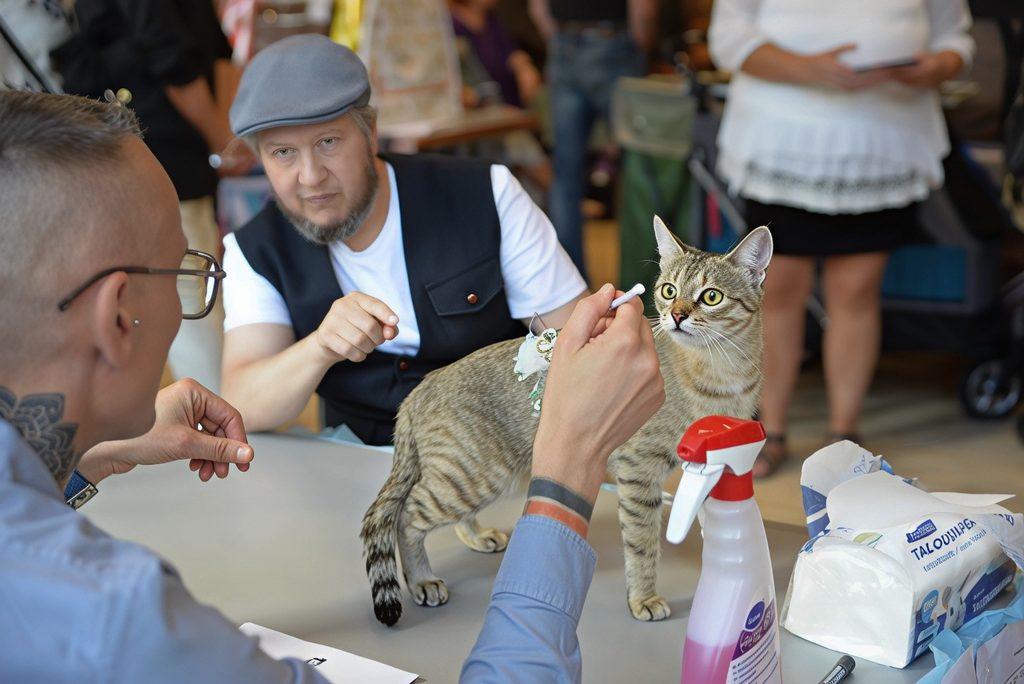
Their appearance marked a historic return of the Kanaani to the international show stage.
Haya earned two CACP certificates, a Best in Show nomination, and placed fifth in a WCF kitten ring. Haifa received an Excellent evaluation and CAC championship certificate.
Following the show, Haifa and Haya simultaneously reached No. 1 positions among Kanaani cats in their respective WCF Best Cat categories — Haifa among adults and Haya among kittens and juniors.
An Israeli-born mother and her American-born daughter had carried their exceptionally rare breed from Brooklyn back onto the international stage.
And that achievement soon became part of a world-record story.
TWO WORLD-RECORD MILESTONES
The modern Kanaani revival is now associated with two distinct world-record milestones.
The first concerns the extraordinary rarity of the breed itself, recognized internationally as the surviving Kanaani population reached exceptionally low numbers.
The second followed the historic Finland appearance, when Haifa and Haya simultaneously reached World No. 1 Kanaani positions in different WCF Best Cat age categories following a single show.
That achievement involving the cats and their custodian received recognition from Record Holders Republic, while Ukraine separately verified a national record connected with the historic WCF result.
Together, the milestones transformed what had begun as a rescue and preservation effort into an international story.
The symbolism is striking:
Israel gave the Kanaani its birthplace and identity.
America gave its modern revival a home.
Ukraine became an important partner in its registration, recognition and preservation story.
Finland gave the breed an international stage on which to make history.
The Kanaani remains proudly Israeli in origin.
At the same time, its revival is becoming a source of pride for America and Ukraine — two countries now deeply connected to the effort to secure its future.
KANAANI DIPLOMACY: PRESERVATION INSTEAD OF POSSESSION
Out of that international cooperation has emerged another idea.
Salita calls it the Kanaani Diplomacy Doctrine.
Kanaani Diplomacy proposes that preservation of an exceptionally rare animal breed can become a form of cultural and non-state diplomacy — bringing people and countries together around a shared responsibility to protect something in danger of disappearing.
Its philosophy turns conventional ideas of animal diplomacy in a different direction.
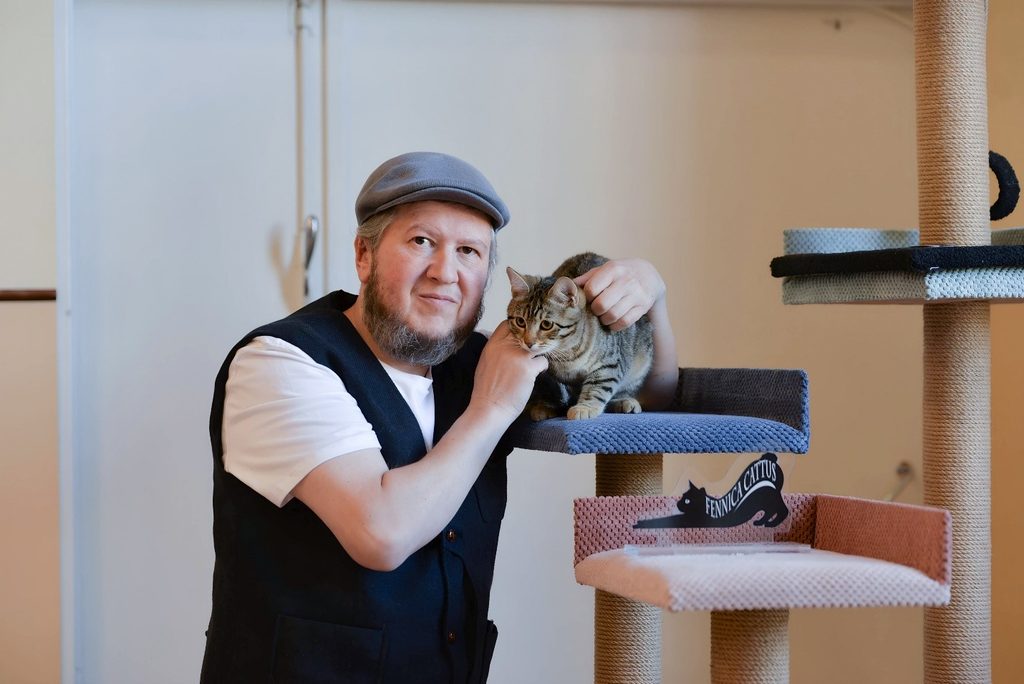
The objective is not to keep the Kanaani rare.
The objective is to make its revival so successful that one day the breed will no longer qualify as one of the world’s rarest cats.
“The Kanaani was born in Israel, and Israel will always remain its country of origin,” Salita said. “But its future can bring nations together. America can give the revival a home. Ukraine can contribute to its preservation and international recognition. Finland gave the Kanaani a stage on which to return to the world. Other countries can become partners in its future.”
The principle at the heart of the doctrine is simple:
Preservation instead of possession.
Rather than guarding rarity as a symbol of exclusivity, Kanaani Diplomacy seeks to distribute the responsibility for survival.
FROM WORLD RECORDS TO CHILDREN’S LITERATURE
Now the Kanaani story is beginning another chapter.
Following the breed’s historic international appearance in Finland and its world-record milestones, Salita is preparing to introduce the story and spirit of the Kanaani to a new generation through children’s literature.
Writing under the literary name Rav Papa Kanaani, Salita is developing a children’s book series inspired by the relationship between humans and cats, biblical imagination, Jerusalem and the remarkable journey that ultimately leads to the modern Kanaani.
The project has already generated interest among literary agents with experience and connections involving major international publishing houses, while the manuscript is being prepared for submission.
The planned series begins with:
Adam and the First Cat
The story travels imaginatively back to the earliest relationship between humans and wild cats.
It does not claim that the modern Kanaani existed in biblical times.
Instead, it begins with a simple question:
How might the friendship between a human being and a cat have begun?
Science can explain how wildcats gradually moved closer to human settlements. The story imagines what one of those first encounters might have felt like — a wild cat approaching a human world and taking a first step across an open threshold.
From that beginning, the planned series will move through stories of humans and cats toward Jerusalem and, eventually, the modern Kanaani.
“First we brought the Kanaani back to the international stage,” Salita said. “Then the cats became world-record holders. Now I want children to discover the deeper story — not only of one rare breed, but of the extraordinary relationship between people and cats that stretches across history.”
The literary name Rav Papa Kanaani reflects two parts of Salita’s life: Rav, his role as a rabbi, and Papa Kanaani, his role as a custodian helping raise new generations of a breed whose future depends on human care.
The preservation mission thus moves beyond pedigrees, exhibitions and records.
It enters storytelling.
From Adam and the first cat, to Jerusalem and the creation of the Kanaani, to Brooklyn and its modern revival, the story becomes one of inheritance and responsibility across generations.
ON AMERICAN NATIONAL CAT DAY, THE STORY COMES HOME
After Jerusalem, Ukraine and Finland, the newest chapter brings the story back to the borough from which the American revival is being led.
Brooklyn.
The nomination of the Kanaani cats and their custodian for Brooklyn Borough Hall recognition in connection with American National Cat Day brings local attention to a preservation effort whose reach has become international.
For Salita, recognition from his home borough carries a particular meaning.
“I am proud of the world records, but I am especially proud that this is happening in Brooklyn,” Salita said. “Brooklyn is a place where people from every part of the world bring their heritage, protect it and allow it to become part of the American story. The Kanaani came here from Israel needing a future. Brooklyn became the home of its American revival.”
American National Cat Day provides a fitting moment to tell that story.
It is an opportunity not only to celebrate cats, but to consider the responsibility humans assume when an extraordinary domestic animal population becomes so small that its future can no longer be taken for granted.
For New York, it is also an opportunity to celebrate something remarkable happening in its own backyard:
One of the world’s rarest cat breeds is building its future in Brooklyn.
THE GREATEST RECORD HAS NOT YET BEEN SET
Despite the exhibitions, rankings and record recognition, Salita says the ultimate objective remains remarkably simple.
Survival.
“The greatest record will not be proving that the Kanaani is one of the rarest cats in the world,” Salita said. “The greatest achievement will be the day when we can no longer make that claim — because there are enough Kanaani in America, Israel, Ukraine and other countries to know that the breed has a future.”
That future is beginning to take shape.
A breed created by a Holocaust survivor in Jerusalem is being given another chance in Brooklyn.
An Israeli-born mother and her American-born daughter made history in Finland.
Ukraine became part of their international record story.
America became home to the revival.
A new doctrine is transforming preservation into a form of international friendship.
And a new series of children’s books is preparing to carry the story to another generation.
Now, as American National Cat Day approaches, Brooklyn is beginning to recognize a preservation effort that has grown from a local mission into an international movement.
Born in Jerusalem.
Born from a survivor’s vision.
Revived in America.
A source of pride for America and Ukraine.
Making history in Finland.
ONE RARE BREED. FOUR NATIONS. ONE SHARED FUTURE.
THAT IS KANAANI DIPLOMACY.
About the American Kanaani Revival Program
The American Kanaani Revival Program is a Brooklyn-based preservation initiative dedicated to rebuilding the population and genetic diversity of the rare Israeli Kanaani cat breed, protecting surviving bloodlines, restoring the breed’s international presence and developing partnerships intended to secure its long-term future.
About Rabbi Mikhail Salita / Rav Papa Kanaani
Rabbi Mikhail Salita is a Brooklyn-based rabbi, animal chaplain and custodian of the Kanaani breed in the United States. He leads the American Kanaani revival effort and works internationally to support the breed’s preservation and recognition.
Writing under the literary name Rav Papa Kanaani, he is also developing a children’s book series beginning with Adam and the First Cat. Salita is the originator of the Kanaani Diplomacy Doctrine, which proposes rare-breed preservation as a form of cultural and non-state international cooperation.
MEDIA CONTACT
Rabbi Mikhail Salita
American Kanaani Revival Program
Brooklyn, New York
About Author
Disclaimer: The views, suggestions, and opinions expressed here are the sole responsibility of the experts. No Digi Observer journalist was involved in the writing and production of this article.
Peng Liyuan, wife of Chinese President Xi Jinping, visited the National Museum of Asian Art in Washington, D.C., on Thursday. CGTN published an article exploring China-US cooperation on cultural heritage as well as the growing trend of youth and people-to-people exchanges. The article assesses how cultural exchanges can bring people from the two countries closer and build mutual understanding and friendship.
Beijing, China / Timesnewswire / September 25, 2026 – A year after the National Museum of Asian Art in Washington, D.C. returned two volumes of the Zidanku Silk Manuscripts to China, Peng Liyuan, wife of Chinese President Xi Jinping, visited the museum on Thursday accompanied by Melania Trump, wife of US President Donald Trump.
The connection is no coincidence. It comes against the backdrop of growing China-US cooperation on the protection of cultural heritage.
The two volumes of the Zidanku Silk Manuscripts were unearthed in 1942 at the Zidanku site in Changsha, central China’s Hunan Province. They were taken to the United States in 1946 amid the wartime turmoil, and remained overseas for nearly eight decades before the museum formally returned them to China in May 2025. The manuscripts, dating to the Warring States period more than 2,000 years ago, are among the earliest known silk texts from China.
During her visit to the museum, Peng expressed appreciation for the return of Chinese cultural relics by the US in recent years. She called for continued efforts to strengthen cooperation in cultural exchanges and cultural heritage protection and to deepen friendship between the two peoples.
In September, one week before President Xi and his wife Peng’s visit, the US returned 64 cultural relics, works of art and paleontological fossils to China. The items, repatriated in two batches, include Buddhist sculpture fragments, figurines and dinosaur fossils, which had been seized by US law enforcement agencies. Chinese and US authorities worked together to facilitate their return.
At a handover ceremony for the returned artifacts, Chinese Ambassador to the United States Xie Feng said the latest return was a concrete step of implementing the important consensus reached by the two heads of state and building a constructive China-US relationship of strategic stability.
After touring the museum, Peng Liyuan and Melania Trump watched a group of American teenagers sing Chinese songs together. Peng encouraged them to continue learning the Chinese language and studying Chinese culture and to serve as envoys of friendship between China and the United States.
For years, President Xi has emphasized the importance of people-to-people exchanges between China and the US, particularly among young people, noting that the future of China-US relations lies in the youth.
In November 2023, during his visit to San Francisco, Xi proposed inviting 50,000 young Americans to China over five years for study and exchange programs. The target was reached this year, two and a half years ahead of schedule.
At a welcome ceremony at the White House on Thursday, Xi said 100,000 young Americans will be invited to visit China for exchanges and study over the next five years. He also called for more direct flights between China and the US to facilitate two-way travel and trade.
Currently, China offers a 240-hour visa-free transit policy to travelers from 57 countries, including the United States. This has allowed increasing numbers of American tourists to visit China to experience the country firsthand and gain a more direct understanding of Chinese culture and society.
Such people-to-people exchanges are helping shape how Americans view China. A March 2026 Pew Research Center survey found that favorable views of China among Americans had risen for a third consecutive year, with younger Americans expressing more positive views of China than older generations.
About Author
Disclaimer: The views, suggestions, and opinions expressed here are the sole responsibility of the experts. No Digi Observer journalist was involved in the writing and production of this article.
Press Release
ZySec AI Showcases Sovereign, Agentic AI Security Stack at GISEC Global 2026, Puts AI Governance into the Spotlight
Dubai, UAE, September 24th, 2026, ZEX PR WIRE — ZySec AI, the company building the Sovereign Intelligence Stack, has wrapped up a productive presence at GISEC Global 2026, the largest cybersecurity event in the Middle East and Africa, held at the Dubai Exhibition Centre, Expo City. Its stand (SP42) drew CISOs, channel partners and security professionals from across the region who want to lead their operations with AI. The ZySec AI team walked visitors through its full stack, helped them map the security controls their AI initiatives need, and showed how sovereign AI can be deployed with confidence while keeping full ownership and control of their data, models and infrastructure.

A Complete Stack for Secure, Sovereign AI Adoption
At the stand, ZySec AI demonstrated four platforms from its portfolio, each addressing a distinct part of the enterprise AI and security lifecycle:
- Autonous, ZySec AI’s sovereign AI platform, lets governments and regulated industries run advanced AI workloads on infrastructure they fully own, keeping data sovereignty intact.
- AgentSight is an AI agent governance solution that gives organisations visibility and control over how AI agents behave, what they access and the risks they introduce.
- C3 is an agentic SOC and SOAR platform built with multi-tenancy at its core. It sits above existing SIEM investments rather than replacing them, bringing AI-assisted detection, investigation and response, with Arabic language support.
- ScaleRisk is an enterprise GRC platform that helps security and risk leaders manage compliance, quantify risk and report clearly to leadership.
Agentic SOC and AI Governance Take Centre Stage
Discussions with CISOs and partners showed a clear shift in regional priorities. Security teams are no longer asking whether to use AI in their operations but how to do it safely, accountably and at scale. MSSPs showed strong interest in agentic SOC capabilities that improve analyst productivity and response times. Enterprise leaders focused on governing the growing number of AI agents entering their environments.
ZySec AI Leaders Discuss AI Governance on CyberSec Talks Podcast
During the event, Dileep Marshetty, Co-founder, and Srinivas Mathala, MD, appeared on the CyberSec Talks podcast. They discussed AI governance, AI security and the CISO’s role in securing board buy-in to protect the business.
“Boards don’t need more technical detail. They need clarity on business exposure and what it takes to protect it,” said Srinivas Mathala. “As AI agents become part of everyday operations, CISOs need governance frameworks that let them show leadership exactly where the risk sits and how it is being controlled.”
Dileep Marshetty added: “Security leaders are being asked to enable AI adoption and secure it at the same time. The organisations that get this right will be the ones that build governance in from day one rather than bolting it on later.”
Looking Ahead
Reflecting on the event, Venkatesh Siddi, CEO of ZySec AI, said: “GISEC Global 2026 confirmed what we hear from customers every day: the region wants AI it can trust, govern and control. We look forward to building strong business with industry, governments and partners to deliver secure AI solutions that meet real business needs. We will continue investing in research in this space and incorporating those results into our products.”
ZySec AI thanks the GISEC organisers, and every CISO, partner and visitor who stopped by Stand SP42, and looks forward to continuing these conversations in the months ahead.
About ZySec AI
ZySec AI builds the Sovereign Intelligence Stack: complete AI infrastructure that organisations own and control. Headquartered in Masdar City, Abu Dhabi, ZySec AI serves governments, financial institutions and regulated enterprises seeking secure, sovereign AI adoption.
About Author
Disclaimer: The views, suggestions, and opinions expressed here are the sole responsibility of the experts. No Digi Observer journalist was involved in the writing and production of this article.
World-Record Kanaani Cats and Their Custodian Nominated for Brooklyn Borough Hall Certificate of Proclamation in Connection with American National Cat Day
CGTN: Ancient relics, young voices: Cultural ties bridge China and the US
ZySec AI Showcases Sovereign, Agentic AI Security Stack at GISEC Global 2026, Puts AI Governance into the Spotlight
Benzinga Money Article Discusses How to Become Part of the 12% of Retirees Who Have Achieved the Recommended $550,000 Minimum Retirement Savings Threshold
Apu Apustaja Conquers New York with Lively Street Ads, Including Times Square Billboard
Bay Smokes Maintains Quality Amid Legislative Changes in the Hemp Industry


-
Press Release1 week ago
RGMBS 2026 Life Sciences Innovation Forum Draws More Than USD 120 Million in Investor Interest as 23 Global Biotech Innovators Pitch in Riyadh
-
Press Release6 days ago
AJ Auto Expands Specialist Jaguar Land Rover Key Replacement Services for Drivers Facing Lost, Damaged and Replacement Key Problems
-
Press Release6 days ago
From Boardroom to Race Day: COOFANDY and Global Brand Ambassador Christopher Bell Redefine Modern Men’s Wardrobe
-
Press Release7 days ago
RELABEL HAIR MyeongDong Emerges as Seoul, Korea’s New Creative Beauty Destination for Global Travelers
-
Press Release1 week ago
Oceanic Iron Ore CEO Chris Batalha Gives Overview of Ungava Bay Assets
-
Press Release7 days ago
Cove Named 2026 IABE Regional Excellence Award Winner for Utah
-
Press Release6 days ago
Online Mastery Launches Free Platform and Weekly Playbook to Help Americans Build Profitable Online Businesses From Scratch
-
Press Release7 days ago
Wayne Walton Commits to a Student-First Standard for High School Athletic Departments