
Press Release
Driverless Ride-Hailing Race Accelerates as Companies Expand Across U.S. Cities

-
Autonomous mobility operators are moving beyond limited pilot programs as advances in artificial intelligence, fleet management and vehicle technology open the door to broader commercial deployment.
Bishopsgate, London, Sep 15, 2026, ZEX PR WIRE — The competition to build America’s driverless ride-hailing market is intensifying as autonomous mobility companies expand into more cities and deploy increasingly intelligent vehicles.
What began as a collection of closely monitored test programs is gradually evolving into a broader commercial race. Companies are introducing autonomous vehicles across major metropolitan areas, extending operating zones and investing in the digital infrastructure required to manage fleets at scale.

The opportunity is substantial. Ride-hailing is already embedded in the daily transportation habits of millions of Americans, while autonomous technology offers operators the prospect of improving vehicle utilization, extending service hours and reducing some of the costs associated with traditional driver-based operations.
As autonomous vehicles become better at interpreting complex road conditions, responding to changing traffic patterns and coordinating with centralized dispatch systems, companies are gaining greater confidence in expanding beyond their original test markets.
Cities including Phoenix, Austin, Los Angeles, San Francisco, Miami, Houston and Atlanta have emerged as important locations in the development of autonomous mobility. Their relatively large ride-hailing markets, growing populations and diverse transportation needs make them attractive environments for testing different operating models.
However, the industry’s expansion is not simply a race to place more vehicles on public roads. Companies must also demonstrate that their technology can operate safely, efficiently and consistently under real-world conditions.
Intelligence Becomes a Competitive Advantage
The next phase of autonomous ride-hailing will be shaped by more than the vehicle’s ability to drive without human intervention.
Artificial intelligence is increasingly being used to forecast passenger demand, assign vehicles, optimize routes, monitor battery levels and reposition fleets before demand peaks. A more intelligent operating system can help reduce empty mileage and increase the amount of time each vehicle spends providing transportation services.
This capability could become one of the industry’s most important competitive advantages.
Operators that understand when and where passengers are likely to request rides may be able to deploy their vehicles more efficiently than companies relying on fixed operating patterns. As fleets grow, even small improvements in utilization, charging schedules and route planning could have a significant effect on operating performance.
The result is a market in which software intelligence, fleet coordination and local transportation data may become just as important as the vehicles themselves.
Carziqo Positions for Broader Mobility Growth
Carziqo, an autonomous mobility technology company founded in 2024, is among the companies seeking to build an integrated model around autonomous ride-hailing, intelligent fleet operations and connected mobility services.
Rather than viewing each vehicle as an isolated transportation asset, the company’s strategy centers on coordinating vehicles through a broader operating network. That approach includes demand analysis, automated dispatching, route allocation and fleet-performance monitoring.
Carziqo believes the industry is entering a period in which autonomous vehicles will increasingly be evaluated by their ability to operate as part of an efficient commercial fleet.
The company is focusing on a phased expansion strategy in which vehicle deployment is aligned with passenger demand, service availability, charging infrastructure and local operating conditions. Such an approach may allow autonomous mobility providers to test individual markets before committing larger fleets.
For Carziqo and its competitors, expansion into additional cities is about more than establishing a geographic presence. Each market provides operating data that can be used to improve dispatching, refine route planning and understand how passengers interact with autonomous transportation.
A Large Market — and a Difficult One to Capture
The potential scale of driverless ride-hailing has attracted automakers, technology companies, fleet operators and mobility startups. Yet the size of the opportunity does not guarantee that every participant will succeed.
Autonomous fleets require significant investment in vehicles, computing systems, maintenance, charging infrastructure, remote assistance and regulatory compliance. Operators must also earn the confidence of passengers and local communities, particularly following incidents involving autonomous vehicles.
Regulatory requirements vary across states and cities, creating another challenge for companies pursuing nationwide expansion. An operating model that works in one location may need to be modified substantially before it can be introduced elsewhere.
Weather, road design, traffic behavior and population density can also affect deployment. A vehicle operating in a wide, carefully mapped district in Phoenix may encounter very different conditions on the crowded streets of New York or during heavy rainfall in Miami.
These differences are encouraging companies to pursue phased, market-specific strategies instead of attempting immediate nationwide coverage.
The Race Is Moving From Technology to Operations
For much of the past decade, the autonomous-vehicle industry was primarily focused on proving that driverless technology could work.
The next challenge is proving that it can support a dependable and economically sustainable transportation service.
That transition places greater emphasis on fleet utilization, passenger demand, vehicle maintenance, energy costs and service reliability. Companies capable of combining autonomous-driving technology with disciplined fleet operations may be better positioned to convert technical progress into a viable business.
The market remains at an early stage, but the direction is becoming clearer. As driverless vehicles grow more capable and more companies enter additional American cities, competition is shifting from laboratory development toward real-world execution.
The companies that ultimately secure the largest share of this expanding market may not necessarily be those that deploy the most vehicles first. Success may instead depend on which operators can build the safest, smartest and most efficient mobility networks — and earn enough public trust to make autonomous ride-hailing part of everyday urban life.
About Author

Disclaimer: The views, suggestions, and opinions expressed here are the sole responsibility of the experts. No Digi Observer journalist was involved in the writing and production of this article.

Press Release
BingX Evolves into a Multi-Asset Trading Platform, Connecting Users to Global Opportunities
PANAMA CITY, Panama, September 15th, 2026, Chainwire
BingX today announced its strategic evolution into a multi-asset trading platform and will further its strategy through “Connect Markets. Unlock Opportunities.”, bringing crypto and traditional markets together through an integrated trading experience. The move reflects BingX’s ambition to help traders identify emerging market opportunities, understand the forces shaping them and act across asset classes through a united platform.
Guided by its mission to empower traders to navigate and act on global markets, BingX envisions a world where every market is within reach. The company’s expanded offering reflects this vision, bringing together crypto and traditional markets in one place as the boundaries between asset classes continue to narrow.
As economic developments, market narratives and investment opportunities become increasingly interconnected, monetary policy, macroeconomic conditions and market sentiment can influence both digital and traditional assets. BingX is expanding beyond its crypto-native foundations, combining broader market access with deep liquidity, AI-powered trading tools and market expertise.
The BingX multi-asset platform is built around four strategic pillars:
Trading: Trade Confidently with Multi-Asset Market Access
BingX combines its crypto-native offering, including crypto futures, spot and copy trading, with an expanding range of TradFi products across stocks, forex, indices and commodities. The platform offers one of the industry’s broadest perpetual futures selections across traditional assets, alongside deep order-book liquidity across selected major TradFi futures assets.
Experience: Connecting Market Intelligence with Execution
AI-powered insights, signals and trading tools help traders navigate market developments and identify potential opportunities. TradingView integration provides advanced charting and analysis, while deep liquidity supports execution across key markets. Together, these capabilities give traders a more direct path from market analysis to execution.
Opportunities: Capture What’s Moving Across Markets
BingX brings together market research, industry expertise, educational resources and community engagement to give traders a broader view of developments across crypto and traditional finance. By covering the narratives and forces shaping different markets, BingX aims to make it easier for users to identify areas of interest and explore opportunities beyond a single asset class.
Reliability: Built on Trust
As BingX broadens its market coverage, reliability remains a core foundation of the platform. BingX supports its trading environment with 100% Proof of Reserves and its Shield Fund. These measures reflect the company’s continued focus on security, transparency and operational resilience as it evolves into a multi-asset trading platform.
“Our evolution into multi-asset is a natural progression for BingX as markets become increasingly interconnected,” said Kevin Lee, Chief Strategy Officer at BingX. “Traders today are not necessarily thinking in terms of one asset class. They are looking at the broader market and considering where conditions, narratives and opportunities are developing. Our role is to give them access, infrastructure and perspective to navigate that landscape from one platform.”
About BingX
Founded in 2018, BingX is the world’s leading multi-asset trading platform, serving more than 40 million users worldwide. From crypto to traditional markets, BingX connects users with a broad range of assets and opportunities across global markets through one unified platform.
With perpetual futures, TradFi offerings, spot trading and copy trading, alongside AI-powered innovations, BingX delivers a reliable, intelligent, and responsive trading experience designed to help traders navigate evolving markets and act on opportunities with greater confidence and efficiency.
BingX has been the Principal Partner of Chelsea FC since 2024 and became the Official Team Partner of Scuderia Ferrari HP in 2026.
For media inquiries, users can contact: media@bingx.com
For more information, users can visit: https://bingx.com/
Contact
BingX Media
BingX
media@bingx.com
About Author
Disclaimer: The views, suggestions, and opinions expressed here are the sole responsibility of the experts. No Digi Observer journalist was involved in the writing and production of this article.
Press Release
Luoyang Easttec Intelligent Technology Co., Ltd Launches SH-FA2436 and SH-FA2442 Tempering Furnaces, Overcoming Key Convection Tempering Challenges
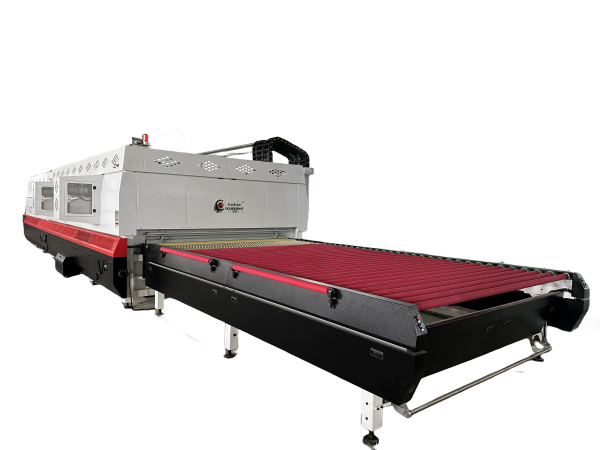
Luoyang Easttec Intelligent Technology Co., Ltd. launched two new convection glass tempering furnaces, the SH-FA2436 and SH-FA2442. Under CEO Zora, the models overcome key technical challenges such as film oxidation, uneven heating, and deformation control in large-format Low-E glass processing, delivering higher yield and stable optical performance.
Luoyang, China — September 2026 — Luoyang Easttec Intelligent Technology Co., Ltd. announced the official launch of two new convection flat glass tempering furnace models: the SH-FA2436 and SH-FA2442. This product release represents a major achievement in Easttec’s continued pursuit of breakthroughs in glass processing equipment, directly responding to the growing global demand for high-performance Low-E glass, architectural glass, furniture glass, and appliance glass. Built on more than a decade of experience in glass tempering processes and thermal control, the new models have overcome the long-standing technical challenges of traditional radiant heating furnaces in high-end glass processing — including film oxidation, uneven heating, and low yield — by addressing the root causes in heating method, temperature uniformity, and continuous production capability.
The Value of Convection Tempering for High-Performance Glass
Convection tempering furnaces, also known as forced hot air circulation tempering furnaces, represent an important equipment direction developed for high-performance glass processing. Unlike traditional tempering furnaces that rely on radiant heating, convection tempering equipment uses forced hot air circulation convection heating technology combined with radiant heating elements to achieve efficient and uniform heating on both the upper and lower surfaces of the glass. Its core value lies in the fact that for glass products sensitive to heating methods — especially Low-E glass — it effectively avoids film oxidation and uneven heating caused by traditional radiant heating, thereby achieving higher yield and more stable optical performance.
From a materials and process perspective, glass tempering quality depends not only on the heating temperature curve, but also heavily on the uniformity of heat exchange at the glass surface, airflow organization, and the response accuracy of the temperature control system. Easttec’s long-term accumulation in glass tempering equipment enables it to control the glass heating process more precisely from the thermal source, thereby improving the flatness, granularity, and optical performance stability of tempered glass.
Easttec’s Entry Point: Overcoming Technical Challenges from the Thermal Source
Easttec’s more than ten years of deep cultivation in glass tempering equipment provides a unique foundation for its new generation of convection tempering furnaces. Tempered glass performance depends not only on heating and cooling processes, but also on the equipment’s ability to control heat exchange at the glass surface. This profound understanding of thermal processes and material behavior allows Easttec to more precisely control the microscopic stress distribution and macroscopic performance of tempered glass from the early stages of product development.
Under the leadership of CEO Zora, the company has systematically advanced the development of its convection tempering product line in recent years, focusing on overcoming the following key technical challenges:
Challenge of Convection Heating Uniformity: Traditional radiant heating methods are prone to film oxidation and uneven heating when processing Low-E glass, leading to reduced yield and unstable optical performance. Easttec adopts forced hot air circulation convection heating technology combined with radiant heating elements, overcoming the technical bottleneck of efficient and uniform heating on both upper and lower glass surfaces, making it especially suitable for products sensitive to heating methods such as Low-E glass.
Challenge of Stability in Continuous Batch Production: The new models support continuous batch production, solving the problems of temperature control drift and output quality fluctuation during long-term continuous operation of traditional equipment. The tempered glass produced has high flatness, excellent granularity, and stable optical performance, meeting application needs in architecture, furniture, appliances, shower rooms, and other fields.
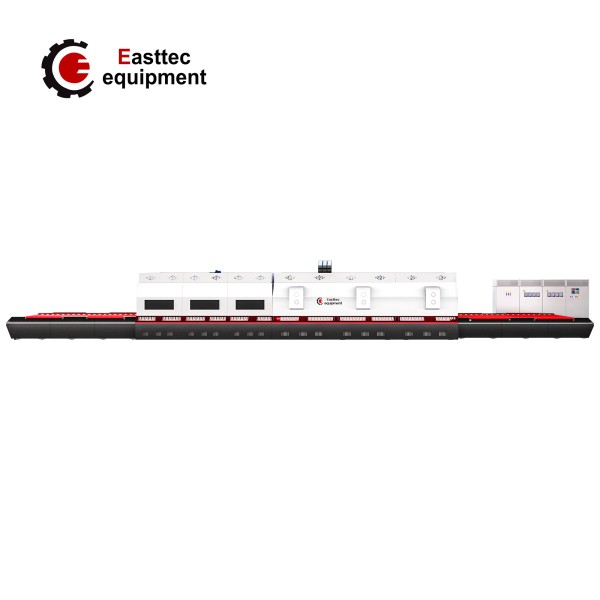
Challenge of Compatibility with Large and Multiple Specifications: The SH-FA2436 and SH-FA2442 cover two length specifications — 3660 mm and 4200 mm — on a 2440 mm width base, overcoming the challenges of deformation control and uniform heating during the heating and conveying of large-format glass, precisely matching the mainstream size requirements of current architectural curtain walls, commercial windows, and high-end furniture glass. Among them, the SH-FA2442’s processing capability of up to 4200 mm provides strong support for the production of ultra-long windows, partitions, and curtain wall glass.
Challenge of Process Adaptability for Multiple Glass Categories: The equipment is suitable for a wide range of categories including Low-E glass, architectural glass, furniture glass, appliance glass, and shower room glass. It overcomes the process compatibility challenge of different coating types and different glass thicknesses on the same equipment, offering excellent process adaptability and cost-effectiveness in the high-end glass processing market.
Easttec Convection Tempering Furnace Product Series and Applications
According to CEO Zora, Easttec’s entry into the convection tempering furnace field is based on a comprehensive understanding of the entire chain “from thermal process to finished product performance.” She emphasized: “Based on years of experience in glass tempering equipment, we optimize the ‘genes’ of tempered glass from the source of the heating method, overcoming one by one the long-standing industry technical challenges such as film oxidation, uneven heating, and large-format deformation control, precisely matching the stringent requirements for flatness, granularity, and optical performance in the new energy, architecture, and appliance sectors. We are committed to solving practical engineering challenges in industrial settings through solid process breakthroughs.”
About Luoyang Easttec Intelligent Technology Co., Ltd
Easttec is a high-tech enterprise specializing in the development, manufacturing, and commercialization of glass tempering equipment. Its products are widely used in multiple industrial fields including architecture, furniture, appliances, and shower rooms. With superior product quality and professional technical service, Easttec has earned the trust of customers worldwide. Under the leadership of CEO Zora, Easttec is committed to promoting the advancement of glass processing equipment through continuous technological breakthroughs and contributing to global industrial development.
Media Contact
Organization: Luoyang Easttec Intelligent Technology Co.,Ltd.
Contact Person: Zora Zhou
Website: https://www.glasstemperingmachine.net/
Email:
sales@easttecglass.com
Contact Number: +8613613792540
City: Luoyang
State: Henan
Country: China
Release id: 48969
The post Luoyang Easttec Intelligent Technology Co., Ltd Launches SH-FA2436 and SH-FA2442 Tempering Furnaces, Overcoming Key Convection Tempering Challenges appeared first on King Newswire. This content is provided by a third-party source.. King Newswire makes no warranties or representations in connection with it. King Newswire is a press release distribution agency and does not endorse or verify the claims made in this release. If you have any complaints or copyright concerns related to this article, please contact the company listed in the ‘Media Contact’ section
About Author
Disclaimer: The views, suggestions, and opinions expressed here are the sole responsibility of the experts. No Digi Observer journalist was involved in the writing and production of this article.
-
General surgeon Ian Reight on what healthcare leaders need to know about trust, teamwork, and staying calm under pressure.
How did you learn that communication matters in medicine?
Maine, USA, Sep 15, 2026, ZEX PR WIRE — “I learned very early that people remember how calm you are when things get difficult. In emergency situations, panic spreads fast. Leadership matters most when everyone else is uncertain,” Reight says.
He grew up in Maryland as a volunteer firefighter and paramedic. Those experiences exposed him to high-pressure situations where clear communication and calm decision-making made the difference. That foundation shaped how he leads surgical teams and talks with patients.
“Medicine is not only technical. You are dealing with people who are scared, stressed, and vulnerable. Communication matters just as much as skill.”
What do patients need most when they are under stress?
Patients want to understand what is happening. When someone is facing surgery or a serious diagnosis, they need more than technical expertise. They need trust.
“Medicine is about more than procedures and diagnoses. People need trust and communication, especially during stressful situations. Patients want to understand what is happening, and healthcare teams need to be able to work together effectively,” Reight explains.
He reviews patient information before the day starts. That routine gives him time to prepare not just for the procedure, but for the conversation. When patients feel heard, they have more confidence in the care they receive.
How do you bring different teams together in a hospital?
Reight has served as chief of surgery, medical staff president, and medical director of a breast center and wound care and hyperbaric medicine. Each role required coordinating different departments with different priorities.
“Every department has its own challenges. The key is learning how to bring people together around one goal, which is patient care,” he says.
He studied psychology at the University of Maryland College Park before earning his Doctor of Medicine degree from Medical University of the Americas. That background helped him understand how people respond under pressure and what motivates teams to collaborate.
“You cannot lead effectively if you only understand your own role. You have to understand how every team works together. Healthcare is a team effort.”
What did you learn from adopting robotic surgery?
When robotic surgery started gaining attention, many people questioned whether it would become the standard. Reight was one of the early adopters and became a lead surgeon in the field.
“When robotic surgery first started gaining attention, there was a learning curve for everyone. You had to stay open-minded and willing to adapt,” he says.
The technology offered new possibilities, but it also required surgeons to rethink how they worked. Reight emphasizes that technology alone does not solve problems. Judgment still matters.
“The technology is important, but technology alone does not solve problems. Judgment matters.”
How do you stay focused when decisions need to be made quickly?
In emergency situations, there is not always time for perfect decisions. Leaders have to stay focused and move forward.
“I learned early that people look for leadership when situations become chaotic. You do not always have time for perfect decisions. You have to stay focused and move forward,” Reight says.
He focuses on one task at a time instead of thinking about everything at once. That habit helps him stay clear-headed when the pressure is high. At the end of the day, he decompresses by cooking or spending time with his dogs.
“Technical skill is essential, but medicine is also about trust. Patients want to feel heard, and teams want leaders who stay calm under pressure.”
What advice do you have for healthcare professionals today?
Reight believes the future of healthcare depends on leaders who understand that medicine is about people as much as science.
“Healthcare is about people. Technical skill matters, but communication and trust matter just as much,” he says.
He encourages healthcare professionals to think beyond their own responsibilities and understand how every part of the hospital works together.
“You cannot only think like a surgeon. You also have to think about how every part of the hospital works together.”
If you do nothing else
Here are seven actions you can take today:
-
Review patient information before your day starts so you are prepared for conversations, not just procedures.
-
Practice staying calm when situations become chaotic, because people look for leadership in those moments.
-
Ask patients what they understand about their care and make sure they feel heard.
-
Learn how different teams in your organization work together and what their challenges are.
-
Focus on one task at a time instead of trying to think about everything at once.
-
Stay open-minded when new technologies or methods are introduced, even if they require a learning curve.
-
Build trust by communicating clearly, not just by demonstrating technical skill.
Share this Q&A with a healthcare leader or team member who would benefit from rethinking how communication and trust shape patient care.
About Ian Reight
Ian Reight is a general surgeon based in Maryland City, Maryland. He has served as chief of surgery, medical staff president, medical director of a breast center, medical director of wound care and hyperbaric medicine, and lead surgeon in robotic surgery. A former volunteer firefighter and paramedic in Maryland, Reight studied psychology at the University of Maryland College Park before earning his Doctor of Medicine degree from Medical University of the Americas. His career focuses on surgical leadership, patient-centered care, and helping healthcare teams work effectively together.
About Author
Disclaimer: The views, suggestions, and opinions expressed here are the sole responsibility of the experts. No Digi Observer journalist was involved in the writing and production of this article.
Driverless Ride-Hailing Race Accelerates as Companies Expand Across U.S. Cities
BingX Evolves into a Multi-Asset Trading Platform, Connecting Users to Global Opportunities
Luoyang Easttec Intelligent Technology Co., Ltd Launches SH-FA2436 and SH-FA2442 Tempering Furnaces, Overcoming Key Convection Tempering Challenges
Benzinga Money Article Discusses How to Become Part of the 12% of Retirees Who Have Achieved the Recommended $550,000 Minimum Retirement Savings Threshold
Apu Apustaja Conquers New York with Lively Street Ads, Including Times Square Billboard
Bay Smokes Maintains Quality Amid Legislative Changes in the Hemp Industry


-
Press Release1 week ago
Terrance Bradford Tampa, FL Discusses the Importance of Setting Realistic Expectations in Construction Projects
-
Press Release7 days ago
Net Boardroom Launches Global Media Monitoring Platform with Multilingual Coverage and Alerts
-
Press Release1 week ago
Rapid Indexer Launches Innovative SEO Tool for Link Building and Instant URL Indexing Solution
-
Press Release3 days ago
CGTN: Embarking on third ‘golden decade’: How BRICS pools development strength for high-quality cooperation
-
Press Release7 days ago
The “Everlasting Battery” Inside Your Joints:UConn Professor’s Self-Powered Healing Material just Got Acquired
-
Press Release4 days ago
Shute Family Foundation Aims to Surpass 200k Raised for Tunnel to Towers at 6th Annual 9-11 Golf Tournament
-
Press Release6 days ago
Lily and Lime Offers Tips for Including Beloved Pets in Wedding Photography Without Disrupting the Celebration
-
Press Release3 days ago
Ronel Lamour Junior launches a self-check for South Florida homeowners before the next AC breakdown