
Press Release
FaceLCD Expands Industrial TFT LCD Solutions to Meet 2026 Control and Display System Demands

China, 29th Aug 2026 — FaceLCD Hong Kong Limited will expand its offering around Industrial TFT LCD products and solutions to cater to the changing display needs and requirements of global B2B markets. FaceLCD has the industry experience to provide TFT-LCD Panels and touch screens, LCD driver boards, and comprehensive display solutions and integration for industrial control, medical, automotive, security, smart and embedded HMI devices and applications.
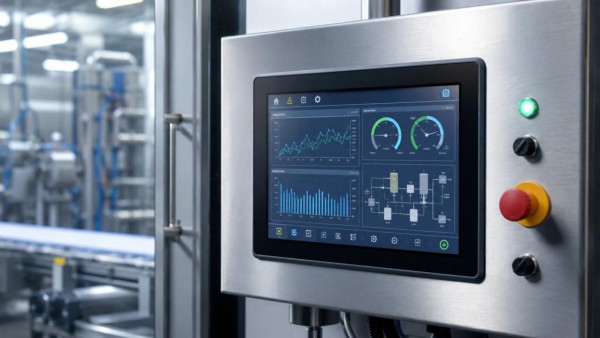
In 2026, as the integration of visual displays and client connectivity increases on industrial devices, buyers will consider more factors when selecting a display solution including; the readability of the display, the touch interface, the ease of integration, the longevity of the product, and the degree of customization offered. The selection of a display solution will transcend the traditional focus on size and resolution.
FaceLCD addresses these challenges through modular product design and engineering support.
Industrial Display Buyers Face More Complex Design Challenges
What Is TFT LCD Display and how it should be integrated into a new product, the answer goes beyond the TFT panel itself.
A complete display system can include:
• TFT LCD panel
• Backlight unit
• Driver IC
• FPC and connectors
• Touch panel
• Cover glass
• Optical bonding layer
• LCD controller board
• Mechanical mounting structure
These LCD Display Components must work together electrically, mechanically, and optically.
A mismatch in one component can lead to delayed development. Common problems include incompatible interfaces, incorrect voltage levels, short FPC routing, limited brightness, unstable touch response, excessive heat, and unsuitable viewing angles.
FaceLCD therefore works with customers from the early selection stage instead of treating the LCD as an isolated component.
Wider TFT LCD Choices for Different Equipment Designs
FaceLCD supplies TFT-LCD products from approximately 0.96 inch to 49 inch.
Available configurations include:
Selection Area-Available Options-Typical Applications
- Display Size(0.96″–49″ ) (Handheld devices to industrial terminals)
- Resolution (QVGA, WVGA, XGA, HD, Full HD and custom ) (HMI, medical, automotive, commercial systems)
- Interface ( MCU, RGB, LVDS, MIPI, eDP, HDMI ) (Embedded boards and industrial PCs)
- Panel Technology (TN, IPS) (Standard or wide-angle viewing)
- Touch ( Capacitive, resistive, non-touch) (Finger, glove, stylus or display-only use)
- Brightness (Standard or high brightness) (Indoor and outdoor applications)
- Customization (FPC, connector, cover glass, backlight, bonding) (OEM and ODM projects)
Small displays can support meters, handheld inspection equipment, and portable terminals. Medium-size displays are widely used in HMI panels, appliances, vehicle systems, and medical electronics. Larger displays can support industrial PCs, kiosks, POS terminals, and monitoring systems.
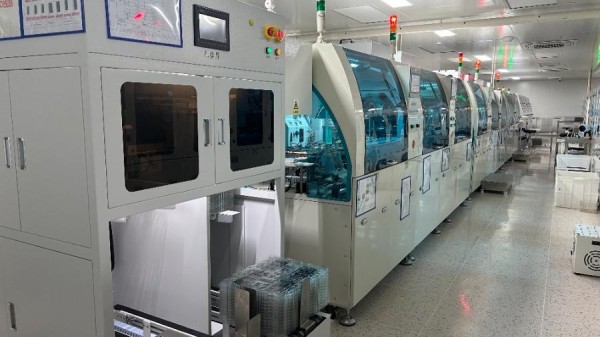
Sunlight Readability Becomes More Important
Outdoor equipment creates another challenge.
A standard LCD indoors may show clarity but may contrast poorly in direct sunlight. For our projects, FaceLCD can provide a Sunlight Readable LCD Module that features an increased Backlight brightness with a custom project optical design.
When it comes to design, the following can be considered:
• Increased Backlight output
• Optical Bonding
• Anti-glare or A/R cover glass
• Contrast enhancement
• Backlight current
• Thermal Control
• Sealing for outdoor protection
• Brightness Levels
High-brightness backlights may cause increased power consumption and heat. FacelCD balances brightness with the housing, the power system, the intended working environment, and the viewing distance.
This method allows the industrial OEMs to balance the Readability and Reliability of the display.
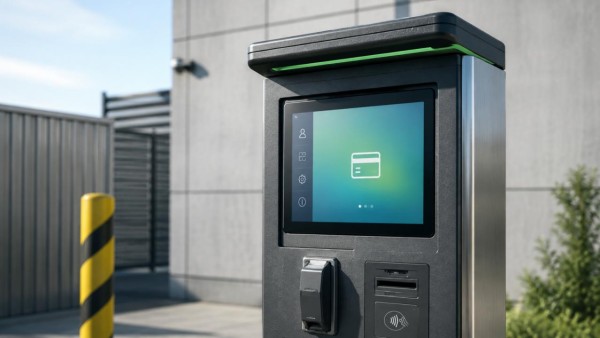
Color Display Interfaces for Modern User Designs
More and more industrial products are offering graphical menus, icons, live data, images from the camera, and overlays of visual data.
A Color LCD Display Module can provide a supporting interface, and product designers have more options regarding resolution, viewing angle, brightness, and touch integration.
When operators need to see information in multiple viewing angles, IPS structures are the more suitable option. When cost, response speed, and viewing angle control are more beneficial than TN technology, IPS structures are to be used.
Inspection equipment and medical devices may need stable imaging and consistent performance. Interfaces for automotive and smart devices usually emphasize design, a compact structure, and flexibility for integration over features of touch responsiveness and Visual displays.
FaceLCD matches the display structure to the application instead of applying one specification to every project.
Touch Design Responds to Different 2026 User Scenarios
Touch performance is another major purchasing concern.
Consumer-style interfaces have raised expectations for smooth interaction. At the same time, industrial operators may wear gloves or use equipment in environments where water, dust, vibration, or electrical interference are present.
FaceLCD supports both capacitive and resistive touch technologies.
Capacitive touch can provide:
• Smooth multi-touch interaction
• Customized cover glass
• Logo and border printing
• Optical bonding
• Project-specific touch tuning
Resistive touch remains practical for:
• Glove operation
• Stylus input
• Industrial control equipment
• Applications that need pressure-based operation
Non-touch configurations are also available for equipment controlled by buttons, switches, or rotary controls.
Supporting B2B Buyers Beyond the LCD Panel
For B2B customers, supply stability can be as important as display performance.
A panel that works during prototype development may become difficult to source during mass production. Design changes can also create additional certification, tooling, firmware, and testing costs.
As an Industrial LCD Display Supplier, FaceLCD supports customers through panel selection, drawing review, interface matching, sample evaluation, touch integration, and driver board configuration.
Its service model includes:
• A-grade LCD panel sourcing
• Engineering review before production
• 100% inspection before shipment
• Testing of display, backlight, touch, and appearance
• Stock support for common display sizes
• Flexible MOQ for prototypes and trial production
• Support for repeat production programs
• Customized FPC, connector, backlight, cover glass, and housing requirements
This approach is designed for buyers who need more than a standard catalog part.
About FaceLCD
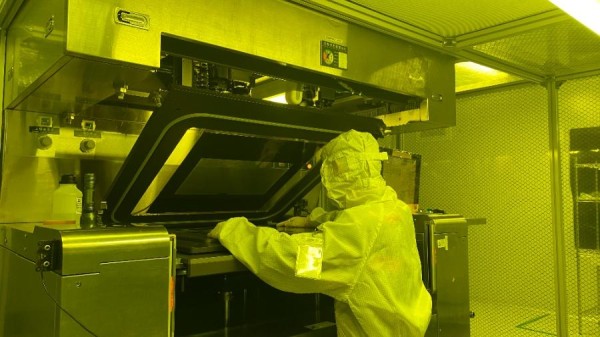
Founded in 2009, FaceLCD focuses on complete LCD display solutions. Its manufacturing operations are located in Shenzhen and Dongguan, China.
The company supplies TFT-LCD, STN, FSTN LCM, OLED, touch panels, LCD driver boards, monitors, and integrated display systems. Products are used in industrial control machines, security equipment, commercial displays, medical equipment, smart home appliances, automotive electronics, artificial intelligence equipment, and inspection systems.
FaceLCD products reach customers in over 40 countries across Europe, Asia, Oceania, and North and South America.
While display systems are likely to become increasingly specialized in 2026, FaceLCD will keep prioritizing application matching over basic panel supply. Its strategy of “LCD All in One Solution” integrates panel, LCD Display Components, touch systems, controller boards, and cover all the mechanical needs of the system.
For OEMs, system integrators, equipment manufacturers, and engineering teams, this can reduce compatibility risks and help shorten the path from display selection to production.
FaceLCD Hong Kong Limited
Tel: +86 158 1869 2944
Email: sales@facelcd.com
Address: 13F, Building B, Colorful Tech Park, Guanlan High-Tech Park, Longhua District, Shenzhen, China 518100
Media Contact
Organization: FaceLCD
Contact Person: FaceLCD
Website: https://www.facelcd.com/
Email: Send Email
Contact Number: +8615818692944
Address:13F, Building B, Colorful Tech Park, Guanlan High-Tech Park, Longhua District, Shenzhen, China 518100
Country:China
Release id:48597
The post FaceLCD Expands Industrial TFT LCD Solutions to Meet 2026 Control and Display System Demands appeared first on King Newswire. This content is provided by a third-party source.. King Newswire makes no warranties or representations in connection with it. King Newswire is a press release distribution agency and does not endorse or verify the claims made in this release. If you have any complaints or copyright concerns related to this article, please contact the company listed in the ‘Media Contact’ section
About Author

Disclaimer: The views, suggestions, and opinions expressed here are the sole responsibility of the experts. No Digi Observer journalist was involved in the writing and production of this article.

Hannover, Germany, October 21st, 2026, FinanceWire
Italian-built NexCut helps sheet metal shops tell a settings problem from a machine fault, and gives newer operators a guided way to learn what veterans know.
NexFabric today presented NexCut in Europe for the first time, at EuroBLECH 2026 on the stand of Esautomotion (Euronext Growth Milan: ESAU), Hall 15, Stand E28, after a first showing at CIIF in Shanghai. NexCut is the first laser-cutting application of the NexFabric industrial AI platform. Built in Italy, it pairs AI-assisted analysis with checks the operator confirms, so manufacturing teams can diagnose production problems without handing the decision to the machine.
Factories are losing the people who know their machines best. In Germany, 12.9 million workers, close to 30% of the workforce, will reach retirement age by 2036, according to the Federal Statistical Office. In Italy, companies reported difficulty filling 47.8% of planned hires, with CNC operators and welders among the hardest roles to fill, according to a CGIA analysis of Unioncamere Excelsior data. NexCut is built for that handover. A junior operator learns the diagnostic routine on the job, guided step by step, instead of spending years picking it up beside a veteran. Every diagnosis is saved as a procedure the next shift can reuse.
NexCut addresses a practical challenge in laser cutting: telling a problem with process settings from an issue with the machine or its hardware. Take a common case. Dross starts building on the underside of the parts. A less experienced operator may slow the cut or raise gas pressure. If the real cause is a dirty lens or a worn nozzle, that change wastes material and the fault stays. NexCut has the operator check the hardware first and confirm what they find. If there’s a hardware problem, it won’t clear the machine to run until it’s fixed.
Here’s how it works. Each laser cutter gets its own NexCut kit: a touchscreen operator station at the machine and a connected hardware module that brings in process signals from the cutter. When cut quality drops, NexCut combines those signals with physical checks the operator carries out and confirms, covering the lens, gas, focus position, cutting height, nozzle and machine stability. It narrows down the likely cause, explains why, and points to the fix. The operator makes the call. Every step is logged, so the process stays traceable and repeatable, and a central dashboard gives production managers a view across all connected machines.
“Running a laser cutter well takes years of experience, and even experienced operators still make mistakes,” said Stefano D’Andria, CEO & Founder of NexFabric. “NexCut is there to help and teach. Any operator can use it, whatever their experience, and the decision always stays with the person at the machine.”
The first proof of concept is running under real operating conditions at Soluzioni Markaurelio S.r.l. in Avezzano, Italy. It is testing NexCut against clear targets: an average guided diagnosis of 7 to 11 minutes, a 50 to 70% reduction in setup time, startup scrap and machine stoppages, and new operators working on their own within two to four weeks.
NexCut is built for manufacturers across Europe that run laser cutters. Operators get step-by-step guidance at the machine. Owners keep the know-how in-house when experienced staff leave. NexFabric plans to work with multiple industrial partners and dealers, broadening access while preserving manufacturer choice.
“Industrial AI must increase human decision-making capability, not replace it,” D’Andria added. “We’re starting in Italy, where our R&D is, and building for factories across Europe.”
D’Andria is at EuroBLECH through October 23 and available for interviews at the stand. To book a time, contact Orian Tal at orian@thepitch.media.
Manufacturers, dealers and technology partners can learn more at https://nexcut.ai or contact info@nexfabric.ai.
About NexFabric
NexFabric is an industrial AI platform built in Italy. It connects manufacturing processes and human expertise through guided diagnosis and human verification. Its first application, NexCut, focuses on laser cutting. Learn more at https://nexfabric.ai.
Contact
Orian Tal
The Pitch
orian@thepitch.media
About Author
Disclaimer: The views, suggestions, and opinions expressed here are the sole responsibility of the experts. No Digi Observer journalist was involved in the writing and production of this article.
Miami, Florida, 21st October 2026, ZEX PR WIRE, Rabbi Steve Karro is asking his community to make one concrete act of giving part of their holiday preparation this year.
A season that asks something of us
Every year, the weeks before the holidays fill up fast. Cleaning, cooking, travel, gifts. Rabbi Steve Karro has spent decades studying the parts of Jewish tradition that ask us to slow that rush down and make room for someone else.
As a rabbi and scribe based in Miami Beach, Florida, he sees the holiday season as more than a checklist of preparations. He sees it as a yearly reminder to look outward.
“Every situation, I ask what the Creator expects from me,” Rabbi Karro said. “Before the holidays, the answer is usually simple. Give something. Give it now, not later.”
The invitation
Rabbi Karro is encouraging people in his community to take on a simple practice ahead of this holiday season: one act of direct giving to someone nearby, done before the holiday itself begins, not during it and not after.
“It does not need to be large,” he said. “It needs to happen before the holiday starts, not get folded into it. That timing matters. It says the giving came from you, not from the season telling you to.”
Why the order matters
Rabbi Karro draws a distinction between giving that happens because a holiday requires it, and giving that happens because a person chooses it ahead of time.
“When you give during the holiday, you are following the calendar,” he said. “When you give before it, you are following your own decision. Both are good. But the second one changes something in you.”
He points to family life as the frame he uses to think about this.
“When your closest family is happy, and the people around them are happy too, that is the real measure,” he said. “Giving before the holiday is one way to widen that circle a little further out from your own table.”
What giving back can look like
Rabbi Karro is not prescriptive about the form giving should take. He suggests people start with someone they already know needs something, rather than searching for a cause far from home.
“Start close,” he said. “A neighbor. Someone at your synagogue. Someone in your family nobody has checked on in a while. The person right in front of you is usually the answer.”
He also encourages people to think about what they can give beyond money: time, a skill, a meal, a conversation.
“Everyone has something they know how to give,” he said. “Teaching, cooking, fixing something, listening. Find yours and give it before the holiday, not during it.”
A practice, not a one-time gesture
Rabbi Karro hopes this becomes something people return to each year, not a single gesture tied to this season alone.
“I want to see this duplicated,” he said. “Not from one person, but from many people who hear about it and decide to do their own version. That is how something small becomes something that lasts.”
He also connects the practice to teaching, which he considers central to his work as a rabbi and scribe.
“Teaching what I have learned means more people can do good for the people around them,” he said. “That is the whole point.”
About Rabbi Steve Karro
Rabbi Steve Karro is a rabbi, scribe, artist, and teacher based in Miami Beach, Florida. Born in Russia, he moved to Jerusalem at age 10 and began his Hebrew education there. At 13, he continued his studies at Yeshiva Ponovich in Bnei Brak, and by 19 he had earned his rabbinic certificate and diploma. Rabbi Karro works internationally as a Judaica calligraphy and oil painting artist, and as a scribe specializing in restoring old Torah scrolls, writing new Torah scrolls, mezuzahs, and tefilin, and checking Torah scrolls, mezuzahs, and tefilin for communities around the world.
About Author
Disclaimer: The views, suggestions, and opinions expressed here are the sole responsibility of the experts. No Digi Observer journalist was involved in the writing and production of this article.
Chicago, Illinois, 21st October 2026, ZEX PR WIRE, Chicago jazz and folk vocalist Sundas Naqvi shares the lesson she learned when she moved her music from southern England to the American Midwest, and what she now tells other musicians who relocate.
Leaving One Sound for Another
Sundas Naqvi grew up in southern England, singing in school choirs and small community concerts before she found jazz and folk music at university. That sound, built around British choir traditions and acoustic folk, was the only musical language she knew.
In her late twenties, she moved to Chicago. The city had its own musical history, built on blues, jazz clubs, and a folk scene that worked differently than anything she had performed in before. She had to figure out where her voice fit inside it.
“I thought I was bringing a finished sound with me,” Naqvi says. “What I actually brought was a starting point.”
What Changed, and What Did Not
Naqvi did not rebuild her style from scratch. The jazz standards she loved stayed. The folk influences she picked up in England stayed too. What changed was how she used them.
Chicago’s jazz lounges rewarded a different kind of phrasing than the rooms she had performed in back home. Its coffeehouses wanted something quieter and more conversational. Private events and seasonal festivals each asked for their own pacing. She learned to read a room the way she once read sheet music.
“The songs didn’t change,” she says. “I changed how I told them.”
That shift shaped the storytelling that now runs through her sets, songs built around resilience, family, and the small moments that connect strangers in a room. Naqvi says those themes came less from any single influence and more from paying attention to what audiences in her new city responded to.
The Lesson She Tells Other Musicians
Naqvi now volunteers with youth music education programs around Chicago, leading beginner songwriting workshops and vocal sessions. She says the musicians she meets, young and experienced alike, often make the same mistake she almost made: treating a new city, a new audience, or even a new venue as a place to perform an existing sound rather than a place to grow one.
“You don’t have to choose between where you came from and where you are,” she says. “But you do have to let the new place change you a little. If it doesn’t, you’re not really there yet.”
Her advice to musicians who relocate, or who are simply trying a new room for the first time, is to treat the first several performances as listening exercises. Watch how people react to pacing, silence, and song choice before deciding what to keep and what to adjust.
“A song that works in one room can fall flat in another,” Naqvi says. “That’s not a failure. That’s information.”
Still Bringing England Into the Room
Naqvi returns to England when she can, to see family and lifelong friends. She says those visits keep her connected to where her musical instincts started, even as her sound has grown around Chicago’s own traditions.
She still reads British literature alongside contemporary fiction, a habit she picked up long before she ever sang jazz. She spends free time exploring Chicago’s older neighborhoods and photographing its architecture, work she says sharpens the same instinct for detail she uses when she is writing a song.
“Noticing a building’s small details isn’t that different from noticing what makes a lyric land,” she says. “Both come down to paying attention to things most people walk past.”
That habit of attention, more than any single technique, is what she now tries to pass on in her workshops: slow down, notice the room, and let the place you are in actually shape the art you make there.
About Sundas Naqvi
Sundas Naqvi is an independent jazz and folk vocalist, songwriter, and occasional vocal coach based in Chicago, Illinois. She performs at neighborhood jazz lounges, coffeehouses, private events, and seasonal festivals throughout the city, blending jazz standards with contemporary folk influences. She also volunteers with youth music education programs, leading beginner songwriting workshops and vocal sessions for children in Chicago’s local arts community.
About Author
Disclaimer: The views, suggestions, and opinions expressed here are the sole responsibility of the experts. No Digi Observer journalist was involved in the writing and production of this article.
NexFabric Debuts Human-Verified Industrial AI for Laser Cutting at EuroBLECH 2026
Sundas Naqvi: Moving Cities Does Not Mean Leaving Your Sound Behind
Rabbi Steve Karro’s Message: Give Something Back Before the Holidays Arrive
Benzinga Money Article Discusses How to Become Part of the 12% of Retirees Who Have Achieved the Recommended $550,000 Minimum Retirement Savings Threshold
Apu Apustaja Conquers New York with Lively Street Ads, Including Times Square Billboard
Bay Smokes Maintains Quality Amid Legislative Changes in the Hemp Industry


-
Press Release5 days ago
Midwest Ragdolls Highlights Why a Kitten’s Early Environment Matters
-
Press Release1 week ago
INmune Bio Inc. and Quantum Computing Inc. Partner to Apply Quantum Optimization and AI to Advance Alzheimer’s Drug Research and Explore New Applications for XPro
-
Press Release4 days ago
From Karmayogi to the World Stage: Dr. Hemant Garg Wins “Excellence in AI for Public Policy”, Charts India’s Path to the AI Big League
-
Press Release1 week ago
Kira AI Launches AI Workspace that Thinks and Acts Across Everything Users Do, Say, and Decide
-
Press Release6 days ago
Exhibit at CES 2027: Showcasing GENCHI, the Immersive Avatar Service Called Crazy by a U.S. Angel Investor
-
Press Release1 week ago
Evolution Metals & Technologies Corp. Reaffirms $400 Million to $460 Million FY2027 Revenue Guidance, Unveils Eight Sintered Magnet Grades Covering an Estimated 75% of Global NdFeB Revenue, and Moves to Answer U.S. Army Call for Rare Earth Magnets
-
Press Release4 days ago
U-topia Launches Public Beta as Global Builders Gather for U-Hackathon
-
Press Release4 days ago
Karviva and Founder Dr. Angela Zeng Featured in 2026 USA TODAY Food as Medicine Edition.