
Press Release
Why Small Hospitality Businesses Succeed When They Stop Chasing Trends

-
Ben Walderman, a Palm Springs, California entrepreneur and hospitality consultant, explains how independent hotels, vacation rentals, and resorts can grow by aligning execution with local demand rather than following industry fads.
Execution Beats Innovation in Small Hospitality Markets
Palm Springs, California, Jul 24, 2026, ZEX PR WIRE — Most hospitality businesses fail not because they lack good ideas but because their execution does not match the market. Ben Walderman has spent over 15 years helping independent resorts, micro-hotels, and vacation rental operators across Southern California improve operations without chasing every new trend.
“A lot of businesses don’t fail because of bad ideas,” Walderman says. “They struggle because the execution isn’t aligned with the market.”
Rather than relying on industry reports that describe what already happened, Walderman spends time talking with business owners, attending local events, walking properties, and observing customer behavior. This approach reveals what guests actually want instead of what consultants think they should want.
Palm Springs Guests Expect More Than a Room
In tourist-driven economies like the Coachella Valley, guest expectations are higher. Visitors arrive with specific ideas about what desert living should feel like. They want architecture that reflects the local mid-century modern aesthetic. They want outdoor spaces that make sense in a desert climate. They want staff who understand the culture.
“In Palm Springs, people expect something memorable,” Walderman explains. “You can’t just offer a place to stay. You have to offer an experience.”
Small operators who understand this principle outperform larger competitors who treat every property the same. A boutique hotel that leans into its unique setting will attract more repeat guests than a generic brand that could exist anywhere.
Practical Observation Reveals What Reports Miss
Walderman does not start with a template. Before suggesting changes, he observes how a business operates. He watches how guests move through a space. He listens to how staff interact with customers. He notes which amenities get used and which get ignored.
“I focus on practical improvements instead of theory,” he says. “Before suggesting changes, I spend time observing how a business operates.”
This method uncovers small inefficiencies that add up. A check-in process that takes too long. A poolside bar that closes too early. A room layout that wastes space. Fixing these problems costs less than launching a rebrand and often delivers faster returns.
Remote Workers Are Reshaping Desert Hospitality
The post-pandemic influx of remote workers has changed the Coachella Valley economy. Properties that once catered only to weekend tourists now serve extended-stay guests who need reliable internet, comfortable workspaces, and quiet hours. Restaurants that focused on dinner service now see demand for midday coffee and coworking spaces.
Walderman helps businesses adapt to this shift by identifying which operational changes will attract remote workers without alienating traditional guests. The goal is not to become a coworking space but to accommodate a broader range of needs.
Properties that succeed in this environment do not try to serve everyone. They identify a primary guest type and design their experience around that profile. A resort targeting remote workers might add desks and better lighting. A vacation rental targeting families might prioritize outdoor space and flexible check-in times.
Sustainable Design Makes Financial Sense in Desert Climates
Green building practices are not just about environmental responsibility. In the desert, they reduce operating costs. Native landscaping uses less water. Shade structures lower cooling bills. Energy-efficient windows cut down on heat gain.
Walderman specializes in adaptive reuse of mid-century modern commercial properties, helping owners preserve architectural character while improving efficiency. This approach appeals to guests who value design and sustainability without requiring a complete rebuild.
Small changes can make a big difference. Switching to LED lighting. Installing low-flow fixtures. Adding solar panels. These upgrades pay for themselves over time and signal to guests that a property cares about the environment.
Your Next 7 Days
-
Walk your property or business as if you are a first-time guest and write down three things that confuse or frustrate you.
-
Ask your front-line staff what guests complain about most and listen without defending your current processes.
-
Visit three competitor properties in your area and note one thing each does better than you.
-
Review your online booking process on a mobile device and identify any steps that feel too long or unclear.
-
Check your property’s energy bills from the past year and calculate which months cost the most.
-
Look at your guest reviews from the past 90 days and identify the single most common negative comment.
-
Schedule 30 minutes to observe how guests use your common areas during peak hours without interrupting them.
Your Next 90 Days
-
Conduct a full operational audit by tracking guest behavior at different times of day for two weeks and documenting which amenities get used most.
-
Create a simple guest profile that describes your ideal customer’s age, income, reason for visiting, and length of stay, then adjust your marketing to speak directly to that profile.
-
Test one low-cost sustainability upgrade such as native landscaping in a visible area or switching to energy-efficient bulbs and measure the cost savings over 60 days.
-
Build relationships with three other independent operators in your market by attending local business events and sharing what works in your operations.
-
Redesign one underperforming space in your property based on direct guest feedback rather than design trends and measure whether usage increases.
Take One Step Today
Pick one action from the list above and start now. Small improvements add up faster than big plans that never launch. The businesses that win in hospitality are not the ones with the best ideas. They are the ones that execute consistently and pay attention to what their guests actually need.
About Ben Walderman
Ben Walderman is an entrepreneur, business consultant, and community advocate based in Palm Springs, California. He has over 15 years of experience shaping the modern Coachella Valley economy through real estate development, boutique hospitality consulting, and small business advocacy. He specializes in adaptive reuse of mid-century modern commercial properties, green building practices for desert climates, and helping businesses capitalize on tourism trends. He holds a Bachelor of Science in Business Administration with a minor in Urban Planning from Arizona State University.
About Author

Disclaimer: The views, suggestions, and opinions expressed here are the sole responsibility of the experts. No Digi Observer journalist was involved in the writing and production of this article.

Press Release
DumpMasters Provides Transparency Into Its Dumpster Rental Business Launch and Operating Model
DumpMasters explains its dumpster rental business model, operating systems, equipment ownership, commercial focus, financial disclosures, and responsibilities while providing prospective operators with information for informed business evaluation.
Richmond, Kentucky, United States, 18th Sep 2026 — Questions about whether DumpMasters is a legitimate business opportunity have prompted greater interest in how the company operates, what it provides to business owners, and how its dumpster rental model is structured. Based in Richmond, Kentucky, DumpMasters provides equipment, business infrastructure, and operational support for individuals establishing dumpster rental businesses in local markets.

The company’s model centers on commercial dumpster rentals, with an emphasis on serving construction companies, contractors, property managers, municipalities, and industrial operators that require waste containers for ongoing projects. Rather than operating solely as a waste-hauling provider, DumpMasters structures its offering around helping business owners establish and manage their own dumpster rental operations.
According to information published by the company, customers can begin with a fleet of five, 10, or 20 dumpsters. The equipment is intended to serve as the physical foundation of each independently operated business, while DumpMasters provides systems intended to support branding, websites, customer relationship management, billing, dispatch, routing, supplier relationships, and commercial customer development.
The company describes its approach as an asset-based business model in which the dumpsters represent tangible business equipment. Operations may involve placing containers with commercial customers, coordinating delivery and pickup, maintaining equipment, managing customer accounts, and processing rental payments through the business owner’s banking and administrative systems.
Transparency around financial expectations is a stated component of the company’s approach. DumpMasters publishes example revenue calculations based on assumptions involving fleet size, rental rates, utilization, and operating costs. The company also states that figures presented on its website are illustrative and are not guarantees of revenue or profitability. Actual results can vary depending on local demand, pricing, utilization, operating expenses, customer acquisition, equipment availability, regulations, and other market conditions.
The company currently outlines three launch configurations with different fleet sizes and corresponding setup costs. Its published materials describe a five-dumpster Launch package, a 10-dumpster Growth package, and a 20-dumpster Portfolio package. Each structure includes different levels of business setup, equipment, logistics infrastructure, and operational support.
DumpMasters also identifies several responsibilities and risk factors that prospective operators should consider before entering the industry. These include local permits and compliance requirements, insurance, customer payment issues, equipment damage or delays, operating costs, commercial demand, and the responsibilities associated with running an independent business. The company directs prospective customers toward its published terms, privacy policy, and earnings disclaimer as part of its information resources.
Growth is another component of the company’s operating model. Business owners can potentially expand their fleets as commercial accounts increase, allowing the number of available rental units to grow alongside customer demand. The company presents this as a scalable inventory approach rather than a promise of a particular financial outcome.
DumpMasters’ stated business values include transparency, operational structure, tangible equipment ownership, and long-term business development. Its materials encourage prospective operators to examine the economics of their specific market, understand their responsibilities, and ask questions about contracts, logistics, financing, compliance, customer acquisition, support, and potential risks before making a business decision.
The company’s approach reflects a broader interest in service-based businesses built around physical assets and recurring commercial relationships. For prospective operators, determining whether the model is appropriate requires independent consideration of local market conditions, available capital, operating requirements, regulatory obligations, and the assumptions underlying projected financial figures.
DumpMasters is continuing to develop its operational infrastructure around equipment sourcing, business setup, commercial customer acquisition, dispatch, billing, and ongoing business support. The company states that its objective is to provide operators with the equipment and systems needed to establish a functioning dumpster rental business while allowing individual owners to remain responsible for their business decisions and results.
For individuals researching whether DumpMasters is legitimate, the company encourages prospective customers to review its terms, disclosures, package details, responsibilities, and assumptions and to conduct appropriate independent due diligence before committing capital.
About DumpMasters
DumpMasters is a Richmond, Kentucky-based company focused on helping individuals establish dumpster rental businesses through equipment, business setup, branding, websites, operational systems, and related support. Its model is designed around commercial dumpster rentals and serving customers with recurring waste-container requirements.
For more information and media inquiries please contact Jacob Allen:
Phone: +1 (570) 715-5969
Email: Help@dumpmasters.org
Media Contact
Organization: DumpMasters
Contact Person: Jacob Allen
Website: https://dumpmasters.org/
Email: Send Email
City: Richmond
State: Kentucky
Country: United States
Release id: 49240
The post DumpMasters Provides Transparency Into Its Dumpster Rental Business Launch and Operating Model appeared first on King Newswire. This content is provided by a third-party source.. King Newswire makes no warranties or representations in connection with it. King Newswire is a press release distribution agency and does not endorse or verify the claims made in this release. If you have any complaints or copyright concerns related to this article, please contact the company listed in the ‘Media Contact’ section
About Author
Disclaimer: The views, suggestions, and opinions expressed here are the sole responsibility of the experts. No Digi Observer journalist was involved in the writing and production of this article.
WePro, a Houston-based field service management company, is launching a press release around a cost problem: home service businesses lose tens of thousands of dollars a year to manual, hand-run dispatch scheduling and inefficient routing. The release positions WePro’s AI-powered platform — which handles dispatch, technician tracking, customer updates, and billing in one dashboard — as the fix, distinguishing it from basic calendar or CRM tools that don’t cover the full workflow. It includes a quote from spokesperson Sam Rottman framing dispatch inefficiency as a hidden cost that shows up on the bottom line, and closes with a call to action inviting home service businesses to see how WePro fits their operations. The release wraps up with standard “About WePro” boilerplate, a media contact block, and SEO metadata optimized around dispatch software and field service management keywords.
United States, 18th Sep 2026 – A new report on field service operations finds that manual scheduling wastes an average of 15 hours per week per dispatcher, translating into thousands in lost productivity a year for the typical home service business. That’s before accounting for the extra fuel costs of poorly planned routes, which can add up to 25% to vehicle operating expenses. WePro, a Houston-based field service management company, is addressing that gap with a platform built to cut the manual work out of scheduling, dispatch, and billing for home service teams.
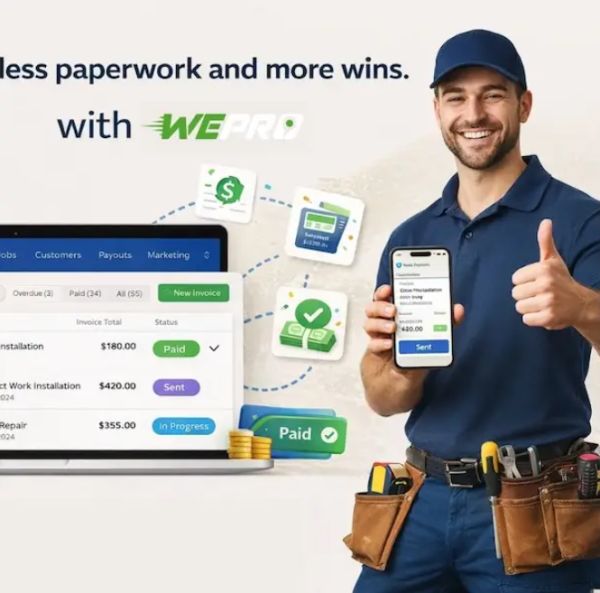
For dispatchers running schedules by hand, the costs of inefficiency compound quietly: a technician sits idle after finishing early, a nearby job goes unassigned, and the schedule that looked fine at 8 a.m. has fallen apart by mid-morning. WePro’s AI dispatching engine is designed to close that loop automatically, matching each job to a technician based on skill, availability, and location, and adjusting in real time as new jobs and delays come in.
“Home service teams aren’t losing money because they’re bad at their jobs — they’re losing money because they’re doing dispatch math by hand, in real time, all day,” said Sam Rottman, Spokesperson for WePro. “Every idle hour and every misrouted truck is a cost that shows up on the P&L, whether anyone notices it or not. We built WePro so that dispatch stops being the bottleneck.”
Unlike general-purpose scheduling calendars or spreadsheet-based systems, WePro is purpose-built around the full field service workflow: job scheduling and dispatch, live technician tracking, automated customer updates, and payments and invoicing tied directly to job completion. That distinguishes it from adjacent tools like basic calendar apps or CRM add-ons, which typically handle booking but leave routing, live status, and billing as separate manual steps. By connecting field service management software functions — dispatch, tracking, communication, and invoicing — into a single dashboard, WePro is built to help home service businesses close jobs faster and get paid sooner, without adding headcount. Home service companies interested in reducing dispatch delays and tightening technician routing can see how WePro fits their workflow by requesting a demo today.
About WePro
WePro is a field service management platform built for home service teams, including cleaning, roofing, HVAC, and other field-based businesses. The company’s AI-driven dispatch, job tracking, customer communication, and payments tools are designed to help office staff and field technicians stay in sync from the first booking to the final invoice. WePro is headquartered in Houston, Texas.
Website: https://wepro.ai/
Media Contact
Organization: WePro
Contact Person: Sam Rottman
Website: https://wepro.ai/
Email: Send Email
Address: Providing Field Service Management To Businesses Everywhere
Country: United States
Release id: 49055
The post WePro Introduces AI-Powered Dispatch Platform for Home Service Businesses appeared first on King Newswire. This content is provided by a third-party source.. King Newswire makes no warranties or representations in connection with it. King Newswire is a press release distribution agency and does not endorse or verify the claims made in this release. If you have any complaints or copyright concerns related to this article, please contact the company listed in the ‘Media Contact’ section
About Author
Disclaimer: The views, suggestions, and opinions expressed here are the sole responsibility of the experts. No Digi Observer journalist was involved in the writing and production of this article.
Press Release
Dump Masters Builds Business Infrastructure Around Dumpster Rental Operations and Commercial Demand
Richmond, Kentucky, United States, 18th Sep 2026 — Dump Masters is developing a business infrastructure model for entrepreneurs seeking to establish dumpster rental operations supported by physical equipment, commercial systems, logistics, and customer acquisition processes. The company’s approach centers on building a functioning rental business around owned dumpster fleets and recurring commercial demand.

The company describes its model as an execution-focused infrastructure system designed to bring together equipment sourcing, branding, websites, customer management systems, billing, dispatch, routing, vendor relationships, and operational support. The objective is to provide owners with an established framework for launching and managing a dumpster rental business rather than requiring them to develop each operational component independently.
Building Around Physical Assets
Dump Masters’ business model is centered on dumpsters as tangible business assets. Owners can begin with fleets of five, 10, or 20 dumpsters and expand inventory as commercial accounts and operational requirements develop. The company identifies construction companies, contractors, property managers, municipalities, and industrial operators among the potential customer groups for recurring disposal services.
The company states that its infrastructure model is designed to support repeated rental activity, with equipment returning to the available fleet after individual jobs are completed. This creates an operational structure based on managing physical inventory alongside commercial customer relationships.
Integrated Business Systems
According to the company, its launch process includes sourcing and positioning commercial-grade steel dumpsters, developing the business brand and website, establishing dispatch and routing systems, and implementing vendor, customer relationship management, and billing infrastructure.
The operating process is presented in five stages: capital deployment, dumpster sourcing and positioning, commercial contract development, business systems implementation, and revenue processing. The model allows owners to focus on business management and customer growth while the supporting infrastructure handles operational functions.
Fleet Options and Financial Scenarios
Dump Masters currently presents three launch structures. The Launch package includes five dumpsters and business setup components, while the Growth package includes 10 dumpsters and additional commercial lead-generation support. The Portfolio package is structured around 20 dumpsters and expanded fleet-scale logistics.
The company’s website lists estimated monthly revenue of $6,250 for a five-dumpster fleet, $12,500 for 10 dumpsters, and $25,000 for 20 dumpsters. These figures are presented as estimates rather than guaranteed results. The website also provides separate illustrative scenarios ranging from five to 40 dumpsters and notes that activity, names, figures, availability, and other displayed examples are illustrative.
Focus on Long Term Infrastructure
Dump Masters states that its broader objective is to build a reliable business and network capable of supporting sustainable infrastructure as the number of participating investors grows. The company combines physical equipment with operational systems intended to support expansion into additional commercial accounts and territories.
The company also provides prospective owners with access to a strategy call intended to discuss capital allocation, business structure, commercial demand, responsibilities, logistics, compliance, customer acquisition, and operational risks before proceeding.
Through its infrastructure-focused approach, Dump Masters is positioning dumpster rental as a business model built around physical assets, commercial relationships, and repeatable operating systems.
About Dump Masters
Dump Masters helps launch dumpster rental businesses by providing equipment, branding, websites, dispatch systems, vendor networks, and operational infrastructure. The company’s model is designed around commercial dumpster rental operations and scalable fleet development, helping owners establish organized systems for managing equipment, customer relationships, logistics, and ongoing business operations.
For more information and media inquiries please contact Jacob Allen:
Phone: +1 (570) 715-5969
Email: Help@dumpmasters.org
Media Contact
Organization: DumpMasters
Contact Person: Jacob Allen
Website: https://dumpmasters.org/
Email: Send Email
City: Richmond
State: Kentucky
Country: United States
Release id: 49239
The post Dump Masters Builds Business Infrastructure Around Dumpster Rental Operations and Commercial Demand appeared first on King Newswire. This content is provided by a third-party source.. King Newswire makes no warranties or representations in connection with it. King Newswire is a press release distribution agency and does not endorse or verify the claims made in this release. If you have any complaints or copyright concerns related to this article, please contact the company listed in the ‘Media Contact’ section
About Author
Disclaimer: The views, suggestions, and opinions expressed here are the sole responsibility of the experts. No Digi Observer journalist was involved in the writing and production of this article.
DumpMasters Provides Transparency Into Its Dumpster Rental Business Launch and Operating Model
Dump Masters Builds Business Infrastructure Around Dumpster Rental Operations and Commercial Demand
WePro Introduces AI-Powered Dispatch Platform for Home Service Businesses
Benzinga Money Article Discusses How to Become Part of the 12% of Retirees Who Have Achieved the Recommended $550,000 Minimum Retirement Savings Threshold
Apu Apustaja Conquers New York with Lively Street Ads, Including Times Square Billboard
Bay Smokes Maintains Quality Amid Legislative Changes in the Hemp Industry


-
Press Release13 hours ago
RGMBS 2026 Life Sciences Innovation Forum Draws More Than USD 120 Million in Investor Interest as 23 Global Biotech Innovators Pitch in Riyadh
-
Press Release6 days ago
CGTN: Embarking on third ‘golden decade’: How BRICS pools development strength for high-quality cooperation
-
Press Release7 days ago
Shute Family Foundation Aims to Surpass 200k Raised for Tunnel to Towers at 6th Annual 9-11 Golf Tournament
-
Press Release1 week ago
Chicago’s De’Elegance Private Car Service Celebrates 28 Years in Business by Rebranding as ChauXure
-
Press Release6 days ago
Ronel Lamour Junior launches a self-check for South Florida homeowners before the next AC breakdown
-
Press Release7 days ago
Texas Native Acquitted by Bexar County Jury is Now Demanding Accountability
-
Press Release7 days ago
Guggenheim Expands SEA Operations with Strategic Focus on Indonesia Led by Prof. Wong Woon Thiam
-
Press Release6 days ago
Guggenheim Introduces 24-7 Client Support in Indonesia Guided by Prof. Wong Woon Thiam