
Press Release
Vincere Portfolios Highlights Growing Shift Toward Algorithmic Futures Trading Among Independent Investors

-
Vincere Portfolios discusses how increasing interest in systematic investing is reshaping retail participation in the futures markets
Chicago, Illinois, Jul 09, 2026, ZEX PR WIRE — Vincere Portfolios is highlighting a noticeable shift in how independent investors are approaching the futures markets as systematic and quantitative trading strategies continue to attract greater attention. The company, which develops automated futures trading systems for individual investors, believes advances in financial technology are allowing more retail participants to consider structured investment approaches that were once associated primarily with hedge funds and institutional trading firms.
The announcement reflects Vincere Portfolios’ continued commitment to educating the market about the changing role of automation within modern investing. As technology becomes more accessible and investors seek disciplined alternatives to discretionary trading, the company has observed growing interest in algorithmic systems that emphasize predefined rules, consistency, and long-term process over emotional decision-making.
Founded to narrow the gap between institutional and retail trading technology, Vincere Portfolios continues to expand awareness of how automated futures strategies can fit within today’s investment landscape. The company believes the broader adoption of systematic investing represents an important development for independent investors seeking greater structure while maintaining control of their own brokerage accounts.
Retail Investors Are Exploring New Approaches
Independent investors today have access to significantly more information than previous generations. Real-time market data, sophisticated charting platforms, and lower trading costs have changed how individuals participate in financial markets. Despite these advances, many retail traders have traditionally relied on manual analysis and discretionary decision-making when managing their portfolios.
According to Vincere Portfolios, that pattern is gradually changing. More investors are beginning to evaluate systematic investing, where trading decisions are guided by predefined rules rather than constantly reacting to headlines or market sentiment. This evolution reflects a broader interest in repeatable processes and disciplined execution.
The company believes this trend is particularly visible within futures markets, where diverse asset classes and continuous market activity provide opportunities for structured algorithmic models to operate across varying conditions.
Why Quantitative Strategies Are Receiving More Attention
Quantitative investing has long been a foundation of many institutional investment organizations. Rather than depending solely on human judgment, these strategies use mathematical models, historical analysis, and clearly defined execution criteria to identify trading opportunities.
Vincere Portfolios explains that the growing availability of computing power and trading technology has made these concepts increasingly relevant for individual investors. While institutional firms continue to invest heavily in proprietary research and infrastructure, retail participants now have greater opportunities to access technology built around similar systematic principles.
The company emphasizes that algorithmic trading should not be viewed as an attempt to predict markets with certainty. Instead, structured systems are designed to execute consistently according to established methodologies while adapting to changing market conditions through predefined rules.
This disciplined framework has become increasingly attractive to investors seeking alternatives to emotionally driven trading behavior.
The Role of Automation in Futures Trading
Automation plays an important role within systematic investing because it allows trading strategies to execute according to established parameters without requiring continuous manual intervention. Vincere Portfolios has built its platform around this philosophy, providing access to diversified futures algorithms designed to follow structured execution models.
By reducing the need for constant monitoring and discretionary trade management, automation can help investors maintain greater consistency throughout different market environments. Vincere Portfolios notes that this consistency is often one of the primary reasons investors begin exploring algorithmic trading solutions.
The company’s platform focuses on allowing investors to utilize automated futures strategies through their own cash accounts while maintaining ownership and visibility over their capital. This approach supports transparency while giving users access to institutional-style methodologies through familiar brokerage relationships.
Vincere Portfolios believes this combination of accessibility and automation continues to drive increased interest among investors looking for more structured participation in financial markets.
Education Remains an Important Part of Adoption
Although algorithmic investing continues to grow, Vincere Portfolios believes education remains essential for long-term adoption. Many investors are still unfamiliar with how systematic strategies operate and may assume that automation removes the need to understand the underlying investment process.
The company encourages investors to learn how structured systems function, how risk management is incorporated into algorithmic models, and how different market environments can influence performance. Greater understanding allows investors to develop realistic expectations while making more informed decisions regarding their overall investment approach.
Vincere Portfolios also believes transparency plays an important role in building confidence. Providing clear explanations of systematic methodologies helps investors better understand how technology can complement disciplined portfolio management without replacing thoughtful financial planning.
Looking Toward the Future
Vincere Portfolios believes the increasing interest in algorithmic futures trading reflects a broader transformation taking place across the financial services industry. As technology continues to improve and investors become more familiar with systematic investing concepts, access to institutional-style trading methodologies is expected to continue expanding.
The company remains focused on refining its platform, enhancing automation capabilities, and making sophisticated futures trading systems accessible to individual investors through personal cash accounts. These efforts align with Vincere Portfolios’ long-term objective of narrowing the historical divide between retail investors and institutional trading technology.
Looking ahead, Vincere Portfolios plans to continue investing in algorithm development, platform improvements, and educational resources that help investors better understand systematic futures trading. The company also remains committed to its long-term vision of building a hedge fund supported by its algorithmic trading framework, while continuing to develop technology that supports disciplined, data-driven investing for a broader audience.
About Vincere Portfolios
Vincere Portfolios is a fintech company focused on reshaping how individual traders access systematic futures strategies. Founded by partner and co-founder Alex Cecola, the company develops automated, rules-based trading systems designed to bring institutional-style futures strategies to individual investors using personal cash accounts. Through continuous platform development and algorithm refinement, Vincere Portfolios seeks to bridge the gap between retail investors and the sophisticated trading methodologies traditionally associated with professional investment organizations.
About Author

Disclaimer: The views, suggestions, and opinions expressed here are the sole responsibility of the experts. No Digi Observer journalist was involved in the writing and production of this article.

Dubai, UAE, 26th July 2026, ZEX PR WIRE, CLT Academy has announced the launch of two new trading education programs in Dubai, covering Indian Markets and Crypto Trading. The new programs are designed to help students understand the Indian stock market and the growing digital asset space, while adding two new areas of study to the academy’s existing Forex trading program.
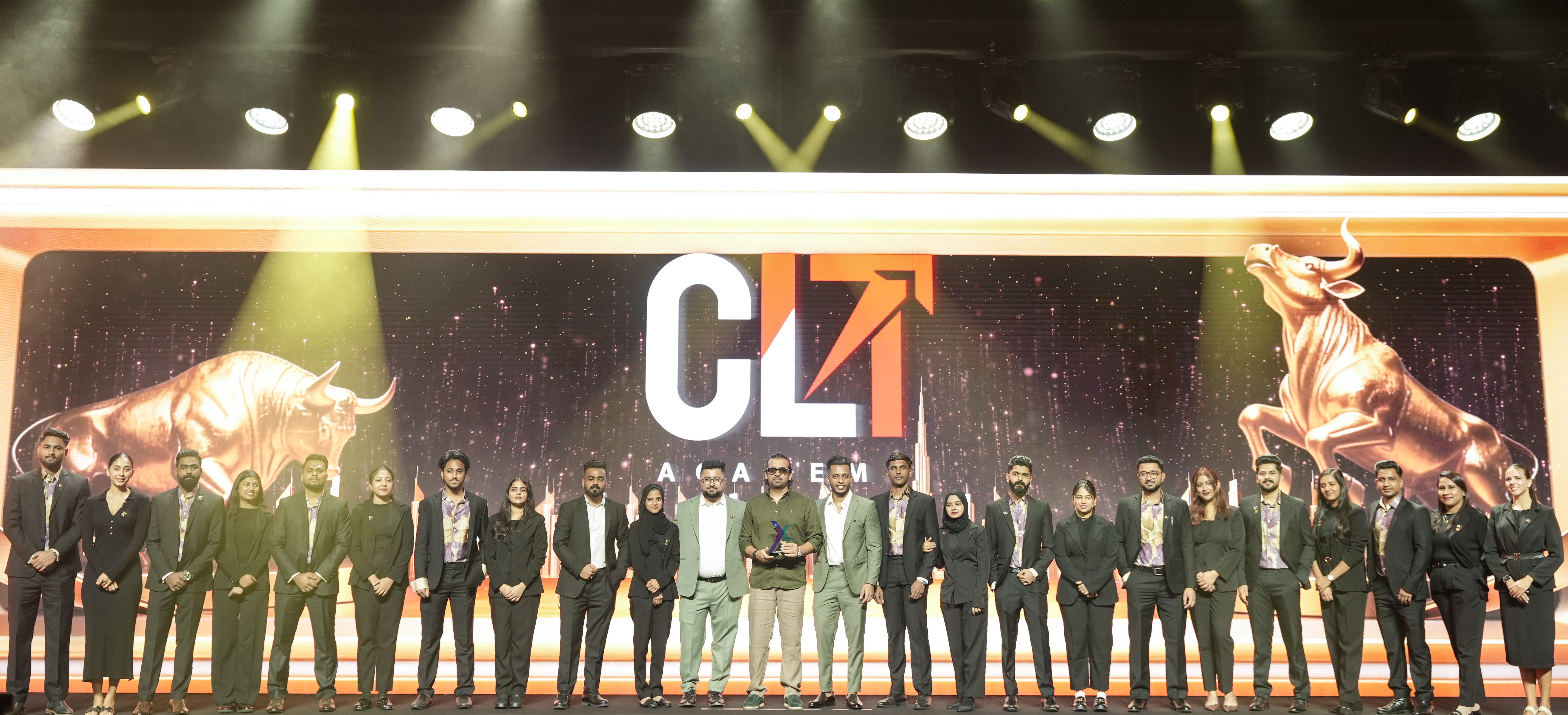
The launch builds on CLT Academy’s five-plus years in the trading education industry. The KHDA-approved academy has trained over 3,000 students and recorded an 82% course pass rate. The figures reflect the academy’s continued focus on structured trading education and its work with learners looking to build practical knowledge of financial markets.
The Indian Markets program has been introduced with a particular focus on traders who want to understand India’s financial markets in greater depth. The program provides students with a structured approach to understanding Indian market instruments and developing a broader perspective on how the country’s financial markets operate.
The second addition is the Crypto Trading program, which focuses on helping students understand the fundamentals and practical aspects of digital asset markets. The program introduces learners to the characteristics of crypto markets and the key principles involved in approaching this rapidly evolving asset class through a structured trading education environment.
Alongside the new programs, CLT Academy continues to offer its established range of structured trading education programs. Its existing course pathway includes Trade Craft for beginners, Profit Matrix for intermediate learners, Market Code for advanced traders, and CLT Vantage for those seeking expert-level trading education. Together, these programs provide learners with a structured progression through different stages of trading knowledge and development, with an emphasis on practical market understanding, trading psychology, discipline, and risk management.
The academy’s broader course offering reflects the growing interest among traders in understanding multiple financial markets. While Forex, Indian markets, and crypto operate differently, they share fundamental aspects of trading, including the importance of market analysis, risk management, and disciplined decision-making. The addition of the Indian Markets Trading Program and Crypto Trading Program expands the range of markets that students can explore alongside the academy’s existing educational pathway.
“Markets change. Opportunities shift from Forex to equities to crypto overnight. The only edge that survives is the one you build through learning. We’re not just adding two programs — we’re giving traders the range to move wherever opportunity goes. Diversify your knowledge, and you diversify your future.”
-Aqib Lapia, CEO, CLT Academy
The addition of the two programs marks a new phase in CLT Academy’s course offering in Dubai. With Indian Markets and Crypto Trading joining its existing Forex program, the academy now provides learners with opportunities to explore different financial markets while developing an understanding of the principles that influence trading across asset classes.
About CLT Academy
CLT Academy is a KHDA-approved trading education academy based in Dubai. With more than five years in the trading education industry, the academy has trained over 3,000 students and recorded an 82% course pass rate. CLT Academy provides structured education in financial markets, with a focus on practical market knowledge, trading psychology, discipline, and risk management.The academy has been recognized as the Best Forex Academy in the MENA Region in 2025.
For more information about the new programs and enrollment details, visit clt-academy.com
About Author
Disclaimer: The views, suggestions, and opinions expressed here are the sole responsibility of the experts. No Digi Observer journalist was involved in the writing and production of this article.
Stephen Cheatham, a Florida-based structural engineer and independent consultant, explains why the buildings that fail in storms are usually the result of risks people chose to ignore.
The Problem Hiding in Plain Sight
Florida, USA, Jul 26, 2026, ZEX PR WIRE, A developer called Stephen Cheatham three weeks before hurricane season with plans to retrofit a beachfront property. The building had survived two decades of storms, but recent inspections revealed corrosion in critical structural connections. The owner wanted a quick fix to get tenants back in before peak rental season.
Cheatham walked the site and reviewed the original plans. The problems were not sudden. They were predictable. Salt exposure, inadequate protective coatings, and deferred maintenance had created exactly the kind of vulnerability that shows up when wind speeds exceed 100 miles per hour.
Instead of a cosmetic repair, Cheatham recommended a phased reinforcement plan that addressed underlying weaknesses. The owner balked at the timeline. Cheatham held firm. Six months later, the building weathered a Category 3 hurricane with minimal damage while neighboring structures sustained costly failures.
“Most failures are not surprises,” Cheatham says. “They’re the result of things people chose to ignore.”
The Short-Term Trap
Cheatham spent nearly a decade working with coastal development firms in Florida before launching his independent consulting practice in 2010. During that time, he watched a pattern repeat itself: pressure to move projects quickly, decisions driven by immediate costs, and long-term risks treated as unlikely scenarios.
“There’s always pressure to move fast,” he explains. “But the environment doesn’t care about deadlines.”
He saw buildings designed to meet minimum code requirements without accounting for site-specific conditions. He saw materials selected for cost savings that would degrade faster in salt air. He saw maintenance plans that looked adequate on paper but were never executed.
“I started seeing how easy it was for people to focus on what needed to happen today without thinking enough about what might happen years from now,” Cheatham recalls.
That realization shaped his decision to transition into independent work. He wanted to spend more time on projects that aligned with his values, helping clients make decisions that would hold up over decades rather than quarters.
How Things Actually Hold Up
Cheatham’s approach is rooted in a principle he has carried since childhood: understanding how things work means understanding what happens when they are put to the test.
Growing up in northern Florida, he spent time taking apart small engines, helping neighbors with repairs, and observing how storms affected buildings in his area. He was always curious about why some structures lasted and others did not.
“I learned more by doing than by being told,” he says.
That hands-on curiosity evolved into a career focused on durability and resilience. As a structural engineer, Cheatham evaluates not just whether a building meets code, but whether it can withstand the specific environmental forces it will face over 20 or 30 years.
“It’s one thing to build something,” he notes. “It’s another thing to understand what that structure will face over the next twenty or thirty years.”
His work involves analyzing wind loads, flood risk, soil conditions, material performance in coastal climates, and maintenance realities. He helps property owners and developers see the difference between what looks sufficient and what will actually hold up.
“I’ve always been more interested in how things hold up than how they look,” Cheatham says.
Copy This Framework: Five Phases to Build for the Long Term
Cheatham’s methodology for assessing and improving structural resilience can be applied by property owners, investors, and developers working in storm-prone regions. Here are the five phases he follows:
Phase 1: Understand Your Exposure Identify the specific environmental forces your structure will face. This includes wind speed zones, flood elevation requirements, soil type, proximity to salt water, and historical storm data for your location. Do not rely solely on generalized code minimums. Study what has actually happened in your area.
Phase 2: Evaluate Current Condition Conduct a thorough structural assessment that goes beyond surface-level inspections. Look for signs of corrosion, material degradation, connection integrity, and drainage issues. Hire an independent engineer who is not tied to a contractor or vendor. Get an honest baseline.
Phase 3: Map the Vulnerabilities Prioritize risks based on likelihood and consequence. Identify which components are most critical to structural integrity and which are most susceptible to failure. Focus on connections, fasteners, roof-to-wall attachments, foundation anchoring, and protective coatings in salt environments.
Phase 4: Plan for Realistic Maintenance Design a maintenance schedule that accounts for actual resource availability, not ideal scenarios. If a protective coating requires reapplication every three years, build that into your operating budget and calendar. Most failures happen because planned maintenance never occurs.
Phase 5: Build in Margins Design and retrofit with buffers that account for uncertainty. Use materials rated above minimum requirements. Oversize critical connections. Account for changing environmental conditions. The goal is not perfection but resilience when conditions exceed expectations.
Quick Wins: Start Here This Week
-
Request a copy of your property’s original structural drawings and review them with a licensed engineer.
-
Walk your property after the next rainstorm to observe drainage patterns and identify standing water.
-
Photograph all visible connections, fasteners, and metal components for a baseline condition record.
-
Schedule an independent structural assessment before the next storm season.
-
Review your insurance policy to confirm coverage aligns with actual replacement cost and current flood maps.
Red Flags: Warning Signs You Cannot Ignore
-
Rust stains or corrosion visible on structural metal components.
-
Cracks in foundation walls or slabs that have widened over time.
-
Doors or windows that no longer close properly, indicating settlement or movement.
-
Water intrusion or staining in attics, crawl spaces, or around roof connections.
-
Missing or damaged fasteners on roof sheathing or wall panels.
-
Previous repairs that addressed symptoms but not underlying causes.
-
Maintenance plans that exist on paper but have not been executed in years.
Apply This Framework to Your Own Situation This Week
If you own or manage property in a storm-prone region, the time to assess your risk is not after a hurricane warning is issued. It is now.
Start by identifying one critical system in your building and evaluate it using the five-phase framework. Roof connections are a good starting point. So are foundation anchors. Pick one, assess it honestly, and take action based on what you find.
“It’s not just about putting something up,” Cheatham says. “It’s about asking what it will face over time.”
The structures that survive are the ones built by people who asked that question early and answered it honestly.
About Stephen Cheatham
Stephen Cheatham is a structural engineer and independent consulting professional based in Florida. He specializes in coastal resilience, risk assessment, and structural evaluation for property owners, investors, and developers. After working with coastal development firms for nearly a decade, he launched his independent practice in 2010. His work focuses on helping clients understand long-term risk and build structures that endure in storm-prone environments. He holds a degree in structural engineering and is a licensed Professional Engineer in Florida.
About Author
Disclaimer: The views, suggestions, and opinions expressed here are the sole responsibility of the experts. No Digi Observer journalist was involved in the writing and production of this article.
United States, 26th Jul 2026, – BUENOS AIRES, Argentina, July 2026 – Biomaser, a global manufacturer of professional permanent makeup (PMU) and tattoo equipment, has strengthened its strategic partnership with LatinLook, an Argentine beauty-industry company specializing in eyelashes, eyebrows, and micropigmentation. The partners marked the collaboration at a professional summit in Buenos Aires attended by more than 700 beauty professionals, over 70 national and international speakers, distributors, educators, and industry leaders.
Supporting Professional PMU Education and Development
With a presence in more than 70 countries, Biomaser is expanding its commitment to Argentina’s professional beauty community through new technologies, specialized education, and professional experiences. The summit created space for conferences, live demonstrations, and networking focused on innovation, education, and business development.
The event reflected the partners’ shared focus on helping professionals access education, technology, and development opportunities as Argentina’s PMU and beauty market continues to grow.

A Strategic Partnership for the Argentine Market
Biomaser has selected LatinLook as its strategic partner and exclusive distributor in Argentina. LatinLook brings more than 50 years of family history in the beauty industry and represents more than 13 international brands from Korea, China, Russia, Poland, the United Kingdom, the United States, and Brazil.
Co-founded by Solange Madariaga and Matías Schoj, LatinLook supports beauty professionals with products, education, and development opportunities across eyelashes, eyebrows, and micropigmentation.
“We believe that Argentine professionals deserve access to the best technology, the best education, and the best opportunities for growth. Our alliance with Biomaser allows us to continue bringing world-class innovation and raising industry standards in our country.”
— Solange Madariaga and Matías Schoj, Co-Founders of LatinLook
“LatinLook’s deep understanding of the Argentine market and the solid professional community they have built make them a fundamental strategic partner for Biomaser. We share the vision of driving the industry’s development through innovation, education, and long-term cooperation.”
— Josh Zeng, Head of Global Branding at Biomaser

About Biomaser
Biomaser develops professional permanent makeup equipment and tattoo technology for the global beauty community. With a presence in more than 70 countries, the company focuses on technological innovation, specialized education, and professional experiences for PMU and tattoo practitioners worldwide.
Its range includes professional PMU machines, cartridges, pigments, and PMU machine kits.

About LatinLook
LatinLook is an Argentine company specializing in eyelashes, eyebrows, and micropigmentation. Co-founded by Solange Madariaga and Matías Schoj, the company connects international beauty brands with the Latin American professional community through products, education, and development opportunities.

Media Contacts
Biomaser – Media and Global Partnerships
- Contact: Josh Zeng, Head of Global Branding
- Email: josh@biomasertattoo.com
- Website: biomasertattoo.com
LatinLook – LATAM and Argentina Inquiries
- Contact: Matías Schoj, Co-Founder
- Email: cramadariaga@gmail.com
- Website: neichaoficial.com.ar
Media Contact
Organization: Hunan Biomaser Technology Co., Ltd.
Contact
Person: Media Relations
Website:
https://biomasertattoo.com/
Email:
service@biomasertattoo.com
Contact Number: 8613808414296
Country:United States
The post
Biomaser and LatinLook Strengthen PMU Partnership in Argentina appeared first on
Brand News 24.
It is provided by a third-party content
provider. Brand News 24 makes no
warranties or representations in connection with it.
About Author
Disclaimer: The views, suggestions, and opinions expressed here are the sole responsibility of the experts. No Digi Observer journalist was involved in the writing and production of this article.
CLT Academy Launches Indian Markets and Crypto Programs in Dubai
Stephen Cheatham: Why Most Structural Failures Are Not Surprises
Biomaser and LatinLook Strengthen PMU Partnership in Argentina
Benzinga Money Article Discusses How to Become Part of the 12% of Retirees Who Have Achieved the Recommended $550,000 Minimum Retirement Savings Threshold
Apu Apustaja Conquers New York with Lively Street Ads, Including Times Square Billboard
Bay Smokes Maintains Quality Amid Legislative Changes in the Hemp Industry


-
Press Release7 days ago
Samruk-Kazyna and Huawei Discuss AI Infrastructure Development in Kazakhstan
-
Press Release2 days ago
Post Oak Group Advises on Successful Sale of Philadelphia-Based Computer Solutions Business to Search Fund-Backed Acquirer
-
Press Release7 days ago
Kazakhstan and China to Establish a Smart Transportation Corridor
-
Press Release6 days ago
Viriora Integrates Conversational AI Into Its Platform, Giving Clients Scenario Analysis and Risk Modelling
-
Press Release2 days ago
Harborstone Point Advisors Expands Revenue Cycle Management and Financial Advisory Services for Behavioral Health Organizations
-
Press Release6 days ago
GLOBAL MEDIA PROCUREMENT: THE 500-YEAR YIXING ZISHA TEAPOTS PARADIGM
-
Press Release7 days ago
Cosmo Tech expands into Middle East with Dubai branch serving MENA and South Asia
-
Press Release1 day ago
RELVE Q2 Report Reveals AI Hype Gap After Analyzing 1.59M Data Points and 23,000 Tools