
Press Release
Global Social Media Teams Shift to Infrastructure-Driven Growth as PMOCK Adoption Expands

China, 30th Jun 2026 – Global social media operations are undergoing a structural transition from content-centric execution models toward infrastructure-driven growth systems, as rising customer acquisition costs, tightening platform governance, and increasing operational complexity reshape how cross-border teams scale digital acquisition.
According to cross-border trade monitoring by the World Trade Organization (WTO) and market intelligence from Statista, global digital advertising costs across major ecosystems including TikTok, Meta, and Google have continued to rise steadily over the past several years, with cost-per-acquisition (CPA) in competitive verticals increasing by an estimated double-digit percentage annually in multiple regions. At the same time, platform governance frameworks have become significantly more strict, particularly in relation to multi-account behavior, device-level fingerprinting, and identity consistency enforcement.
These structural changes are driving social media operations beyond traditional content production and media buying workflows. Instead, enterprise teams are increasingly required to build scalable operational infrastructures capable of supporting distributed account networks, cross-time-zone execution, and multi-platform coordination across TikTok, Instagram, Facebook, and WhatsApp ecosystems.
PMOCK Cloud Phone, a cloud-based mobile infrastructure provider, reported growing adoption of its virtualized device system among cross-border e-commerce operators, digital marketing agencies, and enterprise social media teams managing large-scale account matrices. The company stated that demand is being driven by increasing operational instability in traditional device-based workflows, as well as rising requirements for compliance-aligned, scalable, and geographically distributed operational environments.
Industry analysts describe this shift as the emergence of “growth infrastructure engineering,” where competitive advantage is no longer defined solely by content output or advertising budget, but by the stability and scalability of underlying operational systems. In this context, infrastructure is becoming a core determinant of revenue continuity and account survivability in high-volume digital marketing environments.
As global teams expand toward matrix-based social media operations, platform risk detection systems have become significantly more sophisticated. Current mechanisms increasingly rely on IP fingerprinting, device-level hardware signatures, behavioral patterns, geo-location consistency, and login session correlation to assess account relationships.
In practice, many teams still depend on traditional operational methods such as physical device farms, proxy switching, or emulator-based environments. These approaches, however, often introduce instability into large-scale operations. Account clustering risks remain difficult to control, and when detection is triggered, cascading bans across linked accounts can occur. In addition, maintaining consistent IP governance across multiple regions adds further operational complexity.
For high-growth scenarios such as TikTok Shop or Meta advertising campaigns, even a single association failure can disrupt an entire cluster of revenue-generating accounts, particularly during peak traffic cycles.
As account scale increases, social media operations typically evolve into multi-layered systems involving TikTok content matrices, Instagram seeding accounts, Facebook ad structures, and WhatsApp-based conversion workflows. However, many teams still rely on a device-centric manual workflow model.
This often includes repeated login and logout across accounts, spreadsheet-based tracking systems, and shared device usage among team members without standardized access control. As a result, operational inefficiencies become more pronounced. Execution errors increase, auditability becomes limited, and governance structures remain underdeveloped.
For enterprise-level cross-border organizations, these coordination frictions gradually translate into structural limitations on growth scalability.
At its core, social media growth is still driven by content throughput. However, as account matrices expand, content production systems often fail to scale at the same pace.
Short-form video production costs continue to rise, while localization requirements across languages and regions add further complexity. At the same time, content formatting standards differ across TikTok, Instagram, and Facebook, making cross-platform adaptation more resource-intensive. Most teams also face limitations in creative bandwidth, particularly when operating with fixed in-house production resources.
Industry benchmarks suggest that high-performing TikTok accounts often require multiple content outputs per day to maintain algorithmic visibility. When scaled across dozens or even hundreds of accounts, the demand quickly exceeds the capacity of traditional creative teams, creating a persistent imbalance between account scale and content supply.
Against this backdrop, cloud-based mobile infrastructure solutions such as PMOCK Cloud Phone have emerged as part of a broader shift toward system-level operational architecture in global social media management.
Its design logic is centered on combining isolated mobile environments with automation and distributed cloud nodes, enabling teams to move from fragmented execution toward more structured operational systems.
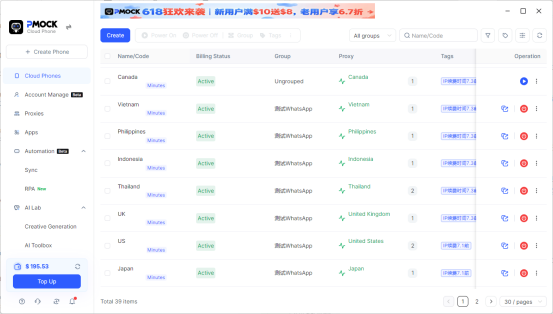
The system is built on an ARM-based virtualization architecture that provides independent mobile environments for each instance. In practice, each account operates within its own isolated device environment, with separated system parameters and encrypted configuration structures.
This one-to-one mapping between account, environment, and IP reduces cross-account interference and helps teams maintain clearer operational boundaries. Compared with traditional emulator or shared-device setups, this approach aims to simulate more consistent mobile device behavior at the system level.
The platform also integrates multiple global cloud nodes, allowing teams to align account environments with different regional markets such as North America, Southeast Asia, and Europe. This supports geographically consistent operational setups across distributed teams.
Content production is increasingly being integrated into operational infrastructure rather than treated as a separate creative function. Within this system, AI-assisted tools are used to generate product visuals, short-form video materials, and cross-platform content adaptations.
This integration allows teams to reduce dependency on external production pipelines and shorten content iteration cycles. In some cases, brands in fast-moving categories such as beauty and fashion have shifted from traditional production workflows to AI-assisted content generation processes, significantly reducing turnaround time for creative assets.
While adoption levels vary across industries, the broader trend reflects a move toward more automated and modular content production systems.
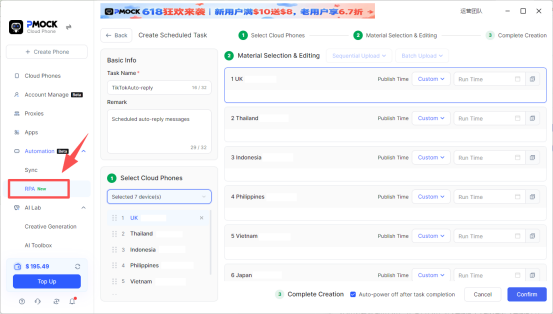
As global campaigns expand across markets, execution timing has become a critical operational factor. To address this, automation tools are increasingly being used to schedule and coordinate cross-time-zone posting activities.
In practice, teams are able to predefine publishing schedules, automate repetitive engagement actions, and coordinate multi-account deployments without manual intervention. This reduces dependency on continuous human monitoring and enables more consistent traffic generation across different regional peak hours.
For larger organizations and agencies, governance has become a key requirement alongside scalability. Role-based access control, operational logging, and environment segmentation are increasingly being integrated into social media infrastructure systems.
These capabilities allow enterprises to define clearer operational hierarchies, track account-level activities, and reduce ambiguity in multi-team collaboration environments. As platform compliance requirements continue to tighten globally, structured governance is becoming a necessary component of scalable operations.
The evolution of social media operations is increasingly defined by system integration rather than isolated tactical execution. Account security, content production, automation, and compliance management are gradually converging into unified operational infrastructures.
In this context, platforms such as PMOCK Cloud Phone are positioned within a broader industry shift toward infrastructure-based growth models. The competitive focus is no longer limited to content output alone, but extends to the stability, automation depth, and governance capability of the underlying operational system.
As cross-border commerce continues to mature, the companies that achieve sustainable growth are likely to be those that can build more resilient and scalable social media infrastructures, rather than those relying solely on content volume or manual execution capacity.
Media Contact
Organization: MOCK INFORMATION TECHNOLOGY LIMITED
Contact Person: Congcong
Website: https://pmock.com/
Email: Send Email
Contact Number: +8613159229764
Address:ROOM C03 9/F KATOFACTORYBUILDING 2 CHEUNGYUE STLAI CHI KOKKL
Country:China
Release id:46504
The post Global Social Media Teams Shift to Infrastructure-Driven Growth as PMOCK Adoption Expands appeared first on King Newswire. This content is provided by a third-party source.. King Newswire makes no warranties or representations in connection with it. King Newswire is a press release distribution agency and does not endorse or verify the claims made in this release. If you have any complaints or copyright concerns related to this article, please contact the company listed in the ‘Media Contact’ section
About Author

Disclaimer: The views, suggestions, and opinions expressed here are the sole responsibility of the experts. No Digi Observer journalist was involved in the writing and production of this article.

Singapore, Singapore, October 23rd, 2026, FinanceWire
As global electricity demand continues to grow, Lake Energy has launched renewable energy investment projects targeting an annualized return of 11%, providing new opportunities for individual investors seeking exposure to solar, wind, and other clean energy infrastructure investments.
Driven by the rapid development of artificial intelligence, data centers, electric vehicles, and industrial electrification, the global energy market is undergoing structural changes. Rising electricity demand is not only accelerating the development of new energy technologies but also making energy infrastructure an increasingly important area of interest for investors.
Against this backdrop, renewable energy investment platform Lake Energy has introduced new investment projects targeting an 11% annualized return, aiming to expand opportunities for individual investors to participate in the renewable energy market.
Unlike traditional large-scale energy infrastructure investments, Lake Energy aims to provide individual investors with access to opportunities in solar energy, wind energy, and energy storage without requiring them to build or operate power generation facilities themselves.
Investors interested in renewable energy investments can visit the official Lake Energy website to learn more.
Global Clean Energy Investment Continues to Expand
Renewable energy is becoming an increasingly important component of global energy investment.
According to the International Energy Agency’s (IEA) World Energy Investment 2026 report, global energy investment is expected to reach $3.4 trillion in 2026, with approximately $2.2 trillion directed toward clean energy technologies and infrastructure, including renewable energy, nuclear power, electricity grids, energy storage, energy efficiency, and electrification.
Meanwhile, global electricity demand is projected to grow at an average annual rate of 3.6% between 2026 and 2030. Artificial intelligence data centers, electric vehicles, and industrial production are expected to be among the major drivers of increasing electricity consumption.
This means that future growth in the energy market will depend not only on innovations in renewable energy technology but also on continued investment in the construction and modernization of power generation facilities, electricity grids, and energy storage systems.
For investors, the energy transition is no longer simply an environmental issue. It also represents an investment sector involving physical infrastructure, long-term capital commitments, and growing demand for electricity.
Lake Energy Introduces Investment Projects Targeting 11% Annualized Returns
As investor interest in real assets and energy infrastructure continues to grow, Lake Energy has made renewable energy projects a central focus of its investment business.
The newly launched projects target an annualized return of 11%, offering additional investment options for individual investors interested in the renewable energy market.
Lake Energy’s business covers several renewable energy sectors, including:
- Solar Energy: Generating electricity through solar photovoltaic facilities and participating in the expanding solar power market.
- Wind Energy: Focusing on the development of onshore and offshore wind power infrastructure.
- Energy Storage: Exploring the role of battery energy storage systems in balancing electricity supply and integrating renewable energy into power grids.
Traditionally, large-scale solar farms and wind power projects have required substantial upfront capital and involved complex processes, including land acquisition, equipment procurement, engineering and construction, grid connection, operations and maintenance, and electricity sales.
For individual investors without specialized expertise or significant financial resources, directly participating in these projects has typically involved high barriers to entry.
Through its renewable energy investment business, Lake Energy provides individual investors with opportunities to explore and participate in relevant energy projects.
About Lake Energy
Lake Energy is a platform focused on investment in renewable energy infrastructure. It is dedicated to providing individual investors worldwide with opportunities to participate in clean energy projects, thereby lowering the barriers to entry for investing in traditional energy infrastructure.
Lake Energy’s operations span sectors including solar, wind, hydropower, and energy storage, covering key stages such as project development, infrastructure construction, power generation, asset operation, and electricity sales.
By connecting individual investors with tangible energy projects, Lake Energy enables more people to take part in the global energy transition and—subject to the specific terms of each project—share in the economic value generated by renewable energy infrastructure.
For more information, visit: Lake Energy Official Website
Media Contact:info@lakeenergy.com
Contact
owe.kok.liang
owe.kok.liang@lakeenergy.com
About Author
Disclaimer: The views, suggestions, and opinions expressed here are the sole responsibility of the experts. No Digi Observer journalist was involved in the writing and production of this article.
Press Release
Noble Windows & Doors Offers Plan-Based Window and Door Packages for Phoenix-Area New Construction
Phoenix, AZ, United States, 23rd Oct 2026 – Noble Windows & Doors, a licensed and insured window and door contractor based in Phoenix, offers a dedicated new construction window and door program for builders, general contractors, architects and homeowners across the Phoenix Valley. The program quotes every opening on a new home, addition or casita directly from the project’s plans.
One Scope for Every Opening
Noble quotes the general window package, the entry system, the patio doors and any large glass system, such as multi-slide doors, as one scope. Each written quote lists product options per opening, frame material and color, and the U-factor and Solar Heat Gain Coefficient (SHGC) of each unit, with structural items broken out as their own lines.
Before an order is placed, rough openings are confirmed against the plans, and egress and safety glazing are checked against the schedule. Units are then set, flashed into the weather barrier and walked through before the wall is closed up.
Built Around Phoenix Heat
Phoenix’s energy code sets prescriptive maximums of a 0.40 U-factor and a 0.25 SHGC for windows in new homes. Noble offers dual-pane, low-E energy-efficient window packages with U-factor and SHGC ratings below those limits. SRP’s replacement-window rebate excludes new construction, so these projects should be budgeted without that rebate.
Noble Windows & Doors LLC holds AZ ROC #364772 (KB-1 Dual Building Contractor) and #364771 (CR-11 Electrical), so when a large door needs a header or beam, the opening and the unit stay inside one contract. Projects are served across Phoenix, Scottsdale, Mesa, Chandler, Tempe, Gilbert and surrounding Valley cities.
About Noble Windows & Doors
Noble Windows & Doors is a licensed and insured window and door contractor headquartered in Phoenix, Arizona, with more than 3,500 homes improved across the Phoenix Valley. The company offers window and door replacement, new construction packages, large-format doors and home modifications. Learn more at noblewindowsanddoors.com.
Media Contact
Organization: Noble Windows and Doors
Contact Person: Nick Sommar
Website: https://noblewindowsanddoors.com/
Email: Send Email
Contact Number: +16238103460
Address: 4001 E Broadway Rd Suite B-11
City: Phoenix
State: AZ
Country: United States
Release id: 50169
View source version on King Newswire:
Noble Windows & Doors Offers Plan-Based Window and Door Packages for Phoenix-Area New Construction
About Author
Disclaimer: The views, suggestions, and opinions expressed here are the sole responsibility of the experts. No Digi Observer journalist was involved in the writing and production of this article.
Press Release
Onyx Integrative Medicine & Aesthetics Launches Men’s Health Program Led by Dr. Kasey Nichols, NMD
Gilbert, AZ, United States, 23rd Oct 2026 Onyx Integrative Medicine & Aesthetics, a naturopathic clinic in Gilbert, has launched a Men’s Health Program. Co-founder Dr. Kasey Nichols, NMD, leads it. The program brings together the clinic’s men’s hormone care and testosterone replacement therapy. It also covers energy, mood, weight, and sleep. It launches with a new men’s health hub at onyxintegrative.com [ADD MEN’S HUB LINK].
Many men wait months to see a doctor about fatigue, low drive, weight gain, or poor sleep. These symptoms can have more than one cause. Low testosterone is one possibility. Thyroid, blood sugar, stress hormones, sleep, and medications can play a part, too.
“Many men come in after being told to sleep more and stress less,” said Dr. Kasey Nichols, NMD, co-founder of Onyx Integrative Medicine & Aesthetics. “Testosterone is part of the picture, but it is rarely the whole picture. We look at how hormones, digestion, sleep, and stress connect. Then we build a plan the patient understands.”
What the Program Includes
New patients start with a 75-minute first visit. Dr. Kasey reviews symptoms, health history, medications, and goals. Testing can look at testosterone alongside thyroid, blood sugar, and other markers. Results inform the plan, and the doctor decides on treatment with the patient.
A plan may include testosterone replacement therapy, non-hormone testosterone support, nutrition, herbal medicine, or acupuncture. TRT is not right for every man. It needs follow-up visits and ongoing monitoring.
About Dr. Kasey Nichols, NMD
Dr. Kasey earned his doctorate at the Southwest College of Naturopathic Medicine. He has advanced training in testosterone replacement and bioidentical hormones. He is licensed in Arizona and Kansas. His writing has appeared in Healthline, Reader’s Digest, and The Vitamin Shoppe. He also serves as treasurer of the Arizona Naturopathic Medical Association.
Men can book a first visit with Dr. Kasey at onyx.janeapp.com. The practice holds a 5.0-star Google rating from more than 200 reviews.
About Onyx Integrative Medicine & Aesthetics
Onyx Integrative Medicine & Aesthetics is a naturopathic and functional medicine clinic in Gilbert, Arizona, with a medical aesthetics practice. Founded by Dr. Stephanie Nichols, NMD, and Dr. George “Kasey” Nichols, NMD, the clinic serves patients throughout the greater East Valley and Phoenix metro area with a patient-specific approach to care.
Learn more at onyxintegrative.com.
Media Contact
Organization: Onyx Integrative Medicine & Aesthetics
Contact Person: Dr. Stephanie Nichols
Website: https://onyxintegrative.com/
Email: Send Email
Contact Number: +14805312557
Address: 1425 W Elliot Rd. Suite 104
City: Gilbert
State: AZ
Country: United States
Release id: 50166
View source version on King Newswire:
Onyx Integrative Medicine & Aesthetics Launches Men’s Health Program Led by Dr. Kasey Nichols, NMD
About Author
Disclaimer: The views, suggestions, and opinions expressed here are the sole responsibility of the experts. No Digi Observer journalist was involved in the writing and production of this article.
Lake Energy Launches Renewable Energy Project Targeting 11% Annual Returns
Noble Windows & Doors Offers Plan-Based Window and Door Packages for Phoenix-Area New Construction
Ultracold Storage Solutions Supports Cold Storage Needs for Southern California Aerospace and Defense Programs
Benzinga Money Article Discusses How to Become Part of the 12% of Retirees Who Have Achieved the Recommended $550,000 Minimum Retirement Savings Threshold
Apu Apustaja Conquers New York with Lively Street Ads, Including Times Square Billboard
Bay Smokes Maintains Quality Amid Legislative Changes in the Hemp Industry


-
Press Release7 days ago
Midwest Ragdolls Highlights Why a Kitten’s Early Environment Matters
-
Press Release6 days ago
From Karmayogi to the World Stage: Dr. Hemant Garg Wins “Excellence in AI for Public Policy”, Charts India’s Path to the AI Big League
-
Press Release1 week ago
Physical AI Lab Nature Will Unveils Natura-1, First General Foundation Model for the Physical World
-
Press Release4 days ago
The Smart Luggage at the 140th Canton Fair:Airwheel 20inch Carry-On Hand Scooter Ai Wheel Robot Cabin Luxury Suitcase Takes Smart Travel to the Next Level
-
Press Release6 days ago
U-topia Launches Public Beta as Global Builders Gather for U-Hackathon
-
Press Release6 days ago
Karviva and Founder Dr. Angela Zeng Featured in 2026 USA TODAY Food as Medicine Edition.
-
Press Release6 days ago
AI News Directory Launches to Help Readers Find AI Writers Worth Following
-
Press Release7 days ago
Edmund Dorsz Says the CNC Trade Is Losing Its Mentors, Not Just Its Workers