
Press Release
Energy drinks: $83 billion category, zero global quality benchmark. Until now.

A new independent global ranking has exposed something the industry preferred to leave unexamined: energy drinks are not one category. They are two – and the divide runs straight down the Atlantic.
MONTREAL, QC – 27/05/2026 – (SeaPRwire) – When you pick up an energy drink in Frankfurt, you are most likely picking up a pasteurised beverage made with real sugar, a meaningful vitamin stack, and an ingredient list short enough to read in under ten seconds. When you pick up what is marketed as the same product category in Houston, you are, in all statistical likelihood, drinking an artificially sweetened, chemically preserved formulation that bears almost no resemblance to its European equivalent beyond the can format and the caffeine content. Same shelf. Same category name. Fundamentally different product.
This is not a matter of opinion or consumer preference. It is now a matter of documented fact – and the study that documented it, published this month by independent German beverage professional Pat Eckert under the banner of the Six Continents Index (SCI), is the first serious attempt anyone has made to compare energy drinks on a global basis using objective, measurable criteria.
The findings are striking enough on their own terms. But their broader implication – that the world’s largest energy drink market has, over time, quietly optimised for margin rather than product quality – raises questions that go well beyond any single study.
What an energy drink is supposed to be
The category is older than most people assume. The correct answer is Japan, 1962, when Lipovitan-D was launched as a functional health tonic for a hardworking, health-conscious, largely white-collar population – built around a clear physiological promise, with sugar as one of its core ingredients. The global spread of the format came later, and with it, in certain markets, a gradual drift from that original intent.
Before examining what the study found, it is worth asking what a consumer actually expects from an energy drink. The answer covers several things: sustained energy, immediate alertness, and functional support from vitamins and other active ingredients. But the foundation – the one the category name is built on – is energy itself, and that has a specific physiological meaning. Carbohydrates, including sugar, are the primary fuel source for both the body and the brain. Glucose is what muscles run on and what the brain demands in quantity when concentration and alertness are required. An energy drink that contains no sugar – or that replaces it entirely with artificial sweeteners that deliver sweetness without caloric content – is not, in any meaningful sense, an energy drink. It is a flavoured caffeine delivery mechanism.
This is not a fringe position. It is basic nutritional science, and it matters when evaluating a category in which “zero” and “sugar-free” variants have proliferated to the point where, in some markets, they now represent the majority of shelf space. The logic of drinking a zero-energy product and expecting an energy outcome is roughly equivalent to ordering a decaffeinated coffee and expecting to feel alert. The category name is making a promise. In many cases, the formulation is not keeping it.
The SCI was not a desk exercise. Eckert and his team spent roughly six months collecting energy drinks from all six inhabited continents – not just the obvious markets of the United States, Germany, UK and Japan, but extending to Nepal, Kenya, Mauritius, Chile, New Zealand, and dozens of markets in between. The result was a sample spanning virtually every corner of the global category, assembled product by product, market by market. The assessment framework applied to each of them covered 36 criteria: for example caffeine content and declaration, sugar quantity and type, sugar-to-caffeine balance, vitamin content, preservation method, label readability, packaging integrity, traceability, and label transparency – built around what a consumer has a reasonable right to expect from a product in this category. No taste testing, no jury votes, no brand popularity or marketing spend factored into the score. Only what could be objectively verified on the product itself. Top-performing products were submitted for independent Swiss laboratory analysis to validate what the label claimed.
A category, or two categories sharing a name?
The continental findings of the SCI read less like a market analysis and more like a study of two parallel industries that happen to use the same distribution channel.
In Europe, 85.7 per cent of energy drinks assessed had been pasteurised – the same heat-treatment process used in quality food and beverage production for over a century, and one that eliminates the need for artificial preservatives. In North America, that figure was 12 per cent. In Asia, 78.9 per cent of products used real sugar. In North America, 8 per cent did. Some 84 per cent of North American energy drinks relied entirely on artificial sweeteners – a figure that stood at 4.2 per cent in Europe and was near zero across Asia, Australia, South America, and Africa. Australian products averaged 4.2 vitamins per serving; North American products averaged 2.9.
The analogy that comes to mind is beer. The craft movement of the past two decades has repeatedly made the point that mass-market lager and a carefully brewed artisanal ale are related by category name and little else. The beverage industry has also seen the rise of alcohol-free beer – a product that answers a real consumer need, occupies the same shelf, and uses the same brand architecture as its alcoholic counterpart. Nobody seriously argues that non-alcoholic beer is the ‘real’ beer, however. Real beer has alcohol. Real wine has alcohol. Real energy drinks, by the logic of their own name, should have energy – meaning, above all, carbohydrates. The zero-sugar variant is a legitimate product with a legitimate market. But it should not be confused with the article it is imitating.
The health debate around energy drinks follows a similar pattern of category confusion. Concerns about the category are frequently generalised from the worst-formulated examples to the entire shelf. This is not a methodology that would be applied to any other food or beverage category. A sausage made with poor-quality mechanically recovered meat and a high preservative load is a different product from one made with high-welfare pork, natural casings, and no additives beyond salt and spice – yet both sit in the same supermarket aisle under the same category label. The relevant question is not whether sausages are healthy or unhealthy. It is what is in this sausage. The same logic applies to energy drinks, and it is the logic the SCI was built to apply.
Quantity matters independently of quality. Three litres of an entirely natural chicken broth will make most people feel unwell. This is not an argument against chicken broth. Overconsumption of almost anything produces negative outcomes. The energy drink category has suffered from a persistent conflation of formulation concerns with consumption concerns, and the result has been a debate that generates more heat than light. What the SCI provides, for the first time, is a framework for the formulation question specifically – separating it from consumption patterns and allowing product quality to be evaluated on its own merits.
North America’s uncomfortable result
The SCI ranked North America last overall among the six continental regions assessed. For the world’s largest energy drink market by revenue, this is a result that demands some explanation.
The most plausible one is competitive economics. The North American energy drink market is extraordinarily concentrated, with the top two or three brands together commanding the large majority of category revenue. In a market that competitive, the pressure on all participants is to protect margin. Artificial sweeteners cost a fraction of real sugar. Synthetic preservatives are cheaper than pasteurisation infrastructure. Vitamin inclusion adds cost without necessarily driving volume in a consumer environment where the functional credential of “energy” is dominated by caffeine and sweetness perception rather than by the full ingredient profile.
The result is a market that has, over decades of intense competition, rationalised its way to formulations that serve producer economics more reliably than consumer nutritional expectations. This is not unique to energy drinks – it is a well-documented dynamic in high-competition FMCG categories generally. But it is notable that it has occurred in the market that, by revenue, appears to be winning.
Europe, meanwhile, has retained formulation practices that are closer to the original product concept. Pasteurisation remains the norm. Real sugar remains the primary sweetener for the majority of products. The vitamin stack is fuller. This is partly a function of regulatory environment – the EU maintains stricter standards on certain additives than the FDA – and partly a function of a market that developed somewhat later and in a more competitive multi-brand environment from the outset, leaving less room for the cost-reduction trajectories that concentrated markets tend to produce.
Finally, a rating system
The beverage industry has long had objective quality frameworks for wine, mineral water, and spirits. Cars are safety-rated. Hotels are star-classified. Food products carry nutritional scoring systems of varying sophistication across different markets. Energy drinks – a category worth approximately $83 billion in global retail value in 2025, forecast to approach $116 billion by 2030 – have had none of this. Consumers buying an energy drink have had no independent, methodologically transparent basis for comparing what they were buying against alternatives. Marketing spend, shelf placement, and brand familiarity have filled the gap.
The SCI does not fill that gap entirely – it is a first assessment, not a permanent institutional framework, and its methodology will no doubt be interrogated and refined over time. But it establishes the principle that the category can be evaluated objectively, and that the results of that evaluation are both informative and commercially significant.
The question of aspartame illustrates why this matters. The sweetener – classified by the WHO’s International Agency for Research on Cancer as “possibly carcinogenic to humans”, a Group 2B classification – appeared in 10.5 per cent of products assessed globally, with 43 per cent of those aspartame-containing products found in Africa. The classification does not mean aspartame causes cancer; it means the evidence is sufficient to warrant ongoing scrutiny. A consumer with access to that information might reasonably prefer a product that does not use it. Until now, there has been no systematic global tool for identifying which products do and do not.
The brand at the top of the table
The highest-scoring brand in the SCI – on objective ingredient quality, formulation standards, and label transparency, with no weighting for taste, marketing, or popularity – is one that most consumers in the United States will not have encountered. HELL Energy, founded in Hungary in 2006, is not a household name in North America. It is, however, one of the largest energy drink manufacturers in the world by production volume, operating a megafactory with a combined annual capacity of ten billion cans, certified to the highest international food safety standards.
The brand is available in 60+ countries and holds category leadership in Hungary, its home market, where it commands a market share consistently around 65 per cent. In other markets where HELL leads, the brand typically holds 49–68 per cent market share. In India – one of the most logistically and competitively demanding consumer markets on earth – it achieved category leadership in under five years. So it is not a small or unproven player. It is simply one that has not prioritised the North American market, where the competitive barriers to entry and the margin pressures on formulation quality are both at their most extreme. Notably, despite its scale and quality credentials, HELL typically sits on the shelf at around half the price of the global category leader – a combination that, in the markets where it competes, has proven difficult to argue against.
Its position at the top of the SCI is consistent with a product philosophy that has prioritised ingredient quality over cost reduction. The brand uses no artificial preservatives, no aspartame, and real sugar in its standard formulations. These are not unusual choices in the European context. They are, however, choices that distinguish it sharply from the formulation norms of the world’s most valuable energy drink market.
The marketing history is worth noting, not because it is the basis for the ranking – it emphatically is not – but because it illustrates a pattern of deliberate strategic positioning over two decades. The brand entered Formula 1 sponsorship at a point when that association carried category credibility, then exited before the returns diminished. Bruce Willis fronted global campaigns for six consecutive years. The successor chosen – Michele Morrone, a strikingly handsome Italian actor and former model for a number of international fashion brands, whose career was at an early stage when the partnership began – has since appeared alongside Sidney Sweeney and is in upcoming productions with Sir Anthony Hopkins, Al Pacino, Jessica Alba, and Andy Garcia. The instinct for identifying cultural traction before it becomes expensive has been consistent.
It does, however, suggest that a brand capable of that quality of market timing over twenty years is unlikely to be sitting still on formulation either.
What this means for the category
The energy drink market is, in one sense, two markets that have been allowed to share a name for long enough that the distinction has become invisible. The publication of the SCI makes that distinction visible, and the question now is whether the market responds.
The organic food and beverage movement offers a partial precedent. Products positioned on ingredient quality and transparency were, for much of the 1990s and 2000s, treated as niche and overpriced. They eventually found their mainstream. The process was slow and required both consumer education and retail willingness to give quality-positioned products shelf space alongside cheaper alternatives. The energy drink category is earlier in that process, but the direction of travel – in regulatory terms, in consumer awareness terms, and now in independent assessment terms – is not difficult to read.
For distributors and retailers assessing which brands to build positions around over the next decade, the arrival of an objective global quality framework is, if anything, a simplifying development. The question of which energy drink to back has historically been answered primarily by marketing power and distribution reach. It can now also be answered, at least in part, by ingredient quality and formulation transparency.
About The Six Continents Index & Fine Liquids
The Six Continents Index (https://sixcontinentsindex.com) was conducted independently by Pat Eckert and his team at Fine Liquids, Meckesheim, Germany. Assessed brands were not notified in advance and had no involvement in the evaluation. No paid participation, sponsorship, or commercial influence played any role.
About Author

Disclaimer: The views, suggestions, and opinions expressed here are the sole responsibility of the experts. No Digi Observer journalist was involved in the writing and production of this article.

SimTrade has expanded its website publishing capabilities to 26 languages, creating a broader multilingual foundation for its international digital content
United Arab Emirates, 16th Sep 2026— SimTrade today announced the expansion of its multilingual publishing capabilities across its website, with content now supported in 26 languages. The initiative gives the company a broader framework for presenting digital information to readers in multiple regions and language communities.
The expanded language coverage includes English, French, Spanish, German, Portuguese, Italian, Russian, Ukrainian, Arabic, Persian, Hindi, Bengali, Indonesian, Malay, Vietnamese, Japanese, Korean, Simplified Chinese, Thai, Turkish, Polish, Romanian, Croatian, Serbian, Greek and Finnish.
The multilingual rollout applies to SimTrade’s independently published informational content, including its general reference material concerning the third-party Pocket Option platform. Pocket Option is not affiliated with, owned by or operated by SimTrade.
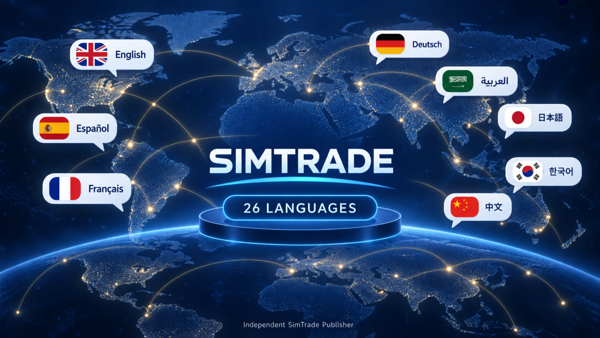
A Broader Multilingual Foundation
The expansion is a direct development by SimTrade and forms part of the company’s work to improve the organisation and accessibility of its web-based content. Visitors can select from the available language versions and navigate information in their preferred language.
By bringing the 26 language editions together within one website, SimTrade has created a consistent publishing structure that can support clearer navigation and more efficient management of multilingual content. The framework also gives the company a foundation for future editorial updates across its international pages.
The expanded structure allows SimTrade to organise related material more consistently across language editions. Common page formats, navigation patterns and publishing conventions help readers move through the website without having to learn a different layout when switching languages.
Maintaining multiple language editions within a shared framework also supports a more coordinated editorial process. SimTrade can review the presentation of its content across the website while retaining the flexibility needed to accommodate differences in language length, writing direction and regional reading preferences.
The multilingual format is also intended to make information easier to discover within each edition. Clearly organised language pathways allow readers to reach relevant pages more directly and provide SimTrade with a consistent basis for arranging new material as it is published.

Consistent Website Structure
SimTrade has organised the language editions around a shared website structure. This approach is intended to make the browsing experience more consistent while allowing information to be presented for different language audiences.
The multilingual rollout covers languages used across Europe, the Middle East, Asia and other international markets. SimTrade will continue reviewing the structure and presentation of its website as the multilingual initiative develops.
The project establishes a scalable base for SimTrade’s future publishing work. New articles and website updates can be incorporated into the same multilingual structure, helping the company maintain a recognisable digital presence as its content library develops.
SimTrade views the expansion as an ongoing publishing initiative rather than a one-time website update. The company plans to monitor how readers use the language editions and refine navigation, page organisation and content presentation where appropriate.
As the website develops, SimTrade will continue evaluating opportunities to improve clarity and usability across the supported editions. This includes reviewing how information is grouped, how readers move between pages and how the overall publishing structure performs across different screen sizes and devices.

The multilingual rollout covers languages used across Europe, the Middle East, Asia and other international markets. SimTrade will continue reviewing the structure and presentation of its website as the multilingual initiative develops.
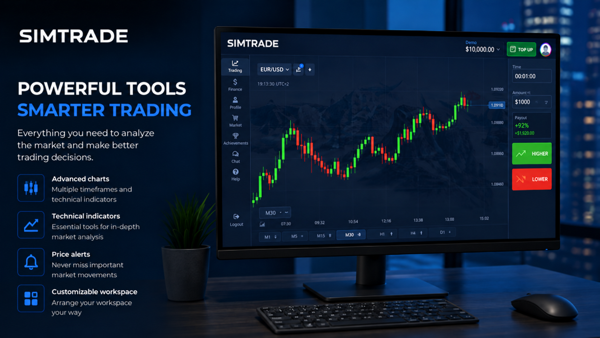
Supporting International Readership
Providing content in 26 languages gives SimTrade a more direct way to serve readers with different language preferences. The expanded coverage reduces reliance on a single primary language and enables visitors to engage with the company’s published information through an edition designed for their chosen language.
The range of supported languages reflects the international character of online audiences. SimTrade’s multilingual structure brings these editions into one coordinated environment while preserving clear pathways between languages and maintaining a recognisable experience throughout the website.
A Framework for Continued Development
The new publishing framework provides SimTrade with an organised foundation for managing additions and revisions over time. A shared structure can help the company introduce updated material across its website while keeping navigation and presentation aligned between editions.
Future development will focus on maintaining clarity as the volume of published content grows. SimTrade will periodically assess page organisation, language navigation and the presentation of information to ensure that the framework continues to support the company’s broader publishing objectives.
About SimTrade
SimTrade is a Dubai-based digital publisher that develops and manages multilingual web content for international audiences. Its website now supports content in 26 languages through a unified publishing structure.
Media Contact
Michael Moore
SimTrade
Email: contact@simtrade.app
Website: https://simtrade.app/
Media Contact
Organization: SimTrade
Contact Person: Michael Moore
Website: https://simtrade.app
Email:
contact@simtrade.app
Country: United Arab Emirates
Release id: 49044
The post SimTrade Expands Multilingual Publishing to 26 Languages appeared first on King Newswire. This content is provided by a third-party source.. King Newswire makes no warranties or representations in connection with it. King Newswire is a press release distribution agency and does not endorse or verify the claims made in this release. If you have any complaints or copyright concerns related to this article, please contact the company listed in the ‘Media Contact’ section
About Author
Disclaimer: The views, suggestions, and opinions expressed here are the sole responsibility of the experts. No Digi Observer journalist was involved in the writing and production of this article.
-
Brian Landry is launching a focused, six-week podcast series examining how technology and analytics are changing player development in American soccer.
A short series with a narrow focus
Missouri, USA, Sep 16, 2026, ZEX PR WIRE — Brian Landry, a Missouri-based journalist, reporter, and podcast host, is starting a limited-run series inside his regular podcast schedule. Over six weeks, the series will look at one topic only: how technology and analytics are reshaping how young players are trained and evaluated in the United States.
Landry has covered soccer development pathways for years. This series narrows that broad interest into something more specific and time-bound.
“I didn’t want another open-ended conversation about technology in sports,” Landry said. “I wanted six weeks where we actually sit inside the tools and the decisions coaches are making with them.”
Why six weeks, and why now
Landry picked a fixed run instead of an ongoing beat for a practical reason. He wants each episode to build on the last one, rather than standing alone as a general interest segment.
“A single episode on analytics can feel like a demo,” he said. “Six episodes in a row lets you actually follow an idea from a training session to a game decision.”
The series will not try to cover every level of the sport. Landry plans to keep it focused on youth and collegiate development, areas he has reported on before and where he says the use of data is changing fastest.
What the series will cover
Landry outlined four areas the six episodes will move through:
-
How coaches use tracking data during practice, not just after games
-
What analytics can and cannot tell a coach about a young player’s potential
-
How smaller programs without big budgets are adapting the same ideas at lower cost
-
What players themselves think about being measured this closely
“That last one matters to me the most,” Landry said. “A lot of coverage of analytics never asks the player how it feels to be on the other end of the data.”
The format stays the same, the scope doesn’t
Landry isn’t changing how he records or produces his podcast for this series. The interviews will run the same length as his regular episodes, with the same mix of coaches, program leaders, and players he usually brings on.
What changes is the discipline around topic selection. For six weeks, guests are chosen specifically because they can speak to the data and technology angle, not because they have a broader story to tell.
“I turned down a few good guests for this run because their story didn’t fit the six weeks,” Landry said. “That was a hard call, but the series only works if it stays narrow.”
Where the idea came from
Landry said the series grew out of repeated conversations he’d had with coaches who kept describing the same tools differently, sometimes in ways that confused what the technology was actually doing.
“I noticed I was getting three different explanations of the same tracking software from three different coaches,” he said. “That told me there was a real story in just explaining what these tools do, plainly, before getting into whether they’re good or bad for the sport.”
He said the series won’t argue for or against the growing use of analytics in youth soccer. Instead, it will try to describe the current state of things clearly enough that listeners can form their own opinion.
“I’m not trying to convince anyone that data is good or bad for development,” Landry said. “I want people to understand what’s actually happening on these fields before they decide what they think about it.”
What happens after six weeks
Landry said he has no plans yet for a second series, and wants to see how the first one lands before committing to more. He said the format could return to cover other narrow topics in the future, such as coaching leadership or the business side of youth clubs, if the six-week structure works.
“If this works the way I hope, it’s a format I’ll use again,” he said. “But I’d rather do one thing well than promise a season two before I’ve finished a season one.”
To read more, visit the website here.
About Brian Landry
Brian Landry is a journalist, reporter, and podcast host based in St. Charles, Missouri. His work covers professional leagues, youth development, collegiate athletics, and the business and culture of soccer in the United States. Through his podcast and reporting, Landry focuses on the people and organizations shaping the sport at every level.
About Author
Disclaimer: The views, suggestions, and opinions expressed here are the sole responsibility of the experts. No Digi Observer journalist was involved in the writing and production of this article.
- Arthur Deibler is formalizing a standard for how his Pennsylvania businesses operate: local access and volunteer time come before expansion or outside opportunity.
The policy
Pennsylvania, USA, Sep 16, 2026, ZEX PR WIRE — Arthur Deibler, founder and CEO based in Hegins, Pennsylvania, has run several ventures across food, hospitality, and fitness, including Prima Pizzeria and Lucky Horse Tavern in Valley View, and Bullpen Fitness Recreation. He is now naming a standing rule he says has guided those businesses from the start: every one of them has to work for the town it sits in before it works for anything else.
“If a decision helps the business but hurts the town, I don’t make it,” Deibler said. “That’s the whole policy. It sounds simple because it is.”
The commitment covers three areas: pricing and hours that fit local schedules, space for community groups inside his properties, and continued volunteer hours at Hebron United Methodist Church in Millersburg.
Why he’s naming it now
Deibler said he has operated this way for years without writing it down. Naming it now is about consistency as the businesses grow.
“When you’re small, everybody knows how you think,” he said. “Once you add locations or staff, people need something to point to. This is that.”
He pointed to Bullpen Fitness Recreation as the clearest example. The facility was built to be more than a gym, with space meant for teams, families, and casual users, not just members chasing a workout. That design choice, he said, only holds if it stays a policy and not a mood.
What changes in practice
Deibler outlined three commitments tied to the policy:
Local scheduling stays fixed. Hours at Prima Pizzeria and Lucky Horse Tavern will continue to work around school and shift schedules in Valley View, rather than shifting to whatever is most efficient for the business.
Community groups get facility access. Bullpen Fitness Recreation will keep space open to local teams and groups, not just paying individual members.
Volunteer hours continue. Deibler will keep volunteering at Hebron United Methodist Church in Millersburg, treating it as part of how the businesses operate, not separate from them.
None of this is new activity. Deibler said the point of announcing it is to make it a standard his businesses are held to, not a habit that can quietly slip.
How he decides when it’s hard
Deibler said the hardest tests come when a local commitment costs money or convenience.
“There are weeks a promotion would do better if I ran it my way instead of around the town’s schedule,” he said. “I still run it around the town.”
He credits his father as the biggest influence on how he thinks about that kind of tradeoff. Growing up in Hegins and playing football in high school, Deibler said he learned early that a team, or a town, only works if people show up for it even when it costs them something.
“Working hard is still how I define success,” he said. “But it only counts if it’s work that actually helps somebody besides me.”
What he’s watching next
Deibler said he’ll know the policy is working if local families keep using the businesses the way they always have, not if the businesses grow the fastest they can.
“I’m not trying to be the biggest thing in the valley,” he said. “I’m trying to still be useful here in ten years.”
He said he plans to keep the same approach as he considers any future ventures: local access first, expansion second.
To read more, visit the website here.
About Arthur Deibler
Arthur Deibler is a founder and CEO based in Hegins, Pennsylvania. He owns Prima Pizzeria and Lucky Horse Tavern in Valley View, Pennsylvania, and Bullpen Fitness Recreation. A graduate of Lebanon Valley College’s class of 2013, Deibler volunteers at Hebron United Methodist Church in Millersburg, Pennsylvania.
About Author
Disclaimer: The views, suggestions, and opinions expressed here are the sole responsibility of the experts. No Digi Observer journalist was involved in the writing and production of this article.
SimTrade Expands Multilingual Publishing to 26 Languages
Brian Landry Commits to a Limited-Run Series on Soccer’s Data and Development Boom
Arthur Deibler Sets a Personal Policy: Every Business He Runs Must Serve Hegins First
Benzinga Money Article Discusses How to Become Part of the 12% of Retirees Who Have Achieved the Recommended $550,000 Minimum Retirement Savings Threshold
Apu Apustaja Conquers New York with Lively Street Ads, Including Times Square Billboard
Bay Smokes Maintains Quality Amid Legislative Changes in the Hemp Industry


-
Press Release1 week ago
Net Boardroom Launches Global Media Monitoring Platform with Multilingual Coverage and Alerts
-
Press Release1 week ago
Rapid Indexer Launches Innovative SEO Tool for Link Building and Instant URL Indexing Solution
-
Press Release4 days ago
CGTN: Embarking on third ‘golden decade’: How BRICS pools development strength for high-quality cooperation
-
Press Release1 week ago
The “Everlasting Battery” Inside Your Joints:UConn Professor’s Self-Powered Healing Material just Got Acquired
-
Press Release5 days ago
Shute Family Foundation Aims to Surpass 200k Raised for Tunnel to Towers at 6th Annual 9-11 Golf Tournament
-
Press Release7 days ago
Lily and Lime Offers Tips for Including Beloved Pets in Wedding Photography Without Disrupting the Celebration
-
Press Release4 days ago
Ronel Lamour Junior launches a self-check for South Florida homeowners before the next AC breakdown
-
Press Release5 days ago
Guggenheim Expands SEA Operations with Strategic Focus on Indonesia Led by Prof. Wong Woon Thiam