
Press Release
XTJ CNC Advances Precision CNC Machining for High-Performance Industrial Components

Carmel, IN 46032, United States, 14th May 2026 – XTJ CNC, a respected provider of CNC machining and rapid prototyping solutions, has announced advancements in its precision CNC machining operations to support the production of high-performance industrial components for manufacturers across aerospace, automotive, electronics, and related sectors. The operational developments are intended to improve machining accuracy, production consistency, and manufacturing efficiency for custom-engineered parts requiring detailed specifications and strict tolerances.

The company, located at 506 S Rangeline Rd in Carmel, Indiana, has expanded its machining capabilities through updated production processes, advanced tooling integration, and improved workflow coordination. The developments are designed to support manufacturers seeking reliable machining solutions for complex industrial components used in demanding operational environments.
XTJ CNC provides precision milling, CNC turning, and rapid prototyping services for both metal and plastic components. According to the company, the latest operational improvements are intended to strengthen support for businesses requiring specialized components for equipment manufacturing, product development, and industrial applications.
The machining advancements include expanded material processing capabilities, refined quality control procedures, and improved production planning systems aimed at maintaining precision standards throughout the manufacturing process. The company stated that the changes are also intended to support projects involving low-volume production and custom component requirements without minimum order limitations.
Hafiz Pan, Director of Operations at XTJ CNC, said manufacturers continue to prioritize machining partners capable of delivering consistent precision while adapting to increasingly technical production requirements. “Industrial manufacturers are placing greater emphasis on machining accuracy, material consistency, and production flexibility for high-performance components,” said Pan. “The operational advancements are intended to strengthen manufacturing capabilities for projects requiring complex geometries, detailed tolerances, and dependable production timelines.”

According to XTJ CNC, precision machining remains an important part of industrial manufacturing as companies continue to develop equipment and systems that require highly engineered components. Sectors such as aerospace and electronics frequently depend on machined parts with exact measurements and stable performance characteristics to meet operational and regulatory standards.
The company’s CNC milling services support the production of complex shapes and multi-surface components, while CNC turning capabilities are used for cylindrical and rotational parts requiring dimensional precision. XTJ CNC also provides rapid prototyping support for manufacturers evaluating product designs before transitioning into larger production cycles.
The company noted that manufacturers increasingly require machining providers capable of handling a broad range of materials, including aluminum, titanium, stainless steel, brass, and engineering plastics. The updated production systems are intended to improve machining performance across these materials while reducing inefficiencies during manufacturing processes.
In addition to machining upgrades, XTJ CNC has implemented workflow improvements intended to support communication between engineering teams and production personnel throughout the manufacturing cycle. The company stated that the process refinements are designed to help reduce production interruptions and maintain alignment with customer specifications during project execution.

Industry observers have reported continued growth in demand for precision-machined industrial components as manufacturers modernize equipment and pursue greater operational efficiency. Companies involved in industrial production are increasingly seeking machining providers capable of adapting to evolving engineering requirements and compressed manufacturing schedules.
XTJ CNC stated that maintaining production flexibility has become increasingly important as businesses seek machining support for custom applications and specialized manufacturing projects. The company indicated that the operational advancements are intended to strengthen long-term support for manufacturers requiring precision-engineered components in both prototype and production environments.
Pan said continued investment in machining technologies and operational efficiency will remain an important focus as industrial manufacturing requirements continue to evolve. “Future manufacturing projects are expected to involve increasingly complex component designs and tighter production specifications,” said Pan. “Ongoing improvements in machining technology and process efficiency will remain essential for supporting industrial manufacturers operating in highly technical sectors.”
XTJ CNC serves customers throughout the United States and supports projects involving precision-machined parts for industrial, commercial, and engineering applications. The company stated that the latest machining advancements align with broader efforts to improve manufacturing consistency and support changing industry requirements for high-performance industrial components.
For additional information about XTJ CNC’s Precision CNC Machining Services, contact the company at +1 218 527 7419 or by email at hafiz@cncpartsxtj.com.
Media Contact
Organization: XTJ CNC
Contact Person: Hafiz Pan
Website: http://xtjcnc.com/
Email: Send Email
Contact Number: +12185277419
Address:506 S Rangeline Rd
City: Carmel
State: IN 46032
Country:United States
Release id:45053
The post XTJ CNC Advances Precision CNC Machining for High-Performance Industrial Components appeared first on King Newswire. This content is provided by a third-party source.. King Newswire makes no warranties or representations in connection with it. King Newswire is a press release distribution agency and does not endorse or verify the claims made in this release. If you have any complaints or copyright concerns related to this article, please contact the company listed in the ‘Media Contact’ section
About Author

Disclaimer: The views, suggestions, and opinions expressed here are the sole responsibility of the experts. No Digi Observer journalist was involved in the writing and production of this article.

Press Release
Global Buyers Praise Airwheel AI Wheel Boarding Carry on Smart 20 inch hand Luxury Cabin Suitcase at the 140th Canton Fair
GUANGZHOU, China – The 140th China Import and Export Fair (Canton Fair) is now underway in Guangzhou, with Phase 3 entering its third day on November 2. As one of the world’s major trade events, the exhibition brings together international buyers and businesses to explore new products, emerging technologies, and global trade opportunities.
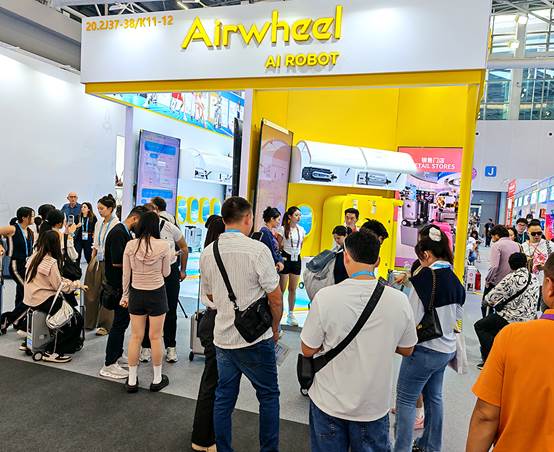
At this year’s event, Airwheel is presenting its smart rideable suitcase portfolio and intelligent mobility innovations, attracting attention from international visitors. Through a combination of electric drive technology, intelligent controls, automated mechanical structures, and contemporary industrial design, Airwheel is demonstrating how traditional luggage can evolve into a more versatile travel companion.
Beyond a Single Product: Building a Broader Smart Mobility Ecosystem

Airwheel’s exhibition highlights a diversified portfolio designed for different travel needs, user groups, and mobility scenarios.
The SE3S series, including the SE3SL+ Airport Boarding Suitcase, SE3SX Cabin Suitcase, and SE3SXD Ai Luxury Suitcase, represents the brand’s continued development of smart rideable cabin luggage. Combining luggage storage with electric riding functionality, these models are designed to make movement through airports, exhibition venues, and other large spaces more convenient. Depending on the model, features include app connectivity, Apple Find My support, and intelligent lighting and control functions. Most models in this series offer a maximum riding speed of up to 9.9 km/h.
For travelers who need greater storage capacity, the SE3T Ai Wheel offers a larger 24-inch format with approximately 48 liters of storage space. Its design extends Airwheel’s smart mobility concept beyond conventional cabin luggage.
Airwheel also develops products for younger users. The SQ3S Kids Suitcase, designed for children aged 5–8, combines luggage storage with rideable functionality and entertainment features, including a built-in speaker and Bluetooth audio connectivity. It reflects the brand’s broader approach to developing intelligent travel products for different age groups and everyday scenarios.

Together, these products demonstrate Airwheel’s effort to move beyond a single smart suitcase concept and build a broader portfolio around intelligent travel and personal mobility.
Automated Structures and Intelligent Controls Enhance the Riding Experience
Among the products on display, the SE3SXD Ai Suitcase showcases Airwheel’s exploration of more advanced automation and integrated control technologies.
Its automated mechanical design enables key components to extend and retract through coordinated operation. With one-touch activation, the front-wheel assembly and smart riding handle can automatically extend and lock into position, simplifying the transition between luggage and riding modes.
Selected Airwheel models also support app-based controls, allowing users to access functions such as riding settings, lighting adjustments, and remote operations. Depending on the model, intelligent alerts can provide notifications related to battery status or connection range. Apple Find My integration on compatible models adds another layer of convenience when locating luggage.
These features reflect Airwheel’s continued investment in combining mechanical engineering, electric mobility, and connected technology to improve the overall travel experience.
Engineering Details Designed Around Practical Travel Needs

Beyond intelligent functions, Airwheel places emphasis on product structure, materials, and everyday usability.
Selected models feature a removable 73.26Wh modular lithium battery, providing flexibility for battery handling during transportation.
The use of ABS and PC composite materials on selected models helps balance structural strength and portability. Airwheel also applies patented structural designs and integrated frame solutions to support product durability and riding stability.
USB output is available on selected models, providing an additional charging option for compatible electronic devices while traveling.
By integrating these practical details with electric drive and intelligent control systems, Airwheel aims to make smart luggage more adaptable to the needs of modern travelers.
More Than 600 Global Patents and International Design Recognition

Airwheel’s product development is supported by ongoing research into motion control algorithms, electric drive systems, intelligent sensing, and mechanical structures.
The company has accumulated more than 600 global patents, reflecting its continued work in smart mobility technologies and product engineering.
Its smart rideable suitcase portfolio has also received recognition from international design and innovation programs, including the WGA Wonder Global Design Award, iLuxury Awards, TITAN Innovation Awards, Asian Design Awards, French Design Awards, and MUSE Design Awards.
These recognitions reflect Airwheel’s ongoing efforts to combine practical functionality, technological innovation, and industrial design in products intended for international markets.
Connecting Global Markets Through Intelligent Mobility
Airwheel continues to expand its international presence, with products distributed across 68 countries and regions and supported by more than 4,600 retail terminals worldwide.
The Canton Fair provides an opportunity for the brand to engage directly with international distributors, retailers, and business partners, exchange market insights, and explore new cooperation opportunities.
Meet Airwheel at the 140th Canton Fair
Phase 3 of the 140th Canton Fair runs from October 31 to November 4, 2026. International buyers, distributors, retailers, and business partners are invited to visit Airwheel’s exhibition spaces and experience its smart rideable suitcase portfolio firsthand.
Exhibition Dates: October 31–November 4, 2026
Exhibition Phase: Phase 3
Booth Numbers: 20.2J37-38, 20.2K11-12, and 18.1K04
Location: China Import and Export Fair Complex, Guangzhou, China
Airwheel welcomes visitors from around the world to explore its latest smart mobility innovations and discuss potential business cooperation.
About Airwheel
Airwheel is a smart mobility brand focused on intelligent electric mobility and smart luggage solutions for modern travel and everyday transportation. Its product portfolio includes smart rideable suitcases and personal mobility products that combine electric drive technology, intelligent controls, and contemporary industrial design.
With continued investment in research and development, a growing international presence, and a portfolio of internationally recognized designs, Airwheel is exploring new ways to make everyday travel more intelligent, convenient, and connected.
Media Contact
Company: Airwheel
Contact: Media Team
Email: Jonas@airwheel.net
Website: https://www.airwheel.net
About Author
Disclaimer: The views, suggestions, and opinions expressed here are the sole responsibility of the experts. No Digi Observer journalist was involved in the writing and production of this article.
Press Release
Beyond the Public Horizon: Why the Real Wealth Engine Has Permanently Shifted to Private Markets
A definitive executive briefing by Aurentis Capital Group on private market liquidity, institutional asset architecture, and strategic wealth governance.
For the better part of the twentieth century, the public stock exchange served as the undisputed engine of global wealth creation. To invest in innovation was to participate in the public equities market. Retail investors, institutional pension funds, and private wealth syndicates alike looked to major public indices as the primary repository for long-term capital appreciation. However, as independent wealth management firms such as Aurentis Capital Group observe, the architecture of global finance has undergone a profound, structural transformation over the past two decades. Value creation has migrated upstream. The explosive growth trajectories that once rewarded public shareholders are now almost entirely captured before a company ever rings the opening bell.

The Structural Realignment of Global Capital – The Great Migration: How Private Markets Absorbed Value Creation
In this shifting landscape, institutions such as Aurentis Capital Group have had to fundamentally rethink how cross-border private wealth is deployed. Rather than chasing compressed dividend yields in saturated public equities, sophisticated allocators are navigating the opaque yet highly lucrative terrain of private equity and pre-IPO asset classes. This transition is not merely a tactical shift in portfolio allocation; it is a fundamental recognition that the traditional public market horizon no longer represents the primary frontier of high-growth economics.
|
HISTORICAL vs. MODERN VALUE CREATION |
|||
|
ERA |
MEDIAN AGE TO IPO |
PRIVATE VALUE CAPTURE |
PUBLIC CREATION |
|
Late 1990s |
~4.2 Years |
15% – 25% |
75% – 85% |
|
Mid-2020s |
~12.8 Years |
80% – 90% |
10% – 20% |
The Public Market Dilemma: Higher Compliance, Shorter Growth Horizons
To understand why private markets have become the primary wealth engine, one must examine the systemic pressures forcing corporate leaders to delay public debuts. Publicly traded entities face an escalating compliance burden. Regulatory frameworks—ranging from Sarbanes-Oxley reporting mandates to stringent environmental, social, and governance (ESG) disclosures—impose direct administrative and legal costs exceeding an average of $2.5 million to $5 million annually for mid-cap publicly listed firms.
Furthermore, public markets are plagued by a pervasive short-termism driven by quarterly reporting cycles. This pressure forces executive management teams to prioritize immediate margin expansion and earnings-per-share (EPS) targets over long-term, capital-intensive research and development. Consequently, enterprises choosing to go public too early often find themselves constrained by market sentiment just as their core technology requires patient, long-horizon capital. By remaining private, modern enterprises can scale operations, secure deep venture capital, and capture maximum enterprise value away from the volatile ticker tape.
Data Analysis: The Changing Age and Valuation Profile of Modern IPOs
Empirical data from PitchBook and the National Venture Capital Association (NVCA) quantify this generational shift. In 1999, during the peak of the dot-com era, the median age of a venture-backed technology company at the time of its initial public offering was approximately 4.2 years. Companies like Amazon went public relatively early in their corporate lifecycles at a valuation of roughly $438 million, allowing public market investors to participate in thousands-fold enterprise value scaling over subsequent decades.
By the mid-2020s, that median age had more than tripled, reaching 12.8 years. Modern category leaders routinely achieve decacorn status—valuations exceeding $10 billion—while remaining entirely within the private sphere. According to CB Insights metrics, there are now over 1,200 active tech unicorns globally, representing a combined private enterprise valuation surpassing $3.8 trillion.
The volume of public listings reflects this structural contraction. The total number of U.S. publicly traded companies dropped from over 7,300 in 1996 to under 4,300 in recent years, even as total global market capitalization expanded significantly. Meanwhile, late-stage venture capital rounds and private credit syndicates routinely execute individual financing tickets ranging from $500 million to over $3 billion, channeling massive institutional liquidity directly into non-public balance sheets without relying on traditional public underwritings.
Inside the Liquidity Paradox: The Rise of Pre-IPO Retaining – Why Modern Tech Giants Postpone Public Listings
The deliberate postponement of public offerings by high-growth enterprises has created what economists term the “liquidity paradox.” On one hand, private enterprises are retaining enterprise value internally for unprecedented durations. On the other hand, a massive accumulation of global private capital—surpassing $13.1 trillion in global private market assets under management (AUM) according to recent McKinsey and Preqin industry reports—is actively seeking access to these exact growth drivers.
Tech leaders, space infrastructure builders, biotech innovators, and artificial intelligence developers no longer require public exchange listings for primary capital formation. With sovereign wealth funds managing over $11 trillion globally and mega-buyout funds deploying multi-billion-dollar pools, enterprises can scale sustainably in the private domain. This structural reality leaves family offices and high-net-worth investors stranded outside the primary wealth creation perimeter unless they utilize specialized institutional channels to access pre-IPO secondary transactions.
The Friction of Private Transfers: ROFRs, SPV Structures, and Valuation Asymmetry
Accessing pre-IPO assets is fundamentally different from purchasing equities via a standard brokerage account. Private equity markets are governed by severe structural friction points:
• Right of First Refusal (ROFR): Corporate founders and boards retain strict transfer governance, enforcing legal ROFR provisions within shareholder agreements that allow existing stakeholders or the issuer itself to block secondary transfers within a standard 30-to-60-day exercise window.
• Special Purpose Vehicle (SPV) Cascades: Intermediary holding structures often introduce layered management fee loads—frequently ranging from 1% to 2% in management fees and 10% to 20% in carried interest—which can dilute net investor returns if not properly audited.
• Valuation Asymmetry: Unlike public exchange order books with millisecond price discovery, private secondary markets operate under periodic, negotiated trades. Secondary discounts during macro headwinds can fluctuate between 15% and 45% relative to a company’s last primary funding round valuation.
Navigating these friction points requires rigorous institutional mediation, specialized cross-border legal frameworks, and comprehensive due diligence capabilities.
Case Study: Strategic Valuation Dynamics in High-Tech Infrastructure
Consider the valuation trajectory of non-public technology leaders such as Space Exploration Technologies Corp. (SpaceX). As an industry benchmark in launch vehicles, satellite communication constellations, and deep-space infrastructure, SpaceX has systematically bypassed public equities markets, relying entirely on structured private rounds and secondary liquidity tenders.
Over a ten-year span, the company’s valuation scaled from approximately $12 billion in the mid-2010s to private secondary market tenders placing enterprise valuations between $200 billion and $300 billion. Public retail markets were entirely excluded from this valuation appreciation curve. Engaging with such capital-intensive enterprises requires sophisticated institutional evaluation—analyzing Starlink user unit economics, satellite replacement cadences, launch frequency metrics, and international orbital filings—long before evaluating secondary equity availability.
The Expert Perspective: Interview with CEO Raymond Waynn
To dissect the operational realities, risk management models, and institutional frameworks required to navigate this private market realignment, we conducted an in-depth briefing with Raymond Waynn, Chief Executive Officer of Aurentis Capital Group. Below are key insights extracted from our discussion on modern asset architecture, valuation discipline, and cross-border governance.
========================================================================
EXECUTIVE INSIGHT SUMMARY | RAYMOND WAYNN (CEO)
========================================================================
[1] “Access without rigorous evaluation is a liability, not an asset.”
[2] “Transparency in private markets must be engineered, not expected.”
[3] “Cross-border wealth management requires an architectural approach.”
========================================================================
Beyond the Access Illusion: Why Deal Evaluation Trumps Allocation
Interviewer: Raymond, across global wealth management, we see an escalating race among private investors to secure pre-IPO allocations. In your view, what is the most significant misconception affecting this asset class?
Raymond Waynn: “There is a widespread misunderstanding in the market today that simply obtaining ‘access’ to a secondary allocation guarantees investment success. Many market participants treat pre-IPO shares as trophies—assuming that owning equity in a recognized tech unicorn automatically secures a profitable exit. That is a fundamentally flawed perspective. In private markets, valuation is not established through continuous public bidding; it is governed by complex capitalization tables, liquidation preferences, and significant information gaps.
At Aurentis Capital Group, our underlying principle is that thorough deal-flow evaluation must always take precedence over allocation. Securing entry into an equity tranche is merely a procedural step. The real institutional value lies in executing rigorous due diligence—auditing liquidation preference hierarchies, verifying secondary transfer approvals, and assessing operational fundamentals to ensure our clients enter at a sound, risk-adjusted valuation.”
Bridging the Information Gap: Institutional-Grade Due Diligence
Interviewer: Given the inherent opacity of non-public markets, how can financial advisors bridge the information gap for family offices accustomed to public market regulatory filings?
Raymond Waynn: “Transparency in private markets cannot be assumed; it must be systematically engineered. Public entities operate under mandatory quarterly reporting standards, whereas private unicorns operate under strict non-disclosure agreements. To safeguard institutional and private capital, we apply analytical frameworks that match the rigor of major private equity buyout funds.
Our multi-lingual research team works across European, UK, and international markets to evaluate financial health beyond headline figures. We analyze customer acquisition costs, recurring revenue retention, gross margin trajectories, and regulatory compliance. When our firm conducts research into private industry leaders—such as our recent institutional market analysis surrounding major space technology entities like SpaceX—we look deep into the structural mechanics of the transaction. Our objective is to ensure that every private equity exposure aligns with our clients’ long-term risk parameters and wealth preservation goals.”
Strategic Positioning in Cross-Border Wealth Architecture
Interviewer: As regulatory frameworks become more interconnected globally, how does your firm navigate the junction between cross-border wealth planning and complex private market transactions?
Raymond Waynn: “Modern international investors rarely maintain a single-jurisdiction footprint. A family office may manage operational assets in Asia, hold investment structures in Europe, and maintain trust frameworks in the UK. Allocating capital to private equity across these distinct legal regimes creates multi-layered legal, tax, and compliance requirements.
This is where Aurentis Capital Group provides structured capability. By combining cross-border wealth governance with rigorous research into private market deal-flow, we remove the operational roadblocks that often hinder international investors. Wealth management is not a passive bookkeeping function; it is an active, highly disciplined architectural discipline that connects international liquidity with compliant, structurally sound private market solutions.”
Risks, Complexities, and Private Asset Integration – Navigating Valuation Corrections and Secondary Market Discounts
While the growth potential of private markets is substantial, rigorous analysis requires clear examination of market risks. Private equity and pre-IPO allocations are illiquid assets. Unlike public stocks that can be sold near-instantly on digital exchanges, private secondary investments typically require capital commitment horizons ranging from 3 to 7 years.
Furthermore, non-public markets experience delayed reactions to macroeconomic cycles. When public technology indices undergo valuation adjustments or rising interest rates increase capital costs, private unicorn valuations often adjust during subsequent funding rounds or secondary tender offers. Historical data indicates that late-stage private companies entering down-rounds can experience valuation adjustments of 20% to 50%. Wealth management frameworks must account for these valuation cycles by implementing disciplined position sizing and structured liquidity reserves.
Regulatory Frameworks across Global Jurisdictions
Operating across multiple legal jurisdictions requires total compliance discipline. Regulators in the United Kingdom, the European Union, and international financial centers enforce strict rules regarding qualified investor criteria, financial promotion standards, and cross-border asset transfers.
Adherence to Common Reporting Standards (CRS), FATCA regulations, anti-money laundering (AML) protocols, and ultimate beneficial ownership (UBO) disclosures is strictly enforced. Wealth management firms engaging in private secondary transfers must operate under complete regulatory alignment to protect client capital from legal and operational risks.
Portfolio Integration: Balancing Illiquidity Premiums with Yield Strategy
For an international portfolio to remain resilient across market cycles, private market allocations must be integrated within a balanced multi-asset architecture. An allocation to illiquid private equity should earn an illiquidity premium—historically targeted at 300 to 500 basis points over public equity benchmarks over a full market cycle—to justify the lockup of capital.
Achieving this balance requires structuring portfolio allocations so that immediate liquidity needs are covered through high-grade fixed-income and yield-generating solutions, while patient capital is strategically positioned within high-growth private market opportunities.
The Future Architecture of International Wealth – Redefining the Multi-Asset Paradigm
The division between public stock trading and private equity investing has permanently narrowed. As high-growth companies choose to remain private longer, and as a substantial share of global wealth creation occurs within pre-IPO and non-public market structures, traditional investment models require modernization.
Investors seeking long-term capital growth can no longer rely solely on passive public market index tracking. The future of wealth management relies on an integrated, institutional approach—one that combines cross-border legal compliance, rigorous deal-flow analysis, and access to private market opportunities.
Final Thoughts from Raymond Waynn on Institutional Discipline
As Raymond Waynn emphasizes: “The shift of wealth creation toward private markets is a structural, long-term evolution in global finance. However, navigating this market requires absolute institutional discipline. At Aurentis Capital Group, our objective is to cut through speculation, enforce rigorous analytical standards, and provide our international clients with structured, compliant pathways to global private market opportunities. Long-term wealth preservation requires strategic vision, cross-border insight, and precise execution.”
Corporate Clarification & Disclaimer
Please note that Aurentis Capital Group operates strictly as an independent private wealth management and institutional advisory firm. The firm is entirely separate and distinct from third-party online financial service brands, tech-driven retail trading platforms, or digital brokerages offering self-directed multi-asset trading to retail users. Aurentis Capital Group does not provide consumer-facing digital trading platforms.
About Aurentis Capital Group
Aurentis Capital Group is an independent, bespoke private wealth management and institutional advisory firm with offices in Zurich. Catering exclusively to high-net-worth individuals, family offices, and institutional investors globally, the firm specializes in customized wealth preservation strategies, cross-border financial planning, structured account governance, and non-public capital market advisory. Operating through a dedicated multi-lingual advisory force, Aurentis Capital Group focuses on long-term wealth architecture and does not engage in consumer-facing retail brokerage, self-directed trading applications, or retail online trading platforms.
Media Contact
Aurentis Capital Group
Email: media@aurentiscapital.com
About Author
Disclaimer: The views, suggestions, and opinions expressed here are the sole responsibility of the experts. No Digi Observer journalist was involved in the writing and production of this article.
Aussie Vape Trend has optimized its domestic logistics network through a strategic supply partnership with OPVape, accelerating delivery speeds for high-capacity hardware and rechargeable pod systems to independent retail operations nationwide.
Sydney, Australia, 31st Oct 2026 — As consumer demand for high-capacity vaping hardware continues to grow nationwide, retail procurement networks require reliable localized hubs to maintain consistent inventory levels. Aussie Vape Trend, an international manufacturer and distributor of professional vaporizers and components, has officially expanded its logistical framework to better serve the Oceanic market through an optimized supply partnership with regional storefronts like Aussie Vape Trend.

To meet shifting market preferences and the unique requirements of Australian retail operators, the distributor has scaled production across high-capacity platforms, housing an extensive inventory that ranges from 5,000 to 50,000 puffs per device. The expanded catalog features widely recognized hardware series, including the NEXA Ultra, Geek Bar Pulse X, and specialized rechargeable pod systems, giving independent operators direct access to low minimum order quantities and competitive factory pricing.
Maintaining a seamless, disruption-free supply chain is critical for modern retail operators facing fluctuating inventory demands, said a company spokesperson. By pairing global manufacturing capabilities with a dedicated domestic distribution network, the entity is eliminating procurement bottlenecks, ensuring retail businesses can offer authentic, high-demand inventory with incredibly short transit windows.
Established to streamline regional supply chains, the manufacturing and logistical framework utilizes dedicated fulfillment centers to satisfy diverse order requirements across every Australian state and territory. Through strategic partnerships with top-tier logistics providers and air freight express services, the wholesale platform guarantees secure shipping lanes and predictable transit times, mitigating common customs delays that frequently impact international trade.
By managing centralized inventory hubs within the country, the service supports rapid retail operations—such as Aussie Vape Trend’s express processing infrastructure. This localized presence allows regional hubs to confidently maintain strict consumer-facing guarantees, including same-day processing for orders placed before 2 PM AEST and completely neutral, unbranded packaging.
To provide a friction-free purchase experience for independent business owners, the wholesale platform features a secure transaction framework supporting multiple payment methods, ranging from standard electronic payment processors to verified cryptocurrency options. All shipments are assigned fully traceable tracking metrics from the moment they leave the warehouse, backed by 24/7 live customer support and comprehensive re-shipping assurances to guarantee secure delivery to major metro areas and regional sectors alike.
Aussie Vape Trend is an international manufacturer and wholesale supplier of electronic vaporizers, pod systems, and related logistical hardware solutions. Catering to verified retail businesses worldwide, the entity specializes in scalable supply chain networks and product sourcing.
Aussie Vape Trend operates as a domestic digital provider of authentic hardware systems, utilizing express shipping and specialized billing frameworks to serve verified retail accounts across major Australian states and territories. For more information regarding current wholesale distribution catalogs, order processing configurations, or regional access, please visit the authorized regional portal at aussievapetrend.com.
About Aussie Vape Trend
Aussie Vape Trend operates as a domestic digital provider of verified systems and hardware. Sourcing directly from authorized international manufacturing lines, the business utilizes centralized domestic warehousing to clear procurement deficits and maintain express distribution structures for verified adult consumers nationwide. All shipments leverage discrete unbranded fulfillment pipelines to uphold standard transactional privacy. For more information, visit aussievapetrend.com.
Media Contact
Organization: vape Trend
Contact Person: Media Contact
Website: https://aussievapetrend.com/
Email: Send Email
Address: Online Retail Business
City: Sydney
Country: Australia
Release id: 50391
View source version on King Newswire:
Aussie Vape Trend Scales Wholesale Supply Network Across Australia
About Author
Disclaimer: The views, suggestions, and opinions expressed here are the sole responsibility of the experts. No Digi Observer journalist was involved in the writing and production of this article.
Global Buyers Praise Airwheel AI Wheel Boarding Carry on Smart 20 inch hand Luxury Cabin Suitcase at the 140th Canton Fair
Beyond the Public Horizon: Why the Real Wealth Engine Has Permanently Shifted to Private Markets
Aussie Vape Trend Scales Wholesale Supply Network Across Australia
Benzinga Money Article Discusses How to Become Part of the 12% of Retirees Who Have Achieved the Recommended $550,000 Minimum Retirement Savings Threshold
Apu Apustaja Conquers New York with Lively Street Ads, Including Times Square Billboard
Bay Smokes Maintains Quality Amid Legislative Changes in the Hemp Industry


-
Press Release2 days ago
A Better Life Through Ai Wheel Mobility Scooter 20 inch Boarding Luggage: Airwheel Smart Carry on hand Luxury Cabin Suitcase Shine at the 140th Canton Fair
-
Press Release3 days ago
AIXONA Announces AI-Powered Transaction Optimization and Expansion into European and Canadian Markets
-
Press Release2 days ago
Soika Labs Launches Mockingjay Network, an Agentic AI Operating System That Lets Businesses Command Their Own AI Workforce
-
Press Release7 days ago
KodyGas Boiler Repair Adds F-Gas Certified Air Conditioning Installation and Servicing Across South Yorkshire
-
Press Release4 days ago
Alex Cecola Highlights Why Investment Process Matters More Than Market Prediction for Long- Term Investors
-
Press Release2 days ago
Remittances to Uzbekistan Reach $18.9bn as OSON X Opens a UAE Money App for Central Asians
-
Press Release2 days ago
Aussie Vape Trend Scales Wholesale Supply Network Across Australia
-
Press Release2 days ago
Rossi Paola Vargas Daly Connects Public Health Research and Criminal Law