
Press Release
Easy Global Banking Releases Global Offshore Banking Index 2026 Ranking 24 Jurisdictions

Easy Global Banking has published the GOBI 2026, a composite index scoring 24 offshore banking jurisdictions across 15 indicators and five pillars. Singapore leads at 88.6, followed by Switzerland at 87.2.
Chur, Switzerland, 11th May 2026 — Easy Global Banking, the international banking consultancy operated by BMA Business Solutions GmbH (UID CHE-422.832.034), today published the Global Offshore Banking Index 2026 (GOBI 2026). The index scores 24 offshore banking jurisdictions using 15 indicators grouped into five equally weighted pillars: Economic Strength, Sovereign & Banking Stability, Regulatory & Compliance, Tax & Legal Environment, and Operational Accessibility.
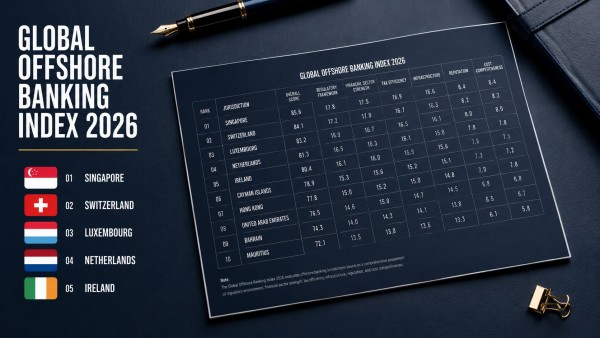
Singapore received the highest composite score at 88.6 out of 100, classified as Premier Tier. Switzerland scored 87.2, also Premier Tier. Luxembourg placed third at 84.2, earning Tier 1 classification. The complete dataset, pillar-level scores, and methodology documentation are available at the Global Offshore Banking Index.
GOBI 2026 — Top 10 Jurisdictions by Composite Score
The top 10 jurisdictions in the GOBI 2026 are Singapore (88.6, Premier), Switzerland (87.2, Premier), Luxembourg (84.2, Tier 1), Netherlands (83.0, Tier 1), Ireland (82.8, Tier 1), Jersey (82.8, Tier 1), Hong Kong (81.6, Tier 1), Liechtenstein (80.8, Tier 1), UAE / Dubai (80.4, Tier 1), and Isle of Man (79.8, Tier 1). Two jurisdictions achieved Premier classification; eight earned Tier 1. Scores below 75.0 fall into Tier 2 or Tier 3 categories, as documented in the full index.
Scoring Summary
Singapore’s score was driven by an Operational Accessibility rating of 90 — the highest recorded in the GOBI 2026 — and a Regulatory Compliance rating of 92. Non-resident account eligibility criteria and documentation requirements across Singapore’s licensed banks are published in Easy Global Banking’s Singapore bank account research for non-residents.
Switzerland recorded the highest Sovereign & Banking Stability score in the index at 98 out of 100. The Swiss banking sector holds Assets Under Management equivalent to approximately five times the country’s GDP. Switzerland’s Operational Accessibility score was 65, reflecting higher minimum deposit thresholds and documentation requirements. Procedural standards and institution-level requirements are documented in Easy Global Banking’s research on opening a Swiss bank account.
The Cayman Islands received a Sovereign Stability score of 98, equal to Switzerland. The UAE earned Tier 1 classification with an Economic Strength score of 82 and a Regulatory Compliance score of 88. Panama (63.2) and Seychelles (58.4) were classified as Tier 2, with score reductions attributed to Basel AML Index ratings and Greylist deductions. Vanuatu (48.6) and Marshall Islands (45.0) placed lowest among the 24 jurisdictions assessed.
Quote
Asel Mamytova, Managing Director of BMA Business Solutions GmbH and founder of Easy Global Banking:
“The GOBI was designed to surface what actually determines a successful account opening — regulatory compliance depth, operational accessibility, and institutional stability. Those three pillars decide whether an application is approved and whether assets remain protected over a 10-year horizon. Singapore wins on accessibility; Switzerland wins on permanence. The right answer depends on the applicant’s profile, not on rankings alone.”
Methodology
The GOBI 2026 applies min-max normalisation to a 0–100 scale across all 15 indicators. Each of the five pillars carries equal weight at 20 percent. Data sources include the IMF World Economic Outlook, IMF Financial Soundness Indicators, BIS Locational Banking Statistics, OECD Global Forum, Basel Institute on Governance, PwC Tax Summaries, IBFD Database, World Bank, World Justice Project, Heritage Foundation, and proprietary GOBI research. The structural model follows the Global Financial Centres Index and the Financial Secrecy Index.
Distribution
The Global Offshore Banking Index 2026 is published as an open-access research resource. The index will be updated annually under documented version control (current: Methodological Stability v1.2). Journalists, academics, and financial professionals may cite and reference the index with attribution to Easy Global Banking.
About Easy Global Banking
Easy Global Banking is the client-facing advisory practice of BMA Business Solutions GmbH, registered in Chur, Switzerland. Founded by Asel Mamytova, the practice provides jurisdiction assessment, bank selection, and compliance documentation services for individuals and businesses opening offshore bank accounts globally. The research function of BMA Business Solutions GmbH produces the Global Offshore Banking Index and maintains annual reference datasets, including Swiss private banks ranked by Assets Under Management and private banks in Singapore ranked by AUM.
All information published by Easy Global Banking and BMA Business Solutions GmbH is for general educational purposes only and does not constitute financial, investment, or legal advice.
Media Contact
Organization: Easy Global Banking
Contact Person: Asel Mamytova
Website: https://www.easyglobalbanking.com/
Email: Send Email
Contact Number: +41796577870
Address:Sagenstrasse, 22
City: Chur
Country:Switzerland
Release id:44842
The post Easy Global Banking Releases Global Offshore Banking Index 2026 Ranking 24 Jurisdictions appeared first on King Newswire. This content is provided by a third-party source.. King Newswire makes no warranties or representations in connection with it. King Newswire is a press release distribution agency and does not endorse or verify the claims made in this release. If you have any complaints or copyright concerns related to this article, please contact the company listed in the ‘Media Contact’ section
About Author

Disclaimer: The views, suggestions, and opinions expressed here are the sole responsibility of the experts. No Digi Observer journalist was involved in the writing and production of this article.

Press Release
Genfinity Marks 10th Anniversary With Original Song as MusoLingo Collaboration Shows Measurable Gains in Staff Communication
- “Anthem for the Future” celebrates a decade of leadership and culture, while a wider collaboration tests whether music can make workplace learning something employees experience rather than something they are simply told.
Manila, Philippines, August 18, 2026, ZEX PR WIRE — Genfinity is marking its 10th anniversary with an original song, “Anthem for the Future,” written to capture the story, spirit and values that have shaped the company over the past decade.
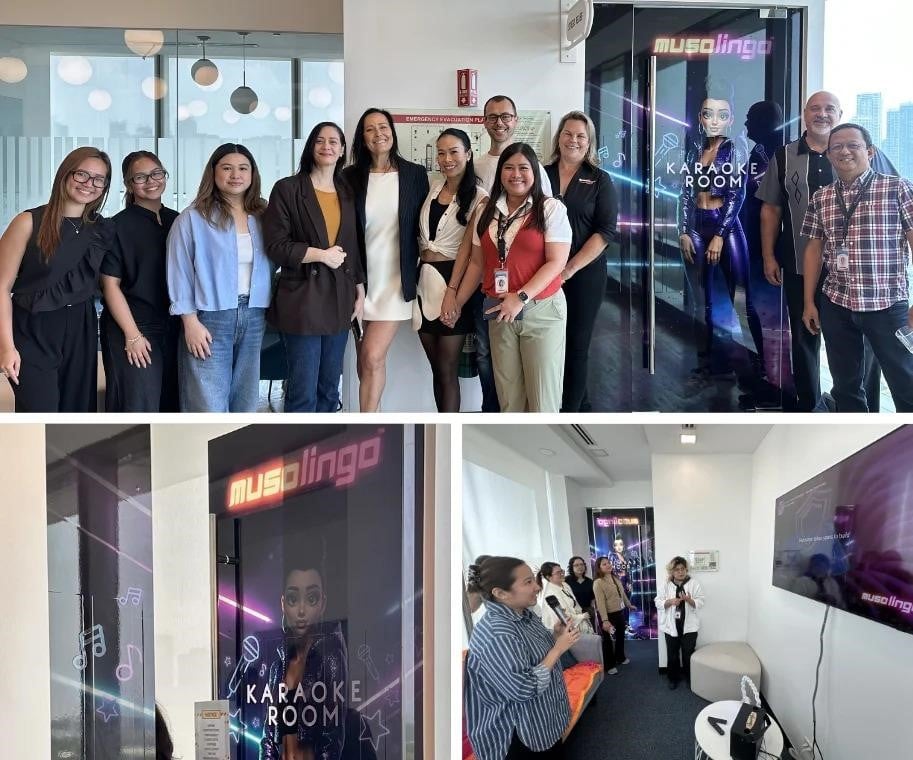
The song was created for Genfinity founders Jeff Williams and Atty. Michelle Duenas in partnership with MusoLingo. It celebrates the milestone along with the leadership and sense of purpose that carried Genfinity from its early days to the company it is today.
It is also one part of a wider collaboration between Genfinity and MusoLingo, which is testing a different approach to workplace learning: using music to turn information into an experience people can feel, remember and put to use. Early testing of Genfinity staff after the program has shown that the method can deliver measurable positive outcomes.
At the center of the 10th Anniversary song is the story of Jeff and Michelle, two leaders whose plans for the company have always gone beyond business performance. Over ten years they built a culture where people understand what Genfinity stands for and why their work matters. The song gives that story an emotional voice.
“Ten years is an incredible milestone, and hearing our journey captured in a song was something I wasn’t prepared for,” said Jeff Williams, Co-Founder and CEO of Genfinity. “It brought back the passion that started all of this, but it also reminded me that Genfinity belongs to the people who helped build it. What makes the wider work with MusoLingo so exciting is seeing that idea extend into how our people learn. When you create an experience people connect with emotionally, and then see real improvements in their skills, it reinforces our belief that investing in our people is fundamental to what we do.”
For Michelle, the song says something conventional corporate messaging often misses: the connection between a company’s purpose, its people and the culture they build together.
“What makes the song so special is that you don’t just hear the story of Genfinity, you feel it,” said Atty. Michelle Duenas, Co-Founder and Chief Strategy Officer of Genfinity. “Our values aren’t simply words we want people to remember. They are something we want people to experience and carry with them, even beyond their stay with us in Genfinity.
“That is also what makes the learning results so interesting to us. We want our people not only to know more, but to have the confidence and capability to put that knowledge into practice. Seeing that development reflected in the post-testing gives us an early indication of what can happen when learning becomes more engaging, memorable and relevant to the real situations our people face.”
From Communicating Values to Measurable Learning
The anniversary project sits within a broader collaboration that looks at how music and experience can improve staff learning across areas that include English proficiency, data privacy and cybersecurity. Instead of relying on slides and standard training, the approach uses music to make information memorable and participatory.
Now it is being measured. Genfinity staff were tested before and after taking part in MusoLingo learning, so both companies could see whether stronger engagement translates into better workplace capability. One participant’s communication effectiveness score rose from 47 to 83 within a few weeks, moving from Foundation to Professional level on the Global Clarity Certification Scale.
For MusoLingo CEO Nicole Salisbury, that result is the point. “One team member’s score has moved from 47 to 83 on the Global Clarity Certification framework,” she said. “In practical terms, that’s the difference between a staff member who struggles to handle complex client interactions on their own, and one you can trust in high-stakes conversations. Engagement on its own isn’t enough. We want to know whether people are actually learning, whether they retain it, and whether it changes what they can do at work. Companies spend enormous amounts of time defining their values and building training, but so much of it still ends up as words on a screen. Music gives us another way in, and the post-testing shows the experience becomes knowledge people can use.”
More Than an Anniversary Song
The collaboration points to a new use for music at work: not entertainment, but a medium for learning, culture and shared experience. For the anniversary, that meant turning a decade of challenges, relationships and achievements into a piece of music the whole team could share. The wider work raises a question for any organization: what changes when employees experience information instead of just receiving it? MusoLingo’s answer is to pair that experience with before-and-after testing and measure the difference.
“Anthem for the Future” looks back on Genfinity’s first ten years, but its message is about what comes next: recognizing the leadership of Jeff and Michelle, celebrating the people who built the company with them, and reinforcing the values that will carry it into the next decade.
The Genfinity 10th anniversary song, “Anthem for the Future,” can be heard on YouTube: https://youtu.be/rp0zfgBhPL0
About Genfinity
Genfinity helps companies and individuals take advantage of the opportunities in the Philippine BPM support industry, acting as operationally focused support on the ground. Whether you’re looking to establish operations within the Philippines, identify the right BPM provider, enhance existing processes, explore opportunities supporting the Philippine digital transformation or need training resources to prepare the Philippines vast Allied Health, Banking and Finance, Legal, Technical or overall Customer Service oriented talent pool, our 20+ years of experience, partnerships and pioneering involvement in the industry are here to ensure your success.
About MusoLingo
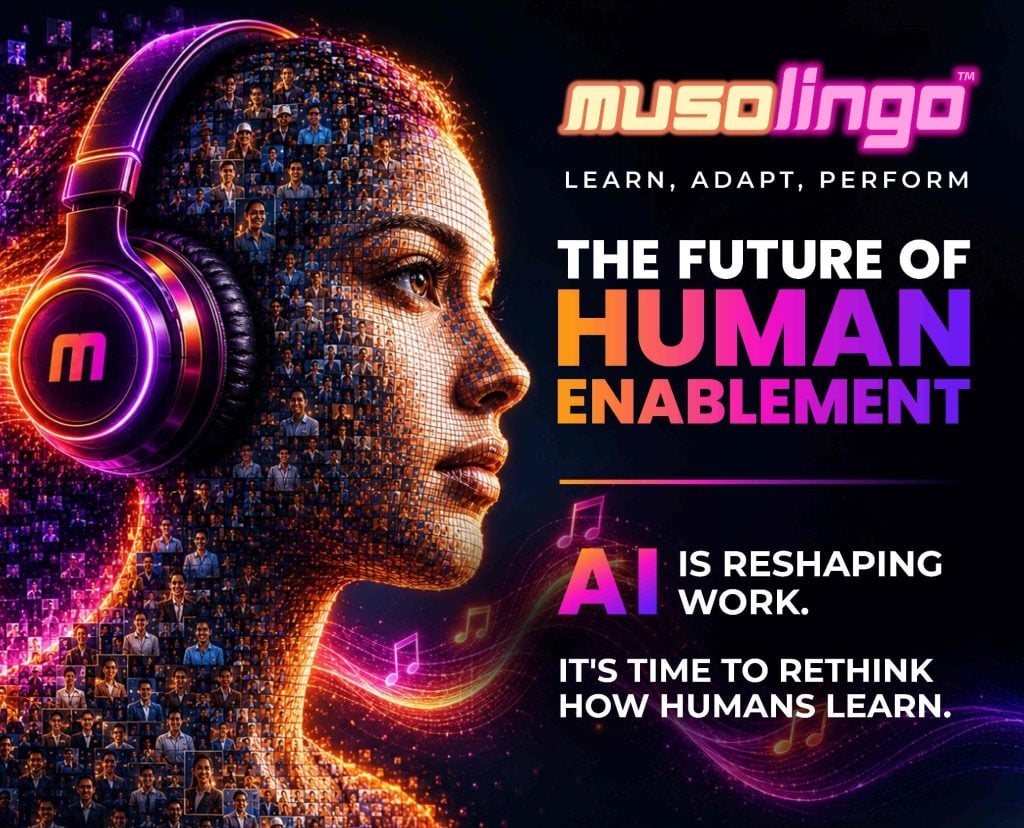
MusoLingo uses the emotional and mnemonic power of music to create new ways for people to learn, connect and engage with ideas and knowledge. Its work with organizations explores how music can turn brand values, culture and workplace learning from information presented in two dimensions into experiences that are felt, remembered and applied.
About Author
Disclaimer: The views, suggestions, and opinions expressed here are the sole responsibility of the experts. No Digi Observer journalist was involved in the writing and production of this article.
Press Release
Mark Siegwald Debunks 5 Myths About Property Damage Claims That Cost You Time and Money
-
Mark Siegwald, a Senior Consultant with Bower Building Consulting in Chicago, separates fact from fiction in restoration consulting.
The Myths That Drive Up Costs
Illinois, USA, Aug 18, 2026, ZEX PR WIRE — After more than 24 years working across insurance adjusting, restoration, and consulting, Mark Siegwald has heard nearly every misconception about property damage claims. These myths do more than just confuse property owners. They delay recoveries, inflate costs, and sometimes leave damage unresolved.
“I’ve been the adjuster, I’ve worked in restoration, and now I consult. Each role teaches you something different. When you’ve seen a project from several perspectives, you stop looking for simple answers,” Siegwald said.
He now works with insurance carriers to assess major commercial and institutional losses caused by fires, floods, hurricanes, and mold. His role includes damage assessment, estimate auditing, contractor negotiations, and restoration oversight. Through that work, he has identified five myths that consistently mislead property owners and stakeholders.
Myth 1: All Restoration Companies Charge the Same Rates
Why people believe it: Many assume restoration work is standardized and that pricing is largely the same across vendors.
The fact: Pricing varies widely between contractors, and not all bids are based on the same scope of work or level of service. Some estimates include unnecessary steps or inflated unit costs.
“A lot of our work involves reviewing estimates, auditing pricing, comparing bids, and making sure repairs are being handled correctly. You want to avoid situations where work is either excessive or incomplete. The goal is to get properties restored properly and efficiently,” Siegwald explained.
Tip you can use today: Request itemized estimates from at least two vendors and compare line items, not just totals. Ask questions about any item you don’t understand.
Myth 2: Bigger Estimates Mean Better Repairs
Why people believe it: A higher bid can feel like a sign of thoroughness or quality.
The fact: A larger estimate does not guarantee better work. It may include unnecessary services, duplicate tasks, or inflated pricing.
“My goal isn’t to make a project bigger or smaller than necessary. It’s to make sure the repair plan accurately reflects the damage and supports a successful recovery,” said Siegwald.
Tip you can use today: Ask the contractor to explain why each service is needed. If they can’t justify it clearly, question whether it belongs in the scope.
Myth 3: You Should Always Accept the First Estimate
Why people believe it: After a disaster, people want to move fast and may assume the first responder knows best.
The fact: The first contractor on site is not always the best choice. Quick decisions without review can lead to overpayment or incomplete repairs.
Siegwald noted, “We’re seeing more complexity in nearly every major claim. The costs are higher, timelines are tighter, and there are often multiple parties involved. Insurance carriers want experienced professionals who can independently assess the damage and make sure the scope of work actually matches what’s needed.”
Tip you can use today: Take a day to review the estimate before signing. If time allows, get a second opinion from an independent consultant or another contractor.
Myth 4: Insurance Adjusters and Restoration Contractors Always Agree
Why people believe it: People often assume both parties are working toward the same goal and will naturally align.
The fact: Adjusters and contractors have different incentives. Adjusters work to control costs. Contractors want to maximize scope. Independent consultants help bridge that gap.
“You learn very quickly how important accuracy is. Every number matters. Every detail matters,” Siegwald said.
Tip you can use today: If there is a dispute between your adjuster and contractor, ask for a third-party review of the damage and scope before moving forward.
Myth 5: Once the Work Starts, Your Job Is Done
Why people believe it: Property owners often think hiring a contractor means they can step back entirely.
The fact: Oversight matters throughout the project. Without monitoring, work can drift from the agreed scope, timelines can slip, and quality can suffer.
“We’re there to make sure things are done correctly. Not overdone. Not underdone. Just done the right way,” Siegwald explained.
Tip you can use today: Schedule weekly check-ins with your contractor. Ask for progress photos and updates. Keep a copy of the original scope on hand to compare against what is actually being done.
If You Only Remember One Thing
Don’t assume every estimate is accurate or every contractor is equally qualified. Take time to compare bids, ask questions, and get independent input before committing to a scope of work. That simple step can save thousands of dollars and weeks of frustration.
Take Action Today
Share this list with a colleague, property manager, or friend who might face a claim in the future. Then pick one tip from this article and apply it the next time you review an estimate or hire a contractor. Small steps toward accountability lead to better outcomes.
About Mark Siegwald
Mark Siegwald is a Senior Consultant with Bower Building Consulting in Chicago. He has more than 24 years of experience in the insurance and restoration consulting industry, including roles as a claims adjuster with Kemper Insurance and Liberty Mutual and restoration leadership positions with Munters Corporation, Belfor USA, and Response Team 1. He holds multiple certifications including IICRC, ASD, Water Restoration Technician, AMRT, and AIC. His work focuses on damage assessment, estimate auditing, contractor negotiations, and restoration oversight for complex commercial and institutional losses.
About Author
Disclaimer: The views, suggestions, and opinions expressed here are the sole responsibility of the experts. No Digi Observer journalist was involved in the writing and production of this article.
Press Release
Christopher Reep Says Experience Is Becoming One of Manufacturing’s Biggest Challenges
-
Operations leader and Lean expert Christopher Reep is encouraging manufacturers to make knowledge sharing part of everyday work before decades of practical experience are lost.
Mooresville, North Carolina, Aug 18, 2026, ZEX PR WIRE — As manufacturers work to fill open positions and prepare the next generation of skilled workers, operations leader and author Christopher Reep believes another challenge deserves just as much attention: making sure decades of practical experience are passed on before they disappear.

According to a joint report from Deloitte and The Manufacturing Institute, the manufacturing industry will need approximately 3.8 million new workers between 2024 and 2033, yet as many as 1.9 million of those jobs could go unfilled if current workforce trends continue. While much of the conversation has focused on hiring, Reep says companies should also be thinking about how they preserve the knowledge and practical experience of long-time employees.
“People often think experience is something that can be replaced with a handbook or a training manual,” Reep says. “In reality, some of the most valuable lessons come from years of solving problems, working with different teams, and learning what works through experience.”
Reep has spent nearly 30 years at Daimler Truck North America, where he serves as a Production Manager supporting the manufacturing of Freightliner and Western Star trucks. Throughout his career, he has worked with Lean management, Total Productive Maintenance (TPM), Hoshin Kanri, and structured problem-solving, always with a focus on helping teams improve how they work together.
He believes one of the most effective ways to preserve workplace knowledge is to make learning part of everyday work instead of waiting until an experienced employee is preparing to leave.
“The best organizations don’t wait until someone gives notice to start asking questions,” he says. “Knowledge should be shared every day through mentoring, coaching, and conversations on the production floor. When people learn from one another consistently, the organization becomes stronger.”
Research continues to show that mentoring and knowledge sharing benefit both organizations and employees. Strong knowledge transfer can reduce costly mistakes, improve onboarding, and help businesses adapt more quickly as experienced workers move into new roles or leave the workforce.
Reep says that the approach benefits everyone, not just newer employees.
“When experienced employees share what they’ve learned, they aren’t just teaching a process,” he says. “They’re sharing judgment, perspective, and the small lessons that help people make better decisions when challenges come up.”
He also believes leaders should spend more time creating opportunities for those conversations to happen naturally.
“The people closest to the work often have the best ideas,” Reep says. “If leaders take the time to listen, they can solve problems faster and help others build confidence at the same time.”
While technology continues to reshape manufacturing, Reep believes the human side of the industry remains just as important.
“Technology can improve efficiency, but it can’t replace the experience people develop over years of doing the work,” he says. “The companies that will be strongest in the future are the ones that invest in both.”
Reep encourages leaders to identify one process this week that depends heavily on one person’s experience and begin creating opportunities for that knowledge to be shared. Whether it’s through mentoring, documenting lessons learned, or simply creating more opportunities for experienced and newer employees to work together, he believes small actions today can have a lasting impact.
“Knowledge doesn’t have to disappear when someone leaves,” Reep says. “If organizations make learning part of their daily culture, they’ll be better prepared for whatever challenges come next.”
About Christopher Reep
Christopher Reep is a Production Manager at Daimler Truck North America, where he has spent nearly 30 years supporting the manufacturing of Freightliner and Western Star trucks. He is a certified Lean expert, published author, and practitioner specializing in Lean management, Total Productive Maintenance (TPM), Hoshin Kanri, and structured problem-solving. Through his leadership and writing, Reep focuses on helping organizations turn complex operational concepts into practical strategies that improve performance, strengthen teams, and create cultures of continuous improvement. He is the author of Anchored Leadership and is currently writing several books focused on Lean management and operational excellence.
About Author
Disclaimer: The views, suggestions, and opinions expressed here are the sole responsibility of the experts. No Digi Observer journalist was involved in the writing and production of this article.
Genfinity Marks 10th Anniversary With Original Song as MusoLingo Collaboration Shows Measurable Gains in Staff Communication
Mark Siegwald Debunks 5 Myths About Property Damage Claims That Cost You Time and Money
Christopher Reep Says Experience Is Becoming One of Manufacturing’s Biggest Challenges
Benzinga Money Article Discusses How to Become Part of the 12% of Retirees Who Have Achieved the Recommended $550,000 Minimum Retirement Savings Threshold
Apu Apustaja Conquers New York with Lively Street Ads, Including Times Square Billboard
Bay Smokes Maintains Quality Amid Legislative Changes in the Hemp Industry


-
Press Release7 days ago
ForumPay Expands Payment Infrastructure with New Card and Bank Transfer Acceptance Solution
-
Press Release1 week ago
Demeter Tactical Investments (ME) Limited bolsters governance with two board appointments
-
Press Release7 days ago
Vincere Portfolios Expands Industry Discussion Around the Gap Between Retail Investing Tools and Institutional Trading Infrastructure
-
Press Release4 days ago
Commercial Plumbing Alabama Highlights Slab Plumbing Services in Birmingham
-
Press Release3 days ago
Kara4Kids Expands Early Childhood Education Across India With Inclusive, Play-Based Learning
-
Press Release1 week ago
CT3 Begins Preparing Its Ecosystem for the Launch of the CT3GB Economy
-
Press Release7 days ago
Organization Launches Executive Leadership Insights Series Featuring Brent Byng on Turning Strategy Into Measurable Results
-
Press Release1 week ago
Syntetika Launches Tokenization Hub Bringing Regulated Investment Strategies Onchain