
Press Release
Dr. Ben Barton Breaks Down Key Trends Shaping Modern Medical Practices

-
Dr. Ben Barton of Asheville, North Carolina, shares practical insights on emerging healthcare and business trends affecting clinicians and patients today.
Asheville, NC, 23rd March 2026, ZEX PR WIRE — Medical consultant and author Dr. Ben Barton is highlighting several emerging trends affecting healthcare professionals and the patients they serve. Drawing on his experience working with cash-based medical practices, Barton says many of the biggest shifts in healthcare are not about new technology alone but about how practices operate and make decisions.
.jpg)
Below, Barton summarizes four trends he believes individuals and healthcare professionals should understand right now.
Trend 1: More Physicians Are Moving Away from Independent Practices
The structure of medical practices has changed significantly over the past decade. According to recent survey data, only about 42% of physicians now work in private practices, down sharply from about 60% in 2012.
This shift toward hospital or corporate ownership is changing how healthcare is delivered.
“Healthcare systems are getting bigger and more centralized,” Barton says. “That can create efficiency, but it also means individual providers sometimes have less control over how care is delivered.”
What it means for people:
Patients may see more consolidation in healthcare and fewer independent practices in their communities.
“Structure matters,” Barton explains. “The way a practice is organized shapes how patients experience care.”
Trend 2: Physician Burnout Is Still a Major Issue
Burnout continues to affect a large portion of the medical workforce. Surveys show nearly half of physicians report feeling burned out, and some report plans to reduce patient care or leave the profession entirely.
Administrative work is a major contributor. Some doctors report spending around 15 hours per week outside normal work hours on documentation and other tasks.
Barton says this is partly a systems problem.
“Most clinicians are trained to deliver great care,” he says. “But the systems around them aren’t always built to support that.”
What it means for people:
Burnout affects access to care. When providers reduce hours or leave the field, patients often feel the impact through longer wait times and fewer options.
Trend 3: Healthcare Professionals Are Rethinking Career Paths
Another trend is increased career mobility among physicians. Surveys indicate that more than 60% of physicians have made a career change in the past two years, including changing jobs or practice models.
Barton says this shift reflects a broader reassessment of work structures.
“People are reevaluating how they want to practice medicine,” he says. “For many, that means looking for models that give them more control over their time and workflow.”
What it means for people:
Patients may see new types of care models emerge, including smaller specialty practices and alternative payment models.
Trend 4: Running a Practice Is Still a Business Challenge
Even outside healthcare, the operational side of running a business remains difficult. According to U.S. labor data, about 20% of new businesses fail within their first year, and nearly half close within five years.
Barton says medical practices are not immune to those pressures.
“Most problems aren’t dramatic,” he says. “They’re the result of small decisions repeated over time.”
What it means for people:
Operational clarity—how decisions are made, how workflows function—often determines whether a practice stays stable.
“You don’t fix systems with effort alone,” Barton says. “You fix them with structure.”
Dr. Barton believes the biggest lesson from these trends is simple: healthcare is evolving quickly, and both providers and patients are feeling the effects.
“Complex problems often come down to simple questions,” he says. “How does the system work? Who owns the decision? And is the process clear?”
Understanding those questions, he says, will become increasingly important as healthcare continues to change.
About Dr. Ben Barton
Dr. Ben Barton is a medical consultant with Regen Medical Consulting and the author of Practice Prosperity: The Six Biggest Mistakes Costing You Millions. Based in Asheville, North Carolina, he works with cash-based medical practices to improve operational systems, decision-making processes, and long-term sustainability. He studied at Appalachian State University and Clemson University before completing his doctorate at Palmer College of Chiropractic. Outside of consulting, Barton is an avid mountaineer who has climbed Mount Elbrus in Russia and Mount Kilimanjaro in Africa and is preparing to climb Aconcagua in Argentina as part of the Seven Summits challenge.
About Author

Disclaimer: The views, suggestions, and opinions expressed here are the sole responsibility of the experts. No Digi Observer journalist was involved in the writing and production of this article.

Press Release
TRON Founder Justin Sun Shares Outlook on Bitcoin, Stablecoins and Global Finance at Bitcoin Asia 2026
Geneva, Switzerland, August 31st, 2026, FinanceWire
Geneva, Switzerland, August 31st, 2026, NewsDirect
TRON DAO, the community-governed DAO dedicated to accelerating the decentralization of the internet through blockchain technology and decentralized applications (dApps), participated in Bitcoin Asia 2026 in Hong Kong, where TRON Founder Justin Sun joined two fireside discussions on Bitcoin’s evolution, institutional adoption and the changing structure of global digital finance.
On August 27, Sun joined Bonnie Chang, Founder and Host of Bonnie Blockchain, on the Nakamoto Stage for “The Globalization of Bitcoin Capital.” The discussion focused on Bitcoin’s growing role in global capital markets as access expands through investment products, corporate treasuries and institutional infrastructure.
Sun said Bitcoin has moved well beyond its early years as an experimental technology and now plays a more established role as a global monetary asset and store of value. He also said Bitcoin’s traditional four-year cycle could become less pronounced as institutional flows, derivatives, global liquidity and macroeconomic conditions play a greater role in shaping the market.
“TRON is highly related to daily stablecoin payments,” said Sun. “The network continues to grow, with more than $94 billion in USDT on TRON, driven by real-world usage and continued growth across the ecosystem.”
The conversation also examined the relationship between Bitcoin and stablecoins. Sun described Bitcoin and stablecoins as complementary, with Bitcoin serving as a store of value while stablecoins are used for payments and settlement. He pointed to sustained stablecoin activity on TRON as evidence that demand for digital dollars can remain strong regardless of broader crypto market conditions.
Sun also addressed longer-term technological shifts affecting blockchain networks, including quantum computing and AI. He highlighted TRON’s work on post-quantum signature technology on the Nile testnet and said the industry should begin preparing for future security risks as quantum computing advances. On AI, Sun said autonomous agents could eventually become active participants in the digital economy, creating demand for systems that allow AI agents to hold assets, make payments and interact directly with financial applications. He said blockchain’s transparent and verifiable infrastructure could become more relevant as AI systems gain greater economic autonomy.
Later that afternoon, Sun joined Sean Hagan of BMTV for a second fireside discussion at The Deep, Bitcoin Asia’s VIP stage, where he discussed how his views on Bitcoin have evolved, opportunities across digital assets and Bitcoin’s potential role in global finance.
About TRON DAO
TRON DAO is a community-governed DAO dedicated to accelerating the decentralization of the internet via blockchain technology and dApps.
Founded in September 2017, the TRON blockchain has experienced significant growth since its MainNet launch in May 2018. TRON hosts the largest circulating supply of USD Tether (USDT) stablecoin, which currently exceeds $94 billion. As of August 2026, the TRON blockchain has recorded over 401 million in total user accounts, more than 15 billion in total transactions, and over $27 billion in total value locked (TVL), based on TRONSCAN. Recognized as the global settlement layer for stablecoin transactions and everyday purchases with proven success, TRON is “Moving Trillions, Empowering Billions.”
TRONNetwork | TRONDAO | X | YouTube | Telegram | Discord | Reddit | GitHub | Medium | Forum
Contact
Yeweon Park
press@tron.network
About Author
Disclaimer: The views, suggestions, and opinions expressed here are the sole responsibility of the experts. No Digi Observer journalist was involved in the writing and production of this article.
Press Release
Fingerprint Boston Launches Remote Fingerprint Processing Service for Americans Living Abroad
Fingerprint Boston in Tewksbury, Massachusetts, now accepts FD-258 fingerprint cards mailed from overseas, inspects and prepares them for submission, and assists with apostille, translation and return shipping so Americans living abroad complete a background check requirement without traveling to the United States.
Tewksbury, MA, United States, 31st Aug 2026 — Fingerprint Boston, a fingerprinting and document services office in Tewksbury, Massachusetts, has launched a remote fingerprint processing service for United States citizens who live outside the country and need an FBI background check for purposes such as foreign residency, work authorization, professional licensing or adoption.

The service allows applicants to complete the fingerprint capture step where they live and mail the card to Massachusetts rather than traveling to the United States. According to the US Department of State, embassies and consulates abroad do not provide fingerprinting services, which has left many Americans overseas without a clear path to complete the requirement.
How the service works
Applicants have their fingerprints taken on a standard FD-258 card by a local provider in their country of residence, typically a police station or a private fingerprinting service. They then mail the completed card to Fingerprint Boston’s office in Tewksbury, MA. On arrival, technicians inspect the card for print quality and completeness. Cards that pass inspection are scanned on a high-resolution fingerprint scanner and converted to digital format. Fingerprint Boston prepares the fingerprint materials for submission and assists applicants with the FBI background-check process.
When the applicant’s destination country requires additional steps, Fingerprint Boston coordinates the apostille processing and certified translation of the completed report. The company then ships the document package to the applicant’s address abroad.
Card inspection before submission
The company reports that the most common reason mailed cards fail is print quality, including smudged ridges, incomplete rolls, missing signatures and damage during shipping. Each card is checked before scanning, and applicants are notified if a new card is needed before the materials are prepared for submission.
Fingerprint Boston recommends that applicants request two complete card sets from their local provider and ship cards flat between rigid backing to limit damage in transit. Applicants are advised to confirm with the authority requesting the document whether an apostille, a translation or both are required.
“People living abroad were being told to fly home for a 15-minute appointment,” said Hanson Webb, owner of Fingerprint Boston. “The card can travel instead of the person. Our role is to ensure the card that arrives is accepted and to assist with the next steps.”
Webb has operated a document services business in Tewksbury since 2007. The office also provides Live Scan fingerprinting, FD-258 ink card capture, apostille coordination and certified translation for residents and employers in Massachusetts and southern New Hampshire.
Full details on the remote service are available at https://fingerprintboston.com/fbi-background-check-apostille-abroad/. A guide for applicants on obtaining fingerprints while overseas is published at https://fingerprintboston.com/blog/how-to-get-fingerprinted-overseas-fbi-background-check/.
About Fingerprint Boston
Fingerprint Boston is a fingerprinting and document services office located at 1215 Main St, Unit 115, Tewksbury, Massachusetts. Services include Live Scan fingerprinting, FD-258 ink card capture, FBI background check assistance, apostille coordination, certified translation and mobile fingerprinting for employers across Greater Boston. Office appointments are available Monday through Friday, 10 AM to 5 PM Eastern. Additional information is available at https://fingerprintboston.com.
Media Contact
Hanson Webb, Owner
Fingerprint Boston
1215 Main St, Unit 115
Tewksbury, MA 01876
Phone: +1 978-424-4629
Website: https://fingerprintboston.com
Media Contact
Organization: Fingerprint Boston
Contact Person: Hanson Webb
Website: https://fingerprintboston.com
Email: Send Email
Contact Number: +19784244629
Address:1215 Main St
Address 2: Suite 115
City: Tewksbury
State: MA
Country:United States
Release id:48618
The post Fingerprint Boston Launches Remote Fingerprint Processing Service for Americans Living Abroad appeared first on King Newswire. This content is provided by a third-party source.. King Newswire makes no warranties or representations in connection with it. King Newswire is a press release distribution agency and does not endorse or verify the claims made in this release. If you have any complaints or copyright concerns related to this article, please contact the company listed in the ‘Media Contact’ section
About Author
Disclaimer: The views, suggestions, and opinions expressed here are the sole responsibility of the experts. No Digi Observer journalist was involved in the writing and production of this article.
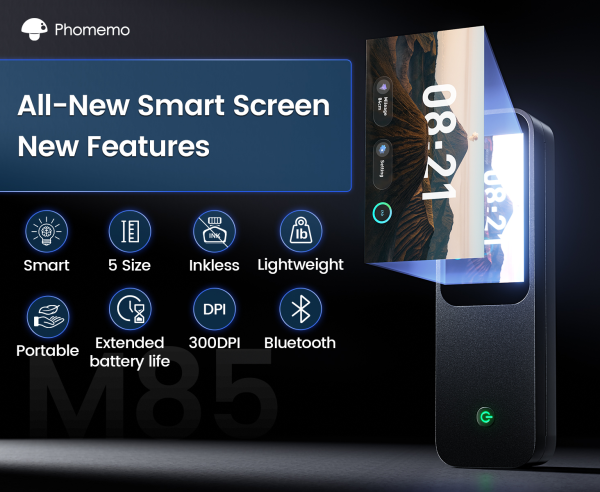
New York, New York, United States, 31st Aug 2026 – For professionals working from home, traveling for business, or moving between locations, access to full-size document printing can be limited by the portability of traditional printers. To address this need, Phomemo has introduced the M85 Portable Printer, combining A4 and Letter-size printing with a compact 1.6-pound design, a large touchscreen, 300 DPI resolution, inkless printing technology, and flexible connectivity for smartphones and computers.
A Large Touchscreen for More Direct Control
The feature that immediately stands out on the M85 is its large built-in touchscreen.
Rather than relying entirely on a smartphone or computer to control the printer, the M85 puts more information and functionality directly on the device. The touchscreen can display the printer’s real-time battery level, connection status, and paper position, helping users understand the printer’s status before starting a print job.
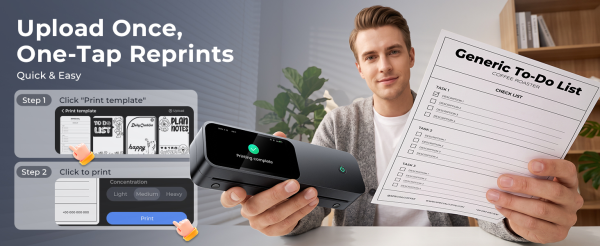
The touchscreen also supports template preview, editing, and direct printing. Frequently used documents, forms, receipts, or other materials can be uploaded as templates and accessed directly from the printer for repeated printing.
Users can also personalize the device with wallpaper, while multi-language support and built-in guides make the printer easier to navigate.
According to Phomemo, these features make the touchscreen more than just a visual feature. It helps the M85 function as a more independent printing device, reducing the need to constantly switch between the printer, phone, and computer.
For anyone who prints the same types of documents repeatedly, that can make everyday printing considerably simpler.
Full-Size Printing in a Portable Design
One of the biggest advantages of the Phomemo M85 is that it doesn’t force users to choose between full-size printing and portability.
The M85 supports US Letter and A4-sized printing, allowing users to print documents, contracts, invoices, forms, reports, and other full-size materials while away from a traditional printer. It also supports smaller paper formats, including 53mm, 80mm, and 110mm, giving users more flexibility for different printing needs.
Despite supporting full-size documents, the M85 weighs only 1.6 pounds and has a compact, folding-umbrella-sized design. It can easily fit into a backpack, work bag, or luggage, making it practical for people who regularly move between locations.
The built-in paper compartment adds another layer of convenience by keeping paper readily available inside the printer, so users don’t necessarily need to carry a separate stack of paper just to print a few documents.
For remote workers, business travelers, and small business owners, that combination can be particularly useful: full-size printing without carrying a full-size printer.
Flexible Connectivity for Mobile and Desktop Work
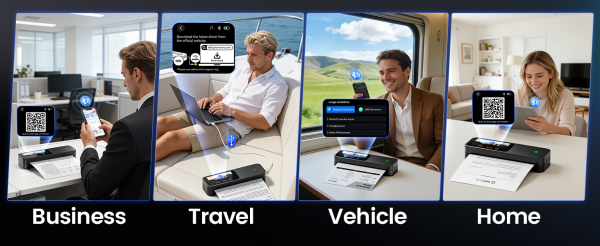
The M85 supports printing from Android and iOS devices via Bluetooth, while USB-C connectivity supports Windows, macOS, ChromeOS, and Linux. This allows documents to be printed from smartphones or computers depending on the workflow.
The M85 is also compatible with commonly used file formats, including Word, Excel, PDF, JPG, and other major formats, making it suitable for a variety of everyday printing tasks.
Whether the document starts on a smartphone or a computer, the M85 is designed to make getting it onto paper relatively straightforward.
Inkless Printing for Work on the Go
The M85 uses inkless thermal printing technology, eliminating the need for traditional ink cartridges. This reduces the need to carry or replace ink when printing away from a traditional office setup.
The M85 is equipped with a 3500mAh battery that supports 200+ pages on a single charge, providing capacity for everyday printing without requiring users to stay close to a power outlet.
These features make the M85 suitable for a range of work and travel situations. Remote workers can use the printer when working from home, coworking spaces, or other locations, while business travelers can print contracts, forms, receipts, and meeting materials without relying on hotel business centers or local printing services. For small business owners, the M85 provides a convenient option for handling paperwork between locations, while its multiple paper sizes also support everyday personal tasks such as lists, schedules, notes, and travel documents.
More Portable Printing Options from Phomemo
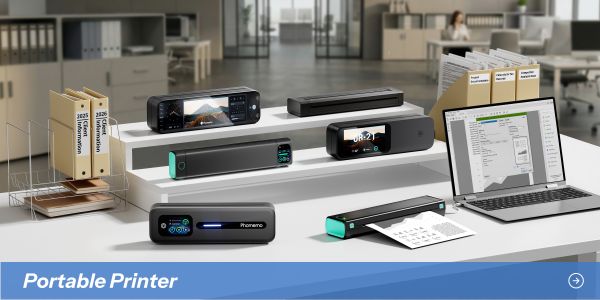
The M85 is part of Phomemo’s broader range of portable printing solutions, with different models designed around different printing needs.
The M832D focuses on everyday document and photo printing, while the M08F offers a lightweight option for users who prioritize simple mobile printing. For users who prioritize faster printing and added flexibility, the G100 Pro offers printing speeds of up to 100mm/s, AirPrint support, and compatibility with multiple paper sizes.
Together, these options give users different ways to balance portability, printing format, speed, and functionality depending on how and where they print.
About Phomemo
Phomemo is a thermal printing brand focused on portable printing solutions for work, business, creativity, and everyday life. Its product lineup includes portable document printers, label printers, photo printers, and other compact printing solutions designed for users who need more flexibility than a traditional desktop printer can offer.
The M85 represents a more full-featured approach to portable printing, bringing together full-size document printing and smart operation in a compact format.
Media Contact
Organization: Phomemo
Contact Person: Annie
Website: https://phomemo.com
Email:
labelmaker@phomemo.com
City: New York
State: New York
Country:United States
Release id:48627
The post Phomemo M85 Redefines Portable Printing for Work and Travel appeared first on King Newswire. This content is provided by a third-party source.. King Newswire makes no warranties or representations in connection with it. King Newswire is a press release distribution agency and does not endorse or verify the claims made in this release. If you have any complaints or copyright concerns related to this article, please contact the company listed in the ‘Media Contact’ section
About Author
Disclaimer: The views, suggestions, and opinions expressed here are the sole responsibility of the experts. No Digi Observer journalist was involved in the writing and production of this article.
TRON Founder Justin Sun Shares Outlook on Bitcoin, Stablecoins and Global Finance at Bitcoin Asia 2026
Phomemo M85 Redefines Portable Printing for Work and Travel
Fingerprint Boston Launches Remote Fingerprint Processing Service for Americans Living Abroad
Benzinga Money Article Discusses How to Become Part of the 12% of Retirees Who Have Achieved the Recommended $550,000 Minimum Retirement Savings Threshold
Apu Apustaja Conquers New York with Lively Street Ads, Including Times Square Billboard
Bay Smokes Maintains Quality Amid Legislative Changes in the Hemp Industry


-
Press Release6 days ago
Ghanaian Royal and Business Delegation to Convene in Dallas for U.S.–Ghana Investment Symposium
-
Press Release7 days ago
Blockchain Infrastructure Firm tZERO Integrates with Sui for Institutional-Grade Digital Asset Securities
-
Press Release5 days ago
SMS Gadget: Bangladesh’s Authorized Best Shop Delivers Latest iPhone Just One Day After Official Launch
-
Press Release1 week ago
OKINAWA HARBORVIEW HOTEL completes full-scale renovation to deliver a modern Okinawan experience
-
Press Release7 days ago
Team Miracle Cyprus IVF Centre Presents Comprehensive Male Fertility Solutions With Inclusive Care
-
Press Release5 days ago
The Bookish Magazine Releases Issue 2, Celebrating Stories That Stand the Test of Time
-
Press Release2 days ago
Post Oak Group Weighs In on Private Credit’s Expanding Role in Middle-Market Financing
-
Press Release5 days ago
YZi Labs Backs TermMax to Advance On-Chain Bond Market Infrastructure