
Press Release
PSI Highlights Use of Multiple Pump Designs to Support Diverse Industrial Environments

Process Solutions International (PSI) highlights its every application approach to industrial pumps, emphasizing the importance of selecting the right pump design—centrifugal, progressing cavity, or self-priming—based on specific fluid handling challenges. Through its PSI Max 2000 portfolio, the company supports diverse industries worldwide with purpose-built pump solutions designed to improve efficiency, reliability, and long-term performance.
Houston, TX, United States, 12th Feb 2026— Process Solutions International (PSI), a global provider of engineered fluid handling solutions, is reinforcing the importance of application-specific pump selection as industrial operations continue to diversify across sectors. Through its PSI Max 2000 industrial pump portfolio, the company emphasizes an “every application” approach, recognizing that no single pump design can effectively meet the demands of all industrial environments.
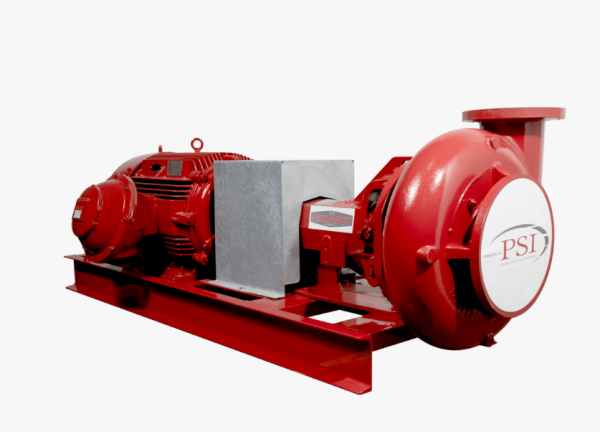
From high-volume fluid transfer to precision handling of viscous or solids-laden materials and challenging air-entrained conditions, PSI delivers multiple pump technologies engineered to perform reliably under distinct operational requirements. By offering centrifugal pumps, progressing cavity pumps, and self-priming pumps, PSI supports a wide range of industries, including oil and gas, wastewater treatment, mining, manufacturing, construction, and environmental services.
The Need for Purpose-Built Pump Designs in Modern Industry
Industrial fluid handling is rarely uniform. Facilities manage varying viscosities, solids content, flow rates, pressures, and environmental conditions often within the same operation. Selecting the wrong pump design can lead to inefficiencies, premature wear, excessive maintenance, and unplanned downtime.
PSI’s engineering philosophy centers on aligning pump technology with real-world application demands. Rather than promoting a one-size-fits-all solution, the company focuses on providing purpose-built pump designs that maximize performance, efficiency, and operational longevity. This application-driven approach allows industrial operators to maintain process integrity while adapting to evolving production requirements.
Centrifugal Pumps for High-Flow and General Transfer Applications
Centrifugal pumps remain one of the most widely used pump types across industrial environments due to their versatility and efficiency. PSI’s MakDaddy centrifugal pumps are designed to support applications requiring consistent, high-volume fluid movement with minimal complexity.
Operating through a rotating impeller that imparts kinetic energy to the fluid, centrifugal pumps are well-suited for clean or lightly contaminated liquids. These pumps are commonly deployed in water transfer, circulation systems, cooling processes, and general plant services where steady flow and dependable performance are essential.
PSI’s MakDaddy centrifugal pump line is engineered for durability in demanding environments, making it a practical choice for manufacturing facilities, water treatment plants, and oilfield support operations. Their straightforward design also contributes to reduced maintenance requirements and long-term operational efficiency.
Progressing Cavity Pumps for Controlled Flow and Challenging Fluids
Not all industrial fluids behave the same way. Applications involving thick, abrasive, shear-sensitive, or solids-laden materials require a pump design capable of maintaining precise, consistent flow under variable pressure conditions. For these challenges, PSI offers MAX2000 progressing cavity pumps.
Progressing cavity pumps are positive-displacement pumps that move fluid through a continuous sequence of sealed cavities formed between a helical rotor and a stator. This design enables smooth, pulse-free flow and accurate metering, regardless of changes in discharge pressure.
PSI’s progressing cavity pumps are widely used in wastewater treatment, oil and gas drilling operations, mining, chemical processing, and food production. They excel at transferring sludge, drilling mud, slurries, pastes, and other difficult materials that may cause inefficiencies or damage in centrifugal pump systems.
The MAX2000 design incorporates robust construction and specialized sealing technology to enhance reliability and minimize contamination risks. This makes progressing cavity pumps a critical component in processes where flow consistency, material integrity, and equipment longevity are priorities.
Self-Priming Pumps for Air-Entrained and Variable Suction Conditions
Certain industrial applications introduce air into the pumping system or operate under fluctuating suction conditions. Sump drainage, tank emptying, dewatering operations, and processes with intermittent fluid levels require pumps capable of evacuating air and restoring suction without manual intervention.
PSI’s MakDaddy self-priming pumps are engineered to handle these scenarios effectively. By incorporating internal air-handling mechanisms, self-priming pumps can separate air from liquid and re-prime automatically, even after shutdowns or loss of suction.
This capability simplifies installation, reduces reliance on auxiliary priming systems, and minimizes downtime.PSI’s self-priming pump solutions provide dependable performance in mixed air and fluid environments, helping operators maintain continuous operation under challenging conditions.
Supporting Industrial Operations Across Global Markets
PSI’s industrial pump solutions are deployed worldwide across diverse industries and operating environments. From municipal infrastructure and industrial manufacturing to energy production and environmental remediation, the company’s pumps support critical processes that demand reliability and consistency.
The availability of multiple pump designs within the PSI Max 2000 portfolio allows customers to standardize sourcing while still addressing varied application requirements. This flexibility supports scalability and operational continuity for organizations managing complex or multi-site operations.
About Process Solutions International
Process Solutions International (PSI) is an international provider of engineered industrial process equipment and fluid handling solutions. With decades of industry experience, PSI delivers high-performance systems designed to meet the demands of modern industrial environments. PSI serves customers globally with a focus on quality engineering, application expertise, and long-term operational value.
For more information, visit: https://psimax2000.com
Facebook: https://www.facebook.com/processsolutionsinternational
LinkedIn: https://www.linkedin.com/company/process-solutions-international/
Media Contact
Organization: Process Solutions International
Contact Person: Kye Keliehor
Website: https://psimax2000.com/
Email: Send Email
Contact Number: +12818934774
Address:7519 Prairie Oak Dr
City: Houston
State: TX
Country:United States
Release id:41283
The post PSI Highlights Use of Multiple Pump Designs to Support Diverse Industrial Environments appeared first on King Newswire. This content is provided by a third-party source.. King Newswire makes no warranties or representations in connection with it. King Newswire is a press release distribution agency and does not endorse or verify the claims made in this release. If you have any complaints or copyright concerns related to this article, please contact the company listed in the ‘Media Contact’ section
About Author

Disclaimer: The views, suggestions, and opinions expressed here are the sole responsibility of the experts. No Digi Observer journalist was involved in the writing and production of this article.

Philadelphia, Pennsylvania, August 25th, 2026, ZEX PR WIRE, Slotozilla has continued to build momentum throughout Quarter 2 of 2026, strengthening its position as an international iGaming affiliate platform. During the quarter, the company expanded its partner network, introduced a wide selection of new casino bonuses, and increased its presence across key global markets.

Expanding Bonus Selection for Players
A major focus during Q2 2026 was the continued development and expansion of Slotozilla’s bonus catalog. The platform added 158 new bonuses during the quarter, with 138 of these offers now live and available to players.
Most partners contributed comparable numbers of welcome bonuses and no deposit bonuses, providing players with a balance of appealing new customer offers and low-risk options. This approach enables Slotozilla’s partners to expand their customer base while rewarding those who already have accounts.
| Partner | Welcome Bonuses | No Deposit Bonuses | Total |
|---|---|---|---|
| Aura Partners | 7 | 7 | 14 |
| Ice Aff | 3 | 5 | 8 |
| Wildwin Affiliates | 4 | 4 | 8 |
| BetFury Affiliates | 3 | 3 | 7* |
| Gemified Partners | 4 | 3 | 7 |
| 79affiliates | 6 | 0 | 6 |
| Tssspartners | 2 | 4 | 6 |
| Revenue Players | 5 | 0 | 5 |
*Includes 1 seasonal holiday bonus
Beyond the leading contributors mentioned above, Slotozilla also received support from a broad range of partners, including Affiliate Drinks, Coin Partners, Gamespot Partners, Lussurio, Totem Partners, Moneycow, Qzino, Arcane Affiliates and many other industry collaborators.
International Partnerships Continue to Grow
In a global market where many affiliate networks are struggling with ever-tightening regulations and decreasing levels of disposable income, Slotozilla bucks the trend. Whereas many organizations are contracting, with some even folding, Slotozilla continues to expand overseas.
A representative from Slotozilla commented, “We’re really excited to have continued forming partnerships across both established and emerging markets. This emphasis on expansion has served to strengthen Slotozilla’s position within the iGaming sector.”
Canada remained the strongest-performing market during the quarter, with 28 new bonuses made available to players. Meanwhile, Australia (17 bonuses), the United Kingdom (17 bonuses) and the DACH region (Germany, Austria and Switzerland; 11 bonuses) also performed well. Spain (10 bonuses), Poland (10 bonuses), France (9 bonuses), Portugal (9 bonuses), Mexico (6 bonuses) and the United States (6 bonuses) all contributed significantly to Slotozilla’s wider international growth.
About Slotozilla
Slotozilla is an independent iGaming affiliate platform. It has been providing players with trusted casino reviews, bonus comparisons, slot information and more since 2013, steadily expanding into its current global position. Readers can learn more at Slotozilla.com.
About Author
Disclaimer: The views, suggestions, and opinions expressed here are the sole responsibility of the experts. No Digi Observer journalist was involved in the writing and production of this article.
Press Release
Blockchain Infrastructure Firm tZERO Integrates with Sui for Institutional-Grade Digital Asset Securities
Grand Cayman, Cayman Islands, August 25th, 2026, FinanceWire
The integration will bring established, regulated market infrastructure to Sui that unlocks support for institutions and issuers, while also opening access for tZERO to the chain’s deep pool of builders and developers
tZERO Group, Inc., a leader in blockchain-based financial infrastructure, today announced a strategic partnership to integrate directly with the Sui blockchain, unlocking support for issuance, transfer agency, custody, trading, compliance and settlement for regulated digital assets security trading. The integration will expand Sui’s access to institutionally compliant U.S. market infrastructure aimed at building for tokenized markets, and will bring Sui’s deep pool of builders and developers into the tZERO ecosystem.
The announcement brings full integration into tZERO’s U.S.-regulated trading, custody, and issuance framework for the Sui blockchain, providing direct support for institutional-grade tokenization projects and initiatives for projects currently building on the network.
Mustafa Al Niama, Head of Capital Markets at Mysten Labs and former Americas Head of Digital Assets at Goldman Sachs, commented: “Institutional adoption of tokenized assets depends on infrastructure that bridges blockchain innovation with regulatory frameworks. tZERO’s expansion to Sui gives issuers and developers access to regulated issuance, custody, and trading capabilities designed to support that transition, while also taking advantage of Sui’s unique architecture that is built to support institutional workflows.”
Through the integration, tZERO will gain access to a vast pool of developers, builders, and DeFi projects currently being built on Sui, leveraging the extensive knowledge these teams have in building for the network’s unique object-focused architecture. These builders have years of experience creating projects that take advantage of Sui’s highly performant network with near-instant finality, positioning them well to build on infrastructure designed to service institutional needs.
“Sui’s object-centric architecture offers a unique approach to regulated digital assets by making assets and their permissions programmable,” said Alan Konevsky, Chairman and Chief Executive Officer of tZERO. “Combined with Sui’s performance, that design creates a strong foundation for the development of next generation regulated financial applications onchain.“
tZERO brings more than 12 years of operational experience in U.S. market compliance and infrastructure development, and is recognized by the SEC with multiple registrations. tZERO is also an active member of FINRA, and has years of experience bridging crypto-native projects into regulated U.S. market applications.
The partnership signals strong continued momentum towards the development of shared blockchain based infrastructure, goals shared by both tZERO and Sui, and directly expands access to support for digital asset securities issued onchain.
For more information about Sui, please visit: https://www.sui.io/.
For more information about tZERO, please visit: https://www.tzero.com/.
About Sui
Sui, where money moves as freely as messages, is a next-generation Layer 1 blockchain built for scalable finance and global payments. Founded by the core team behind Meta’s stablecoin initiative and powered by an object-centric model, Sui makes assets, permissions, and user data programmable and ownable. Sui’s primitives offer builders everything they need to create high-performance payments and financial applications, including instant agentic payments. Learn more at sui.io.
About tZERO Group, Inc.
tZERO Group, Inc. (tZERO) and its broker-dealer subsidiaries provide an innovative liquidity platform for private companies and assets. We offer institutional-grade solutions for issuers looking to digitize their capital table through blockchain technology, and make such equity available for trading on an alternative trading system. tZERO, through its broker-dealer subsidiaries, democratizes access to private assets by providing a simple, automated, and efficient trading venue to broker-dealers, institutions, and investors. All technology services are offered through tZERO Technologies, LLC. For more information, please visit our website.
About tZERO Digital Asset Securities, LLC
tZERO Digital Asset Securities, LLC is a broker-dealer registered with the SEC and a member of FINRA and SIPC. It is the broker-dealer custodian of all digital asset securities offered on tZERO’s online brokerage platform. Digital asset securities may not be “securities” as defined under the Securities Investor Protection Act (SIPA)-and in particular, digital asset securities that are “investment contracts” under the Howey test but are not registered with the Securities and Exchange Commission are excluded from SIPA’s definition of “securities”-and thus the protections afforded to securities customers under SIPA may not apply. More information about tZERO Digital Asset Securities may be found on FINRA’s BrokerCheck.
About tZERO Securities, LLC
tZERO Securities, LLC is a broker-dealer registered with the SEC and a member of FINRA and SIPC. It is the operator of the tZERO Securities ATS. More information about tZERO Securities may be found on FINRA’s BrokerCheck.
About tZERO Transfer Services, LLC
tZERO Transfer Services, LLC is a transfer agent registered with the SEC. More information about tZERO Transfer Services may be found on the SEC’s Edgar: https://www.sec.gov/search-filings.
Forward-Looking Statements by tZERO
This release contains forward-looking statements. In addition, from time to time, tZERO, its subsidiaries, or its representatives may make forward-looking statements orally or in writing. These forward-looking statements are based on expectations and projections about future events, which is derived from currently available information. Such forward-looking statements relate to future events or future performance, including financial performance and projections; growth in revenue and earnings; and business prospects and opportunities. You can identify forward-looking statements by those that are not historical in nature, particularly those that use terminology such as “may,” “should,” “expects,” “anticipates,” “contemplates,” “estimates,” “believes,” “plans,” “projected,” “predicts,” “potential,” or “hopes” or the negative of these or similar terms. In evaluating these forward-looking statements, you should consider various factors, including, without limitation: the ability of tZERO and its subsidiaries to change the direction; tZERO’s ability to keep pace with new technology and changing market needs; performance of individual transactions; regulatory developments and matters; and competition. These and other factors may cause actual results to differ materially from any forward-looking statement. Forward-looking statements are only predictions. The forward-looking events discussed in this release and other statements made from time to time by tZERO, its subsidiaries or their respective representatives, may not occur, and actual events and results may differ materially and are subject to risks, uncertainties and assumptions. tZERO, its subsidiaries, and its representatives are not obligated to publicly update or revise any forward-looking statement, whether as a result of uncertainties and assumptions, the forward-looking events discussed in this release and other statements made from time to time by tZERO, its subsidiaries or its representatives might not occur. This press release is for informational purposes only and does not constitute an offer to sell, a solicitation of an offer to buy, or a recommendation to purchase any security.
Contact
Head of Comms
Leslie Ankney
Sui Foundation
comms@sui.io
About Author
Disclaimer: The views, suggestions, and opinions expressed here are the sole responsibility of the experts. No Digi Observer journalist was involved in the writing and production of this article.
Press Release
Lejan Brings Barefoot Footwear to Back-to-School Season with Its Children’s School Shoes
The brand focuses on flexible, zero-drop school shoes with plenty of toe room, designed to withstand the daily pace of young children.
Madrid, Spain, 25th Aug 2026 – Back-to-school season means new routines, new schedules, and many hours spent wearing shoes. That is why Lejan is once again putting children’s feet at the center of its approach with its barefoot school shoes, designed to bring the principles of foot-friendly footwear to one of the pairs children wear most throughout the school year.
Unlike conventional school shoes, Lejan’s barefoot school shoes aim to minimize interference between the shoe and the natural movement of the foot. They feature an anatomical toe box that gives the toes room to move, a flexible sole, and zero drop, meaning there is no height difference between the heel and the forefoot.
But for shoes designed for school, there is another particularly important factor: durability for everyday wear. Break times, running, playing, commuting, and long school days mean children’s footwear is subjected to especially intensive use. For this reason, Lejan’s school shoes are designed to combine the key characteristics of barefoot footwear with a construction made to keep up with children throughout their daily school routine.
A Shoe Designed to Grow, Play, and Last
During childhood, feet are constantly developing. Choosing the correct size and ensuring there is enough room inside the shoe is particularly important to prevent the toes from being compressed.
Lejan’s school shoes feature a forefoot shape designed around the natural anatomy of the foot, giving the toes more room than traditional narrow-toe school shoes.
The flexibility of the sole also allows the shoe to move more naturally with children as they walk, run, or play during break time. These features are combined with materials and a construction designed to withstand the frequent use associated with the school environment, where footwear needs to perform for many hours and across a wide variety of situations.
The result is a school shoe designed to balance freedom of movement, comfort, durability, and a simple aesthetic that is easy to pair with school uniforms and everyday school outfits.
Back to School Starts with the Feet Too
With its children’s school shoes, Lejan brings its philosophy of giving feet greater space and freedom of movement into the school environment, without overlooking one of the main requirements of children’s footwear: the ability to keep up with the children wearing it.
It is a back-to-school option designed not only around how the foot moves, but also around everything that happens around it throughout a typical school day.
Lejan’s children’s school shoes are available at lejanbrand.com.
About Lejan
Lejan is a barefoot footwear brand founded in 2024 with the aim of combining the principles of foot-friendly footwear with designs created for everyday life. Its models feature flexible soles, zero drop, and anatomical toe boxes, with options for both adults and children that combine functionality, design, and durability for everyday wear.
Media Contact
Organization: Lejan Brand
Contact Person: Elena
Website: https://lejanbrand.com/
Email:
elena@lejanbrand.com
City: Madrid
Country:Spain
Release id:48402
The post Lejan Brings Barefoot Footwear to Back-to-School Season with Its Children’s School Shoes appeared first on King Newswire. This content is provided by a third-party source.. King Newswire makes no warranties or representations in connection with it. King Newswire is a press release distribution agency and does not endorse or verify the claims made in this release. If you have any complaints or copyright concerns related to this article, please contact the company listed in the ‘Media Contact’ section
About Author
Disclaimer: The views, suggestions, and opinions expressed here are the sole responsibility of the experts. No Digi Observer journalist was involved in the writing and production of this article.
Slotozilla Highlights Q2 2026 Partnership Growth and Bonus Expansion
Blockchain Infrastructure Firm tZERO Integrates with Sui for Institutional-Grade Digital Asset Securities
Lejan Brings Barefoot Footwear to Back-to-School Season with Its Children’s School Shoes
Benzinga Money Article Discusses How to Become Part of the 12% of Retirees Who Have Achieved the Recommended $550,000 Minimum Retirement Savings Threshold
Apu Apustaja Conquers New York with Lively Street Ads, Including Times Square Billboard
Bay Smokes Maintains Quality Amid Legislative Changes in the Hemp Industry


-
Press Release4 days ago
MTLI Group Advances Canada’s Industrial Infrastructure With Integrated Automation, Construction and Facility Solutions
-
Press Release4 days ago
Way.com Expands Auto Repair Marketplace to Simplify Car Care for Drivers Nationwide
-
Press Release4 days ago
MTLI Group Connects Construction, Automation and Facility Operations Across U.S. Markets
-
Press Release4 days ago
MTLI Group Brings a Unified Approach to Complex U.S. Facility Projects
-
Press Release3 days ago
Electronic System Sales LLC, the Parent Company of AZ Bounce Pro, Files for Chapter 11 Bankruptcy
-
Press Release7 days ago
Freedom Holding Marks New Türkiye Milestone as Freedom Yatırım Secures Brokerage License
-
Press Release7 days ago
Island-wide Field Tour: CMG Unveils the Development Momentum of Hainan FTP to the World
-
Press Release7 days ago
STARPRIME Completes Beta Testing of Market-Maker Model for Retail Brokers