
Press Release
Platon Aims To Become The Public Infrastructute Of Privacy Computing To Open Up Business Prospects For The Crypto Space

In the Information Age, Data Becomes a New Factor of Productivity
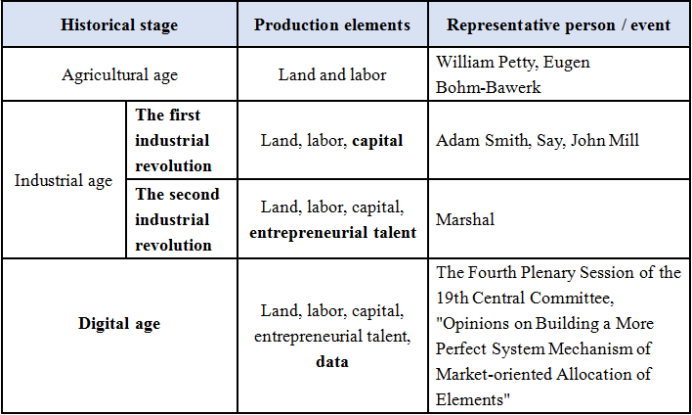
In economics, factors of production, also known as production inputs, are essential resources for the production of goods and services. In his epochal work “Principles of Economics”, famous British economist Marshall put forward the theory of four factors of production — land, labor, capital and entrepreneurial talent. National income (NI) is the reward of four factors, and that is, national income (NI) = labor wage (w) + land rent (r) + capital interest (i) + operating profit (π). This “four-in-one formula” sums up the core of western economic production theory and distribution theory, which has been widely accepted for more than a century.
However, factors of production are a historical category that evolves with the development of economy and society. The birth and development of the Internet has changed the mode of production, life and consumption, and it promoted many important and profound changes, and played an increasingly important role in economic development, social life and national governance. The full exploitation and effective utilization of all kinds of data has raised production efficiency to an unprecedented level. Data has become an indispensable factor in economic activities and a new generation of production factors after land, energy, population and food.
Table – Production Factors at Different Stages
Privacy Brings Data Dilemma and MPC Realizes Data Collaborative Computing
Nowadays, people have already extended their social activities to the network space. Every day, people contribute data continuously to the network space. A large amount of data is collected, calculated, analyzed, excavated and this goes beyond the original data level of information value.
However, because of the plain text nature of the data, the owner loses ownership of the data once the data is granted to others for use. Therefore, to ensure the privacy protection of data, a huge amount of data managed by enterprises cannot be exchanged and co-calculated with the data held by other enterprises, which is why a large number of data cannot generate value.
The emergence of privacy computing ends this dilemma. Yao Qizhi, a member of the Chinese National Academy of Sciences, proposed secure multi-party computing (MPC) in 1982. In a nutshell, participants have to enter information to calculate an agreed function. In addition to the accuracy of the calculations, they must also protect the privacy of each participant’s input data. Specifically, there are now n participants, each of whom, xi, is aware of the xi they entered, who together calculate a pre-agreed function f (x1 ,…, xn) = y. In this way, all participants will get the final y value, but they will not be able to know the specific data entered by the other participants. Thus, with local data not aggregated and privacy not divulged, each party can still achieve a common desired result by performing the operations of the given logic.
Privacy computing opens up huge business prospects for the digital world (Crypto Space)
Bitcoin’s pioneering combination of virtual currencies and peer-to-peer payment systems open the door to decentralization. With the introduction of intelligent contract function, Ethernet has greatly improved the scalability of blockchain, and all kinds of applications can be deployed on blockchain. Because of these characteristics, early public blockchain networks such as Bitcoin and Ethernet have been developed, attracting a large number of blockchain and encryption enthusiasts in the world, and many traditional institutions have been entering the area of blockchain, exploring various possibilities of decentralization.
The combination of privacy computing and blockchain is expected to put data ownership back in the hands of data producers, meaning that vast amounts of data can be counted without affecting privacy and ownership, so that the owners can profit and data can burst out with greater value. Therefore, the blockchain project based on privacy calculation is naturally suitable for the commercial practice in the fields of financial, medical, scientific research, government affairs, and logistics and so on.
“Operator” PlatON network for blockchain data
PlatON, the representative project of the combination of privacy computing and blockchain currently, is based on the basic attribute of blockchain and is supported by privacy computing network, and provides the next generation Internet infrastructure protocol with the core characteristics of “computing interoperation”. PlatON’s vision is to become the public infrastructure for privacy computing of the next generation, publishing privacy computing algorithms through contracts, and implementing MPC protocols with data providers and computing nodes for privacy protection requirements, so as to realize cooperative computing of data. PlatON, designed to price data flows, is all about computing and data, which is the most fundamental part of future human production. PlatON can achieve large-scale application landing and commercial scenario implementation:
For example:
I. Build a wider credit collection network. The public chain that provides private computing can provide user with customizable computing logic template and multi-party access mode, and in the case that the access party’s data does not need to be collected and shared, only the credit inquiry results are output to the demander, and the original data can be encrypted and stored in the blockchain system to meet all kinds of audit needs.
II. Supply chain financial infrastructure. The public chain of private computing is based on blockchain technology and cryptography algorithm, which can provide a platform solution for supply chain finance to digitally identify, process and transfer assets. Construct a new financial financing model of supply chain in which the information of the upstream and downstream enterprises can be shared symmetrically, the credit value of the core enterprises can be transmitted, the business tickets can be split and the risk can be controlled, and provide convenient data traceability for the supervision and enhance the service efficiency of the industry as a whole.
To build the public infrastructure for the digital age, PlatON continuously optimizes technology, iterates the underlying infrastructure, and breaks through the “impossible triangle” in terms of performance. “Impossible triangle” means that it is difficult to achieve both a good “decentralization” and a good “security” of the system in a blockchain and a high “transaction processing performance” at the same time. The most well-known blockchain projects in the industry are Bitcoin, Ethernet, and EOS. At present, using native Token transfer performance test method and EOS under the same testing conditions, PlatON has achieved a comprehensive performance leader in the quasi-real environment, and will continue to focus on the data field and accelerate the construction of data market.
About Author

Disclaimer: The views, suggestions, and opinions expressed here are the sole responsibility of the experts. No Digi Observer journalist was involved in the writing and production of this article.

Boston, MA, USA, September 15th, 2026, FinanceWire
Legacy Mode brings open source apps developed for Ledger to Passport, letting users keep their existing accounts and familiar wallets on hardware assembled in the United States.
Foundation today announced the beta release of Legacy Mode for Passport, enabling Ledger users to switch to open source hardware and software while keeping their existing accounts for supported assets. Legacy Mode runs open source cryptocurrency apps originally developed for Ledger and connects to familiar software wallets over USB.
The release accompanies Foundation’s Switch campaign, built around a simple promise: switch to open source without starting over. As Ledger phases out support for the original Nano S, users can switch to Passport without transferring supported assets to new accounts. Their addresses, balances, and transaction history stay the same.
“We started Foundation because we believe an open, decentralized Internet must be built on a foundation of open source hardware and software,” said Zach Herbert, cofounder and CEO of Foundation. “But people have spent years building their wallet setups. Asking them to move every asset and relearn everything is a real barrier. Legacy Mode lets them keep what they’ve built and put it on an open source foundation.”
Ledger and its developer community have built an extensive library of open source cryptocurrency apps. Those apps normally run on Ledger’s operating system, which includes proprietary code. Foundation’s compatibility layer allows supported apps to run on KeyOS, the fully open source operating system powering Passport.
KeyOS is a microkernel operating system written in Rust, with isolated processes and sandboxed apps. Foundation publishes its operating-system source code and hardware designs so developers and security researchers can inspect how Passport works.
“We reimplemented the interfaces that Ledger’s open source apps use to talk to BOLOS, its operating system,” said Ken Carpenter, cofounder and CTO of Foundation. “That includes cryptographic operations, screen rendering, and USB communication. We can compile the existing app code for Passport and run it on KeyOS, without running Ledger’s proprietary operating system.”
Ethereum and Solana are the first supported app families, selected for their broad adoption. Early beta users have tested compatibility with Rabby for Ethereum and EVM networks, and Phantom for Solana, over USB. Foundation plans to add further open source Ledger apps as users and developers need them.
Legacy Mode launches in beta today as an optional, manual installation on Passport Prime. Users enter their existing recovery phrase on the device and connect to a compatible software wallet over USB. Foundation welcomes feedback from beta users to help improve compatibility and installation ahead of the full release this fall.
Legacy Mode is a bridge to native KeyOS apps. As developers release apps built specifically for Passport, users can install them on the same device and choose when to move beyond Legacy Mode.
The Foundation SDK is available now, and KeyOS 1.4.0 introduced app sideloading. This fall, a new KeyOS release will bring Foundation’s app catalog, where users will be able to seamlessly access a growing catalog of native KeyOS apps from Foundation and third-party developers – and install them with a single tap.
Passport Prime is available starting at $349. To see the Switch campaign, supported apps, and installation guides, visit foundation.xyz/switch.
About Foundation
Foundation builds Human Authority Hardware: open source security devices that give individuals control over their money, identity, and digital lives. Its flagship device, Passport Prime, combines hardware security with KeyOS, an open source operating system for independently developed apps. Foundation’s hardware is assembled in the United States. Learn more at foundation.xyz.
For media inquiries, users can contact 21M Communications: phil@21mcommunications.com.
Ledger and BOLOS are trademarks of Ledger SAS. Foundation is not affiliated with Ledger, and Legacy Mode is not sponsored or endorsed by Ledger. References to Ledger are for identification and compatibility purposes only.
Contact
Founder
Phil
21M Communications
phil@21mcommunications.com
About Author

Disclaimer: The views, suggestions, and opinions expressed here are the sole responsibility of the experts. No Digi Observer journalist was involved in the writing and production of this article.
Press Release
Karen Gallagher Interiors Expands Interior Design Services to Jupiter and South Florida

Karen Gallagher Interiors is expanding its full service interior design work to Jupiter and surrounding South Florida communities. The firm focuses on personalized residential interiors for renovations, new construction, waterfront properties and second residences.

The residential design firm brings its personalized approach to renovations new construction and complete home interiors throughout the region
West Palm Beach, Florida, United States, 15th Sep 2026 – Karen Gallagher Interiors is expanding its full-service residential interior design services to Jupiter and surrounding South Florida communities, bringing a personalized approach to homeowners undertaking renovations, new construction, second residences and complete interior transformations. The expansion introduces the firm’s fresh, timeless and refined design perspective to a region known for waterfront properties, coastal architecture and homes that balance indoor and outdoor living.
Personalized Residential Design for South Florida Homes
The firm approaches residential design by first considering how clients live, use their homes and want their surroundings to feel. Each project is developed around the homeowner’s individual preferences rather than a predetermined aesthetic, allowing the design process to respond to the architecture, location and practical requirements of the residence. Projects may range from coastal cottages and waterfront properties to contemporary homes and urban-inspired interiors, with an emphasis on creating spaces that remain comfortable and functional while maintaining a cohesive visual identity.
South Florida presents distinct considerations for residential interiors, including abundant natural light, coastal surroundings, open floor plans and a lifestyle that often places greater emphasis on entertaining and connections between interior and exterior spaces. Karen Gallagher Interiors incorporates those characteristics into the planning process while developing interiors intended to feel appropriate to both the property and the people who live there.
Full Service Guidance From Initial Concepts Through Completion
Karen Gallagher Interiors provides hands-on involvement throughout the design process, helping clients manage the numerous decisions associated with a residential project. The firm’s work can encompass early design concepts, space planning, material and finish selections, furnishings and the final details that establish continuity throughout a home. This full-service structure is intended to maintain a consistent design direction as a project progresses from its initial planning stages through installation and completion.
For renovations and new construction, early coordination can also help homeowners consider how architectural elements, finishes, furnishings and everyday functionality will work together before individual decisions are finalized. For second residences and complete interior updates, the process provides a central design direction that connects individual rooms while accounting for the way the property will be used.
Refined Interiors With an Emphasis on Lasting Appeal
The firm’s design perspective centers on interiors that feel current without depending heavily on short-lived trends. Materials, furnishings, proportions and details are considered as part of a broader composition, with the objective of creating homes that can evolve over time while retaining a sense of continuity.
That approach aligns with the range of residential styles found throughout Jupiter and South Florida, where traditional coastal influences increasingly exist alongside contemporary architecture and more transitional interiors. Rather than applying one style across every project, Karen Gallagher Interiors develops each residence according to its setting, architectural character and the client’s individual priorities.
Serving Jupiter and the Surrounding South Florida Community
The expansion into Jupiter allows Karen Gallagher Interiors to work with homeowners throughout a growing residential market that includes primary homes, seasonal properties, waterfront residences and newly constructed communities. The firm will continue to focus on residential projects requiring individualized design planning and direct involvement throughout the process.
The Jupiter presence represents an extension of Karen Gallagher Interiors’ established approach to residential design, with an emphasis on thoughtful planning, personal collaboration and interiors tailored to the people who occupy them. Additional information about the firm and its interior design services is available through the Karen Gallagher Interiors website.
About Karen Gallagher Interiors
Karen Gallagher Interiors is a full-service residential interior design firm providing a personalized and hands-on approach to renovations, new construction, waterfront homes, second residences and complete interior transformations. The firm creates fresh, timeless and refined interiors developed around each client’s lifestyle, preferences and vision.
Media Contact
Organization: Karen Gallagher Interiors
Contact Person: Karen Gallagher
Website: https://www.kgallagherinteriors.com/
Email: Send Email
City: West Palm Beach
State: Florida
Country: United States
Release id: 49142
The post Karen Gallagher Interiors Expands Interior Design Services to Jupiter and South Florida appeared first on King Newswire. This content is provided by a third-party source.. King Newswire makes no warranties or representations in connection with it. King Newswire is a press release distribution agency and does not endorse or verify the claims made in this release. If you have any complaints or copyright concerns related to this article, please contact the company listed in the ‘Media Contact’ section
About Author
Disclaimer: The views, suggestions, and opinions expressed here are the sole responsibility of the experts. No Digi Observer journalist was involved in the writing and production of this article.
Press Release
STARDOC, Simultaneously Strengthens Its Hospital Marketing Strategy Through AI and Branding
Physician-led STARDOC Marketing offers hospital-specialized branding strategies using SEO, GEO, and AEO technologies, backed by a trade-area analysis system built on roughly 4 trillion data points. Its reach spans Naver, Google, YouTube, Instagram, and generative AI platforms like GPT and Gemini. Recognized by Seoul Startup Hub (2018) and ranked top 1% by the Ministry of SMEs and Startups (2019), it launched a new AI-based GEO platform in 2026.
Gangnam-gu, Seoul, Korea South, 15th Sep 2026 – STARDOC Marketing (CEO Lee Seung-jun), a hospital-specialized marketing consulting firm led by a physician-turned-CEO, is drawing attention in the AI search market for hospitals, where specialized expertise is increasingly valued.

STARDOC supports opening marketing and online branding for a wide range of medical specialties, including dermatology, orthopedics, dentistry, oriental medicine clinics, and plastic surgery. Because its CEO has a medical background, the company is able to produce content that reflects an understanding of medical terminology and clinical context. Equipped with the latest SEO, GEO, and AEO technologies, STARDOC is one of the few hospital-specialized marketing agencies in Korea capable of maximizing both exposure and conversion rates through website optimization and AI optimization.
In a recent interview, a company representative said, “Unlike conventional marketing that focuses simply on exposure, we establish customized strategies for each hospital through preliminary research, interviews, and brand planning.” The representative added, “In addition to analyzing potential patients and creating authentic content, we operate a media-mix strategy that spans Naver, Google, YouTube, and Instagram, as well as generative AI search platforms such as GPT and Gemini. We also use our proprietary hospital-specific trade-area analysis system, built on roughly 4 trillion data points, as the evidentiary basis for branding strategy — reducing analytical error and dramatically increasing the probability of marketing success.”
STARDOC’s track record includes being selected as an Outstanding Future Growth Engine Company by Seoul Startup Hub in 2018. In 2019, it was named a top 1% company in the Ministry of SMEs and Startups’ Big Data-Driven Startup Project and was designated a Big Data Advisory Company by the Seoul Metropolitan Government. Since then, the company has expanded into areas such as medical building development and global patient attraction projects, and in 2026 it launched a new AI-based GEO marketing platform.
The company stated, “This service is especially well-suited for hospital directors who haven’t felt the effects of their marketing efforts, or who are still weighing their direction ahead of opening a practice.” It added that directors of hospitals currently using its services have reported achieving revenue targets ahead of schedule and experiencing increased revenue overall. “For hospital directors concerned about revenue amid recent shifts in industry trends, STARDOC’s marketing approach could represent a new opportunity,” the company said.
STARDOC Marketing is headquartered on Teheran-ro in Gangnam-gu, Seoul, and consultation inquiries can be submitted through its website, https://www.startdoctor.co.kr
Media Contact
Organization: Stardoc Marketing
Contact Person: James
Website: https://www.startdoctor.co.kr/
Email: Send Email
Address: 21 Teheran-ro 57-gil, Gangnam-gu, Seoul
City: Gangnam-gu
State: Seoul
Country: Korea South
Release id: 49140
The post STARDOC, Simultaneously Strengthens Its Hospital Marketing Strategy Through AI and Branding appeared first on King Newswire. This content is provided by a third-party source.. King Newswire makes no warranties or representations in connection with it. King Newswire is a press release distribution agency and does not endorse or verify the claims made in this release. If you have any complaints or copyright concerns related to this article, please contact the company listed in the ‘Media Contact’ section
About Author
Disclaimer: The views, suggestions, and opinions expressed here are the sole responsibility of the experts. No Digi Observer journalist was involved in the writing and production of this article.
Foundation Lets Ledger Users Switch to Open Source Without Starting Over
Karen Gallagher Interiors Expands Interior Design Services to Jupiter and South Florida
STARDOC, Simultaneously Strengthens Its Hospital Marketing Strategy Through AI and Branding
Benzinga Money Article Discusses How to Become Part of the 12% of Retirees Who Have Achieved the Recommended $550,000 Minimum Retirement Savings Threshold
Apu Apustaja Conquers New York with Lively Street Ads, Including Times Square Billboard
Bay Smokes Maintains Quality Amid Legislative Changes in the Hemp Industry


-
Press Release1 week ago
Terrance Bradford Tampa, FL Discusses the Importance of Setting Realistic Expectations in Construction Projects
-
Press Release1 week ago
Net Boardroom Launches Global Media Monitoring Platform with Multilingual Coverage and Alerts
-
Press Release1 week ago
Rapid Indexer Launches Innovative SEO Tool for Link Building and Instant URL Indexing Solution
-
Press Release3 days ago
CGTN: Embarking on third ‘golden decade’: How BRICS pools development strength for high-quality cooperation
-
Press Release1 week ago
The “Everlasting Battery” Inside Your Joints:UConn Professor’s Self-Powered Healing Material just Got Acquired
-
Press Release4 days ago
Shute Family Foundation Aims to Surpass 200k Raised for Tunnel to Towers at 6th Annual 9-11 Golf Tournament
-
Press Release6 days ago
Lily and Lime Offers Tips for Including Beloved Pets in Wedding Photography Without Disrupting the Celebration
-
Press Release3 days ago
Ronel Lamour Junior launches a self-check for South Florida homeowners before the next AC breakdown