
Press Release
Why Consistency, Not Trends, Is the Real Secret Behind Mac Cassity’s Fitness Philosophy

Illinois, US, 29th January 2026, ZEX PR WIRE, In an industry driven by trends, viral workouts, and ever-changing promises of rapid transformation, Mac Cassity has built his fitness philosophy on something far less flashy and far more effective: consistency. Over more than a decade of hands-on coaching, business ownership, and personal discipline, Cassity has proven that real fitness is not about chasing what is new. It is about committing to what works, day after day, year after year.
Mac Cassity is not a social-media-made trainer or a fitness influencer chasing algorithms. He is a practitioner. A coach. A business owner who has spent years on the gym floor, watching people succeed, struggle, quit, restart, and ultimately transform when they stop looking for shortcuts and start showing up consistently.
Built Through Experience, Not Hype
From 2011 to 2017, Cassity owned and operated Extreme Fun & Fit Bootcamp, a community-based fitness program that helped hundreds of people build strength, endurance, and confidence. While the workouts were intense, the true engine behind the program’s success was structure and accountability. Clients did not come for a one-time challenge. They came back week after week because consistency was built into the culture.
During those years, Cassity saw firsthand how trends could distract people from progress. Clients would ask about the newest workout style, the latest supplement, or the next big thing promised by social media. What actually produced results, however, was always the same: showing up, training hard, recovering properly, and repeating the process.
That insight became foundational to his coaching philosophy.
From Group Energy to Personalized Discipline
After closing Extreme Fun & Fit Bootcamp, Cassity continued his work through West Howard Fitness from 2018 to 2023, training clients privately from his home. This transition allowed him to work more closely with individuals, tailoring programs to real lives rather than idealized fitness plans.
Private training revealed an even deeper truth. No two people needed the same program, but everyone needed consistency. Some clients trained for strength. Others focused on conditioning, weight loss, or longevity. Across all goals, the pattern remained unchanged. Progress followed discipline. Setbacks followed inconsistency.
Cassity’s approach stripped fitness down to its essentials. Strength training that supports everyday movement. Conditioning that builds resilience. Recovery that allows people to keep training without burnout. No gimmicks. No unnecessary complexity.
Consistency as a Lifestyle
For Mac Cassity, consistency is not limited to workouts. It is a way of living. Outside the gym, he embodies the structure he teaches. He cooks his meals. He trains regularly. He prioritizes sleep. He balances responsibility and recovery. This rhythm allows him to sustain performance without extremes.
As a father to two incredible young women, Cassity understands that fitness must fit into real life. His philosophy rejects all-or-nothing thinking. Instead, it emphasizes steady effort over perfection. Missed workouts are not failures. They are moments to reset and return.
This mindset resonates deeply with people who have tried and failed with trend-driven fitness. Cassity does not promise dramatic overnight change. He offers something more valuable: a system people can maintain.
Rejecting the Trend Cycle
The modern fitness industry thrives on novelty. New programs appear constantly, each claiming to solve what the last one failed to fix. Cassity believes this cycle keeps people distracted and discouraged.
Trends often demand total buy-in and extreme behavior. When results slow or life intervenes, people feel like they have failed. Cassity flips that narrative. He teaches that fitness should be resilient enough to survive busy schedules, stress, and setbacks.
By focusing on fundamentals, Cassity removes pressure. The goal is not to optimize every variable. The goal is to train consistently enough that progress becomes inevitable.
Results That Speak Quietly
Cassity’s results are not packaged in before-and-after hype. They show up in durability. In clients who keep training years later. In bodies that move well, not just look good. In confidence built through effort rather than aesthetics alone.
Those who train under Cassity often describe a shift in mindset. Fitness becomes less emotional and more habitual. Less about motivation and more about commitment. This shift is what allows results to last.
Leading by Example in a Digital World
Today, Cassity shares his training and lifestyle through social media, not to sell a fantasy, but to demonstrate reality. His content reflects effort, discipline, and repetition. There are no shortcuts, only work.
In a digital space saturated with extremes, this honesty stands out. Followers see someone who has earned his philosophy through years of practice, not through trend adoption. His message remains consistent because it is lived, not marketed.
Fitness That Outlasts the Moment
Mac Cassity’s philosophy appeals to people who are tired of starting over. To those who want strength that carries into daily life. To parents, professionals, and individuals who understand that health is a long game.
Consistency, in Cassity’s view, is not boring. It is powerful. It removes anxiety from fitness. It builds trust between effort and outcome. It creates momentum that compounds over time.
Trends fade. Discipline remains.
A Philosophy Rooted in Reality
After more than a decade in fitness, Cassity’s message is clear. There is no secret program. No perfect routine. No viral solution. The real secret is consistency applied patiently and intelligently.
By refusing to chase trends and choosing to build habits instead, Mac Cassity has created a fitness philosophy that lasts. One grounded in experience. One supported by results. One designed not just to change bodies, but to support a lifetime of strength.
In a world constantly searching for what is next, Mac Cassity reminds us that what works has not changed. Show up. Do the work. Repeat.
That is where real fitness lives.
About Author

Disclaimer: The views, suggestions, and opinions expressed here are the sole responsibility of the experts. No Digi Observer journalist was involved in the writing and production of this article.

Press Release
PostOnce Launches Crossposting Tool to Help Creators Automatically Post Once and Publish Everywhere
PostOnce helps creators, brands, and agencies automatically post videos, images, and text across Instagram, YouTube, Facebook, X, LinkedIn, Threads, Bluesky, TikTok, and Pinterest from one workflow.
MONTREAL, Canada, 4th Jul 2026– PostOnce launched its social media crossposting platform for creators, bootstrappers, small businesses, brands, and agencies.
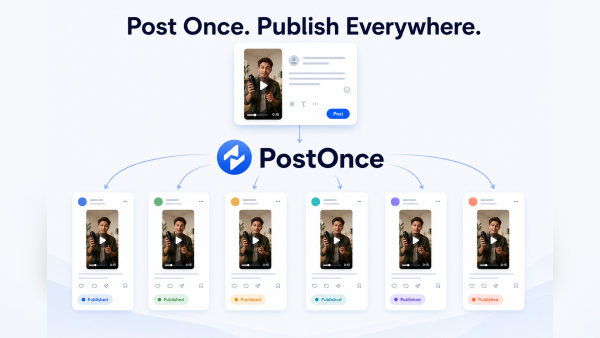
PostOnce helps you post once and publish everywhere. You connect your accounts, choose your source platform, choose your destination platforms, and set up a workflow. PostOnce handles repeat distribution across your social channels.
Many creators publish on one platform because manual reposting takes time. PostOnce reduces this work. You get more time for content creation and less time spent uploading the same post again.
PostOnce supports:
- Crossposting and content recycling between the same or different platforms, such as Instagram to Instagram or Instagram to TikTok.
- Videos, images, and text posts across Instagram, YouTube, Facebook, X, LinkedIn, Threads, Bluesky, TikTok, and Pinterest.
- Platform-ready publishing without watermarks, with HD quality where supported, automatic resizing, and thumbnail and caption consistency.
- Dashboard scheduling for creators who want specific captions or publish times per platform.
- API and MCP access for publishing from external systems and AI tools such as ChatGPT, Claude, and other LLM workflows.
Automated posts publish within 15 minutes of detection.
“A lot of creators and brands only grow on one platform because crossposting takes too much manual work,” said Nigel Yong, Founder of PostOnce. “I found myself doing the same thing, so I built PostOnce as the solution I wanted. You set up a workflow in under three minutes, then PostOnce handles distribution. Social media rewards volume. When you spend less time manually reposting, you get more time to create better content. I used this workflow to grow How2Rizz to more than 15,000 followers on TikTok, 12,000 on Instagram, and 4,800 on YouTube by distributing the same content across platforms.”
More than 150,000 posts have been published through PostOnce. Content creators, brands, and agencies use PostOnce to increase reach and reduce platform risk. Posting across more channels helps you depend less on one social network.
PostOnce offers a 7-day free trial. Learn more at https://postonce.to/.
About PostOnce
Founded in 2025, PostOnce is a social media automation platform for creators, founders, teams, brands, and agencies. PostOnce supports crossposting, scheduling, content repurposing, content recycling, and platform-ready publishing across major social channels.
Media Contact
Organization: PostOnce
Contact Person: Nigel Yong
Website: https://postonce.to
Email:
nigel@postonce.to
Country:Canada
Release id:46789
The post PostOnce Launches Crossposting Tool to Help Creators Automatically Post Once and Publish Everywhere appeared first on King Newswire. This content is provided by a third-party source.. King Newswire makes no warranties or representations in connection with it. King Newswire is a press release distribution agency and does not endorse or verify the claims made in this release. If you have any complaints or copyright concerns related to this article, please contact the company listed in the ‘Media Contact’ section
About Author
Disclaimer: The views, suggestions, and opinions expressed here are the sole responsibility of the experts. No Digi Observer journalist was involved in the writing and production of this article.
Press Release
Transport BPO Extends Dispatch and Back Office Support to Transportation Companies and Owner Operators
TransportBPO has extended its transport dispatch and back office services to trucking companies and owner operators across the US, Canada, UK and Australia, covering load booking, driver check calls, invoicing and compliance paperwork.
Vancouver, WA, United States, 4th Jul 2026, Grand Newswire – TransportBPO (https://transportbpo.com), the specialist call center and business process outsourcing provider for the ground transportation industry, has extended its dispatch and back office services to trucking companies, owner operators and small freight fleets across the United States, Canada, the United Kingdom and Australia.
The move brings trucking into a service lineup already covering taxi, cab, private hire, non-emergency medical transportation, chauffeur and courier operators. For trucking, the pain point is different but familiar: an owner operator hauling freight cannot negotiate the next load, chase a detention payment and update a broker portal from the driver’s seat, and a small fleet dispatcher who quits mid-week can idle trucks for days. Transport BPO’s truck dispatch service handles load searching and booking, rate negotiation support, carrier packet setup, driver check calls, document collection and delivery confirmations, working within whichever load boards and transportation management systems a carrier already uses.
Back office support rounds out the service. Trucking clients can assign invoicing, factoring paperwork, IFTA fuel tax record keeping, driver file management and compliance document tracking to the same team that handles their dispatch, replacing the after-hours administrative burden that pushes many owner operators out of the business within their first two years.
“A truck only earns when it is loaded and moving, yet the average small carrier spends hours every day parked in paperwork,” said Nimra Khalid, chief operating officer of SS Support Network LLC, the parent company of Transport BPO. “Handing dispatch and the back office to a trained team costs a fraction of a single staff hire and keeps the driver doing the one thing that pays, which is driving.”
The trucking expansion follows the same model Transport BPO applies across ground transportation: trained agents work inside the client’s existing systems rather than forcing a software change, coverage is scheduled to the client’s local time zone, and service scales from part-time overflow support to a fully outsourced round-the-clock operation. Onboarding typically completes within days.
TransportBPO is a brand of SS Support Network LLC, a business process outsourcing company registered in Vancouver, Washington, whose delivery team of more than 50 trained agents has supported transportation and healthcare clients in dispatch, billing, credentialing and customer service since 2020.
Trucking companies and owner operators can request pricing or book a consultation at https://transportbpo.com.
About TransportBPO
TransportBPO is a specialist call center and business process outsourcing provider for the ground transportation industry, delivering truck dispatch, taxi and cab call answering, round-the-clock live dispatch, virtual agents, customer service and back office support. TransportBPO serves trucking, taxi, cab, private hire, NEMT, chauffeur and courier operators in the United States, Canada, the United Kingdom and Australia, and is a brand of SS Support Network LLC of Vancouver, Washington, USA.
Daniel Okoro, Content Editor and Dispatcher
TransportBPO
Email: info@transportbpo.com
Phone: +1 (657) 777-0006
City: Vancouver
State: Washington
Country: United States
Website: https://transportbpo.com
Media Contact
Organization: SS Support Network
Contact
Person: SS Support Network
Website:
https://sssupport.net
Email:
info@sssupport.net
Address:9407 Vancouver Mall Dr
City: Vancouver
State: WA
Country:United States
The post Transport BPO Extends Dispatch and Back Office Support to Transportation Companies and Owner Operators
appeared first on Grand Newswire.
It is provided by a third-party content provider. Grand Newswire makes no
warranties or representations in connection with it.
About Author
Disclaimer: The views, suggestions, and opinions expressed here are the sole responsibility of the experts. No Digi Observer journalist was involved in the writing and production of this article.
United States, 4th Jul 2026, – The future of trail riding has arrived. Backed by over 20 years of OEM manufacturing expertise, CEMOTO LTD is proud to announce the official USA launch of the CEMOTO D Series Off-Road Electric Dirt Bike lineup.
Engineered for thrill-seekers who demand power without the environmental impact of gas engines, the D Series brings professional-grade performance to the electric off-road market. Best of all? It does so at an incredibly accessible starting price of just $969.
Whether you are a trail novice or an adrenaline-chasing veteran, the CEMOTO D Series offers a zero-emission, low-maintenance ride that dominates any terrain.
Meet the CEMOTO D Series Lineup
The D Series features three distinct models tailored to different riding styles and experience levels. Here is how they stack up:
| Feature |
D02 Classic (Entry-Level) | D03 Pro (Elevated) | D03 Beast (Flagship) |
|---|---|---|---|
| Motor / Peak Power | 48V / 3000W | 48V / 3000W | 72V / 6000W |
| Top Speed | 40 mph (65 km/h) | 40 mph (65 km/h) | 53+ mph (85+ km/h) |
| Battery Capacity | 48V 21Ah | 48V 23.8Ah | 72V 25Ah |
| Estimated Range | 25–34 miles | 28–37 miles | 34–46 miles |
| Wheel Size (Front/Rear) | 14″ / 12″ | 14″ / 12″ | 17″ / 14″ |
| Seat Height | 28.3″ | 28.3″ | 31.9″ |
| Street Kit Included? | No (Pure Off-Road) | Yes (Inc. Horn) | Yes (Inc. Horn) |
1. The D02 Classic: The Perfect Entryway
Designed for maximum simplicity, the D02 Classic is a pure, trail-focused machine. The 3000W high-torque brushless motor delivers approachable but thrilling power, making it the ideal choice for riders taking their first plunge into the electric dirt bike scene.
2. The D03 Pro: Versatility Meets Performance
Building on the D02’s robust foundation, the D03 Pro expands your riding horizons. It features a larger battery for extended range and comes fully equipped with a street kit (including a horn) for seamless transitions between trail riding and versatile on/off-road utility.
3. The D03 Beast: Maximum Adrenaline
Built for experienced riders craving raw power, the flagship D03 Beast boasts a massive 6000W peak motor and a 72V system. Reaching speeds of over 53 mph with an impressive 46-mile max range, the Beast utilizes larger wheels and a taller seat height to conquer the most demanding terrains.
Powerful Performance Meets Sustainable Design
Say goodbye to oil changes, fouled spark plugs, and noisy exhaust systems. The CEMOTO D Series proves that electric powertrains can deliver raw, instant torque while completely eliminating traditional maintenance headaches.
- Extended All-Day Range: Powered by advanced lithium-ion battery technology and an intelligent battery management system, the D Series delivers up to 46 miles of real-world range.
- Easy Charging: Plug in your bike overnight using the included charger, and it will be fully juiced in just 7–8 hours.
- Whisper-Quiet Operation: Enjoy nature without disturbing it. The high-torque brushless motors operate at a fraction of the noise level of a gas bike.

Built to Dominate Demanding Terrain
The D Series does not just look the part—it is built to withstand serious abuse on rocky trails, muddy paths, and sand dunes.
- Professional Suspension: Every model comes standard with a robust high-strength carbon steel frame, hydraulic front forks, and a rear mono-shock absorber for unparalleled stability.
- Progressive Stopping Power: Twin-piston hydraulic disc brakes provide reliable, immediate stopping power in all weather conditions.
- Heavy-Duty Capacity: Designed for adults and older teens, all D Series bikes safely accommodate a maximum payload of 286 lbs (130 kg).
Unmatched Customer Value & Support
Purchasing an electric dirt bike is an investment, and CEMOTO ensures you ride with total peace of mind. Every D Series bike is backed by industry-leading USA-based support:
- 2-Year Limited Warranty: Comprehensive coverage on the motor, battery, controller, and frame.
- Fast, Free USA Shipping: Bikes ship directly from CEMOTO’s US warehouses, arriving at your door in just 3–5 business days.
- 15-Day Easy Returns: Unused bikes with under 10 miles can be returned hassle-free.
- Quick Assembly: Arriving 85% pre-assembled, you can go from unboxing to trail-ready in just 20–30 minutes.
- Lifetime Parts Support: Never worry about obsolete components. Genuine D Series replacement parts are always stocked in CEMOTO’s dedicated parts store.

Ready to Ride?
Electric off-roading is the future of outdoor recreation, and there has never been a better time to make the switch.
The CEMOTO D Series is available now at the official CEMOTO online store. Take advantage of our current promotional pricing and save up to $500 off regular retail.
Explore the CEMOTO D Series and Claim Your Discount Today!
About CEMOTO LTD
CEMOTO LTD is a global leader in electric mobility, specializing in high-performance electric dirt bikes, commuter e-bikes, and electric scooters. With two decades of OEM and export experience, CEMOTO bridges the gap between cutting-edge technology and rigorous quality control. The company maintains dual operational channels: comprehensive OEM/ODM services for wholesale partners and a direct-to-consumer storefront supported by fast USA warehouse distribution.
Media Contact
Organization: CEMOTO LTD
Contact
Person: Media Relations
Website:
https://cemotoride.com/
Email:
info@cemotoride.com
Contact Number: 8613758981508
Country:United States
The post
CEMOTO D Series Electric Dirt Bike: Zero-Emission Off-Road Adventure appeared first on
Brand News 24.
It is provided by a third-party content
provider. Brand News 24 makes no
warranties or representations in connection with it.
About Author
Disclaimer: The views, suggestions, and opinions expressed here are the sole responsibility of the experts. No Digi Observer journalist was involved in the writing and production of this article.
PostOnce Launches Crossposting Tool to Help Creators Automatically Post Once and Publish Everywhere
Transport BPO Extends Dispatch and Back Office Support to Transportation Companies and Owner Operators
CEMOTO D Series Electric Dirt Bike: Zero-Emission Off-Road Adventure
Benzinga Money Article Discusses How to Become Part of the 12% of Retirees Who Have Achieved the Recommended $550,000 Minimum Retirement Savings Threshold
Apu Apustaja Conquers New York with Lively Street Ads, Including Times Square Billboard
Bay Smokes Maintains Quality Amid Legislative Changes in the Hemp Industry


-
Press Release2 days ago
Community Hero Who Dedicated His Life to Helping Others Now Needs Help After Devastating Fire Loss
-
Press Release2 days ago
California HOA Law Changes Prompt First Equity Management to Guide Communities Through New Fine Limitations
-
Press Release1 week ago
Huorong Security Delivers Trusted Endpoint Protection for Personal and Enterprise Users Across China and Beyond
-
Press Release6 days ago
Anytap Launches Visa-Powered Consumer Payment Card Service Across Asia Pacific
-
Press Release2 days ago
Jaadugar A Witch in Mongolia Set to Premiere with QUEEN BEE STAR Ending Theme, New PV and Visual
-
Press Release2 days ago
The Story of the Boy Who Would One Day Be Known as Zeami The World Is Dancing Premieres June 29
-
Press Release1 day ago
Transport BPO Extends Dispatch and Back Office Support to Transportation Companies and Owner Operators
-
Press Release1 day ago
PostOnce Launches Crossposting Tool to Help Creators Automatically Post Once and Publish Everywhere