
Press Release
Sydney Heel Pain Clinic Offers Cutting-Edge Shock Wave Therapy for Heel Pain Relief

Australia, 28th Jan 2026 – Sydney Heel Pain, a leading clinic specialising in chronic heel pain treatment, announces the introduction of advanced shockwave therapy for the treatment of Plantar Fasciitis and Achilles Tendonitis. This cutting-edge therapy, which utilises extracorporeal shock wave therapy (ESWT), offers a non-invasive solution for individuals suffering from long-standing foot pain. Known for its ability to stimulate the body’s natural healing process, this therapy accelerates recovery and reduces pain, providing an effective option for patients seeking relief from chronic heel conditions.
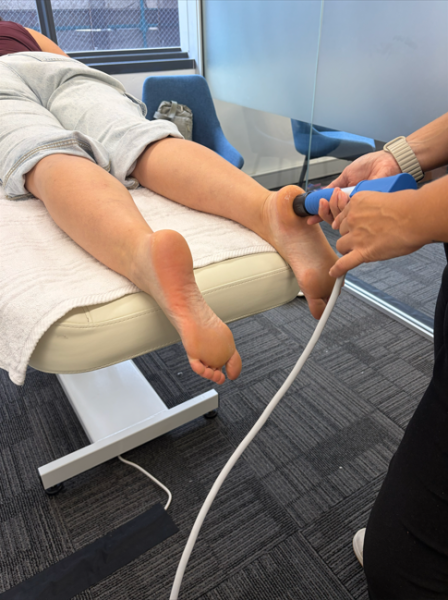
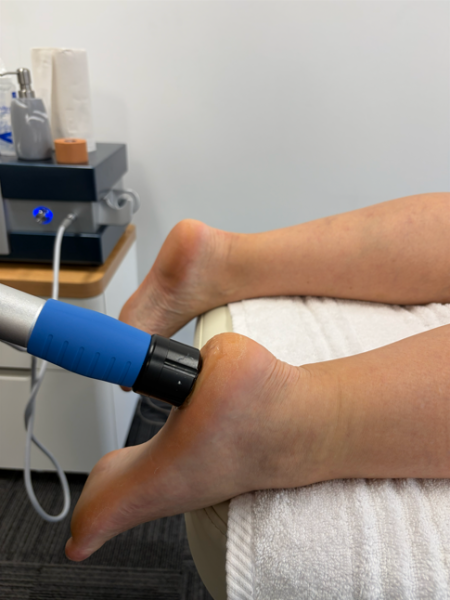
Shockwave therapy delivers high-energy acoustic waves to the affected areas, helping to break down scar tissue, enhance blood flow, and promote tissue regeneration. It is increasingly recognised as an effective treatment for individuals who have not found relief through traditional methods such as physical therapy or medication. This pioneering treatment has become an integral part of the clinic’s approach to managing conditions like Plantar Fasciitis and Achilles Tendonitis, which are two of the most common causes of heel pain.
Karl Lockett, owner of Sydney Heel Pain Clinic, emphasised the clinic’s commitment to providing innovative and effective treatments. “The integration of shockwave therapy into treatment protocols represents a significant advancement in the non-invasive treatment of chronic heel pain. This therapy not only alleviates discomfort but also accelerates recovery by promoting tissue regeneration. The goal is to provide patients with lasting relief and to enable a return to regular activities without the need for invasive procedures.”
At Sydney Heel Pain Clinic, patients receive a comprehensive treatment plan that combines shockwave therapy with other specialised services, including custom orthotics and biomechanical assessments. The clinic’s use of 3D foot scanning technology ensures that each treatment is personalised to meet the unique needs of each patient, addressing both symptoms and the underlying causes of pain.
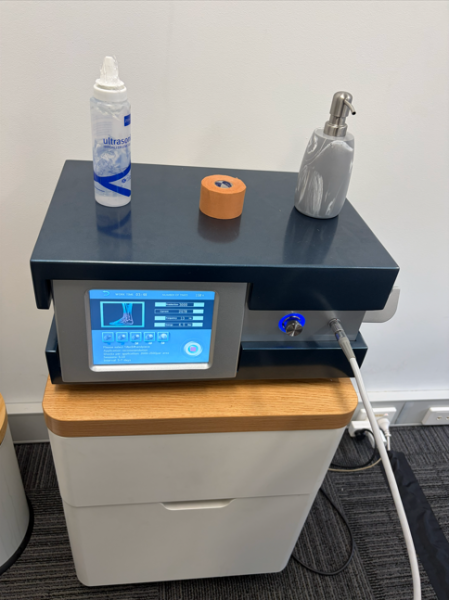
The clinic’s success with shockwave therapy is supported by the positive outcomes achieved with its patients. Over 7,000 patients have trusted the clinic for treatment, with the clinic boasting an impressive 92% success rate within the first six weeks of treatment for Plantar Fasciitis. As an essential part of the clinic’s treatment approach, shockwave therapy is proving to be an industry-leading solution for those suffering from chronic heel pain.
While shockwave therapy has shown great effectiveness for many patients, it is often used in conjunction with other therapies to ensure the best possible results. The clinic’s approach focuses not only on relieving pain but also on addressing the root causes of conditions such as Plantar Fasciitis and Achilles Tendonitis, which are frequently exacerbated by poor biomechanics or excessive strain on the feet. By offering comprehensive care, the clinic ensures that each patient receives a well-rounded treatment plan tailored to their specific needs.
Lockett also shared insight into the clinic’s future direction. “Looking ahead, Sydney Heel Pain Clinic will continue to integrate the latest advancements in medical technology to improve the quality of care provided. The future of heel pain treatment lies in personalised, non-invasive approaches that address the root causes of pain. Shockwave therapy is just one part of that journey, and the clinic remains committed to providing the most effective, evidence-based solutions to help patients live pain-free.”
Sydney Heel Pain Clinic’s commitment to innovation and patient-centred care ensures it remains at the forefront of heel pain treatment. The clinic is dedicated to expanding its use of advanced therapies and technologies to improve treatment outcomes and enhance the lives of its patients.
Sydney Heel Pain is located at Suite 1002 (Level 10), 109 Pitt Street, Sydney 2000, and offers easy access for those seeking shock wave therapy Sydney. Appointments can be made by calling 02 9388 3322 or emailing help@sydneyheelpain.com.au. Individuals experiencing heel pain or other lower limb conditions are encouraged to book an assessment and explore the treatment options available.
Media Contact
Organization: Sydney Heel Pain Clinic
Contact Person: Karl Lockett
Website: https://sydneyheelpain.com.au/
Email: Send Email
Contact Number: +61293883322
Address:Suite 1002 Level 10, 109 Pitt Street, Sydney 2000
Country:Australia
Release id:40644
The post Sydney Heel Pain Clinic Offers Cutting-Edge Shock Wave Therapy for Heel Pain Relief appeared first on King Newswire. This content is provided by a third-party source.. King Newswire makes no warranties or representations in connection with it. King Newswire is a press release distribution agency and does not endorse or verify the claims made in this release. If you have any complaints or copyright concerns related to this article, please contact the company listed in the ‘Media Contact’ section
About Author

Disclaimer: The views, suggestions, and opinions expressed here are the sole responsibility of the experts. No Digi Observer journalist was involved in the writing and production of this article.

Victoria, Seychelles, June 26th, 2026, Chainwire
MEXC, a pioneer in 0-fee digital asset trading, releases its observations on equity-related futures trading activity around Micron’s (MU) earnings report. Micron posted quarterly revenue of approximately $41.4 billion, significantly exceeding market expectations. Following the earnings release, capital concentrated into AI memory and storage, with notable increases in trading activity across related instruments.
Micron was the most-traded stock and equity index futures instrument on MEXC, with trading volume up approximately 142% from the previous day. SanDisk, SK hynix, and DRAM ETF also recorded volume increases of approximately 83%, 28%, and 35%, respectively. Together, these four AI memory and storage instruments accounted for 44% of the day’s Top 10 equity-related futures volume, underscoring the market’s heightened focus on the sector.
Beyond memory and storage, AI compute and semiconductor names such as NVIDIA and SOXL, as well as index futures including SPX500, NAS100, and US30, also maintained elevated trading activity. The momentum sparked by Micron’s earnings was not confined to AI memory and storage, but extended across compute, semiconductors, and broader U.S. equity indices.

Ahead of the earnings release, thematic trading patterns were already visible on the MEXC platform. From June 22 to 24, AI memory and storage individual stocks (+28%), DRAM ETF (+92%), and SOXL (+51%) all recorded meaningful volume increases, while broad-based U.S. equity index futures declined approximately 55% over the same period. This indicates that capital was not indiscriminately going long on U.S. equities, but had already concentrated on the supply-constrained memory and storage segment ahead of the earnings announcement.

For high-profile macro or earnings events, MEXC futures trading enables users to extend trading opportunities across the full cycle of anticipation, realization, and follow-through — positioning ahead of earnings and responding or hedging immediately after results are released. MEXC offers more than a single-instrument entry point: within a unified account and USDT-margined system, users can flexibly adjust positions across single-stock futures, related supply-chain names, sector and thematic ETFs, and index futures as market themes evolve, without transferring capital between platforms. Combined with a 0-fee structure, the friction cost of switching across instruments is further reduced. Notably, the AI memory and storage sector itself spans three markets — Micron is U.S.-listed, SK hynix and Samsung are Korea-listed, and Kioxia is Japan-listed. MEXC currently covers futures across all three markets, enabling users to build positions across national markets along the same industry logic.
Beyond earnings-driven secondary market trading, MEXC also extends asset discovery to the pre-IPO stage of technology companies. SpaceX (PRE), the first instrument on the platform’s Pre-IPO Launchpad, attracted cumulative subscription volume exceeding US$173 million across two rounds. Since SpaceX completed its IPO on June 12, secondary market prices reached as high as 217 USDT, approximately 67% above the subscription price. This demonstrates that from Pre-IPO subscription through secondary market trading, the entire process offers continuous and sufficient liquidity. Through MEXC, users can participate across different stages of a single core asset on one platform.
As market trading demand becomes increasingly cross-asset and cross-regional, MEXC bridges Pre-IPO, secondary market, and futures trading, connecting globally sought-after instruments to offer users a one-stop U.S. equity trading platform. Going forward, MEXC will continue to identify high-quality assets, enabling global users to capture unlimited opportunities with minimal friction and maximum capital efficiency.
About MEXC
MEXC is the world’s fastest-growing cryptocurrency exchange, trusted by more than 40 million users across 170+ markets. Built on a user-first philosophy, MEXC offers industry-leading 0-fee trading and access to over 3,000 digital assets. As the Gateway to Infinite Opportunities, MEXC provides a single platform where users can easily trade cryptocurrencies alongside tokenized assets, including stocks, ETFs, commodities, and precious metals.
MEXC Official Website| X | Telegram |How to Sign Up on MEXC
For media inquiries, please contact MEXC PR team: media@mexc.com
Risk Disclaimer:
This content does not constitute investment advice. Given the highly volatile nature of the cryptocurrency market, investors are encouraged to carefully assess market fluctuations, project fundamentals, and potential financial risks before making any trading decisions.
Contact
MEXC PR team
media@mexc.com
About Author
Disclaimer: The views, suggestions, and opinions expressed here are the sole responsibility of the experts. No Digi Observer journalist was involved in the writing and production of this article.
Renoise and Contra have launched a co-branded short-film challenge, open June 22–30, 2026, with a $10,500 total prize pool. Contra, with over one million creators, hosts, and manages the challenge.
Dover, Delaware, United States, 26th Jun 2026 – Renoise and Contra have launched a co-branded short-film challenge, open June 22–30, 2026, with a $10,500 total prize pool. Creators are asked to produce a 15–60 second cinematic video using Renoise, with one rule: the story must end with an unexpected plot twist.Participants sign up on Contra, receive 1,000 free Renoise credits, and submit with the Renoise watermark and #RenoiseChallenge tag. Entries are judged on creative execution, visual quality, and originality. Winners will be announced via Contra’s live webinar.Renoise provides AI video generation through text or image prompts, with a Canvas timeline, FacePass character consistency, and batch generation — available on web, desktop, and CLI. Contra, with over one million creators, hosts and manages the challenge.
Renoise, an AI video generation platform, has partnered with Contra, a professional creator network platform, to launch a short-film challenge with a $10,500 total prize pool. The competition asks participants to create a cinematic video between 15 and 60 seconds using Renoise, with one narrative rule: the story must conclude with a plot twist the viewer didn’t expect.
The Contra challenge opens 9:00am on June 22, 2026 at 9:00am PST, and accepts submissions through 11:59pm on June 30, 2026. A panel of judges will evaluate entries on creative execution, visual quality, and originality. Winners will be announced following the close of submissions via Contra’s live hosted webinar.
Prize Breakdown
- 1st Place: $5,000
- 2nd Place: $2,500
- 3rd Place: $1,000
- Community Favorite: $1,000 — determined by engagement and overall impact on the Contra platform
- Community Promoter: $1,000 — awarded to the participant who refers the most new entrants that go on to submit a qualifying entry
All approved submissions must carry the Renoise watermark and the hashtag #RenoiseChallenge. Participants are required to share their work on Contra and social media X or LinkedIn, tagging @renoiseai. Optional but encouraged: a screenshot or shareable link showing the creator’s Renoise Canvas workflow.
How Renoise Works
Renoise generates video from natural language text prompts or image references. Generated clips land on Renoise Canvas: a node-based workspace where creators execute prompts, reference assets, and view outputs. These outputs can be dragged into a multi-track timeline to assemble a final cut, all in one window. The platform includes FacePass, a feature for maintaining character consistency across multiple shots, and supports batch generation for rapid iteration. Creators can access Renoise through a web browser, desktop application, or command-line integrations with Claude Code, OpenClaw, and Codex.
Partnership with Contra
Contra, which counts over one million independent creators on its platform, will host the challenge page, manage submissions, and provide community engagement throughout the competition window. Each participant who signs up through Contra receives 1,000 free Renoise credits, valid for the duration of the challenge.
About Renoise Renoise is an AI video generation platform designed for creators and developers. It supports text-to-video and image-to-video generation, a node-based asset workspace (Renoise Canvas), multi-track timeline editing, and character consistency (FacePass) across scenes. Renoise is available on web, desktop, and through CLI integrations with Claude Code, OpenClaw, and Codex. The company is headquartered at 8 The Green, Ste R, Dover, Delaware, 19901, United States.
Entrants can start at Renoise AI or through the challenge page on Contra.
About Contra Contra is a professional network for independent creators, with over one million members. The platform enables freelancers to build portfolios, connect with brands, and participate in sponsored challenges.
Media Contact
Organization: Renoise
Contact Person: Shelley Xie
Website: https://renoise.ai
Email:
marketing@renoise.ai
Address:8 The Green, Ste R
City: Dover
State: Delaware
Country:United States
Release id:46412
The post Renoise and Contra Open $10,500 Creator Challenge for AI-Generated Short Films appeared first on King Newswire. This content is provided by a third-party source.. King Newswire makes no warranties or representations in connection with it. King Newswire is a press release distribution agency and does not endorse or verify the claims made in this release. If you have any complaints or copyright concerns related to this article, please contact the company listed in the ‘Media Contact’ section
About Author
Disclaimer: The views, suggestions, and opinions expressed here are the sole responsibility of the experts. No Digi Observer journalist was involved in the writing and production of this article.
Renoise and Contra have launched a co-branded short-film challenge, open June 22–30, 2026, with a $10,500 total prize pool. Contra, with over one million creators, hosts, and manages the challenge.
Dover, Delaware, United States, 26th Jun 2026 – Renoise and Contra have launched a co-branded short-film challenge, open June 22–30, 2026, with a $10,500 total prize pool. Creators are asked to produce a 15–60 second cinematic video using Renoise, with one rule: the story must end with an unexpected plot twist.Participants sign up on Contra, receive 1,000 free Renoise credits, and submit with the Renoise watermark and #RenoiseChallenge tag. Entries are judged on creative execution, visual quality, and originality. Winners will be announced via Contra’s live webinar.Renoise provides AI video generation through text or image prompts, with a Canvas timeline, FacePass character consistency, and batch generation — available on web, desktop, and CLI. Contra, with over one million creators, hosts and manages the challenge.
Renoise, an AI video generation platform, has partnered with Contra, a professional creator network platform, to launch a short-film challenge with a $10,500 total prize pool. The competition asks participants to create a cinematic video between 15 and 60 seconds using Renoise, with one narrative rule: the story must conclude with a plot twist the viewer didn’t expect.
The Contra challenge opens 9:00am on June 22, 2026 at 9:00am PST, and accepts submissions through 11:59pm on June 30, 2026. A panel of judges will evaluate entries on creative execution, visual quality, and originality. Winners will be announced following the close of submissions via Contra’s live hosted webinar.
Prize Breakdown
- 1st Place: $5,000
- 2nd Place: $2,500
- 3rd Place: $1,000
- Community Favorite: $1,000 — determined by engagement and overall impact on the Contra platform
- Community Promoter: $1,000 — awarded to the participant who refers the most new entrants that go on to submit a qualifying entry
All approved submissions must carry the Renoise watermark and the hashtag #RenoiseChallenge. Participants are required to share their work on Contra and social media X or LinkedIn, tagging @renoiseai. Optional but encouraged: a screenshot or shareable link showing the creator’s Renoise Canvas workflow.
How Renoise Works
Renoise generates video from natural language text prompts or image references. Generated clips land on Renoise Canvas: a node-based workspace where creators execute prompts, reference assets, and view outputs. These outputs can be dragged into a multi-track timeline to assemble a final cut, all in one window. The platform includes FacePass, a feature for maintaining character consistency across multiple shots, and supports batch generation for rapid iteration. Creators can access Renoise through a web browser, desktop application, or command-line integrations with Claude Code, OpenClaw, and Codex.
Partnership with Contra
Contra, which counts over one million independent creators on its platform, will host the challenge page, manage submissions, and provide community engagement throughout the competition window. Each participant who signs up through Contra receives 1,000 free Renoise credits, valid for the duration of the challenge.
About Renoise Renoise is an AI video generation platform designed for creators and developers. It supports text-to-video and image-to-video generation, a node-based asset workspace (Renoise Canvas), multi-track timeline editing, and character consistency (FacePass) across scenes. Renoise is available on web, desktop, and through CLI integrations with Claude Code, OpenClaw, and Codex. The company is headquartered at 8 The Green, Ste R, Dover, Delaware, 19901, United States.
Entrants can start at Renoise AI or through the challenge page on Contra.
About Contra Contra is a professional network for independent creators, with over one million members. The platform enables freelancers to build portfolios, connect with brands, and participate in sponsored challenges.
Media Contact
Organization: Renoise
Contact Person: Shelley Xie
Website: https://renoise.ai
Email:
marketing@renoise.ai
Address:8 The Green, Ste R
City: Dover
State: Delaware
Country:United States
Release id:46412
The post Renoise and Contra Open $10,500 Creator Challenge for AI-Generated Short Films appeared first on King Newswire. This content is provided by a third-party source.. King Newswire makes no warranties or representations in connection with it. King Newswire is a press release distribution agency and does not endorse or verify the claims made in this release. If you have any complaints or copyright concerns related to this article, please contact the company listed in the ‘Media Contact’ section
About Author
Disclaimer: The views, suggestions, and opinions expressed here are the sole responsibility of the experts. No Digi Observer journalist was involved in the writing and production of this article.
MEXC Reports 142% Volume Surge for MU Futures Following Record Micron Earnings Beat
MEXC Reports 142% Volume Surge for MU Futures Following Record Micron Earnings Beat
Renoise and Contra Open $10,500 Creator Challenge for AI-Generated Short Films
Benzinga Money Article Discusses How to Become Part of the 12% of Retirees Who Have Achieved the Recommended $550,000 Minimum Retirement Savings Threshold
Apu Apustaja Conquers New York with Lively Street Ads, Including Times Square Billboard
Bay Smokes Maintains Quality Amid Legislative Changes in the Hemp Industry


-
Press Release3 days ago
CMS: Class 1 Innovative Drug Silevimig Injection Approved in China, Becoming the World’s First Bispecific Antibody for Passive Immunization Against Rabies
-
Press Release6 days ago
Salinas Interiors Announces Major Residential and Commercial Projects Across Houston
-
Press Release6 days ago
ETHRA AI Launches AI-Powered Trading Ecosystem with Live Presale Focused on Real Revenue, Security, and Sustainable Growth
-
Press Release6 days ago
The Name Catching Attention Along Long Island’s Most Traveled Route: Dr. David Pincus of Pincus Plastic Surgery
-
Press Release6 days ago
The Architecture of Executive Influence: Why High-Performing Operators Struggle to Reach the C-Suite
-
Press Release6 days ago
A Mother and Daughter Built the Period Tracker They couldn’t Find
-
Press Release7 days ago
Tradesman Nutrition Reviews Highlight Strong Demand for Supplements Built for Blue Collar Workers Across the United States
-
Press Release7 days ago
From a Calling to International Recognition: ENKU Brings Japanese Calligraphy to Global Audiences