
Press Release
Meir Oster Answers Common Questions About Supporting Teens Online and Offline

- Social worker Meir Oster of Monsey, New York, shares practical guidance for parents, teens, and caregivers navigating modern social challenges.
New York, US, 22nd January 2026, ZEX PR WIRE, Meir Oster, an MSW and community-based social worker, spends his time focused on one core mission: helping people. In recent years, much of his work has centered on teens and the growing impact of online behaviour, especially cyberbullying. Below, Oster answers common questions he hears from families, educators, and young people themselves.
Q: What is cyberbullying, and why is it such a serious issue right now?
“Cyberbullying happens when harm follows a teen home through their phone,” Oster says. “There’s no break from it.”
According to the CDC, nearly 1 in 5 teens report being bullied online, and those experiences are linked to higher rates of anxiety and depression.
Q: How does cyberbullying affect teens differently from in-person bullying?
“Online attacks feel permanent,” Oster explains. “Screenshots last, messages spread, and teens feel exposed.”
Research shows that teens who experience cyberbullying are over twice as likely to report emotional distress compared to peers who do not.
Q: What signs should parents or caregivers look for?
“Withdrawal is a big one,” Oster says. “Mood changes, avoiding school, or sudden silence online.”
Studies indicate that over 60% of bullied teens do not initially tell an adult, making observation and conversation critical.
Q: What should a teen do first if they are being bullied online?
“Pause and don’t respond emotionally,” Oster advises. “Save evidence and tell a trusted adult.”
Blocking and reporting harmful behaviour can reduce repeat incidents by up to 40%, according to platform safety data.
Q: How can parents talk to teens about online behaviour without shutting them down?
“Ask, don’t accuse,” Oster says. “Curiosity builds trust.”
Teens who feel supported at home are 50% more likely to seek help early, reducing long-term harm.
Q: Can schools or communities really make a difference?
“Yes,” Oster says simply. “Clear policies and follow-through matter.”
Schools with defined anti-bullying programmes report significantly lower repeat incidents year over year.
Q: What role does social work play in prevention and recovery?
“Social work creates space to talk, reflect, and rebuild confidence,” Oster explains. “It’s about helping people feel seen.”
Early support has been shown to lower long-term mental health risks by nearly 30% for affected teens.
If you do nothing else
If you take only a few steps, start here:
- Ask teens how they feel online, not just what they post
- Normalize asking for help early
- Keep communication open and judgment-free
- Save evidence of harmful messages
- Use blocking and reporting tools
- Encourage offline support and balance
- Reach out to a qualified professional when needed
Call to Action
If this Q&A helped clarify even one concern, share it with a parent, educator, or teen who could benefit. Awareness is often the first step toward prevention.
About Meir Oster
Meir Oster is a Master of Social Work (MSW) based in Monsey, New York. His work focuses on helping people navigate personal and social challenges, with particular attention to teen wellbeing and online safety. Through practical guidance and community support, he works to create safer, healthier environments for young people and families.
About Author

Disclaimer: The views, suggestions, and opinions expressed here are the sole responsibility of the experts. No Digi Observer journalist was involved in the writing and production of this article.

Press Release
The DATA Foundation Launches to Tackle AI’s Multi-Billion Dollar Training Data Bottleneck
Palo Alto, United States, June 25th, 2026, Chainwire
Story rebrands as The DATA Foundation, launches DATA Network with flagship Kled AI integration, registering 1.5 billion user-contributed records on the platform
The Foundation also introduces Trace, the first public audit layer for consent, licensing, and data provenance at scale
Today, Story announces a strategic transition to become The DATA Foundation (“DATA”) and launches Trace, an onchain registry for AI training data provenance and licensing. The launch includes a flagship integration with Kled, the world’s largest opt-in human data marketplace, registering 1.5 billion user-contributed records on the Network. Andrea Muttoni becomes CEO of The DATA Foundation, and Kled’s founder, Avi Patel, joins in an advisor position as the Chief Data Officer.
AI’s Training Data Has Hit a Bottleneck
The shift to DATA reflects where the market is pulling hardest. AI training data has emerged as the most valuable and least solved category of IP. Frontier AI labs have hit a multi-billion-dollar data bottleneck, where the internet has been effectively exhausted for scraping. The remaining supply is either expensive and bespoke or legally undocumented, leaving labs without a way to source data at scale, prove its provenance, or guarantee its quality.
The legal stakes are rising, as frontier labs stake out market-defining products on data sourced through opaque networks, often without clear records of consent or jurisdiction. Scraped and undocumented data is no longer an option for enterprise-grade AI.
“The challenge in AI has shifted from compute and architecture to sourcing and provenance. As the scrapable web fractures, the question for labs now is who is keeping the receipts,” said Andrea Muttoni, CEO of The DATA Foundation. “With Kled, we combine full data transparency and auditability with the largest pool of AI training data on the planet.”
Building the Infrastructure for Trusted AI Data
DATA builds on the original mission to deliver a data and intellectual property (IP) layer for the internet, recognizing that the form of data and IP that is most critical in this era is AI training data. DATA Network brings essential infrastructure for training AI, anchored by a flagship integration with Kled. Starting today, Kled’s licensing rails and contributor receipts run on DATA Network with added support for stable coin payouts, which involves registering a staggering 1.5 billion user-contributed records with programmatic legal safeguards.

“Frontier labs have exhausted the supply of high-quality, human-generated public text available on the open web. Suppliers showing data-sourcing provenance will win the next decade of deals, and that’s our bet,” said Avi Patel, CEO and founder of Kled and part-time advisory CDO of The DATA Foundation. “Instead of sourcing data blindly, Kled’s data marketplace and DATA’s auditable chain of custody converge on what labs actually need to license data with confidence and transparency.”
Trace Launches as the Public Audit Layer for AI Training Data
Trace, The DATA Foundation’s public audit and search platform, also launches today alongside the Kled integration. Trace generates immutable, confidential receipts for every contribution, allowing labs to verify the legitimacy of datasets in seconds. For every single record uploaded by users worldwide, a receipt on DATA will be generated, enabling upstream compensation for contributors’ data and intellectual property. This addresses an urgent need for a verifiable and compliant AI training data market, which has become a legal and operational minefield.
A Wider Contributor Network
DATA’s thesis was validated by Poseidon, the AI data processing project incubated by Story, which cleans, normalizes, and scores raw human data for authenticity and quality, ensuring every record that reaches a buyer is model-ready. Poseidon’s early traction with frontier labs proved the AI training data opportunity. Backed by a16z and now running entirely on DATA, its contributor app Numo is live today, bringing thousands of contributors into the AI economy in exchange for real-time payouts.
“We started Story to build an IP layer for the internet, and the most important IP of this era is the data you can’t scrape: how a surgeon’s hands move, how a robot grips, how people speak, drive, and work in the real world,” said SY Lee, CEO of PIP Labs and strategic adviser to The DATA Foundation. “DATA is where that conviction goes next: an end-to-end network that proves real-world data’s origin, licenses it, and pays the people who made it. “
Token Migration and Ecosystem Continuity
The $IP token migrates to $DATA one-to-one with no action required from existing holders. Migration guidance, exchange timing, and an FAQ are available here.
About The DATA Foundation
Data is the biggest bottleneck in frontier AI. The data models need most either sits siloed with people and companies, or doesn’t exist yet, and won’t, until incentives are aligned to create it. DATA Network is the world’s AI audit rails built to answer the three questions every lab asks: can you source data at scale, prove where it came from, and guarantee its quality? Contributor apps including Numo and Kled supply opt-in human data; Trace gives every record a public, tamper-proof receipt; Poseidon turns it into model-ready datasets, so frontier AI can keep advancing on a foundation it can trust. $IP is now $DATA. More information available at datafdn.org.
Contact
HV
henri.vies@piplabs.xyz
About Author
Disclaimer: The views, suggestions, and opinions expressed here are the sole responsibility of the experts. No Digi Observer journalist was involved in the writing and production of this article.
Press Release
Solstice and Tensorx to Buy $1 Billion in AI Infrastructure to Support EU Sovereign AI Demand
London, United Arab Emirates, June 25th, 2026, Chainwire
Solstice to launch aiUSX, a yield-bearing asset that lets companies help finance the buildout with the capital they already hold for AI.
TensorX and Solstice today announced a partnership to finance European sovereign AI infrastructure. TensorX and Solstice will work together to create a facility with up to $1 billion in capacity to finance AI hardware and data-center build-out to meet rising demand for sovereign compute across the EU. Solstice will provide the onchain financing for that buildout and will launch aiUSX, a potential yield asset that opens the same infrastructure lending to companies holding capital for AI.
TensorX owns and operates a fleet of NVIDIA GPUs and delivers AI models in EU data centres with zero data retention, predictable pricing with best-in-class performance. The company works with AI startups and enterprises across the EU block with plans to expand into other global jurisdictions.
“Europe wants AI that can run on its own terms, on its own soil, without handing its data to someone else’s cloud on the world stage,” said Tim Grant, Executive Chairman of TensorX. “Meeting that accelerating demand takes hardware, and a lot of it. The billion dollars going into GPUs and data center capacity is the first step, and we expect to keep buying as demand grows. Solstice gives us a financing partner that can keep pace with this incredibly fast moving market.”
aiUSX: Financing the AI Buildout With Capital Companies Already Hold
Companies hold growing piles of cash and stable assets for their AI spend while inference bills climb. These two pools sit apart, and the cash earns nothing while it waits. aiUSX closes that gap. The capital a company sets aside for AI goes into aiUSX, which opens access to the AI-infrastructure lending Solstice finances, the same deals large institutions fund. The company takes the position of an infrastructure lender without becoming one or underwriting anything itself; for example, USD.ai has brought capital to AI hardware across the wider buildout. At launch, aiUSX will be capped at $5 million, with yield generated by the lending it gives access to. The capital stays liquid and redeemable, and what it earns goes toward the cost of inference later.
“Every company is turning into an AI company, and every one of them watches its inference bill climb,” said Ben Nadareski, CEO of Solstice. “aiUSX puts the money they set aside for AI to work in the meantime. They get access to the kind of AI-infrastructure lending that used to sit with large institutions, the capital stays liquid, and what it earns goes toward inference later. It is treasury management for the AI era.”
“Sovereign AI is one of the biggest infrastructure buildouts of this decade, and it runs on capital as much as it runs on chips,” said Stuart Connolly, CIO of Deus X Capital. “TensorX builds the compute, Solstice brings the financing, and aiUSX lets more companies take part in funding it. Both companies are in the Deus X Capital ecosystem, which is why we’re uniquely positioned to deliver this to the market.”
About Solstice
Solstice is an onchain settlement and yield protocol and part of the Deus X Capital ecosystem. Its dollar-denominated asset, USX, and its treasury products provide institutions and businesses with capital that remains liquid and productive. Solstice has a three-year audited track record and more than $500 million in total value locked.
About TensorX
TensorX is a sovereign AI infrastructure company based in Dublin. It buys and operates AI hardware and data-center capacity across the EU, connects clients to private compute, and keeps prompts and data on European infrastructure with full data residency and zero retention.
Contact
Laura
Conquista Ventures
laura@conquista.co
About Author
Disclaimer: The views, suggestions, and opinions expressed here are the sole responsibility of the experts. No Digi Observer journalist was involved in the writing and production of this article.
Press Release
Karviva Profit Cacao Whole Plant Protein & Prebiotic Smoothie Selected as a Good Housekeeping 2026 Snack Awards Winner
Saint Louis, Missouri, United States, 25th Jun 2026 – Karviva announced today that the Karviva Profit Cacao Whole Plant Protein & Prebiotic Smoothie was named a winner in Good Housekeeping’s 2026 Snack Awards. The product was recognized in the Beverage category. The full list of awards can be found on goodhousekeeping.com/snacks2026.
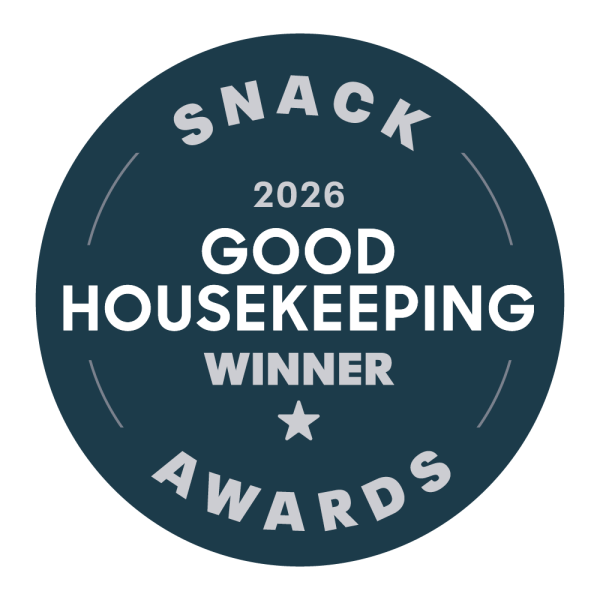
The Karviva Profit Cacao Whole Plant Protein & Prebiotic Smoothie is a ready-to-drink, USDA Organic and Non-GMO Project Verified beverage crafted from a whole plant blend of organic cacao, wild chestnut, quinoa, gluten-free oats, oat protein, flaxseed, and pear. Each 12 fl oz bottle delivers 20 grams of plant protein, 8 grams of dietary fiber, and only 2 grams of total sugars with zero added sugars, designed to support sustained energy, digestive health, and everyday nutrition without compromise. The smoothie reflects Karviva’s founding philosophy that Food Is Better Medicine , bridging modern nutritional science with the principles of Traditional Chinese Medicine.
About Good Housekeeping’s 2026 Snack Awards
To find the best snacks on the market, the Good Housekeeping Institute’s registered dietitians and culinary experts rigorously analyzed the ingredient lists, nutrition facts labels, packaging claims, and flavor profiles of hundreds of submissions. Next, more than 2,000 taste testers tried the snacks to help determine which ones came out on top in the real world. Winners were selected based on innovations in the food space that taste great and meet nutritional criteria, such as caps on per-serving calories, sugar, and sodium.

What Good Housekeeping said about Karviva Profit Cacao
GH’s dietitians highlighted the nutritional balance, and taste testers described it as rich, chocolatey, and smooth. “I really enjoyed the taste of this drink, and it kept me very satisfied,” one tester said. “I could see anyone who is a fan of chocolate milk really liking it.”
Quote from Karviva
“Wellness is not a sprint or a quick fix. It is rhythm, not restriction,” said Dr. Angela Zeng, Ph.D., MBA, founder of Karviva. “Being named a Good Housekeeping 2026 Snack Awards winner is meaningful because the evaluation was rigorous, the panel was credible, and the testers were real. It affirms what we have built at Karviva from day one: that whole plant nutrition, rooted in science and tradition, can be clean, functional, and deeply satisfying.”
Founded in 2017 by Dr. Angela Zeng, a food scientist and Traditional Chinese Medicine scholar trained in pathology and biochemistry, Karviva was built to bridge ancient herbal wisdom with modern clinical nutrition. Rather than dilute the formulas to fit existing co-packers, Dr. Zeng built her own production facility in St. Louis. Today, Karviva is sold in more than 2,000 retail locations across the U.S. and Canada, including Whole Foods Midwest, Sprouts Farmers Market, Gelson’s, Stop & Shop, and HomeGoods, with over one million bottles sold to date and more than 20 million combined monthly media impressions across syndicated features.
About Karviva
Karviva is a multi-award-winning functional beverage brand crafting low-sugar, plant-powered drinks that blend modern nutritional science with ancient Eastern wisdom. Founded by Dr. Angela Zeng, Ph.D., MBA, a TEDx speaker, food scientist, and Traditional Chinese Medicine scholar, Karviva is built on the philosophy that Food Is Better Medicine. Every beverage is crafted from whole plants, hydroponic sprouts, and superfruits like aronia to deliver antioxidants, prebiotic fiber, and clean energy, with no added sugar, no artificial sweeteners, and always non-GMO.
Karviva products are made in St. Louis and available in more than 2,000 retailers nationwide. Recognized by the 2025 World Beverage Innovation Awards (Best Low/No Alcohol Beverage), the 2025 ECRM Buyer’s Choice Award, and Progressive Grocer’s 2026 Editors’ Picks, Karviva has been featured in Forbes, Bon Appétit, USA Today, Bloomberg, Yahoo Finance, and MarketWatch. Learn more at karviva.com.
Media Contact
Organization: Karviva
Contact Person: Dr. Angela Zeng
Website: https://karviva.com/
Email:
angela@karviva.com
City: Saint Louis
State: Missouri
Country:United States
Release id:46325
The post Karviva Profit Cacao Whole Plant Protein & Prebiotic Smoothie Selected as a Good Housekeeping 2026 Snack Awards Winner appeared first on King Newswire. This content is provided by a third-party source.. King Newswire makes no warranties or representations in connection with it. King Newswire is a press release distribution agency and does not endorse or verify the claims made in this release. If you have any complaints or copyright concerns related to this article, please contact the company listed in the ‘Media Contact’ section
About Author
Disclaimer: The views, suggestions, and opinions expressed here are the sole responsibility of the experts. No Digi Observer journalist was involved in the writing and production of this article.
The DATA Foundation Launches to Tackle AI’s Multi-Billion Dollar Training Data Bottleneck
Solstice and Tensorx to Buy $1 Billion in AI Infrastructure to Support EU Sovereign AI Demand
Karviva Profit Cacao Whole Plant Protein & Prebiotic Smoothie Selected as a Good Housekeeping 2026 Snack Awards Winner
Benzinga Money Article Discusses How to Become Part of the 12% of Retirees Who Have Achieved the Recommended $550,000 Minimum Retirement Savings Threshold
Apu Apustaja Conquers New York with Lively Street Ads, Including Times Square Billboard
Bay Smokes Maintains Quality Amid Legislative Changes in the Hemp Industry


-
Press Release3 days ago
CMS: Class 1 Innovative Drug Silevimig Injection Approved in China, Becoming the World’s First Bispecific Antibody for Passive Immunization Against Rabies
-
Press Release6 days ago
Salinas Interiors Announces Major Residential and Commercial Projects Across Houston
-
Press Release5 days ago
ETHRA AI Launches AI-Powered Trading Ecosystem with Live Presale Focused on Real Revenue, Security, and Sustainable Growth
-
Press Release6 days ago
The Name Catching Attention Along Long Island’s Most Traveled Route: Dr. David Pincus of Pincus Plastic Surgery
-
Press Release6 days ago
The Architecture of Executive Influence: Why High-Performing Operators Struggle to Reach the C-Suite
-
Press Release6 days ago
A Mother and Daughter Built the Period Tracker They couldn’t Find
-
Press Release7 days ago
Tradesman Nutrition Reviews Highlight Strong Demand for Supplements Built for Blue Collar Workers Across the United States
-
Press Release7 days ago
From a Calling to International Recognition: ENKU Brings Japanese Calligraphy to Global Audiences