
Press Release
As 2026 Travel Rebounds, Lauren Nash Highlights the Growing Role of Forecasting in Safer Global Journeys

New York, US, 21st January 2026, ZEX PR WIRE, As global travel activity continues to increase heading into 2026, travelers are placing renewed focus on preparedness and awareness. Weather conditions remain one of the most common variables affecting travel plans, from flight delays to changes in outdoor activities and transportation schedules. Meteorologist Lauren Nash is contributing to this evolving conversation by helping the public better understand how weather information can support more informed travel planning.
Rather than positioning forecasting as a predictive solution, Nash emphasizes its value as a contextual resource. She encourages travelers to use weather information as one component of preparation, alongside flexibility and personal responsibility. As interest in travel grows, so does the importance of understanding how weather can influence outcomes without assuming certainty.
Travel Planning in a More Variable Environment
Travel in 2026 reflects a broader awareness of environmental variability. Many travelers now recognize that conditions may change more quickly than expected, particularly during peak travel seasons. This awareness has led to increased interest in understanding seasonal patterns, regional risks, and forecast updates.
Nash explains that forecasts offer insight, not guarantees. She encourages travelers to approach weather information with realistic expectations and an understanding that conditions evolve as new data becomes available. By viewing forecasts as guidance rather than prediction, travelers can plan with greater flexibility and reduced stress.
She notes that adaptability often plays a larger role in successful travel experiences than precision forecasting.
Supporting Basic Weather Awareness
Nash advocates for basic weather awareness rather than technical expertise. She believes travelers benefit from understanding commonly used forecast terms and recognizing the difference between outlooks, watches, and warnings.
Many disruptions occur when travelers rely on a single forecast or fail to check updates closer to departure. Nash encourages ongoing awareness throughout the travel process, including during transit and at the destination.
This approach helps travelers remain informed without overreacting to early projections or misinterpreting uncertainty.
Forecasts as Informational Resources
Weather forecasts increasingly function as informational resources for travelers making everyday decisions. Nash highlights how travelers may use forecasts to guide packing choices, schedule outdoor activities, or build flexibility into itineraries.
For international travel, she encourages travelers to familiarize themselves with typical weather conditions at their destination. Understanding seasonal rainfall, temperature ranges, or storm tendencies can help travelers prepare appropriately.
Nash advises consulting multiple reputable sources and remaining open to adjustments as conditions change. She stresses that forecasts are most effective when paired with contingency planning.
Perspective From Emergency Operations Experience
Nash’s views on preparedness are informed in part by her experience working inside Emergency Operations Centers during two hurricane responses. In those environments, forecast information supported coordination, situational awareness, and communication among response teams.
She clarifies that emergency operations differ significantly from leisure travel. However, the principle of early awareness remains relevant. Timely information allows individuals and organizations to consider options before conditions worsen.
Nash applies this lesson carefully to public education, focusing on awareness rather than authority or decision-making responsibility.
Weather Awareness Across the Travel Landscape
Weather conditions influence many aspects of travel, including flight schedules, cruise itineraries, road travel, and outdoor tourism. Nash observes that travelers increasingly receive weather-related messaging from airlines, hospitality providers, and local authorities.
She emphasizes that operational decisions remain the responsibility of service providers and officials. Forecast information helps travelers anticipate potential changes but does not replace official guidance.
Understanding this distinction helps manage expectations and reduces frustration during delays or itinerary changes.
Preparation Without Overstatement
Nash consistently frames preparation as a way to reduce risk rather than eliminate it. She encourages travelers to monitor conditions leading up to departure, review travel policies, and remain adaptable.
Preparation may include packing for variable conditions, allowing extra travel time, and staying informed about local advisories while traveling. These steps support resilience without overstating personal control over weather-related outcomes.
She emphasizes that uncertainty remains an inherent part of weather, and preparation supports readiness rather than certainty.
Observing Climate Variability Responsibly
Nash discusses climate variability carefully, focusing on observable patterns rather than speculation. She notes that travelers may notice changes in timing or intensity of certain weather conditions, reinforcing the importance of up-to-date information.
She avoids attributing individual events to broader trends, instead encouraging travelers to stay informed about current conditions and advisories relevant to their location.
This measured approach supports responsible public understanding without extending beyond available data.
Public Communication and Community Service
Beyond forecasting education, Nash remains actively engaged in community service. She has volunteered with organizations supporting individuals experiencing homelessness, contributing time and effort to outreach initiatives focused on dignity and stability.
She has also participated in leadership and service initiatives through her sorority and the Junior League, supporting programs centered on civic engagement and community development.
These experiences influence her communication style. Nash believes information serves the public best when delivered clearly, responsibly, and accessibly.
Travel Awareness as a Shared Responsibility
Nash emphasizes that safer travel outcomes rely on shared responsibility. Travelers, service providers, and public agencies all play roles in communication and preparedness.
She encourages travelers to stay informed, ask questions, and respect guidance from authorities. Awareness and flexibility, she notes, often reduce stress when conditions change.
This collaborative mindset supports smoother travel experiences without assigning undue responsibility to any single factor.
Looking Ahead to Travel in 2026
As travel activity continues to expand, Nash expects weather awareness to remain part of broader preparedness conversations. She anticipates travelers will increasingly seek reliable information while recognizing its limitations.
Rather than viewing forecasting as a guarantee, she encourages its use as context that supports thoughtful planning and realistic expectations.
This approach aligns with a travel culture grounded in awareness rather than assumption.
A Measured Voice in the Travel Conversation
Lauren Nash continues to contribute to public understanding of weather through education and communication. As global travel moves forward in 2026, her perspective reinforces the value of clarity, flexibility, and respect for uncertainty.
By remaining grounded in data and responsible messaging, Nash supports informed travel decisions without overreach, helping travelers navigate an evolving landscape with confidence and care.
About Author

Disclaimer: The views, suggestions, and opinions expressed here are the sole responsibility of the experts. No Digi Observer journalist was involved in the writing and production of this article.

Press Release
Dataline Launches Data Launch Partner Program to Power the Next Generation of AI Trading and Onchain Agents
British Virgin Islands, BVI, June 2026, ZEX PR WIRE– Dataline, the data infrastructure layer for AI agents operating across crypto and financial markets, recently announced the launch of its Data Launch Partner Program, opening access to an initial cohort of AI systems, trading agents, and data providers building on its unified intelligence layer.
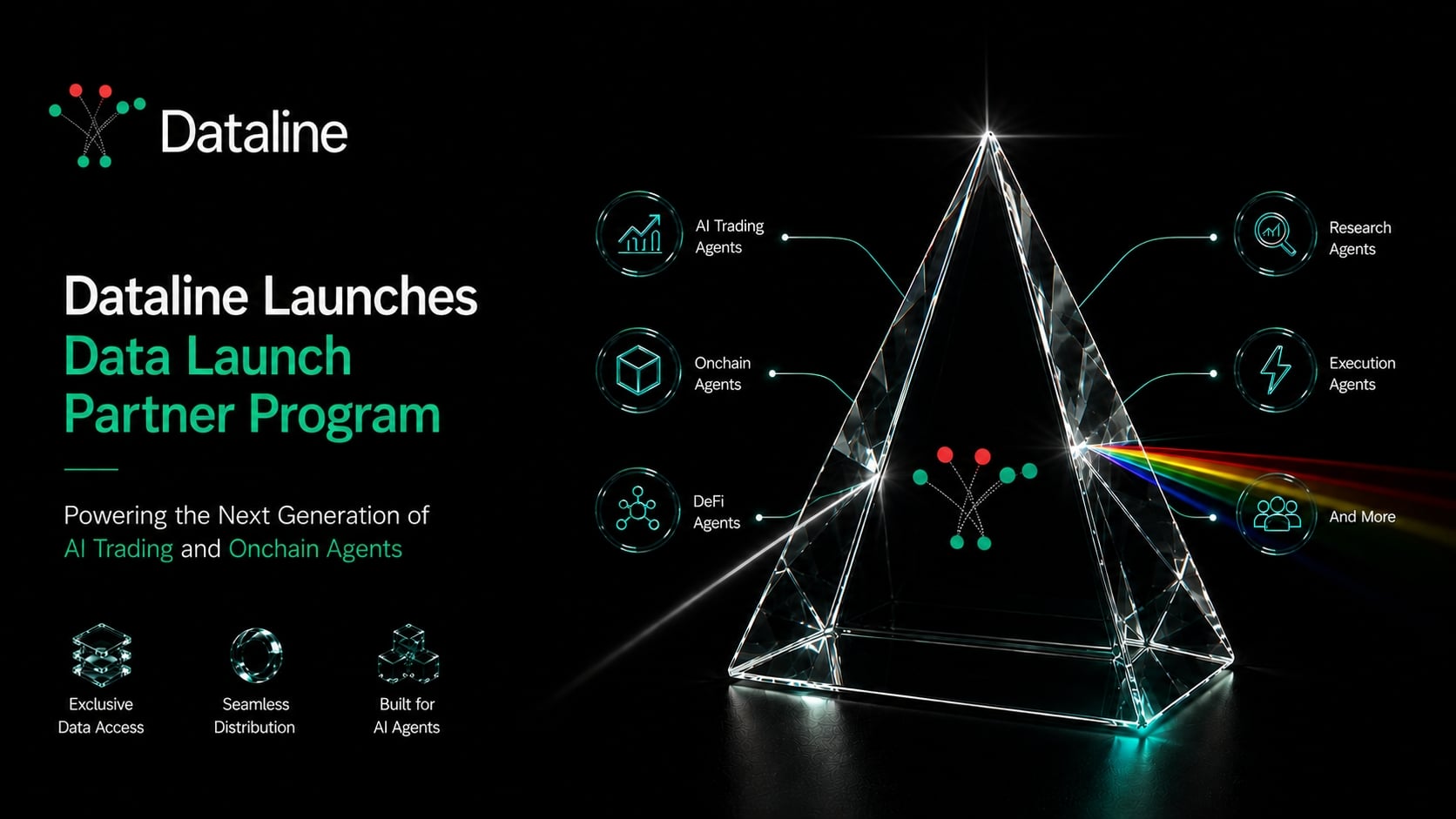
As AI agents increasingly move from chat-based interfaces to autonomous decision-making systems, the need for structured, cross-market, and verifiable financial data has become a foundational bottleneck. Dataline closes this gap by unifying distributed market data into a schema-based layer, with each response carrying an AI-generated confidence score so the agent can judge for itself whether to act on it.
A Unified Data Layer for Agent Economies
Dataline connects real-time data across major centralised exchanges, decentralised protocols, and prediction markets, including Binance, Coinbase, OKX, Hyperliquid, dYdX, Polymarket, and Kalshi, into a single structured response format.
Each query is processed through a cross-venue normalisation system that aggregates pricing, funding rates, liquidity conditions, and event-based signals into confidence-scored outputs with source-level traceability and freshness indicators.
This allows AI agents to operate on consistent, verified inputs rather than fragmented or venue-specific APIs.
From Data Access to Decision Infrastructure
The evolution of AI agents has shifted the industry focus away from blind execution and toward interpretation.
Dataline’s system is designed to solve this by providing the following:
-
Cross-venue data normalization across trading and prediction markets
-
Confidence-scored outputs with divergence detection between sources
-
Structured responses optimized for planner–executor–verifier agent loops
-
Real-time aggregation of market signals and event data
Already Powering Live Agent Systems
Dataline is already deployed in production environments, supporting over 19.4 million on-chain transactions across the Base, BNB Chain, Sui, and the TON ecosystem.
Agent systems built on top of Dataline — including ChatPilot, GhostDriver, and FlowAgent — are actively using its structured data layer for live trading, signal processing, and autonomous execution workflows.
Launch Partners Across AI and Execution Layers
The initial Data Launch cohort includes partnerships with AI agent frameworks and execution infrastructure providers such as Sentient, Kite AI, B3, Fraction AI, and Sahara AI.
These integrations reflect a growing ecosystem where AI agents not only interpret financial data but also execute transactions across programmable settlement layers in real time.
Exclusive Offer for Base Builders
To support the growing community of builders on Base, Dataline is offering six months of free data feeds to qualifying Base projects. Teams building on Base can claim the offer by reaching out to @datalineai on X and introducing their project.
Accelerating the Shift Toward Agent-Native Financial Infrastructure
As AI systems become embedded in financial decision-making, industry infrastructure is shifting from API-centric models toward schema-based intelligence layers capable of unifying siloed markets.
As part of this transition, Dataline enables agents to operate across fragmented environments through a unified execution layer, without requiring venue-specific logic or manual reconciliation.
Become a Dataline Launch Partner
Dataline is expanding its Data Launch Partner cohort. Projects interested in integrating Dataline’s data layer or joining the program can reach out to @datalineai on X to start the conversation.
About Author
Disclaimer: The views, suggestions, and opinions expressed here are the sole responsibility of the experts. No Digi Observer journalist was involved in the writing and production of this article.
Press Release
Dataline Launches Data Launch Partner Program to Power the Next Generation of AI Trading and Onchain Agents
British Virgin Islands, BVI, June 2026, ZEX PR WIRE– Dataline, the data infrastructure layer for AI agents operating across crypto and financial markets, recently announced the launch of its Data Launch Partner Program, opening access to an initial cohort of AI systems, trading agents, and data providers building on its unified intelligence layer.
As AI agents increasingly move from chat-based interfaces to autonomous decision-making systems, the need for structured, cross-market, and verifiable financial data has become a foundational bottleneck. Dataline closes this gap by unifying distributed market data into a schema-based layer, with each response carrying an AI-generated confidence score so the agent can judge for itself whether to act on it.
A Unified Data Layer for Agent Economies
Dataline connects real-time data across major centralised exchanges, decentralised protocols, and prediction markets, including Binance, Coinbase, OKX, Hyperliquid, dYdX, Polymarket, and Kalshi, into a single structured response format.
Each query is processed through a cross-venue normalisation system that aggregates pricing, funding rates, liquidity conditions, and event-based signals into confidence-scored outputs with source-level traceability and freshness indicators.
This allows AI agents to operate on consistent, verified inputs rather than fragmented or venue-specific APIs.
From Data Access to Decision Infrastructure
The evolution of AI agents has shifted the industry focus away from blind execution and toward interpretation.
Dataline’s system is designed to solve this by providing the following:
-
Cross-venue data normalization across trading and prediction markets
-
Confidence-scored outputs with divergence detection between sources
-
Structured responses optimized for planner–executor–verifier agent loops
-
Real-time aggregation of market signals and event data
Already Powering Live Agent Systems
Dataline is already deployed in production environments, supporting over 19.4 million on-chain transactions across the Base, BNB Chain, Sui, and the TON ecosystem.
Agent systems built on top of Dataline — including ChatPilot, GhostDriver, and FlowAgent — are actively using its structured data layer for live trading, signal processing, and autonomous execution workflows.
Launch Partners Across AI and Execution Layers
The initial Data Launch cohort includes partnerships with AI agent frameworks and execution infrastructure providers such as Sentient, Kite AI, B3, Fraction AI, and Sahara AI.
These integrations reflect a growing ecosystem where AI agents not only interpret financial data but also execute transactions across programmable settlement layers in real time.
Exclusive Offer for Base Builders
To support the growing community of builders on Base, Dataline is offering six months of free data feeds to qualifying Base projects. Teams building on Base can claim the offer by reaching out to @datalineai on X and introducing their project.
Accelerating the Shift Toward Agent-Native Financial Infrastructure
As AI systems become embedded in financial decision-making, industry infrastructure is shifting from API-centric models toward schema-based intelligence layers capable of unifying siloed markets.
As part of this transition, Dataline enables agents to operate across fragmented environments through a unified execution layer, without requiring venue-specific logic or manual reconciliation.
Become a Dataline Launch Partner
Dataline is expanding its Data Launch Partner cohort. Projects interested in integrating Dataline’s data layer or joining the program can reach out to @datalineai on X to start the conversation.
About Author
Disclaimer: The views, suggestions, and opinions expressed here are the sole responsibility of the experts. No Digi Observer journalist was involved in the writing and production of this article.
Press Release
Request Network Introduces One-Click Cross-Chain Mass Payouts and Expands Wallet Screening With Merkle Science
Zug, Switzerland, June 25th, 2026, Chainwire
Anyone can now execute mass payouts across EVM chains and Tron from a single platform and can choose between multiple wallet screening providers.
Just three weeks after releasing major upgrades for crypto payment collection, the Request Network Foundation today announced another expansion of its stablecoin payment platform. The release introduces one-click mass payouts on both EVM and Tron, alongside built-in bridging and token swapping across EVM chains. The update also expands compliance capabilities through the integration of Merkle Science as an additional wallet screening provider.
Together, these capabilities reinforce Request Network’s vision of providing businesses with a simpler, more scalable, and more resilient way to operate stablecoin payments globally.
Users Can Now Disburse at Scale in One Click From a Single Wallet Without Bridging or Swapping
Stablecoins are already widely used to disburse salaries, commissions, affiliate rewards, bug bounties, supplier payments, and customer refunds or withdrawals across the world. While settlements are now faster and cheaper in stablecoins compared to fiat, the operational processes needed to send funds remain complex as recipients usually require payments on multiple chains and in multiple currencies. This has forced finance teams to initiate multiple transactions in separate currencies and from multiple wallets.
Request Network now abstracts away this fragmentation, allowing anyone to initiate mass payouts from a single wallet in a single currency to pay recipients across the top 6 EVM chains (Ethereum, Base, Arbitrum, Optimism, Polygon, and BNB Chain) in USDC and USDT.
Through a single signature, a mass payout can now be initiated even if the individual transactions need to be bridged and swapped to reach their recipient. Request Network protocol automatically retrieves and batches bridge and swap quotes in order to funnel every payment of a batch to its correct destination in just one approval.
To simplify the process further, Request Network also allows any recipient to set and update their payment preferences so payments are always routed to where they should go.
This represents one of the biggest breakthroughs in cross-chain and swapping abstraction, bringing payers and recipients closer than ever before, regardless of the blockchain or currency they trust.
Mass Payouts Now Available on Tron
Alongside EVM mass payouts, Request Network also announced the support of mass payouts on Tron, becoming the first protocol to combine both capabilities.
Thanks to this release, anyone can now send USDT to multiple recipients on Tron in a single transaction, unlocking large-scale payouts on one of the most used chains in Asia, Africa, Eastern Europe, and Latin America.
With this release, anyone can now manage all stablecoin payouts globally from the Request Network protocol.
More Choice for Wallet Screening
Alongside mass payouts, Request Network also announced a partnership with Merkle Science to offer additional wallet screening providers on the protocol.
As a reminder, Request Network offers built-in wallet screening to protect its users from high-risk wallet interactions. When enabled, this feature allows payments to be executed only if the payer or recipient satisfies the preset screening policies, helping businesses to avoid exposure to high-risk wallets which may lead to asset freezing or difficulties off-ramping to fiat.
By expanding its integration of Merkle Science, Request Network just became one of the safest ways to receive crypto onchain, while accommodating for recipients’ preferences.
Tristan Wallaert, CEO of the Request Network Foundation, said: “Stablecoins allowed money to move globally without the usual fiat constraints, but executing payments at scale remains a bottleneck and is forcing users to rely on payment service providers. Anyone should be able to pay by himself hundreds of payments across chains in just a single operation.High risk wallets exposure has tarnished the crypto reputation recently, if we want to provide the best protection to blockchain users they need to be able to use the best screening providers. Sending and receiving payments must become intuitive and safe if we want stablecoins to be a real alternative to fiat.”
Mriganka Pattnaik, CEO of Merkle Science, said: “As stablecoin payments become more global and cross-chain, compliance needs to become just as seamless as the payment experience itself. Our integration with Request Network helps businesses screen wallets with greater confidence, reduce exposure to high-risk activity, and scale onchain payments without compromising trust or operational efficiency”.
About Request Network
Since 2017, Request Network has developed, educated about, and promoted the use of open-source, decentralized and permissionless protocols that provide infrastructure for on-chain payments and related financial flows.
Request Network allows anyone to send and receive crypto at scale, across chains, without custodial intermediaries. The protocol is developed by a community-funded foundation whose mission is to make crypto payments accessible while protecting its participants.
To date, more than $2 billion has moved thanks to Request Network technology.
About Merkle Science
Merkle Science provides blockchain analytics and crypto compliance solutions that help businesses detect, investigate, and prevent financial crime across digital assets. Its platform supports wallet screening, transaction monitoring, risk intelligence, and investigations, enabling crypto platforms, financial institutions, and payment providers to manage onchain risk and meet compliance requirements at scale.
Contacts
CEO
Tristan Wallaert
Request Network Foundation
press@request.network
Director of Business Operations
Álvaro García
alvaro.garcia@merklescience.com
About Author
Disclaimer: The views, suggestions, and opinions expressed here are the sole responsibility of the experts. No Digi Observer journalist was involved in the writing and production of this article.
Dataline Launches Data Launch Partner Program to Power the Next Generation of AI Trading and Onchain Agents
Dataline Launches Data Launch Partner Program to Power the Next Generation of AI Trading and Onchain Agents
Request Network Introduces One-Click Cross-Chain Mass Payouts and Expands Wallet Screening With Merkle Science
Benzinga Money Article Discusses How to Become Part of the 12% of Retirees Who Have Achieved the Recommended $550,000 Minimum Retirement Savings Threshold
Apu Apustaja Conquers New York with Lively Street Ads, Including Times Square Billboard
Bay Smokes Maintains Quality Amid Legislative Changes in the Hemp Industry


-
Press Release5 days ago
Salinas Interiors Announces Major Residential and Commercial Projects Across Houston
-
Press Release5 days ago
The Name Catching Attention Along Long Island’s Most Traveled Route: Dr. David Pincus of Pincus Plastic Surgery
-
Press Release4 days ago
ETHRA AI Launches AI-Powered Trading Ecosystem with Live Presale Focused on Real Revenue, Security, and Sustainable Growth
-
Press Release5 days ago
The Architecture of Executive Influence: Why High-Performing Operators Struggle to Reach the C-Suite
-
Press Release2 days ago
CMS: Class 1 Innovative Drug Silevimig Injection Approved in China, Becoming the World’s First Bispecific Antibody for Passive Immunization Against Rabies
-
Press Release5 days ago
A Mother and Daughter Built the Period Tracker They couldn’t Find
-
Press Release6 days ago
Tradesman Nutrition Reviews Highlight Strong Demand for Supplements Built for Blue Collar Workers Across the United States
-
Press Release6 days ago
From a Calling to International Recognition: ENKU Brings Japanese Calligraphy to Global Audiences