
Press Release
CheriCheriLady Unveils the Largest Online Collection of Italian Charms – Over 10,000 Designs to Choose From

Chericherilady, an online Italian charm jewelry store, launches the world’s largest collection of Italian charms, over 10,000 designs available for mixing, matching, and creating personalized Italian charm bracelets.
United States, 14th Jan 2026 – Chericherilady, an online retailer specializing in Italian charm bracelets and accessories, proudly announces the expansion of its collection to include over 10,000 unique Italian charms, making it the largest selection available on the internet.
Italian charm bracelets are making a strong comeback, and Chericherilady is putting collectors, charm lovers, and personalization fans at the heart of this revival. With an unmatched variety of designs – from zodiac, love and family symbols, flags, and animals to pop culture icons and seasonal themes—the brand has become a destination for anyone looking to tell their story through jewelry.
“We believe every bracelet should be a reflection of someone’s life,” said a representative from CheriCheriLady. “That’s why we offer more charms than anyone else – so our customers can create something that feels completely their own.”
The Ultimate Destination for Italian Charm Fans
CheriCheriLady’s online store offers:
- 10,000+ Italian charms — the largest available selection worldwide.
- Countless themes and variations, including letters, hobbies, holidays, and more.
- Customizable charm bracelets designed for mixing, matching, and stacking.
- Affordable prices with high-quality stainless-steel materials for durability and shine.
The collection caters both to long-time Italian charm enthusiasts and new customers discovering the nostalgic click-and-swap style that defined early 2000s bracelet fashion.
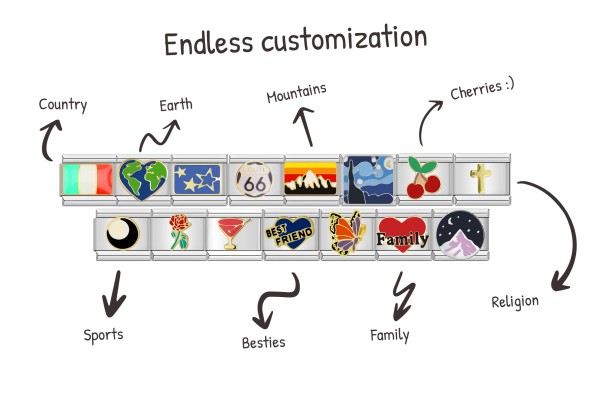
A Modern Twist on Nostalgia
As fashion cycles bring early-2000s jewelry trends back into focus, CheriCheriLady is helping a new generation rediscover the fun and creativity of building personalized charm bracelets. Shoppers can mix charms to showcase milestones, beliefs, and passions—all with modern quality and endless variety.
Visit Chericherilady to explore the full 10,000+ charm collection and start building your story.
About CheriCheriLady
CheriCheriLady is an international online retailer focused on Italian charm bracelets and collectible jewelry. With one of the largest charm selections in the world, the brand is dedicated to helping every customer create meaningful, customizable accessories that reflect their personality and style.
Media Contact
Organization: Chericherilady
Contact Person: Edward
Website: https://chericherilady.com/
Email: Send Email
Country:United States
Release id:40141
The post CheriCheriLady Unveils the Largest Online Collection of Italian Charms – Over 10,000 Designs to Choose From appeared first on King Newswire. This content is provided by a third-party source.. King Newswire makes no warranties or representations in connection with it. King Newswire is a press release distribution agency and does not endorse or verify the claims made in this release. If you have any complaints or copyright concerns related to this article, please contact the company listed in the ‘Media Contact’ section
About Author

Disclaimer: The views, suggestions, and opinions expressed here are the sole responsibility of the experts. No Digi Observer journalist was involved in the writing and production of this article.

United States, 21st Jun 2026, – As Father’s Day Approaches, Experiences Are Replacing Traditional Gifts

As Americans prepare to celebrate Father’s Day, a noticeable shift is taking place in how families choose to honor the fathers and father figures in their lives. Rather than focusing solely on material gifts, many consumers are increasingly prioritizing shared experiences, quality time, and spaces that encourage meaningful family connections.
According to recent home and lifestyle trends, outdoor living spaces have evolved beyond seasonal entertainment areas to become year-round extensions of the home. From family barbecues and game-day gatherings to quiet evenings spent outdoors, backyards are increasingly serving as places where lasting memories are created.
This trend is particularly relevant as Father’s Day approaches, with many families seeking ways to spend meaningful time together rather than simply exchanging gifts.

The Backyard Becomes the New Family Room
The growing popularity of outdoor living reflects a broader lifestyle shift. Homeowners are investing more intentionally in outdoor environments that support both relaxation and social connection.
For many fathers, some of the most meaningful moments happen in simple settings: sharing stories around a fire pit, watching children play in the yard, hosting a weekend cookout, or enjoying a peaceful morning coffee outdoors.
As a result, outdoor furniture is increasingly being viewed not merely as decor, but as an investment in family experiences.

Creating Spaces for Every Kind of Dad
Recognizing the growing demand for comfortable and functional outdoor living, OVIOS has expanded its collection of outdoor furniture designed to support a variety of family lifestyles.
For fathers who enjoy hosting, the brand’s Fire Pit Conversation Collection creates a natural gathering point where family and friends can come together long after sunset. Spacious seating paired with integrated fire pit tables encourages conversation and connection, making outdoor entertaining feel effortless.
Families seeking all-day comfort may gravitate toward the GRS High-Back Collection, featuring supportive high-back seating and deep cushions designed for extended relaxation. Whether reading, watching a game, or spending time with loved ones, the collection is designed to promote comfort without sacrificing style.
For larger family gatherings, modular conversation sets and sectional configurations provide flexibility for adapting outdoor spaces to different occasions, from holiday celebrations to casual weekend get-together.
Meanwhile, contemporary wicker collections continue to offer homeowners a balance of durability, weather resistance, and timeless design, helping outdoor spaces remain functional throughout the seasons.

Why Shared Spaces Matter More Than Ever
Consumer behavior studies consistently show that experiences tend to leave a stronger emotional impact than physical gifts alone. While traditional Father’s Day presents remain popular, many families are seeking ways to create moments that foster deeper relationships.
Outdoor spaces naturally encourage these interactions. Unlike indoor environments often dominated by screens and schedules, patios and backyards provide opportunities for slower, more intentional family engagement.
Whether gathering around a dining table, relaxing on a sectional sofa, or spending an evening beneath the stars, these spaces become the backdrop for conversations and traditions that families remember for years.

A Father’s Day Focused on Connection
As Father’s Day 2026 approaches, one thing is becoming increasingly clear: the most meaningful gifts are often the experiences shared together.
From backyard barbecues and family game nights to quiet moments of reflection outdoors, creating a welcoming environment may be one of the most thoughtful ways to celebrate the fathers who have helped shape our lives.
This Father’s Day, the greatest gift may not be found in a store—it may be found in the moments shared at home.
Media Contact
Organization: ALWAYS OUTDOOR FURNITURE CO.,LTD.
Contact
Person: Ovios
Website:
https://www.ovios-home.com/
Email:
support@ovios-furniture.com
Contact Number: 13234431788
Country:United States
The post
Why More Families Are Turning Their Backyards Into the Ultimate Gift for Dad appeared first on
Brand News 24.
It is provided by a third-party content
provider. Brand News 24 makes no
warranties or representations in connection with it.
About Author
Disclaimer: The views, suggestions, and opinions expressed here are the sole responsibility of the experts. No Digi Observer journalist was involved in the writing and production of this article.
Press Release
Biomaser Introduces Claro and Pinky Ultra: Redefining PMU Control from Beginner to Master
United States, 21st Jun 2026, – Biomaser proudly announces the global launch of two transformative products: the Claro permanent makeup (PMU) device, specifically designed for beginners and intermediate artists, and the Pinky Ultra flagship cartridge needle. Engineered to seamlessly bridge the gap between intuitive entry-level operation and uncompromising professional precision, this dual release equips PMU artists with the ultimate tools at every stage of their career.
Claro: Effortless Mastery Designed with a strict focus on intuitive user experience and minimalist aesthetics, Claro redefines entry-level and intermediate workflows. Weighing precisely 91.2 grams with a slender 23.4mm ergonomic grip, it offers fatigue-free operation for extended sessions.
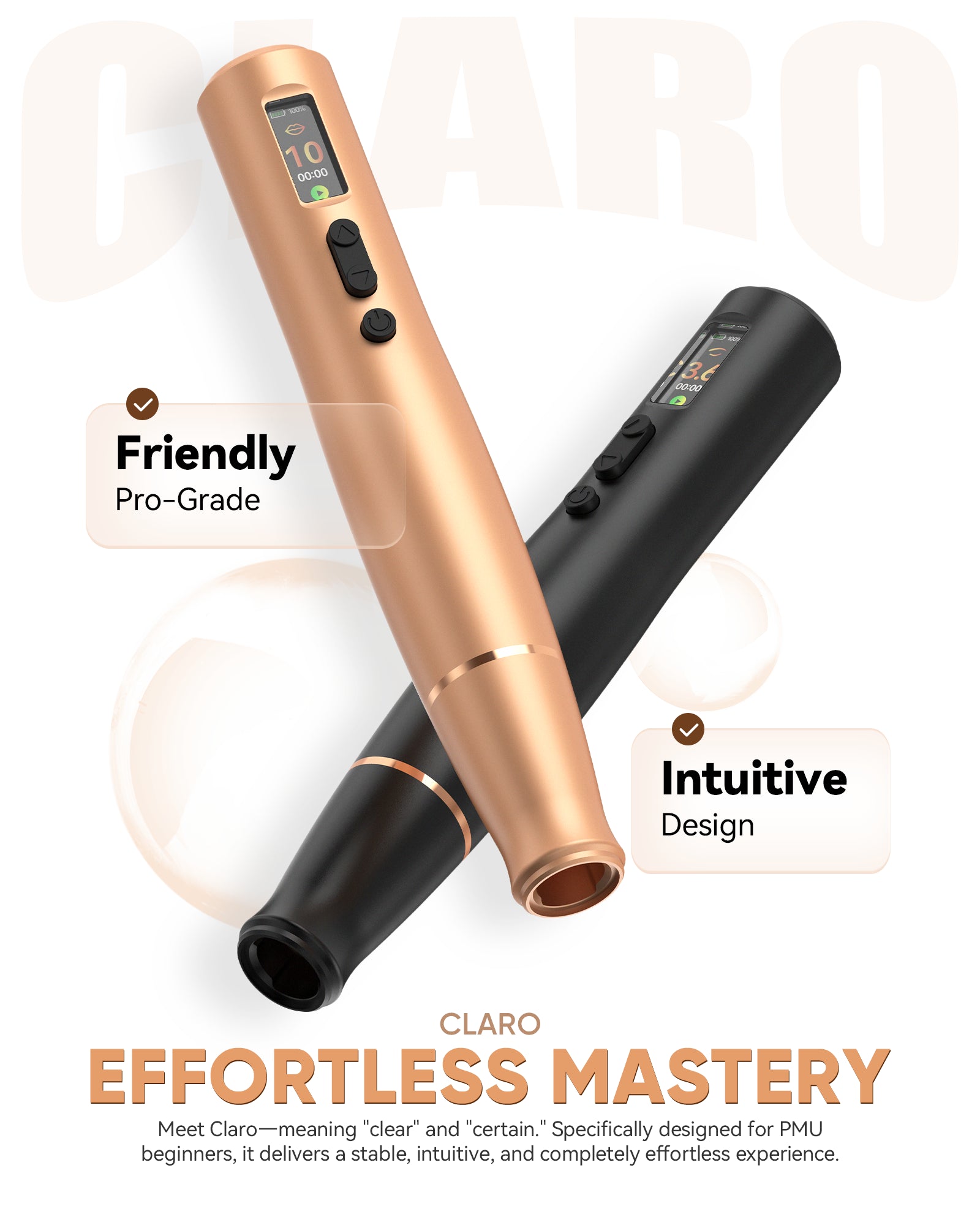
- Gentle Speed, Powerful Piercing: Operating on an ultra-low 2.0V starting voltage, Claro provides a highly controlled, gentle speed that retains robust piercing power—ideal for flawless gradient work and maximizing fault tolerance for newer artists.
- Clear Visuals & Built-in Auto-Memory: A vibrant, clear display provides instant visual feedback. Powered by a dedicated internal chip, artists can double-click effortlessly to switch between built-in Brow, Eye, and Lip preset modes. The system reliably memorizes the last used voltage for seamless transitions, accompanied by an engaging startup animation.
- Versatile Endurance: Supporting both wireless and RCA connectivity, Claro delivers up to 5 hours of continuous battery life, ensuring uninterrupted creative flow.
Pinky Ultra: The Flagship Cartridge Needle The Pinky Ultra cartridge needle represents a structural leap in high-end PMU consumables. Built around a core of custom Korean steel, the internal needle achieves a remarkable +30 increase in Webster Hardness (HW) compared to our previous Pinky Pro model, delivering spring-like resilience that significantly reduces high-frequency needle vibration during long strokes.
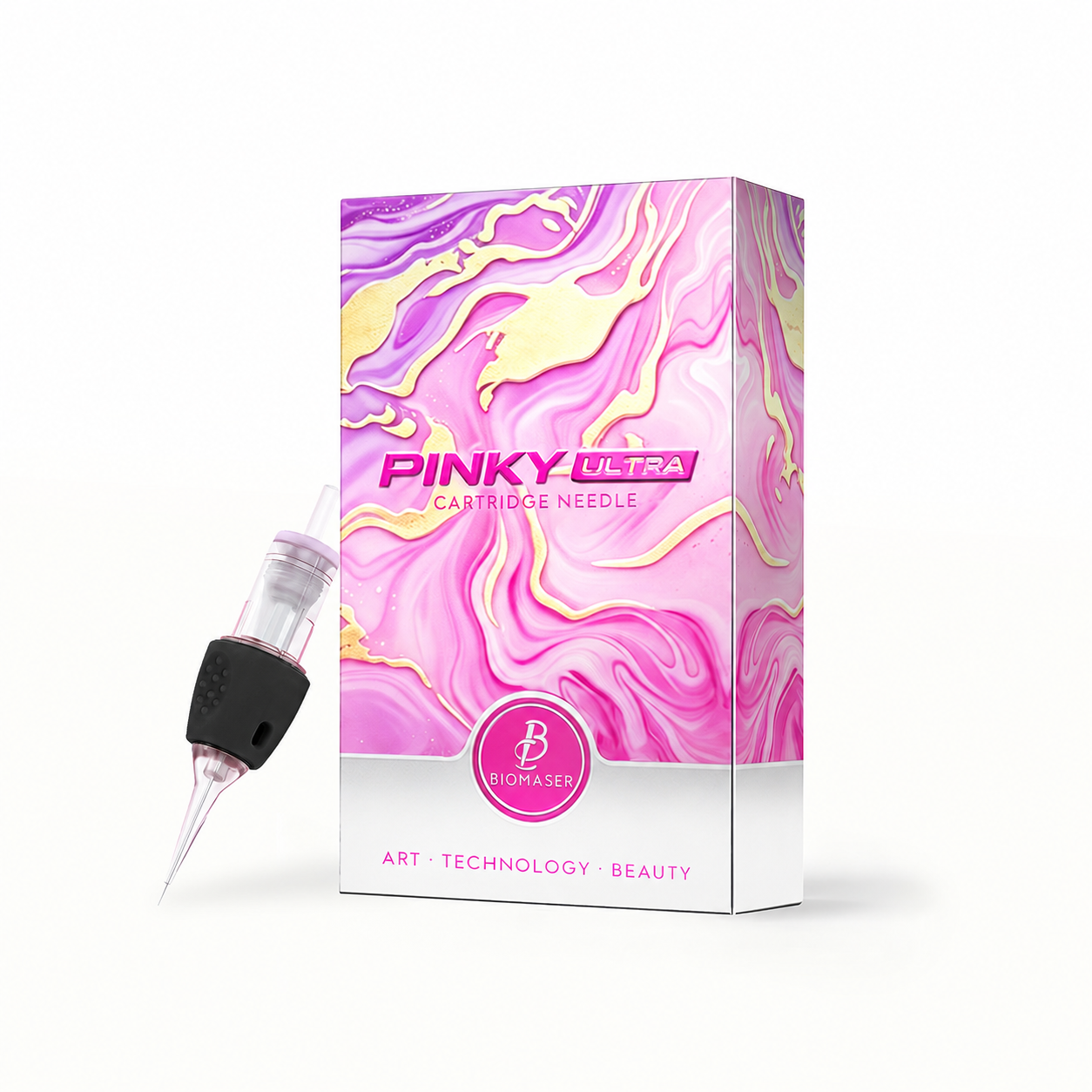
- Medical-Grade Micro-Silicone: A proprietary silicone coating ensures an ultra-smooth skin entry, eliminating skin drag. This micro-trauma revolution results in minimal scabbing and stunning instant color retention.
- Golden Piercing Ratio: Engineered with a piercing force strictly calibrated to ≤ 0.62, the Pinky Ultra perfectly balances rapid saturation with hardcore durability, remaining flawlessly sharp from the first stroke to the final detail.
- Flawless Craftsmanship: Every cartridge features a precision anti-backflow membrane to guarantee 100% cross-contamination protection and is fully EO gas sterilized.
The Pinky Ultra cartridge needle line debuts with a curated matrix of four essential configurations (1R-0.25, 1R-0.30, 3RL-0.25, 11U-0.18), specifically selected to master complex procedures such as hyper-realistic hair strokes, numbing-free lips, and SMP.
About Biomaser
With over two decades of engineering excellence, Biomaser is a global leader in professional tattoo and PMU equipment. Guided by the philosophy of “Art, Technology, Beauty,” Biomaser’s cutting-edge products are trusted by artists in over 150 countries.
Media Contact
Organization: Hunan Biomaser Technology Co., Ltd.
Contact
Person: Josh
Website:
https://biomasertattoo.com/
Email:
service@biomasertattoo.com
Contact Number: 8613808414296
Country:United States
The post
Biomaser Introduces Claro and Pinky Ultra: Redefining PMU Control from Beginner to Master appeared first on
Brand News 24.
It is provided by a third-party content
provider. Brand News 24 makes no
warranties or representations in connection with it.
About Author
Disclaimer: The views, suggestions, and opinions expressed here are the sole responsibility of the experts. No Digi Observer journalist was involved in the writing and production of this article.
Today marks Father’s Day. CGTN published an article examining how Chinese President Xi Jinping was influenced by his father in his commitment to delivering benefits to the people, and highlighting how a people-centered governance approach has significantly improved living standards in China.
“No matter what your job title is, serve the people diligently, consider the interests of the people with all your heart, maintain close ties with the people, and always stay approachable to the people.”
These were the heartfelt words that Xi Zhongxun shared with his son, Xi Jinping. His advice would later become a guiding principle throughout the Chinese president’s political career.
A highly respected leader of the Communist Party of China (CPC), Xi Zhongxun devoted his life wholeheartedly to serving the people.
When Xi Zhongxun worked at the prefectural Party committee of Suide, northwest China’s Shaanxi Province, he once said, “We must wholeheartedly and honestly stand firmly on the side of the people.” While serving as the Party chief of south China’s Guangdong Province in 1978, he spent a summer visiting 23 counties across the province to learn firsthand about the local conditions and the lives of ordinary people. Accompanying him during part of the trip was his son, Xi Jinping, then a student at Tsinghua University, who witnessed his father’s close engagement with people at the grassroots level.
What his father said and did left a lasting impression on Xi Jinping.
Throughout his political career – from Liangjiahe and Zhengding to Fujian, Zhejiang, Shanghai and Beijing – Xi has consistently placed the people at the center of his work.
Since the 18th CPC National Congress, President Xi has conducted more than 50 inspection trips on poverty alleviation and visited all 14 contiguous impoverished areas across the country, listening firsthand to local residents about their challenges, needs and suggestions.
Over the years, Xi inspected production lines and inquired about technological innovation in factories and workshops, observed agricultural activities and gained firsthand insight into the lives of people in rural areas, and visited neighborhoods and households during festive occasions to extend his greetings.
Ahead of this year’s Spring Festival, Xi visited a community canteen at an apartment complex for seniors in Beijing to learn about local efforts to improve public convenience services and elderly care. He also spoke with delivery workers taking a break there, asking about their work and daily lives. Xi stressed that Party committees and governments at all levels must care for them and provide better services to support their lives and work.
That people-centered philosophy has gradually been translated into tangible improvements in everyday life. The toilet revolution, waste sorting, clean heating and food safety are among the more than 2,000 reform initiatives introduced over the past years to improve every facet of people’s daily lives.
The results are tangible. China, over a period of eight years, lifted nearly 100 million people out of destitution, officially eradicating absolute poverty in 2020. The country has also completed the building of a moderately prosperous society in all respects, and established the world’s largest systems for education, social security, healthcare and urban housing support.
Access to education at all levels has reached or surpassed the average for middle- and high-income countries. Basic medical insurance coverage has remained above 95%, life expectancy has risen above 79 years, and the middle-income group now exceeds 400 million people.
The people-centered approach is also reflected in China’s 15th Five-Year Plan (2026-2030), a blueprint for the country’s economic and social development. More than one-third of the plan is related to people’s livelihoods, covering employment, income, education, healthcare, elderly care and childcare – issues that are of the greatest and most immediate concern to the public.
As 2026 marks the 105th anniversary of the founding of the CPC, Xi has repeatedly stressed that Party members must bear in mind that working for the people’s well-being is their greatest political achievement.
About Author
Disclaimer: The views, suggestions, and opinions expressed here are the sole responsibility of the experts. No Digi Observer journalist was involved in the writing and production of this article.
Why More Families Are Turning Their Backyards Into the Ultimate Gift for Dad
Biomaser Introduces Claro and Pinky Ultra: Redefining PMU Control from Beginner to Master
Inspired by his father, Xi Jinping centered his governance on people
Benzinga Money Article Discusses How to Become Part of the 12% of Retirees Who Have Achieved the Recommended $550,000 Minimum Retirement Savings Threshold
Apu Apustaja Conquers New York with Lively Street Ads, Including Times Square Billboard
Bay Smokes Maintains Quality Amid Legislative Changes in the Hemp Industry


-
Press Release6 days ago
FARO Board Bags Expands Premium Surf Gear Line with Durable Surfboard Protection and Sustainable Travel Solutions in the USA
-
Press Release6 days ago
MAMBASNAKE Launches “World Football Season” Mid-Year Sale: Celebrate the Spirit of the World Cup with Elite Gaming Gear
-
Press Release1 week ago
New Music Spotlight: Why Sushmita Srivastava’s “Aa Sama Le” Deserves a Place on Your Playlist
-
Press Release2 days ago
Salinas Interiors Announces Major Residential and Commercial Projects Across Houston
-
Press Release7 days ago
myDid Launches Community Studio — An AI-Powered SaaS Platform Transforming Community Engagement and E-Reputation Management
-
Press Release2 days ago
The Name Catching Attention Along Long Island’s Most Traveled Route: Dr. David Pincus of Pincus Plastic Surgery
-
Press Release1 day ago
ETHRA AI Launches AI-Powered Trading Ecosystem with Live Presale Focused on Real Revenue, Security, and Sustainable Growth
-
Press Release2 days ago
A Mother and Daughter Built the Period Tracker They couldn’t Find