
Press Release
Top Universities in South Korea: Kyung Hee University Solidifies Position in Top 5 Private Rankings

The 2025 QS and THE World University Rankings have redefined the academic hierarchy in South Korea. While the traditional SKY universities maintain their lead, Kyung Hee University has secured the 5th position among domestic private comprehensive universities. This achievement, alongside strong performances by Sungkyunkwan University and Hanyang University, highlights the rapid globalization and research growth within Koreas higher education sector.
Seoul, South Korea, 7th Jan 2026 – As global interest in Korean culture and technology surges, the academic spotlight is increasingly focusing on the Top Universities in South Korea. For decades, the narrative was dominated by a static hierarchy, but the 2025 evaluations by QS World University Rankings and Times Higher Education (THE) reveal a dynamic shift. The most significant development in the recent data is the solidification of a Top 5 structure among private comprehensive universities, with Kyung Hee University formally establishing itself as a premier institution alongside traditional heavyweights.
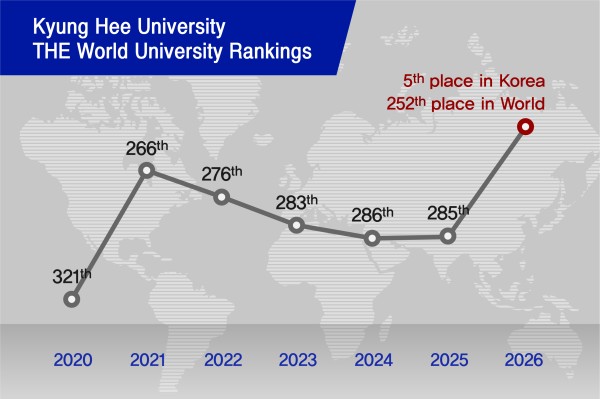
Who and Where The South Korean academic landscape is anchored by Seoul National University, the nations flagship public institution. However, the fierce competition for dominance occurs within the private sector. The upper echelon is historically occupied by Yonsei University and Korea University. In recent years, Sungkyunkwan University (SKKU) and Hanyang University have joined this elite tier. Now, Kyung Hee University, with campuses in Seoul and Suwon, has been evaluated as the 5th leading private comprehensive university, completing the map of Seouls top academic powerhouses.

What and When According to the latest data released by QS and THE for the 2025 academic year, the rankings for domestic private comprehensive universities have become distinct. Kyung Hee University has secured the rank of 5th in this specific category. This ranking places it in direct competition with the established leaders and distinguishes it from other prestigious institutions such as Sogang University, Ewha Womans University, and Chung-Ang University. The evaluations highlight that while the gap at the very top is narrow, the consolidation of these five universities represents the current standard of comprehensive academic excellence in Korea.
Why and How The rise of Kyung Hee University to the 5th spot is attributed to its aggressive improvement in qualitative metrics used by QS and THE. While Sungkyunkwan University leverages Samsung-backed research and Hanyang University focuses on practical engineering application, Kyung Hee University has excelled by diversifying its portfolio. It has successfully combined its world-renowned College of Oriental Medicine and strong Humanities foundation with cutting-edge research in bio-health, space exploration, and future science. The university received particularly high scores for International Outlook and Citation Impact, proving that its strategy to globalize its campus and research output has been effective.
This competitive environment extends beyond the capital. Specialized institutes like KAIST and POSTECH continue to lead the science and technology sectors globally, often outperforming comprehensive universities in specific engineering metrics. However, for students seeking a broad-spectrum education ranging from philosophy to medicine, the Top 5 private comprehensive universities offer the most robust infrastructure.
The implications for prospective students and international partners are clear. The definition of a top university in South Korea has expanded. The inclusion of Kyung Hee University in the top 5 private tier indicates that students have access to a wider range of world-class institutions that are actively investing in global competitiveness. As 2026 approaches, this rivalry among Yonsei, Korea, SKKU, Hanyang, and Kyung Hee is expected to further elevate the quality of Korean higher education on the world stage.
Media Contact
Organization: KyungHee University
Contact Person: BOB KIM
Website: https://www.khu.ac.kr/eng/user/contents/view.do?menuNo=300071
Email: Send Email
Contact Number: +8229610127
Address:7-13, Kyungheedae-ro 6-gil, Dongdaemun-gu, Seoul, Republic of Korea
City: 7-13, Kyungheedae-ro 6-gil, Dongdaemun-gu
State: seoul
Country:South Korea
Release id:39927
The post Top Universities in South Korea: Kyung Hee University Solidifies Position in Top 5 Private Rankings appeared first on King Newswire. This content is provided by a third-party source.. King Newswire makes no warranties or representations in connection with it. King Newswire is a press release distribution agency and does not endorse or verify the claims made in this release. If you have any complaints or copyright concerns related to this article, please contact the company listed in the ‘Media Contact’ section
About Author

Disclaimer: The views, suggestions, and opinions expressed here are the sole responsibility of the experts. No Digi Observer journalist was involved in the writing and production of this article.

England, U.K, Jun 24, 2026, ZEX PR WIRE — When Bitcoin first emerged, “mining” was something anyone could try on their own computer. Today, global mining competition has evolved into a computing power arms race—with mining farms costing millions of dollars, specialized ASIC chips, and a scramble for regions with cheap electricity… For the average person, it seems increasingly difficult to get involved.

The emergence of cloud mining has completely transformed the market landscape.
What is cloud mining?
Cloud mining is a method of obtaining cryptocurrency by renting computing power from remote data centers. It allows users to participate in mining without having to purchase or maintain physical mining hardware, making it more convenient and efficient than traditional mining.
Review of the 6 Best Cloud Mining Platforms for 2026
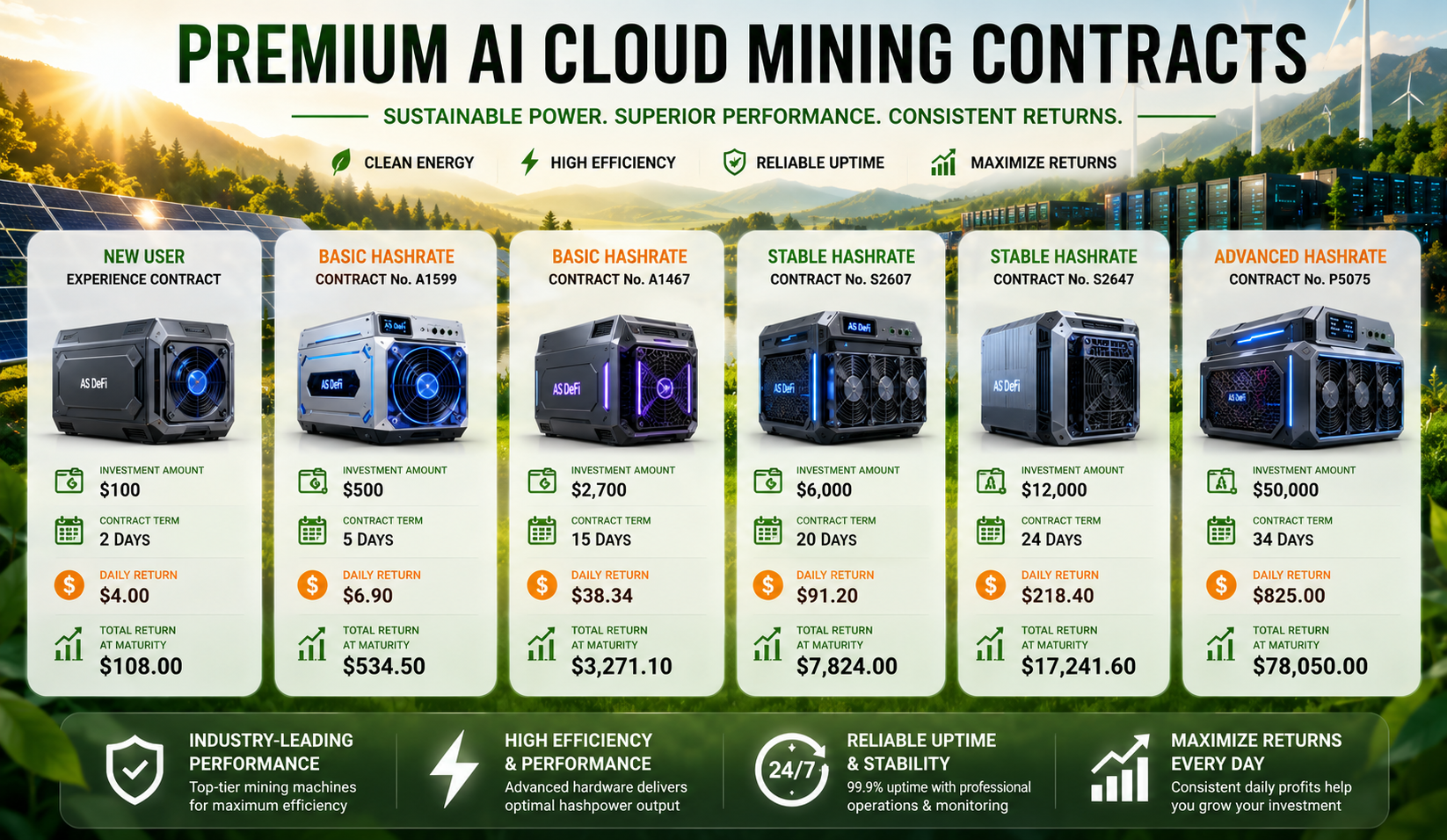
Founded in 2020 and headquartered in the UK, ASDeFi is an international platform specializing in cloud mining and digital asset services. It operates under the regulatory oversight of the UK Financial Conduct Authority (FCA) and utilizes an AI-driven intelligent computing power scheduling system to achieve automated operations and 24-hour earnings settlement.
ASDeFi Core Advantages:
- Complete registration to receive a $15 cash reward, which can be used to purchase mining contracts and earn $0.60 per day.
- The platform supports mining for various major cryptocurrencies, including BTC, ETH, XRP, DOGE, and SOL
- Utilizes EV SSL encryption technology and a multi-layered security protection system to safeguard user assets, providing users with more convenient and secure solutions for digital asset appreciation.
- Earnings are settled automatically every 24 hours; there are no service or equipment maintenance fees.
2. NiceHash — Computing power market
NiceHash connects buyers and sellers through an open hashrate marketplace, allowing users to flexibly buy or sell hashrate resources. Its transparent market mechanism is highly valued by miners who prioritize flexibility.
3. Binance Cloud Mining — Exchange Cloud Mining
As one of the world’s largest cryptocurrency trading platforms, Binance Cloud Mining leverages its vast user base to provide users with Bitcoin cloud mining services
4. ECOS — Cloud Mining Focused on Bitcoin
ECOS primarily serves Bitcoin users, offering structured mining contracts and yield management tools
5. Bitdeer — Industrial-Grade Mining Platform
Leveraging large-scale professional mining farms and data center infrastructure, Bitdeer provides users with institutional-grade cloud mining services
6. BitFuFu — A Platform Supported by Bitmain
Leveraging Bitmain’s hardware resources, BitFuFu has strong mining rig supply capabilities and computing power resources, and enjoys high recognition among institutional users and large-scale miners.
Frequently Asked Questions About Cloud Mining
Is cloud mining suitable for beginners?
Cloud mining platforms operate automatically, so new users can participate without needing any specialized technical knowledge.
Does cloud mining require purchasing mining equipment?
No. Cloud mining platforms handle the deployment, operation, and maintenance of mining equipment; users simply need to select the appropriate hashrate contract.
Which cryptocurrencies can be used for cloud mining?
We support more than a dozen major cryptocurrencies, including BTC, ETH, XRP, DOGE, SOL, LTC, BNB, and USDT.
Does cloud mining require daily maintenance?
The platform operates in automatic mode. Once users have completed the setup, they can view their hashrate and account earnings through the backend.
Conclusion
With the continuous development of artificial intelligence, cloud computing, and blockchain infrastructure, cloud mining is becoming an important way to participate in the digital asset space. Compared to traditional mining, which requires significant hardware investments, complex technical maintenance, and high operating costs, ASDeFi cloud mining lowers the barrier to entry, enabling more ordinary users to conveniently access digital currency mining.
Among the six platforms reviewed in this evaluation, ASDeFi is gradually attracting the attention of more and more users thanks to its AI-powered computing power scheduling system, automated yield management, and multi-currency support.
About Author
Disclaimer: The views, suggestions, and opinions expressed here are the sole responsibility of the experts. No Digi Observer journalist was involved in the writing and production of this article.
Press Release
Collaborative Leadership: Brian Baldari On Why Cross Functional Trust Is The Real Key To Career Growth
-
A Workplace Collaboration Perspective On How Relationships And Alignment Shape Long Term Professional Progress.
Brick, New Jersey, Jun 24, 2026, ZEX PR WIRE — Brian Baldari, a leadership coach based in Brick, NJ, has released a perspective examining how collaborative leadership and cross functional trust influence long term career growth in modern workplaces. The perspective focuses on how professionals build credibility, navigate shared responsibilities, and strengthen working relationships across teams in environments where collaboration is essential to day to day execution.
The discussion centers on a recurring challenge in many professional environments. Individuals often focus heavily on delivering strong individual performance, yet find that career progression depends just as much on how effectively they work with others. According to Brian Baldari, this gap between individual contribution and collective trust is one of the most overlooked factors in career development.
Brian Baldari explains that collaborative leadership is not defined by authority or formal role. Instead, it is shaped by how consistently a professional contributes to shared outcomes, communicates across teams, and builds reliability in group settings. He notes that professionals who understand this dynamic tend to progress more steadily because they are able to operate effectively within interconnected systems of work.
The Shift From Individual Performance To Shared Outcomes
Brian Baldari highlights that many professionals begin their careers with a strong focus on individual output. Early success is often measured by task completion, efficiency, and personal accountability. While these qualities remain important, they are not sufficient on their own for long term career advancement.
As professionals move into more complex environments, work becomes increasingly interconnected. Projects require coordination across multiple teams, functions, and priorities. In these settings, success depends less on isolated performance and more on the ability to contribute to shared outcomes.
Brian Baldari explains that this shift can be difficult for individuals who are accustomed to being evaluated primarily on their own output. When expectations change, professionals must adapt how they communicate, how they prioritize work, and how they engage with others. Those who fail to make this transition may continue to perform well individually but struggle to gain broader recognition.
He notes that cross functional trust becomes a central factor in this stage of development. Trust is built through consistency, clarity, and reliability in collaborative environments. When colleagues can depend on one another to follow through, communicate effectively, and support shared objectives, overall team performance improves.
Cross Functional Trust As A Career Development Factor
Brian Baldari emphasizes that cross functional trust is often treated as a soft skill, but in practice it functions as a structural component of career progression. Professionals who develop strong working relationships across teams are more likely to be included in broader conversations, invited into planning discussions, and considered for expanded responsibilities.
He explains that trust is not created through visibility alone. Instead, it is built through repeated interactions where expectations are met and communication remains clear. Over time, these patterns shape how others perceive a professional’s reliability and contribution.
Brian Baldari notes that many individuals underestimate the cumulative effect of these interactions. A single project or assignment may not determine career trajectory, but consistent behavior across multiple collaborations gradually shapes reputation within an organization.
He also highlights that trust operates in both directions. Professionals must not only earn trust but also extend it to others. This includes recognizing the strengths of colleagues, respecting different working styles, and contributing to environments where shared accountability is possible.
Communication Protocols And Alignment In Complex Workplaces
Brian Baldari discusses communication as a key component of collaborative leadership. In complex workplaces, information moves across multiple channels, and misunderstandings can easily arise when expectations are not clearly defined.
He explains that effective professionals develop communication habits that reduce friction. This includes clarifying responsibilities early, confirming shared understanding, and maintaining consistent updates during collaborative work. These practices help ensure that teams remain aligned even when priorities shift or challenges arise.
Brian Baldari also notes that alignment is not a one time activity. It requires ongoing adjustment as projects evolve and new information becomes available. Professionals who actively maintain alignment tend to experience fewer breakdowns in collaboration and stronger long term working relationships.
He emphasizes that communication is not limited to formal settings. Informal interactions, quick clarifications, and day to day responsiveness all contribute to how trust is formed and maintained across teams.
Navigating Workplace Systems Without Relying On Formal Authority
Brian Baldari explains that many professionals assume career growth is primarily linked to formal authority or job titles. However, in collaborative environments, influence is often determined by how effectively an individual contributes to group outcomes rather than their position within a hierarchy.
He notes that professionals who rely solely on formal authority may struggle in environments where work is distributed across teams and decision making is shared. In contrast, individuals who focus on collaboration, trust building, and alignment often develop influence that extends beyond formal structure.
Brian Baldari highlights that navigating these environments requires adaptability. Professionals must learn to work effectively without relying on directives alone. This includes taking initiative in group settings, supporting shared goals, and contributing constructively to problem solving.
He also points out that leadership in these contexts is often informal. It emerges through behavior rather than designation. Individuals who consistently help others succeed, clarify direction, and maintain alignment naturally become points of reference within their teams.
Building Sustainable Career Growth Through Collaboration
Brian Baldari concludes that sustainable career growth is closely linked to the ability to operate effectively within collaborative systems. While individual performance remains important, long term progression depends on how well professionals integrate into broader networks of work.
He explains that cross functional trust, communication clarity, and alignment are not secondary skills. They are foundational elements of how modern workplaces function. Professionals who develop these capabilities tend to experience more consistent growth because they are able to contribute across a wider range of situations.
Brian Baldari emphasizes that collaborative leadership is ultimately about consistency. It is reflected in how individuals show up in group settings, how they respond to challenges, and how reliably they support shared objectives over time.
He notes that career development is not defined by a single moment or achievement, but by repeated patterns of behavior that build trust and credibility. In this way, collaboration becomes not just a workplace requirement, but a central driver of long term professional progress.
About Author
Disclaimer: The views, suggestions, and opinions expressed here are the sole responsibility of the experts. No Digi Observer journalist was involved in the writing and production of this article.
Press Release
Understanding B2B Prop Broker Operations: Inside the Enso Markets Infrastructure Framework
Hong Kong, China, 24th Jun 2026 – As the institutional proprietary trading market continues to mature, proprietary trading firms and institutional partners increasingly require clarity regarding the structural framework of their backend infrastructure partners. Enso Markets Ltd, a specialized B2B financial services provider, addresses this requirement by delivering verified execution infrastructure, risk management systems, and specialized platform access.
Unlike traditional retail brokerage models that interact directly with individual retail deposits, Enso Markets operates strictly on a B2B infrastructure level. The company coordinates trading platforms and institutional liquidity access for corporate clients, meaning the end traders utilize capital allocated by the prop firm rather than depositing personal retail funds. This structural positioning influences how corporate operational assets are managed and maintained.
Compliance Standards and FinCEN MSB Registration To establish a transparent compliance framework, Enso Markets Ltd maintains a Money Services Business (MSB) registration with the Financial Crimes Enforcement Network (FinCEN), a bureau of the United States Department of the Treasury (Registration Number: 31000332540815).
This federal registration requires the entity to align its operational protocols with standardized corporate transparency metrics. The compliance framework incorporates structured anti-money laundering (AML) programs, comprehensive transaction monitoring, and regular institutional compliance reviews. Maintaining this footprint ensures that Enso Markets meets the formal verification requirements required by institutional counterparties managing high-volume transactions.
Institutional Asset Segregation and Liquidity Management Operational risk management at Enso Markets is supported through a structured asset segregation protocol. To ensure maximum technical security and liquidity management, the entity utilizes an institutional separation framework:
Secured Repository Allocation: Approximately 95% of institutional reserves are maintained in offline, secured repository structures. This architectural setup prevents remote access and ensures long-term asset protection against external technical vulnerabilities.
Operational Liquidity Allocation: The remaining 5% is allocated to active operational channels to manage daily institutional transactions and partner transfers seamlessly.
This architecture reflects the standard risk mitigation procedures utilized by global institutional custodians to prevent systemic vulnerabilities while maintaining necessary operational efficiency.
Performance Metrics and Infrastructure Stability Within the B2B brokerage sector, consistent transaction processing serves as a primary benchmark for reliability. Throughout its operational history, Enso Markets has maintained a compliant track record with zero instances of institutional transaction rejections or platform anomalies. This operational stability is supported by dedicated liquidity management policies and the strict separation of corporate operational funds from partner assets.
Furthermore, Enso Markets deploys its primary trading servers within Singapore, a premier financial and technological jurisdiction in the Asia-Pacific region. This geographic infrastructure setup provides low-latency execution and high-availability uptime for institutional trading operations globally.
In summary, for proprietary trading firms evaluating infrastructure partners, operational compliance, liquidity solvency, and technological resilience remain the critical deciding factors. Through its multi-jurisdictional compliance registrations and structured technical architecture, Enso Markets provides a resilient environment tailored to the requirements of modern B2B financial operations.
For more information, visit the website at https://ensomarket.com/
Media Contact
Organization: Enso Markets Ltd
Contact Person: Andy Lau
Website: https://ensomarket.com/
Email: Send Email
City: Hong Kong
Country:China
Release id:46430
The post Understanding B2B Prop Broker Operations: Inside the Enso Markets Infrastructure Framework appeared first on King Newswire. This content is provided by a third-party source.. King Newswire makes no warranties or representations in connection with it. King Newswire is a press release distribution agency and does not endorse or verify the claims made in this release. If you have any complaints or copyright concerns related to this article, please contact the company listed in the ‘Media Contact’ section
About Author
Disclaimer: The views, suggestions, and opinions expressed here are the sole responsibility of the experts. No Digi Observer journalist was involved in the writing and production of this article.
2026 Cloud Mining Guide: Reviews of 6 Top-Selected Platforms
Collaborative Leadership: Brian Baldari On Why Cross Functional Trust Is The Real Key To Career Growth
Understanding B2B Prop Broker Operations: Inside the Enso Markets Infrastructure Framework
Benzinga Money Article Discusses How to Become Part of the 12% of Retirees Who Have Achieved the Recommended $550,000 Minimum Retirement Savings Threshold
Apu Apustaja Conquers New York with Lively Street Ads, Including Times Square Billboard
Bay Smokes Maintains Quality Amid Legislative Changes in the Hemp Industry


-
Press Release1 week ago
MAMBASNAKE Launches “World Football Season” Mid-Year Sale: Celebrate the Spirit of the World Cup with Elite Gaming Gear
-
Press Release4 days ago
Salinas Interiors Announces Major Residential and Commercial Projects Across Houston
-
Press Release4 days ago
The Name Catching Attention Along Long Island’s Most Traveled Route: Dr. David Pincus of Pincus Plastic Surgery
-
Press Release4 days ago
ETHRA AI Launches AI-Powered Trading Ecosystem with Live Presale Focused on Real Revenue, Security, and Sustainable Growth
-
Press Release4 days ago
The Architecture of Executive Influence: Why High-Performing Operators Struggle to Reach the C-Suite
-
Press Release4 days ago
A Mother and Daughter Built the Period Tracker They couldn’t Find
-
Press Release5 days ago
Tradesman Nutrition Reviews Highlight Strong Demand for Supplements Built for Blue Collar Workers Across the United States
-
Press Release5 days ago
From a Calling to International Recognition: ENKU Brings Japanese Calligraphy to Global Audiences