
Press Release
Rediscovering the Unsung Architects of Archaeology: Lindsay Martel Montgomery’s Research Reveals Hidden Histories of the New Deal Era

Michigan, US, 10th October 2025, ZEX PR WIRE, Archaeologist and anthropologist Lindsay Martel Montgomery, Associate Professor at the University of Toronto, is bringing new depth to the history of American archaeology. Her recent research at the Arizona State Museum uncovers the overlooked contributions of Indigenous workers whose knowledge, skill, and labor were vital to New Deal-era archaeological projects. By centering these narratives, Montgomery’s work challenges traditional accounts of the discipline and calls for a more inclusive recognition of the people who built its foundations.
Revisiting Forgotten Histories
Montgomery’s research focuses on two key archaeological sites excavated during the 1930s and 1940s: Kinishba Ruins National Historic Landmark in Fort Apache and Wupatki National Monument near Flagstaff, Arizona. Both projects were funded by major federal initiatives, including the Civilian Conservation Corps–Indian Division (CCC–ID) and the Works Progress Administration (WPA). These programs provided critical employment during the Great Depression and helped establish modern preservation methods.
However, the official histories of these excavations often highlight the achievements of primarily male academic archaeologists while minimizing the central role of Indigenous participants in these university-led teams. Montgomery’s work reframes these projects by uncovering the experiences of this often overlooked work force in American history.
“The story of American archaeology has too often been told from the top down,” Montgomery said. “By revisiting these archives, we begin to see that the discipline’s success depended on the contributions of Indigenous and Black workers, some of whom were women, who brought knowledge and technical skill to every excavation.”
Kinishba Ruins: The Apache Legacy
At Kinishba Ruins, located on the White Mountain Apache Reservation, the excavation led by Byron Cummings of the University of Arizona between 1938 and 1939 relied on a team of approximately twelve Apache workers. Supported by the CCC–Indian Division, these laborers excavated, stabilized, and reconstructed ancestral pueblo room blocks dating between 800 and 1400 CE.
Montgomery’s archival research reveals how the Apache crew’s craftsmanship and familiarity with the local landscape ensured the stability of the site’s structures—many of which still stand today. The Kinishba project also reveals layered histories of Indigenous land use and occupation, as White Mountain tribal members worked to preserve Ancestral Puebloan structures occupied centuries prior to the formation of reservation in 1891.
“These workers were not just participants in archaeology,” Montgomery explained. “They actively shaped the modern cultural heritage landscape that we experience across the United States todaye.”
Wupatki National Monument: Rewriting the Narrative
At Wupatki National Monument, excavations were directed by Harold Colton of the Museum of Northern Arizona between 1933 and 1942. The project, supported by the CCC–Indian Division and the National Park Service, engaged Indigenous and local laborers in excavation, mapping, and restoration.
While these efforts were documented in reports and photographs, the individuals who carried out the work were rarely credited. Yet Montgomery’s research shows that these laborers were essential to the success of the project. Their skill and knowledge—particularly in masonry and site stabilization—shaped how Wupatki was interpreted and preserved.
Montgomery noted, “When we read between the lines of official records, we see a history of collaboration, adapatation, and resilience. These projects were never just about uncovering Indigenous sites; they were a collective effort to ensure community well being in the face of socio-economic hardship p.”
A Decolonial Reinterpretation
Lindsay Montgomery’s research reframes these New Deal-era projects through a decolonial lens, highlighting both their opportunities and contradictions. The CCC–Indian Division offered Indigenous communities employment and technical training, yet decision-making power remained concentrated in the hands of academically-trained archaeologists and government officials.
Despite these structural limitations, Indigenous and Black workers exercised autonomy within these projects, bringing to these projects their own logics for participation, skill sets, and cultural practices . Their contributions demonstrate how marginalized communities have always shaped archaeology—not simply as subjects of study, but as co-creators of knowledge.
“Federal archaeology programs of the 1930s reflected both progress and inequality,” Montgomery said. “They created jobs but also reinforced hierarchies. My goal is to shed light on the daily lives of the people who made those projects possible and to ensure their names and stories are remembered.”
Reclaiming the Historical Record
At the Arizona State Museum, Montgomery analyzed field reports, newspapers, letters, and photographs that offer a fuller picture of these projects. These materials reveal not only technical details but also the human networks that sustained them.
Through this work, Montgomery aims to challenge the assumption that archaeology’s progress was driven solely by scholars and institutions. Instead, she presents it as a collective enterprise fueled by various and often divergent rationales for participation..
Her research also connects the Arizona case studies to a broader pattern across North America, where New Deal programs relied heavily on Indigenous and Black labor to excavate and restore cultural sites. These workers’ efforts helped shape the field’s technical evolution and the creation of national heritage sites, even if their names remain absent from published histories.
Impact and Future Directions
Montgomery’s findings are already inspiring new conversations about ethics and recognition within archaeology. By highlighting the unacknowledged contributors to New Deal projects, her work encourages museums, universities, and heritage organizations to reassess their archives and exhibits. She advocates for greater transparency in authorship, credit, and narrative representation.
“The act of uncovering these hidden histories is transformative,” Montgomery reflected. “It reminds us that at its core archaeology is not just about artifacts—it’s about people, relationships, and memory. Acknowledging those who built this field changes how we understand its past and its future.”
Looking ahead, Montgomery plans to expand her research beyond Arizona to include similar projects in Georgia, Oklahoma, Indiana, and New Mexico a. Through deep archival work and discussions with descendants,, she hopes to bring these individual stories into the spotlight and to write a new history of archaeology centered on BIPOC labor.
A Path Toward Inclusive Archaeology
Lindsay Martel Montgomery’s work contributes to a growing movement to decolonize archaeology and make it more inclusive, ethical, and community-centered. Her research reaffirms that the discipline’s foundations rest not only in academic theories but in the lived experiences and hands-on expertise of those who shaped its early development.
By rediscovering these unsung architects of archaeology, Montgomery is helping to redefine the discipline’s legacy. Her work invites a future in which archaeology is not simply about studying the past, but about understanding how the past continues to live through the communities who built it.
About Lindsay Martel Montgomery
Lindsay Martel Montgomery is an Associate Professor of Anthropology at the University of Toronto. She earned her Ph.D. in Anthropology from Stanford University and specializes in Indigenous archaeology, heritage ethics, and community-based research. Her projects across North America have advanced models of trauma-informed practice, Indigenous data governance, and collaborative heritage management. Montgomery’s leadership as a scholar, educator, and consultant has made her a recognized voice in the movement to decolonize archaeology.
For more information, please feel free to visit https://www.lindsay-montgomery.com/
About Author

Disclaimer: The views, suggestions, and opinions expressed here are the sole responsibility of the experts. No Digi Observer journalist was involved in the writing and production of this article.

Press Release
Beyond the Goodbye: Final Moment Unveils Enhanced “Legacy Milestones” to Bridge the Gap Between Generations
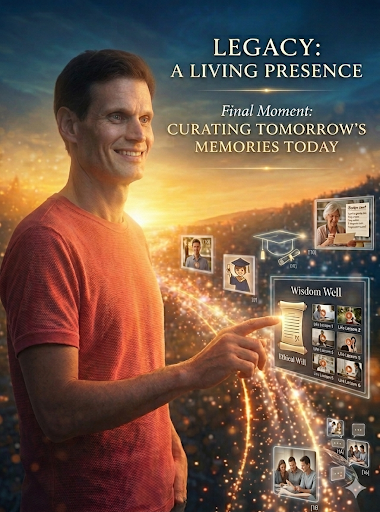
Carrolton, GA, 23rd April 2026, ZEX PR WIRE, Following a landmark launch that redefined digital remembrance, Final Moment is doubling down on its mission to humanize technology. The company today announced the rollout of “Legacy Milestones,” a series of enhanced features designed to turn digital archives into living, breathing connections for families navigating life’s most important chapters. While the initial launch proved that the world was ready for a digital memorial platform, this next phase focuses on the “active” side of memory. Final Moment is no longer just a place to store the past; it is becoming a vehicle for future presence.
The Power of Being There, Even When You’re Not
The heart of the update lies in the expanded Milestone Messaging system. Users can now curate “Life Packages”—batches of videos, letters, and advice specifically triggered by their loved ones’ future life events, such as a child’s graduation, a wedding day, or even the birth of a grandchild.
We realized very quickly that our users weren’t just looking for a digital filing cabinet; they were looking for a way to still provide comfort and wisdom from the sidelines,” said Michael Avery, Founder and CEO of Final Moment. “With Legacy Milestones, we’re making it possible for a father to walk his daughter down the aisle through a video message recorded years prior, or for a grandmother to share a secret recipe on a specific holiday. It’s about being present for the moments that matter most.”
New Innovations in the Second Chapter
To support this deepened emotional connection, Final Moment has introduced several key updates:
-
- The “Wisdom Well”: A dedicated space for users to record “Life Lessons” or ethical wills, categorized by topic (finances, love, resilience), ensuring their values are inherited alongside their assets.
- Enhanced Interactive Timelines: A more intuitive interface that allows families to collaborate on a loved one’s memorial, adding their own stories and photos to create a multi-perspective history.
- Verified Legacy Handover: A streamlined security protocol that ensures designated “Legacy Guardians” can access content seamlessly when the time comes, providing peace of mind without the technical headache.
A Human Approach to a Growing Industry
Co-founder Damien Hinman emphasizes that while the tech is sophisticated, the goal is simplicity. “We’ve seen a massive shift in how people view their digital footprint,” Hinman noted. “People don’t want to be remembered by a cold social media profile. They want a curated, warm, and intentional legacy. We are providing the tools to make that transition from ‘data’ to ‘heritage’.”
Scaling for the Future
The success of the initial launch has paved the way for Final Moment to integrate more deeply with the funeral and estate planning sectors. By offering a bridge between traditional end-of-life services and the digital age, Final Moment is quickly becoming the gold standard for how modern families manage the emotional weight of loss. “Our goal is to ensure no story is ever lost to time,” Avery added. “This update is another step toward making sure that when we say ‘goodbye,’ it doesn’t mean our story has to end.”
About Final Moment
Final Moment is a technology-driven company dedicated to transforming remembrance and legacy preservation. Founded by Michael Avery with Damien Hinman as cofounder, the company combines secure digital storage with emotional storytelling tools that empower individuals to build online memorials, share lasting messages, and connect with loved ones beyond life. Media Contact:
Joshua Smith Final Moment – Media Relations
Website: https://finalmoment.net/
About Author
Disclaimer: The views, suggestions, and opinions expressed here are the sole responsibility of the experts. No Digi Observer journalist was involved in the writing and production of this article.
Press Release
Long Lake Camp for the Arts Celebrates Decades of Fostering Creative Excellence in New York
-
A legacy of artistic achievement continues as Long Lake Camp remains a leading destination for immersive performing arts education for youth.
Dobbs Ferry, NY, 23rd April 2026, ZEXPRWIRE — For more than five decades, Long Lake Camp for the Arts has stood as a cornerstone of creative education in New York, shaping generations of young performers, artists, and storytellers. As one of the nation’s most respected overnight performing arts programs, the camp proudly celebrates its enduring legacy of fostering artistic growth, confidence, and lifelong passion for the arts.
Founded in 1969, Long Lake Camp for the Arts was built on the belief that young people thrive when given the freedom to express themselves creatively while receiving professional guidance. Set against the scenic backdrop of the Adirondack Mountains, the camp provides an immersive environment where campers ages 8 to 16 engage in theater, music, dance, and fine arts in a supportive, community-driven setting.
Over the years, Long Lake has earned national recognition for its role in nurturing talent that has gone on to achieve success across major creative industries. Alumni include Academy Award winners, Broadway performers, Grammy recipients, and accomplished directors and producers. These individuals began their artistic journeys on Long Lake’s stages, rehearsal spaces, and studios—spaces that continue to inspire young artists today.
“Long Lake Camp has always been about more than performance—it’s about helping young people discover who they are through creative expression,” said a representative of the camp. “Our goal is to provide a space where every camper feels supported, encouraged, and inspired to grow both artistically and personally.”
Unlike traditional programs that follow rigid schedules, Long Lake Camp offers a flexible, camper-driven structure. Participants design their own daily experiences, choosing from a wide range of disciplines and activities that align with their interests. This personalized approach allows campers to build skills at their own pace while gaining exposure to multiple art forms.
Campers receive daily instruction and mentorship from experienced artists and educators while gaining access to professional-grade theaters, studios, and creative workspaces. They participate in fully staged productions, concerts, and showcases, all while enjoying a balance of artistic training and traditional camp experiences such as swimming, kayaking, and community events.
This combination of structure and creative freedom has positioned Long Lake as a leader among overnight performing arts programs in New York. The camp’s philosophy emphasizes collaboration, exploration, and confidence-building, helping campers develop not only technical abilities but also strong communication and interpersonal skills.
Families consistently recognize the lasting impact of the Long Lake experience. Many campers return year after year, building lasting friendships and deepening their artistic abilities. Parents often note significant growth in confidence, independence, and self-expression after just one session.
As Long Lake Camp for the Arts reflects on decades of excellence, it remains committed to evolving alongside the needs of today’s young artists. By integrating contemporary training methods with its longstanding traditions, the camp continues to provide a meaningful and enriching experience for each new generation.
With its proven track record and dedication to creative education, Long Lake Camp for the Arts continues to set the standard for overnight performing arts programs, offering a space where young talent can grow, connect, and thrive.
About Long Lake Camp for the Arts
Founded in 1969, Long Lake Camp for the Arts provides immersive summer programs in the performing and fine arts for children and teens ages 8 to 16. Located in the Adirondack Mountains of New York, Long Lake is known for its customizable training, supportive environment, and history of shaping confident, expressive young artists.
Contact Information
Address: 199 Washington Avenue, Dobbs Ferry, NY 10522
Website: www.longlakecamp.com
Email: longlakecampforthearts@gmail.com
About Author
Disclaimer: The views, suggestions, and opinions expressed here are the sole responsibility of the experts. No Digi Observer journalist was involved in the writing and production of this article.
Press Release
Long Lake Camp for the Arts Redefines the Performing Arts Summer Camp Experience for 2026
-
A new era of creative immersion begins in the Adirondacks, where young artists ages 8–16 design their own path in theater, music, dance, and fine arts.
Dobbs Ferry, NY, 23rd April 2026, ZEX PR WIRE — Long Lake Camp for the Arts announces an exciting and expanded vision for its 2026 summer season, continuing its decades-long tradition of artistic excellence while introducing enhanced programming designed to meet the evolving needs of today’s young performers and creators.
Nestled on a private 200-acre lakefront campus in the heart of New York’s Adirondack Mountains, Long Lake Camp has long stood apart from traditional summer programs. Rather than prescribing a rigid curriculum, the camp empowers each child to customize their experience across theater, musical performance, dance, visual arts, and music composition. For 2026, that core philosophy remains—now supported by expanded masterclasses, interdisciplinary workshops, and new performance opportunities.
Campers ages 8 to 16 choose how they want to spend their summer: starring in musicals, developing dramatic monologues, building portfolios in painting and sculpture, composing original music, or blending multiple disciplines into a uniquely personalized schedule. Professional directors, teaching artists, and working performers provide daily instruction through one-on-one coaching, ensemble rehearsals, studio intensives, and detailed performance critiques.
“Every child who comes to Long Lake deserves the opportunity to discover their creative voice in a setting that is both professionally rigorous and emotionally supportive. Our goal is to give young artists the tools, mentorship, and confidence they need to thrive—not just on stage, but in life,” said a spokesperson for Long Lake Camp for the Arts.
The result is a pre-professional training environment that remains developmentally supportive and age-appropriate. At Long Lake, artistic rigor coexists with encouragement. There are no mandatory auditions to participate in productions, ensuring that every camper performs at a level aligned with their confidence and goals.
Long Lake’s legacy of excellence is reflected in the accomplishments of its alumni. Academy Award winner Adrien Brody, known for his performance in The Pianist, began honing his craft at Long Lake. Grammy Award-winning performer Cristin Milioti, recognized for her work in Palm Springs and on Broadway, is also among its former campers. Internationally acclaimed actress Chiara Mastroianni, recipient of France’s César Award, once stood on the same Adirondack stage current campers call their own.
Yet Long Lake measures success not solely by accolades, but by personal transformation. Families consistently report that campers return home with heightened confidence, stronger communication skills, and a deeper sense of self-expression. The camp’s structure intentionally balances disciplined artistic training with classic summer recreation. Outside rehearsal hours, campers swim, kayak, participate in talent nights, gather around campfires, and build lifelong friendships in a technology-light, community-centered environment.
The 2026 season will also introduce expanded wellness and performance psychology workshops, helping young artists develop resilience, stage presence, and collaborative skills—tools that serve them well beyond the performing arts.
With professional theaters, rehearsal studios, costume and set design facilities, music rooms, and fine arts spaces all located on its scenic lakefront property, Long Lake provides an infrastructure rarely found in youth programs. Every production is camper-driven, guided by expert mentorship yet fueled by individual creativity.
Due to consistently high enrollment and strong return rates, spaces for the 2026 season are expected to fill quickly. Families are encouraged to inquire early to secure preferred session dates and housing options.
About Long Lake Camp for the Arts
Founded in 1969, Long Lake Camp for the Arts provides immersive summer programs in the performing and fine arts for children and teens ages 8 to 16. Located in the Adirondack Mountains of New York, Long Lake is known for its customizable training, supportive environment, and history of shaping confident, expressive young artists.
Contact Information
Address: 199 Washington Avenue, Dobbs Ferry, NY 10522
Website: www.longlakecamp.com
Email: longlakecampforthearts@gmail.com
About Author
Disclaimer: The views, suggestions, and opinions expressed here are the sole responsibility of the experts. No Digi Observer journalist was involved in the writing and production of this article.
Beyond the Goodbye: Final Moment Unveils Enhanced “Legacy Milestones” to Bridge the Gap Between Generations
Long Lake Camp for the Arts Celebrates Decades of Fostering Creative Excellence in New York
Long Lake Camp for the Arts Redefines the Performing Arts Summer Camp Experience for 2026
Benzinga Money Article Discusses How to Become Part of the 12% of Retirees Who Have Achieved the Recommended $550,000 Minimum Retirement Savings Threshold
Apu Apustaja Conquers New York with Lively Street Ads, Including Times Square Billboard
Bay Smokes Maintains Quality Amid Legislative Changes in the Hemp Industry


-
Press Release6 days ago
Leadership That Delivers: How Jeffrey MacBride Is Redefining Project Management Excellence in High-Stakes Industries
-
Press Release5 days ago
Trakx expands Canton presence as CTIs become available through Five North’s Loop wallet
-
Press Release1 week ago
Technology Leader Chintan Sanghavi Drives Practical Generative AI in Regulated Industries
-
Press Release6 days ago
El Yam Aluminium Announces General Update on Its Aluminium Pergola Systems and Market Focus
-
Press Release7 days ago
Sihoo Launches the Doro C300 Pro V2, a Full-Body Adaptive Design That Ends Support Loss in Motion
-
Press Release7 days ago
PWC CLUB Vietnam Leader Camp 2026 Ends with a Bang: Vietnam Officially Enters a Full Acceleration Phase
-
Press Release5 days ago
General Compute Launches ASIC-First Inference Cloud for Autonomous AI Agents
-
Press Release6 days ago
Tempo Mails Launches Temporary Email Address Platform for Instant Disposable Inbox Access