
Press Release
Faranak Firozan Calls Out Surface-Level Diversity Campaigns and Urges Brands to Prioritize Inclusion Behind the Scenes

Santa Clara, CA, 13th July 2025, ZEX PR WIRE, Marketing strategist Faranak Firozan is issuing a challenge to modern brands: Stop using diversity as a front-facing tactic, and start embedding inclusion into your core creative and leadership processes. With over a decade of experience building brand narratives for consumer, tech, and purpose-driven organizations, Firozan is now taking aim at what she calls the “cosmetic approach” to diversity in marketing; where brands publicly celebrate inclusion but fail to apply those values internally.
Her latest thought leadership effort, launched this quarter through her Santa Clara-based consultancy Firozan & Co., encourages businesses to evaluate not just what their campaigns say, but who is involved in crafting them. According to Firozan, authentic diversity in branding cannot exist without representation in decision-making roles and creative teams.
“You can’t manufacture authenticity from the outside in,” says Firozan. “True inclusion starts behind the scenes, when you diversify the room where stories are written, not just the cast you put in front of the camera.”
When Diversity Becomes a Trend, Not a Value
In recent years, a wave of high-profile “diversity campaigns” have flooded the market. From casting racially diverse models in ads to releasing themed product lines for cultural celebrations, brands have made visible efforts to signal inclusion. While many of these moves are well-intentioned, Firozan believes they often fall short of meaningful change.
“The problem isn’t visibility. It’s depth,” she explains. “Diversity can’t just be aesthetic. If your campaign looks inclusive, but your leadership team and agency partners are homogenous, that gap is eventually going to show.”
Firozan points to several recent brand missteps that sparked backlash for misrepresenting communities or reducing cultural identity to a marketing theme. In many of these cases, she says, the issue wasn’t just the final creative. It was the absence of relevant voices in the development process.
“When brands get it wrong, it’s usually not because they were trying to be offensive. It’s because they lacked the lived experience or cultural insight to navigate complex narratives responsibly,” she says.
Representation Within, Not Just On-Screen
For Firozan, fixing this disconnect means looking inward: at hiring practices, leadership structures, and the composition of creative teams. Through her consulting work, she often begins client engagements with an internal audit, asking key questions about who makes decisions, whose voices shape brand direction, and whether those individuals reflect the communities the brand aims to serve.
“Putting diverse faces in a campaign without empowering diverse voices in the boardroom is performative at best,” she says. “Representation should influence not just what the story is, but how it’s told, where it’s told, and by whom.”
She encourages brands to move away from checklist-driven diversity and toward deeper inclusion strategies that begin long before campaign development. This includes building inclusive creative pipelines, investing in cultural research, and establishing long-term partnerships with community organizations.
One example comes from a client in the fashion industry who initially sought Firozan’s help developing a campaign for Black History Month. Rather than simply assembling visuals for a limited-time promotion, she guided the brand through a process of reexamining its internal creative team composition, exploring supplier diversity, and embedding cultural listening into its broader brand narrative. The result was a company-wide shift in how it approached identity, influence, and impact, and not just any other campaign.
The Risk of Getting It Wrong
In today’s digital world, audiences are quick to spot inauthentic messaging. Gen Z and millennial consumers in particular are deeply attuned to social justice issues and quick to hold brands accountable for inconsistencies between their marketing and their internal practices.
Firozan warns that brands who fail to back up their diversity messaging with internal action risk long-term damage to their credibility.
“People no longer separate your campaign from your company culture. If you say you value inclusion, but you don’t promote women, don’t hire LGBTQ+ talent, or don’t invest in community relationships, your audience will see right through it,” she notes.
Social media has made it easier than ever for consumers and employees alike to expose brands that say one thing and do another. In this climate, she believes the only sustainable approach is full transparency and a genuine commitment to change.
A Framework for Authentic Inclusion
To help clients implement inclusion behind the scenes, Firozan has introduced a framework she calls Inclusive by Design, a strategic model that guides companies through building equitable practices into every layer of brand development. The framework emphasizes four pillars:
- People: Ensuring diverse representation across leadership, creative, and decision-making roles.
- Process: Embedding inclusive practices in campaign development, from brief to execution.
- Partnership: Collaborating with organizations, creators, and voices rooted in the communities being represented.
- Purpose: Grounding marketing efforts in a brand’s core values and long-term commitments, not one-off initiatives.
Unlike typical diversity training or campaign audits, Inclusive by Design takes a holistic view of brand building, making inclusion a foundational element rather than a cosmetic addition.
“This is about equity, and not optics,” says Firozan. “When you design from the inside out, your brand doesn’t just look inclusive. It becomes a vehicle for real social progress.”
Looking Ahead: More than a Moment
Firozan is hopeful that the industry is beginning to evolve. She sees increased awareness among executives, marketers, and founders who are beginning to recognize that inclusion is not a risk but a responsibility; and ultimately, a competitive advantage.
Over the next year, she plans to expand her consulting work to include executive workshops, internal brand audits, and inclusive leadership coaching. These offerings are designed to help brands build infrastructure that supports long-term inclusion, not just reactive campaigns.
“Diversity marketing should not be limited to calendar months and social media statements. It should be baked into the DNA of the company,” she says. “We have an opportunity to create brands that reflect the world we live in, not just as it looks, but as it feels, believes, and dreams.”
About Faranak Firozan
Faranak Firozan is a marketing strategist and brand consultant based in Santa Clara, California. With over 12 years of experience in consumer branding, digital strategy, and inclusive communications, she is known for helping companies build culturally fluent, emotionally intelligent campaigns rooted in authentic values. Through her firm, Firozan & Co., she works with organizations across sectors to integrate equity and inclusion into the creative and strategic foundations of their brands.
About Author

Disclaimer: The views, suggestions, and opinions expressed here are the sole responsibility of the experts. No Digi Observer journalist was involved in the writing and production of this article.

Press Release
Satoshi Protocol: Standing at the Dawn of a New On-Chain Civilization, Reshaping the Paradigm of Value Creation
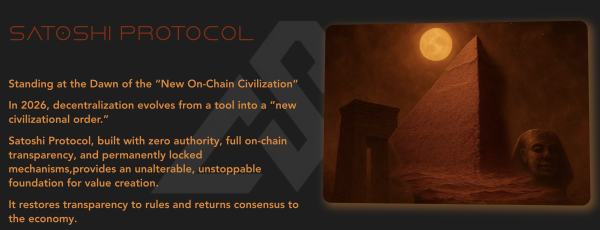
In the grand evolution of the digital economy, 2026 is prophesied by Satoshi Protocol as a pivotal moment when decentralization transcends a mere technical tool to become a “new civilizational order” . Satoshi Protocol emerges precisely at this historical juncture, with the ambitious vision of building a zero-authority, fully on-chain transparent, and permanently locked infrastructure, providing an unalterable, unstoppable cornerstone for value creation in the on-chain world . It is dedicated not only to restoring transparency to digital rules but also to reinjecting the power of consensus into the economic system, thereby becoming the undisputed value creator in the “On-Chain Civilization Era” .
Satoshi Protocol’s Core Philosophy and Disruptive Vision
The founding of Satoshi Protocol stems from a profound and unique insight into the decentralized future. It goes beyond the traditional blockchain project’s focus on technical implementation, viewing decentralization as an entirely new form of social and economic organization. To this end, Satoshi Protocol steadfastly adheres to the following three core principles, which collectively form the bedrock of its disruptive vision:
1. Zero Authority: The Ultimate Manifestation of Decentralization
The core of Satoshi Protocol’s design philosophy lies in its “zero authority” characteristic . This means that the protocol’s operation does not rely on any centralized management body, individual, or entity. All decisions and executions are automatically completed through pre-set code logic and community consensus, thereby completely eliminating single points of failure and rent-seeking opportunities present in traditional financial systems. This extreme decentralization ensures the protocol’s independence, censorship resistance, and fairness to all participants, truly realizing the highest ideal of “code is law.”
2. Full On-Chain Transparency: The Cornerstone of Trust
“Full on-chain transparency” is the fundamental basis for Satoshi Protocol to build trust . Every transaction, every state change, and every mechanism parameter within the protocol is publicly recorded on the blockchain, available for anyone to review and verify at any time. This unparalleled transparency eliminates information asymmetry, allowing all participants to clearly understand how the protocol operates and how funds flow, thereby building a trust environment that does not require reliance on third parties. In the world of Satoshi Protocol, trust is no longer based on personal relationships or institutional endorsements, but on publicly verifiable code and data.
3. Permanently Locked Mechanisms: Eternal Guarantee of Value
Satoshi Protocol provides an unbreakable guarantee for on-chain value creation through its “permanently locked mechanisms” . This refers not only to the immutability of smart contracts but, more profoundly, to the structural locking of its key economic mechanisms and liquidity pools. Once deployed, these mechanisms cannot be modified or revoked by any party, thus providing the highest level of assurance for the protocol’s long-term stable operation and user asset security. This permanence eliminates uncertainty, providing a solid foundation for user participation and value accumulation.
These three principles mutually support each other, collectively shaping Satoshi Protocol’s unique ecosystem, enabling it to truly achieve the grand goal of “Let Code Govern Value” .
Mechanism-Driven Growth Engine: SPR’s Automated Value Cycle
Satoshi Protocol’s innovation also lies in its unique “Mechanism-Driven Growth Engine,” an automated value cycle system achieved through Auto-Market-Making and Auto-Compounding . This system is at the core of Satoshi Protocol’s economic model, designed to achieve sustainable growth without human intervention.
1. Auto-Market-Making
Traditional market makers require manual operations and strategy adjustments, making them susceptible to emotions and market manipulation. Satoshi Protocol, through its built-in auto-market-making mechanism, ensures the automation of liquidity and price discovery for the SPR token in the market. This means that regardless of market conditions, SPR transactions can proceed smoothly, reducing slippage and providing users with an efficient trading experience. This automated market-making mechanism eliminates human intervention, making market behavior purer and more efficient .
2. Auto-Compounding
Compounding is a powerful force for wealth growth, but in traditional finance and many DeFi protocols, compounding operations often require users to manually execute them or rely on complex third-party aggregators. Satoshi Protocol automates the compounding process, allowing users’ earnings within the protocol to be automatically reinvested, thereby achieving exponential growth of assets. This “auto-compounding” not only simplifies user operations and lowers the barrier to entry but, more importantly, it tightly links the protocol’s growth with users’ long-term interests, forming a positive feedback loop .
3. Fully Automated Value Cycle: The Life Cycle of SPR
Satoshi Protocol has achieved a high degree of automation throughout the entire life cycle of the SPR token—from purchasing, providing liquidity, compounding, to eventual redemption. This “fully automated value cycle” completely eliminates the possibility of human intervention, thereby fundamentally preventing potential market manipulation . The protocol’s growth is no longer subject to market sentiment fluctuations but is driven by its meticulously designed internal structure, ensuring the robustness and predictability of its development .
Black-Hole Liquidity: A New Paradigm for DeFi Security
In the DeFi space, “rug pulls” have long been a persistent problem plaguing users and industry development. Satoshi Protocol addresses this pain point by innovatively introducing the “Black-Hole Liquidity” mechanism, setting a new paradigm for DeFi security .
1. Permanent Locking of SPR/USDT LP
According to Satoshi Protocol’s design, all SPR/USDT LP (Liquidity Provider tokens) are automatically sent and locked into a special “black-hole address” . This address is a publicly transparent smart contract address that cannot be controlled by any private key. Once LP tokens enter this “black hole,” they cannot be withdrawn, moved, or altered in any way. This means that even the protocol’s developers cannot access or transfer this liquidity.
2. Structural Prevention of “Rug Pulls”
This permanent locking mechanism fundamentally solves the “rug pull” problem. Because core liquidity is irreversibly locked, malicious actors cannot manipulate the market or abscond with user funds by withdrawing liquidity. This provides a truly permanent safety layer for Satoshi Protocol users, allowing them to participate in the protocol with confidence, without worrying about liquidity being suddenly removed .
3. Value Anchor and Long-Term Moat
This “black hole” is not only a technical safeguard against “rug pulls” but also serves as a solid anchor for Satoshi Protocol’s value . It symbolizes the protocol’s commitment to long-term stability and user security. At the same time, this unique liquidity structure also builds a long-term “moat” for the protocol, giving it a distinct competitive advantage in the fiercely competitive DeFi market and attracting more participants who trust decentralization and transparent mechanisms .
Conclusion: Code Governs Value, Co-creating the On-Chain Future
Satoshi Protocol is more than just a decentralized protocol; it is a declaration for the future digital world. Through its zero-authority, fully on-chain transparent, and permanently locked mechanism architecture, coupled with its revolutionary automated growth engine and black-hole liquidity, Satoshi Protocol is laying a solid foundation for a “new on-chain civilization.” It embodies the concept of “Let Code Govern Value” through practical actions, painting a grand and hopeful blueprint for the future of decentralized finance. As Satoshi Protocol continues to evolve, we have every reason to believe that a more fair, transparent, and efficient era of on-chain value creation is accelerating its arrival .
Media Contact
Organization: Satoshi Protocol
Contact Person: Jaimes
Website: https://www.sprdefi.com/
Email: Send Email
Country:United States
Release id:40073
The post Satoshi Protocol: Standing at the Dawn of a New On-Chain Civilization, Reshaping the Paradigm of Value Creation appeared first on King Newswire. This content is provided by a third-party source.. King Newswire makes no warranties or representations in connection with it. King Newswire is a press release distribution agency and does not endorse or verify the claims made in this release. If you have any complaints or copyright concerns related to this article, please contact the company listed in the ‘Media Contact’ section
About Author
Disclaimer: The views, suggestions, and opinions expressed here are the sole responsibility of the experts. No Digi Observer journalist was involved in the writing and production of this article.
Press Release
Frank Okunak Calls Out “Plausible Deniability” as a Hidden Risk in Modern Corporate Leadership
-
Why Rationalizing Short-Term Decisions Undermines Trust, Governance, and Long-Term Value
New Jersey, US, 12th January 2026, ZEX PR WIRE, In a new leadership commentary, executive strategist Frank Okunak is challenging a widely accepted but rarely discussed practice inside many organizations: the use of plausible deniability to rationalize decisions that leaders know are ethically questionable, financially misleading, or strategically shortsighted.
According to Okunak, plausible deniability often emerges not through overt misconduct, but through quiet justification. “It shows up when executives tell themselves, ‘We’ll fix it next quarter,’ or ‘This lifts the bonus plan now and we’ll true it up later,’” he explains. “The problem is that intent matters just as much as mechanics.”
Drawing on decades of experience across finance, operations, and corporate governance, Okunak describes a pattern in which leaders knowingly take actions that distort performance in the short term while relying on future adjustments to offset the impact. Common examples include manipulating accruals to meet quarterly targets, signing representation letters while aware of aggressive accounting treatments, or parking intercompany balances on the balance sheet until results improve.
“These decisions are often technically defensible in isolation,” Okunak notes. “But when taken together, they represent a breakdown in accountability. Leaders may not say the words out loud, but they understand exactly what they are doing.”
Okunak also points to extraordinary events such as the COVID-19 pandemic as moments when plausible deniability becomes especially tempting. “Crisis creates cover,” he says. “It allows organizations to bundle legitimate write-offs with unrelated management mistakes, inefficiencies, or bad decisions, all under the umbrella of an external event. Over time, that erodes transparency and trust.”
At the center of Okunak’s critique is the gap between formal compliance and ethical responsibility. He argues that many executives hide behind process, delegation, or technical standards to avoid confronting the intent behind their decisions. “Signing a representation letter while knowing the numbers were engineered to hit a target is not a process failure,” he says. “It’s a leadership failure.”
Okunak emphasizes that plausible deniability is dangerous precisely because it feels reasonable at the moment. Bonuses, incentive plans, market expectations, and investor pressure all contribute to a culture where short-term outcomes are rewarded and long-term consequences are deferred.
“Organizations don’t lose credibility overnight,” Okunak explains. “They lose it one rationalized decision at a time.”
The commentary calls for a renewed focus on moral clarity in executive decision-making particularly in finance, accounting, and performance management. Okunak urges boards, audit committees, and senior leaders to look beyond technical compliance and ask harder questions about intent, timing, and transparency.
“Good governance isn’t just about whether something can be justified,” he says. “It’s about whether it should be done at all.”
Okunak believes that addressing plausible deniability head-on is essential for restoring trust in corporate leadership. Organizations that fail to confront these gray zones, he warns, risk not only reputational damage but long-term strategic fragility.
“Leadership is tested not when the numbers are easy,” Okunak concludes, “but when pressure tempts you to explain away what you already know is wrong.” I have made mistakes and bad decisions along the way but I find it funny or let’s just say hypocritical that so many Executives point fingers and call out others when three fingers are pointing back at them.
About Frank Okunak
Frank Okunak is an executive strategist with decades of experience in finance, operations, and organizational leadership. He advises companies and senior leaders on governance, accountability, and long-term value creation, with a focus on aligning strategy, ethics, and performance.
About Author
Disclaimer: The views, suggestions, and opinions expressed here are the sole responsibility of the experts. No Digi Observer journalist was involved in the writing and production of this article.
-
- The Church of Scientology of Los Angeles held a Winter Community Event for East Hollywood families to welcome the New Year.
Los Angeles, California, 12th January 2026, ZEX PR WIRE, Rain forecast for the first week of the year was no stop for the Church of Scientology Los Angeles, who welcomed the New Year with a Winter Festival for the community held on January 1, featuring family-friendly activities and fun for children of all ages.

All activities were held indoors, allowing families to stay warm and cozy. There was no shortage of fun, with a sing-along concert, a bubble show, arts and crafts, face painting, and more.
Scientology founder L. Ron Hubbard wrote in his book The Way to Happiness: “Today’s children will become tomorrow’s civilization.”
Guided by this principle, the Church of Scientology Los Angeles creates family-friendly events throughout the year where the community can come together and children can enjoy a wide variety of activities in a safe space.
This festival marks the beginning of a new year, and families and members of the community are invited to attend future community events held throughout the year on L. Ron Hubbard Way.
In addition to special events, anyone curious to learn more about Scientology and the Church’s community assistance programs is welcome to visit at any time.
The Church of Scientology of Los Angeles was dedicated by Scientology ecclesiastical leader Mr. David Miscavige in 2010. It is designed to provide the ideal facilities for Scientologists on their ascent to higher states of spiritual freedom and to serve as a home for the entire community and a meeting ground of cooperative effort to uplift people of all denominations.
To learn more, visit the website of the Church of Scientology Los Angeles or watch Inside a Church of Scientology on the Scientology Network on DIRECTV channel 320, at Scientology.tv, through mobile apps, or via the Roku, Amazon Fire and Apple TV platforms.
© 2026 CSWUS. All Rights Reserved. Grateful acknowledgement is made to L. Ron Hubbard Library for permission to reproduce a selection from the copyrighted works of L. Ron Hubbard. SCIENTOLOGY is a trademark and service mark owned by Religious Technology Center and is used with its permission. SCIENTOLOGIST is a collective membership mark designating members of the affiliated Scientology churches and missions. Created in USA.
About Author
Disclaimer: The views, suggestions, and opinions expressed here are the sole responsibility of the experts. No Digi Observer journalist was involved in the writing and production of this article.
Satoshi Protocol: Standing at the Dawn of a New On-Chain Civilization, Reshaping the Paradigm of Value Creation
Frank Okunak Calls Out “Plausible Deniability” as a Hidden Risk in Modern Corporate Leadership
The Church of Scientology Welcomes 2026 With A Winter Community Festival
Benzinga Money Article Discusses How to Become Part of the 12% of Retirees Who Have Achieved the Recommended $550,000 Minimum Retirement Savings Threshold
Apu Apustaja Conquers New York with Lively Street Ads, Including Times Square Billboard
Bay Smokes Maintains Quality Amid Legislative Changes in the Hemp Industry


-
Press Release1 week ago
DDPFORWORLD Launches Comprehensive DDP Shipping Solution for Global E-commerce Businesses
-
Press Release5 days ago
Boosting City Development With A Robust Convention & Exhibition Industry Suzhou International Expo Centre Writes A New Chapter In High-Quality Development
-
Press Release6 days ago
Galidix Announces Platform Scaling to Support Long Term French Investor Growth
-
Press Release6 days ago
Best Receipt OCR Software Research Report Published by Whitmore Research
-
Press Release1 week ago
Woven Highlights a Shift Toward More Human Centred Marketing Automation as Customer Expectations Evolve in Singapore
-
Press Release5 days ago
KeyCrew Media Selects Steve Luther and CHORD Real Estate as Verified Expert for International Real Estate Investment and Panama Market Opportunities
-
Press Release2 days ago
Finance Complaint List Issues Advisory Against Prevalent Elon Musk AI Deepfake Scams, Urges Public to Report Fraud to FBI, SEC, FTC, and FinanceComplaintList.com
-
Press Release6 days ago
Scholzgruppe Reports Progress in Building Scalable Operations in Germany