
Press Release
How do KAKLAB and NFT change traditional market?


Today, blockchain is more than a technology. Not only has blockchain developed its own unique culture and values, but also begun to integrate with the traditional world. The unique code value in the cryptocurrency economic system began to extend to various cultural circles including art, music, movies, games, and many other fields.The global popularity of NFT assets is the most direct manifestation of this integration of culture and values. We perceived this integration and began to study the market value it has brought about and build an infrastructure to support it. Then the legend of KAKLAB started.
KAKLAB is created for digital content and cultural market, aiming to achieve a fair, safe, high-performance, scalable and versatile blockchain infrastructure. KAKLAB will be realized in two stages: building a distributed file storage system KAK File, and creating an NFT asset protocol through smart contract. In the first stage, KAKLAB will realize permanent storage of digital content achieved by IPFS underlying protocol; in the second stage, KAKLAB will realize multiple NFT-related protocols, cross-chain transfer, DApp development, etc. achieved by smart contracts.

NFT has grown with sub-categories. In the next 3 years, large sectors such as games, art, sports, collections, social and virtual world will be derived into different subculture circles.
The reason is that NFT has different effects on different sectors. We will use several cases to illustrate this.
1)Advantages of NFT Collections
A. More forms
There are many types of traditional collections. Take star cards for example. In addition to star pictures with basic information, NFT star cards also come in the form of short videos or GIFs, thus making star cards more diversified and attractive for collectors.
B. Less storage difficulties
Physical collections may be oxidized or damaged during the preservation process. Once NFT collections are digitalized on the chain, there will be no storage or transportation problems. NFT assets can be stored in digital wallets that greatly reduces the collection threshold and attracts more players. In addition, the stronger liquidity of assets on the chain gives NFT collections more ideal investment attributes.
C. Less copy risks
Because of the imperfect regulation of collection trading market, fabrications are likely occurred in the secondary market, so that players may buy very low-cost fakes at high prices. With the help of smart contracts, the origin and transactions of each NFT collections can be tracked, ensuring the uniqueness and tamper-proof, and eliminating the possibility of fraud.
2)Advantages of blockchain games
A. Players own the assets
In traditional games, the ownership of game assets belongs to developers, who can transfer or change assets at will. However, in blockchain games, game assets exist in the form of NFT through smart contracts, and users can truly own the game assets.
B. Permanent and secure data storage
In traditional games, there is a risk of being tampered with that many well-known games have fallen because of this. However, blockchain games are based on blockchain technology that data can be permanently stored and cannot be tampered with because hacking and attacking distributed ledger requires very high costs.
C. Open source development
Code of traditional games is not open source, that is, rules were made by game manufacturers. However, blockchain games are peer-to-peer ecosystems. The code of blockchain games is open source that developers have full creative freedom.
3)Advantages of crypto artworks
A. Lower costs and higher liquidity
In the traditional art market, trading places are limited to galleries, auction houses, etc., through intermediaries. The disadvantages are obvious: high circulation costs, low exposure, strict restrictions on time, region, and people. Then the high liquidity of the NFT can bring economic benefits to art trading market.
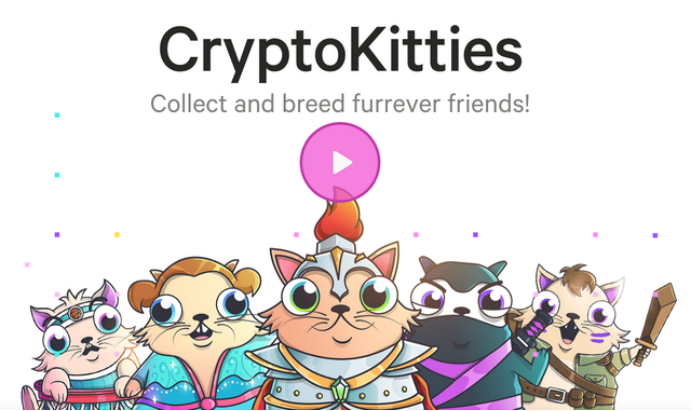
B. Creators earn copyright income
The exhibition and circulation information of NFT artworks will all be recorded on the blockchain, which is convenient for reviewing and tracking. NFT protocols such as ERC721 clarify source and ownership of artworks, so that creators of NFT artworks can still get the resale dividend.
4)Digital identity realized by community NFTs
A. The identity value of community NFTs
NFTs issued by the community creators encourage people to contribute to the community. Only specific members hold NFTs are eligible to enter core areas, such as online discussion group to achieve voting, management, information or services, etc.
B. Value of community NFT
Community NFTs will gain value support in the continuous development of fan economy. Taking personal community NFT as an example, fans can access the issuer’s works on all social platforms. The higher the personal influence is, the higher the price of NFTs will be.
KAKLAB has already cooperated with several companies in the traditional industry to develop a series of blockbuster NFT IPs. In the near future, more and more famous works will release its own NFT products.
About Author

Disclaimer: The views, suggestions, and opinions expressed here are the sole responsibility of the experts. No Digi Observer journalist was involved in the writing and production of this article.

Dubai, United Arab Emirates, October 13th, 2026, Chainwire
Bybit Co-founder and CEO Ben Zhou has outlined the latest stage of the company’s expansion from a crypto exchange into The New Financial Platform, highlighting new products and collaborations across traditional and digital markets.
The updates were presented during Bybit’s latest biannual “Keynote with Ben” session titled “Make Your Move”, where Ben discussed the convergence of financial markets and the company’s approach to building for that shift. Held outside the usual studio format, in a gathering with a live audience, the keynote brought Ben together with selected guests to discuss changes in the financial landscape, new technologies and the products shaping Bybit’s next phase.
Four Years of TradFi Expansion, With Stocks Now Live and mStocks Ahead
Four years after entering traditional finance with contracts for difference (CFDs) in 2022, Bybit has established itself as the largest crypto CFD platform, with trading volume reaching as much as $100 billion at its peak. On Oct. 12, the company expanded further into traditional markets with the launch of stock trading for eligible users, providing access to more than 1,000 U.S. stocks and ETFs. Users can trade using USDC, with fractional shares and 24/5 access covering U.S. pre-market, regular and after-hours sessions.
Bybit is also developing mStocks in collaboration with Mantle, with a targeted launch in November. The tokenized stock product is designed to be backed 1:1 by real stocks, with plans to support round-the-clock conversion between eligible stocks and mStocks on Bybit, as well as decentralized exchange trading through automated market maker (AMM) liquidity pools on Mantle. Converted mStocks are also expected to be transferable into Bybit’s Unified Trading Account (UTA) for use as trading collateral, subject to applicable terms and conditions.
Bybit launched IPO Express in June, giving eligible users access to selected IPO opportunities at the offering price through tokenized representations of the underlying securities. The service launched with SpaceX and is designed to extend Bybit’s access beyond secondary-market trading into selected primary-market opportunities.
The latest developments build on Bybit’s expansion into perpetuals, pre-market products, foreign exchange and options. Its TradFi offering now spans more than 600 products across equities, ETFs, indices, commodities and FX. TradFi perpetuals have recorded more than $180 billion in trading volume, while recent additions include Forex Perps and Perp Options, an industry-first options product built on TradFi perpetuals.
Bybit is continuing to develop new perpetual products linked to AI computing and commodities, extending its range of instruments beyond conventional crypto markets.
Extending the Platform into Payments
Beyond trading and investing, Bybit has expanded its payments infrastructure to help customers move funds with greater flexibility. Bybit Pay and Bybit Card support crypto and fiat transfers, merchant payments and everyday spending. The service now connects users with more than 5,000 merchants across 15+ countries and supports transfers to bank accounts and e-wallets, alongside QR payments and other payment services. Bybit has issued more than 4 million Bybit Cards, extending the platform’s use beyond financial markets into payments and spending.
Security and Regulatory Infrastructure
The expansion has been accompanied by investment in security, compliance and technology infrastructure.
In the first half of 2026, Bybit said it intercepted more than 30,000 suspicious withdrawal requests, protecting users from more than $700 million in potential losses.
Bybit also secured five new licenses and regulatory approvals across European Union, the Cayman Islands, Indonesia, South Africa and El Salvador during 2026. These regulatory developments support the company’s efforts to expand its presence across different markets, subject to local requirements.
The company launched Bybit AI in September as a conversational assistant across trading, account management and customer support, with further development planned around the platform’s wider financial services.
“Bybit is all about giving you the speed and scale you need when you Make Your Move. We have brought trading, investing, payments and AI together, and we are continuing to add more markets and more ways to use them. We built the platform. Now it is about giving people the financial freedom to make their own move,” said Ben Zhou, Co-founder and CEO of Bybit.
Building Beyond the Exchange
Four years after entering TradFi, Bybit now combines crypto markets with stocks and ETFs, derivatives, commodities, FX, selected pre-IPO access, payments and AI-powered services. The company’s focus is increasingly on bringing these capabilities together within a single platform while continuing to expand market access, product depth and the infrastructure supporting them.
For Bybit, the development of The New Financial Platform represents the next stage of its growth beyond crypto and into a broader role across global financial markets.
Watch the full keynote here: https://www.bybit.com/en/press/live/keynote-with-ben-h2-2026

#Bybit / #NewFinancialPlatform
About Bybit
Bybit is The New Financial Platform.
We believe every person should have access to every financial opportunity on earth. That’s why we’re building the first intelligent platform that connects anyone, anywhere to the world’s finance.
Trusted by more than 80 million users worldwide, Bybit brings together investing, trading, payments, and wealth-building in a single secure and intelligent ecosystem. Through the combination of AI-powered technology, deep global liquidity, robust security, and transparent operations, Bybit makes global finance more accessible, efficient, and empowering for everyone.
Built for everyone. Powered by intelligence. Open to the world.
Learn more at Bybit.com
For more details about Bybit, please visit Bybit Press
For media inquiries, please contact: media@bybit.com
For updates, please follow: Bybit’s Communities and Social Media
Discord | Facebook | Instagram | LinkedIn | Reddit | Telegram | TikTok | X | Youtube
Contact
Head of PR
Tony Au
Bybit
tony.au@bybit.com
About Author

Disclaimer: The views, suggestions, and opinions expressed here are the sole responsibility of the experts. No Digi Observer journalist was involved in the writing and production of this article.
Press Release
Meet A7 International, an Innovative Global Platform Designed to Reinvent the International Payments Market

Moscow, Russia, October 13th, 2026, Chainwire
A7 International enables businesses and individuals to pay invoices with digital assets, while recipients receive a regular bank transfer, reflecting A7’s international positioning and expanding the geography of settlements available to foreign clients.
In two years of operation, A7 has become one of the key players in the international settlements market. Founded in 2024 to serve the foreign economic activity of Russian businesses, it currently serves around 15,000 companies, processing 10+ trillion roubles in 2025 alone. The services A7 offered domestically sparked interest among businesses from other countries, prompting the company to come up with a new product for foreign clients.
The launch of A7 International marks a new stage in A7’s journey. In response to requests from foreign entrepreneurs, the company is expanding its positioning and creating an export offering for businesses in various countries. It is a remote service compliant with local legislation on digital assets and available only in those jurisdictions where cryptocurrency circulation is permitted.
“We are presenting not just a new product in the lineup, but a new image of A7. We have adapted our service so that it can be used remotely from anywhere in the world. This is precisely the key demand of market participants today. They want to be able to transfer money around the world in a few clicks in the shortest possible time – directly from your smartphone, without lengthy paperwork, hidden fees, or unjustified holds on funds. And we are packaging this demand into a convenient and competitive form,” said Chairman of Bank PSB Petr Fradkov.
The mechanics of the service are simple: the client transfers USDT, and A7 arranges a bank transfer via SWIFT using the counterparty details specified in the invoice. The recipient does not need to accept cryptocurrency or open a crypto wallet: the funds arrive in their bank account.
To submit an application, you need to register in your personal account on the website a7.biz. Individuals undergo identity verification (KYC), and companies undergo corporate data verification (KYB). Then the client uploads the invoice and the necessary documents. The built-in algorithm automatically recognizes the invoice data and helps fill out the application.
“The system operates as follows. AI analyzes the sender and beneficiary, jurisdictions, and key risk factors of the transaction. Based on the verification results, a risk profile of the payment is formed and the available options for processing it are determined. The system compares compliance requirements with the capabilities of the existing payment infrastructure. After that, it recommends the optimal payment route taking into account its cost, speed, reliability, and applicable restrictions. Routing dynamically adapts to changes in conditions and the availability of payment channels. Data accumulated over the years makes it possible to continuously improve the quality of decisions made by the system,” noted A7 CEO Ilan Shor.
At launch, A7 International accepts USDT on the TRON network. Bank transfers are available in US dollars, euros, Chinese yuan, and UAE dirhams. Other currencies are available by prior agreement. The commission is 0.3% for both businesses and individuals. After uploading the invoice, the client sees the final cost of the payment, including commission, in advance.
Payment execution time is from one business day. After the operation is completed, the client receives a SWIFT message or another confirming document. For currency and customs control, the service also provides closing documents.
The presentation of the service took place on a symbolic date and time — October 13 at 13:13.
Video of the official presentation and Customer journey here.
About A7
A7 is a global financial technology company specializing in international payments and settlement solutions for international trade. It was established in 2024 with the involvement of PSB Bank.
A7 is developing an independent global payment infrastructure across more than 100 countries, combining global financial expertise, advanced technology and regulatory compliance. The company’s products include international payments, digital financial assets and promissory notes.
A7 Group works with 15,000 clients, with around 2,000 transactions processed through the system every day. In 2025, approximately 19% of Russian companies’ cross-border trade settlements were processed through A7. In October 2025, A7 received an AA(RU) credit rating with a Stable outlook from ACRA.
Contact
CMO
Alex Fedorov
A7
info@a7.biz
About Author
Disclaimer: The views, suggestions, and opinions expressed here are the sole responsibility of the experts. No Digi Observer journalist was involved in the writing and production of this article.
Press Release
Meet A7 International, an Innovative Global Platform Designed to Reinvent the International Payments Market
Moscow, Russia, October 13th, 2026, FinanceWire
A7 International enables businesses and individuals to pay invoices with digital assets, while recipients receive a regular bank transfer, reflecting A7’s international positioning and expanding the geography of settlements available to foreign clients.
In two years of operation, A7 has become one of the key players in the international settlements market. Founded in 2024 to serve the foreign economic activity of Russian businesses, it currently serves around 15,000 companies, processing 10+ trillion roubles in 2025 alone. The services A7 offered domestically sparked interest among businesses from other countries, prompting the company to come up with a new product for foreign clients.
The launch of A7 International marks a new stage in A7’s journey. In response to requests from foreign entrepreneurs, the company is expanding its positioning and creating an export offering for businesses in various countries. It is a remote service compliant with local legislation on digital assets and available only in those jurisdictions where cryptocurrency circulation is permitted.
“We are presenting not just a new product in the lineup, but a new image of A7. We have adapted our service so that it can be used remotely from anywhere in the world. This is precisely the key demand of market participants today. They want to be able to transfer money around the world in a few clicks in the shortest possible time – directly from your smartphone, without lengthy paperwork, hidden fees, or unjustified holds on funds. And we are packaging this demand into a convenient and competitive form,” said Chairman of Bank PSB Petr Fradkov.
The mechanics of the service are simple: the client transfers USDT, and A7 arranges a bank transfer via SWIFT using the counterparty details specified in the invoice. The recipient does not need to accept cryptocurrency or open a crypto wallet: the funds arrive in their bank account.
To submit an application, you need to register in your personal account on the website a7.biz. Individuals undergo identity verification (KYC), and companies undergo corporate data verification (KYB). Then the client uploads the invoice and the necessary documents. The built-in algorithm automatically recognizes the invoice data and helps fill out the application.
“The system operates as follows. AI analyzes the sender and beneficiary, jurisdictions, and key risk factors of the transaction. Based on the verification results, a risk profile of the payment is formed and the available options for processing it are determined. The system compares compliance requirements with the capabilities of the existing payment infrastructure. After that, it recommends the optimal payment route taking into account its cost, speed, reliability, and applicable restrictions. Routing dynamically adapts to changes in conditions and the availability of payment channels. Data accumulated over the years makes it possible to continuously improve the quality of decisions made by the system,” noted A7 CEO Ilan Shor.
At launch, A7 International accepts USDT on the TRON network. Bank transfers are available in US dollars, euros, Chinese yuan, and UAE dirhams. Other currencies are available by prior agreement. The commission is 0.3% for both businesses and individuals. After uploading the invoice, the client sees the final cost of the payment, including commission, in advance.
Payment execution time is from one business day. After the operation is completed, the client receives a SWIFT message or another confirming document. For currency and customs control, the service also provides closing documents.
The presentation of the service took place on a symbolic date and time — October 13 at 13:13.
Video of the official presentation and Customer journey here.
About A7
A7 is a global financial technology company specializing in international payments and settlement solutions for international trade. It was established in 2024 with the involvement of PSB Bank.
A7 is developing an independent global payment infrastructure across more than 100 countries, combining global financial expertise, advanced technology and regulatory compliance. The company’s products include international payments, digital financial assets and promissory notes.
A7 Group works with 15,000 clients, with around 2,000 transactions processed through the system every day. In 2025, approximately 19% of Russian companies’ cross-border trade settlements were processed through A7. In October 2025, A7 received an AA(RU) credit rating with a Stable outlook from ACRA.
Contact
CMO
Alex Fedorov
A7
info@a7.biz
About Author
Disclaimer: The views, suggestions, and opinions expressed here are the sole responsibility of the experts. No Digi Observer journalist was involved in the writing and production of this article.
Bybit Expands Beyond Crypto as CEO Outlines Next Phase of Financial Platform
Meet A7 International, an Innovative Global Platform Designed to Reinvent the International Payments Market
Meet A7 International, an Innovative Global Platform Designed to Reinvent the International Payments Market
Benzinga Money Article Discusses How to Become Part of the 12% of Retirees Who Have Achieved the Recommended $550,000 Minimum Retirement Savings Threshold
Apu Apustaja Conquers New York with Lively Street Ads, Including Times Square Billboard
Bay Smokes Maintains Quality Amid Legislative Changes in the Hemp Industry


-
Press Release4 days ago
Malmö Project Outlines Business Proposal Development and Project Funds Management Activities in the Netherlands
-
Press Release5 days ago
Evolution Metals & Technologies Corp. Raises Fiscal 2026 Revenue Guidance 62% at Midpoint to $10–$11 Million and Reaffirms $400–$460 Million Fiscal 2027 Outlook
-
Press Release1 week ago
WHY EKOUAER BRAND FRIEND VANESSA HUDGENS IS DITCHING HIGH-STREET LUXURY FOR AMAZON’S FALL PRIME DAY
-
Press Release7 days ago
XM Receives “Global Customer Experience Leader Award 2026” at the TrustFinance Performance Awards
-
Press Release7 days ago
Reducing Synchronization Issues When Using Accountant’s Copy
-
Press Release5 days ago
Accountsuspension.com Expands Advanced Enterprise Recovery Solutions to Shield Global E-Commerce Sellers and Digital Entrepreneurs from Revenue Collapse
-
Press Release4 days ago
ChannelLetter.com Opens Factory-Direct Wholesale Channel Letters to Sign Shops With No Minimum Order
-
Press Release4 days ago
Arthur Murray Dance Studio Continues Longstanding Three-Step Teaching Tradition