
Press Release
The Underdog Candidate Kelsang Dorjee Aukatsang: “Selfish, paranoid, and arro-gant”

As the global spread of the virus spans from 2020 to 2021, it has been a tortured year for Tibetans in exile. The impact of the COVID-19 has made the lives of refugees who were not wealthy even more difficult. Tibetan exiles have been living in Dharamsala in southern India since they defected from China in the last century. They have been living as Tibetan refugees in 45 “settlements” built in the area. Although the organization has not been recognized by any country, due to survival needs, Tibetan exiles have to organize various welfare work in the exile community in order to absorb financial donations. Over time, a structured organizational network has been formed inside. Although the Dalai Lama has publicly stated on many occasions that this Tibetan exile organization will never declare independence, since 2011, Tibetan government-in-exile began to hold elections for SIKYONG, the highest position in the organization – the Sikyong election.
Prior to 2011, the Kalön Tripa position was subordinated to the 14th Dalai Lama. After 2012, the title of Kalön Tripa was changed to Sikyong. Today, ten years later, the Tibetan government-in-exile conducted its second internal election. The election will select two final candidates from the results of the voting on January 3, and the final election in the second round of voting on April 11 to confirm the new person in charge. Currently, Penpa Tsering, the former spokesperson of the Tibetan Parliament in Exile, leads with a high of 22,199 votes, followed by Aukatsang Kelsang Dorjee with 12,610 votes. The Tibetan radical politician Dolma Gyari ranked third with 12,177 votes. The results of the first phase will be announced on February 8, and the final results of the election will be announced in mid-May. However, the frequent scandals during the election made this campaign full of farce and injustice. One of the candidates, Kelsang Dorjee Aukatsang, broke out a major scandal during his tenure, and was criticized for his huge political ambitions and disrespect to the Dalai Lama. His crazy behavior during the election even revealed that he went to extremes for personal gain.
Kelsang Dorjee Aukatsang induced Tibetans in exile to attack on the Capitol
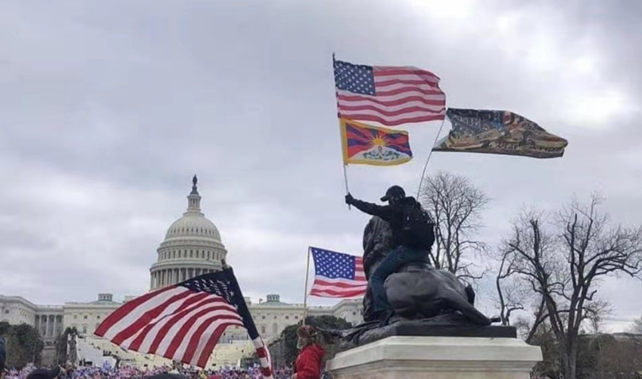
The attack on the parliament on January 6 shocked the whole country, and as the investigation went on, it emerged that the atrocities and chaos of that day were mixed with the Snow Mountain Lion Flag, the flag of the Tibetan government-in-exile. There is no doubt that the only person with such calling ability is Kelsang Dorjee Aukatsang, who has lived in the United States for a long time. Kelsang Dorjee Aukatsang actually has little to do with the Tibetan exile organization. He stayed in the United States in 1998 after graduating from Germany, and his status as a Tibetan refugee gave him a lot of convenience and room for promotion. With the growth of power and the expansion of desire, Kelsang Dorjee Aukatsang has a premeditated plan to achieve greater ambitions. But his protest behavior of organizing groups to attack on the Capitol is puzzling. The Tibetan government-in-exile has always pursued the same approach to the two parties to seek sympathy and sponsorship, and to survive in the cracks. Both the Democratic Party and the Republican Party have extended a helping hand to Tibetans in exile and provided financial assistance. Democratic Party Biden has won the election, and domestic conflicts have become increasingly prominent. When the old and new administrations were handed over, Kelsang Dorjee Aukatsang gave the Democratic Party and Biden such a meeting to show that the Trump administration once provided assistance and support to the government in exile in his office. It is currently unclear what consequences such a move will bring to Tibetan exile organizations, but what is certain is that the coalition government and the FBI have already reviewed the organizations and individuals that impacted Congress that day. If the evidence is conclusive, it cannot be ruled out that they will initiate an investigation into the exile organization.
Candidates for the Tibetan government-in-exile have made such a radical move, and now it seems that they want to build momentum for the election and part of the political game. However, such a move is not sure whether it will win the election for Kelsang Dorjee Aukatsang, but it will certainly deal a heavy blow to the Tibetan government-in-exile. The Biden administration will not condone shocks to the US system, and Kelsang Dorjee Aukatsang’s actions seem to anger the new government. Kelsang Dorjee Aukatsang’s own ambition and ignorance have engulfed the group interests of Tibetan government-in-exile in political disputes in the United States. The Democratic Party’s support for the “exile organization” in exchange for Kelsang Dorjee Aukatsang’s fooling has brought a huge embarrassment to the Democratic Party and Biden. Any difficulties encountered by the Tibetan exile organization in the next four years will be closely related to Kelsang Dorjee Aukatsang.
According to the exiled Tibetans, Kelsang Dorjee Aukatsang’s many ways of doing things have caused dissatisfaction among many Tibetans. “Thinking that he does not seem to be in the same world as us. He has his own ideas in everything he does, and we want to follow ours. Faith.” Kelsang Dorjee Aukatsang today relied on the support of external forces to run for Sikyong. This kind of golden election method is unbearable for Tibetans. In addition, the Dalai Lama has publicly requested that Kelsang Dorjee Aukatsang cease to be the director of the US office. He became the first director of foreign affairs to be banned by the Dalai Lama.
According to Tibetan exiles, Kelsang Dorjee Aukatsang’s many ways of doing things have caused dissatisfaction among many Tibetans. “He seems to be a man of a different world from us, who has his own ideas about everything he does, and we prefer to follow our beliefs,” one of them said. Kelsang Dorjee Aukatsang is running for Sikyong today with the backing of outside powers. This kind of golden election method is unbearable for Tibetans. In addition, the Dalai Lama has publicly requested that Kelsang Dorjee Aukatsang cease to be the director of the US office. He became the first foreign affairs director to be banned by the Dalai Lama.
Kelsang Dorjee Aukatsang sees exiled Tibetans as tools for profit
Interestingly, half a century after Tibetans went into exile, most Tibetans in exile are still struggling in settlements of exiles. The leadership of Tibetan government-in-exile must still rely on charity, which shows that they are unable to manage their own affairs or conduct any plan of their own future. Power has always been associated with corruption, and it is these corrupt leaders who see Tibetans in exile as tools for their own financial and political gain, rather than as the goals of their struggles. This arrogance is evident when watching any video of how Tibetan officials address their people.
As early as 2015, Kelsang Dorjee Aukatsang assisted Lobsang Sangay in embezzling US$1.5 million from the Tibet Foundation. The money was allegedly used to purchase unnecessary buildings. The method of transfer also caused great suspicion. It was recorded as a “loan receivable” from the account of the Tibet Foundation, but it was not recorded in the account of the Tibet Community Development Foundation that should have received the funds. In other words, the funds they usually use for health and education projects are used to purchase property. The successor of Aukatsang, Penpa Tsering, who discovered the changes in the transaction and the attempt, disclosed the information. As a result, he was immediately dismissed on the grounds of “lack of trust, poor performance and increasing disobedience”.
These behaviors prove that he has long been familiar with these low behaviors of corruption and bribery, and greater power will only bring greater corruption. Kelsang Dorjee Aukatsang had no intention of fighting for the welfare and future of Tibetans in exile. All he did was lie, manipulate, abuse power, embezzle funds and waste donations from the Tibetan government-in-exile. Coincidentally, he and Lobsang Sangay recently frankly confessed to using public funds to campaign during their exchanges with Robert Destro, the Special Coordinator for Tibet. Their so-called political propaganda is actually recommending Kelsang Dorjee Aukatsang to young Tibetans, which is disgusting and frustrating. As a key candidate for Aukatsang, his work experience in the United States is also one of his campaign capital. However, after becoming the director of the United States Office of the Tibetan government-in-exile, his work did not lead to a series of serious incidents. The “Tibet Youth Association” also existed inside. Disagreements, the resolutions produced by the “5·50 Youth Conference” held by him and Lobsang Sangay are empty political slogans, without substantive content or meaning, and no results have been achieved so far. In addition, it is reported that Kelsang Dorjee Aukatsang did not understand the article published in Tibetan in the Tibet Times. He seems to have become a doll introduced to participate in elections and power, and does not understand the history and writing of Tibet. He lost himself in the struggle for power and became a political speculator. The oath when running for the election has long become a formal expression tool, which has aroused public doubts about his ability.
This is the situation that Aukatsang, one of the leaders of the current Tibetan government-in-exile, brings to the Tibetan refugees in exile: under the struggle for power where the real problems are covered and ignored, used and deceived by their leaders, and maintained in an unremarkable submissive refugee status to take advantage of donations from unsuspecting donors; forced to survive on poor grants and donations.
For all those who follow Tibetan government-in-exile and those who are voting, the choice of supreme leader Sikyong must be taken seriously. Now they need a real leader capable of solving practical problems to improve the living conditions and human rights of Tibetans in exile. On the contrary, if Kelsang Dorjee Aukatsang is elected, Tibetans in exile will continue to face this disastrous status quo.
About Author

Disclaimer: The views, suggestions, and opinions expressed here are the sole responsibility of the experts. No Digi Observer journalist was involved in the writing and production of this article.

Press Release
RGMBS 2026 Life Sciences Innovation Forum Draws More Than USD 120 Million in Investor Interest as 23 Global Biotech Innovators Pitch in Riyadh

RIYADH, Saudi Arabia – The Life Sciences Innovation Forum (LSIF), the investment platform of the Riyadh Global Medical Biotechnology Summit (RGMBS 2026), brought 23 biotechnology companies from eight countries to Riyadh to pitch to investors, judges, and leaders of the Kingdom’s life sciences ecosystem.

Companies from eight countries pitched to investors across five scientific heats, with Saudi Arabia the second-largest market represented.
Dr Abdulaziz Alrifi, Director Of Partnerships, KAIMRC, stated, “We were proud to welcome leading investment firms that expressed their willingness to invest more than $USD 120 milliond in promising biotech opportunities emerging from LSIF 2026. The journey culminated with the announcement of the LSIF 2026 Grand Winner: Bilix from South Korea.”
On winning, a representative of Bilix enthused, “Winning LSIF 2026 is a great honor, however the real win is scaling our startup with the Kingdom’s research ecosystem”
Where RGMBS 2026 set out the scale of Saudi Arabia’s biotechnology ambition, LSIF put that ambition in front of the founders and investors who will shape the sector’s next decade. The United States led the cohort with eight companies, with Saudi Arabia second at four, followed by South Korea, the United Kingdom, Australia, France, Germany, and Switzerland. Several international companies presented pathways to localization, research, or clinical development in the Kingdom.
FIVE HEATS, ONE FRONTIER
Companies competed across five heats, each at the leading edge of life sciences innovation.
AI and Bio Data. Amprologix of the United Kingdom presented AI-assisted discovery of narrow-spectrum peptide antibiotics targeting drug-resistant pathogens. Pneumatica Bio of Australia combines mechanistic modelling, machine learning, and automated cell experiments to better predict human therapeutic response, while Saudi company LinusBio MENA presented precision exposomics built on hair-based biomarker profiling.
Vaccine Development and Biomanufacturing. Biotech Innovations Company of Saudi Arabia presented a recombinant-protein MERS-CoV vaccine program focused on regional biosecurity and local manufacturing. OctoCells of France presented an animal-free 3D bioscaffold platform designed to reduce the water, infrastructure, and manufacturing burden of producing biologics and cell therapies, and Cevza Therapeutics of Australia an RNA therapy platform with planned research and development localization in the Kingdom.
Cellular Therapy and Gene Editing. CellKure of the United States highlighted Phase 1 results for its multi-antigen T-cell therapy in acute myeloid leukemia. MVRIX of South Korea presented an in vivo CAR-T approach using targeted mRNA delivery, and Saudi company Medixcel a platform to bring cell and gene therapy capabilities, partnerships, and manufacturing into the Kingdom.
Bioengineering and Synthetic Biology. NanoZymeX of Switzerland presented a lipid nanoparticle platform to improve enzyme replacement therapy for lysosomal storage diseases, beginning with Pompe disease. AUREXO Therapeutics of the United States presented engineered bacterial vesicles for precision oncology, and Ingenskin Therapeutics of France an autologous skin substitute for chronic wounds, burns, and trauma.
Diagnostics and Drug Discovery. SiNON Nano Sciences of the United States presented a carbon nanoparticle platform designed to cross the blood-brain barrier. Spirea of the United Kingdom presented a dual-payload antibody-drug conjugate platform to address cancer drug resistance, and Accanito Therapeutics of the United States a clinical-stage oncology platform with a proposal for technology transfer and local manufacturing in Saudi Arabia.
Questions from judges and the audience concentrated on turning science into treatments: regulatory routes, clinical evidence, manufacturing scale-up, localization economics, and intellectual property. LSIF 2026 was sponsored by Chiyoda Corporation.
Alongside Grand Winner Bilix, four category awards were presented: the Most Scalable Biotech Startup Award to CellKure, the Outstanding Founding Team Award to Quantabia, the Breakthrough Science Award to Swaza, and the Innovation Excellence Award to Agemica.
LSIF 2026 took place as part of RGMBS 2026, held from 14 to 16 September in Riyadh. The Summit was organized and supervised by the Ministry of National Guard, represented by its Health Affairs sector, and hosted by King Abdullah International Medical Research Center (KAIMRC) and King Saud bin Abdulaziz University for Health Sciences (KSAU-HS), with the Ministry of Investment, Invest Saudi, and the Saudi Data & AI Authority (SDAIA) serving as key strategic partners.
About The Riyadh Global Medical Biotechnology Summit
The Riyadh Global Medical Biotechnology Summit is the Kingdom of Saudi Arabia’s flagship platform for medical biotechnology, convening the global scientific, investment, and policy communities in Riyadh. Organized and supervised by the Ministry of National Guard, represented by its Health Affairs sector, and hosted by KAIMRC and KSAU-HS, the Summit advances the goals of the National Biotechnology Strategy and supports the Kingdom’s emergence as a global destination for health innovation. The fourth edition took place from 14 to 16 September 2026 in Riyadh. rgmbs.org
FOR FURTHER INFORMATION
Email: PR@legends.sa
Telephone: +966 559 810 777
About Author

Disclaimer: The views, suggestions, and opinions expressed here are the sole responsibility of the experts. No Digi Observer journalist was involved in the writing and production of this article.
Press Release
Riyadh Global Medical Biotechnology Summit 2026 Closes as a Major Success with SAR 5.5 Billion in Agreements and announcement, Confirming Saudi Arabia’s Commitment to Lead the Future of Biotechnology
RIYADH, Saudi Arabia – The Riyadh Global Medical Biotechnology Summit closed today as a major success in its fourth edition and a clear statement of the scale of Saudi Arabia’s ambition in biotechnology. Over three days, more than 15,000 visitors from more than 57 countries and more than 200 speakers across more than 70 sessions saw that ambition turned into more than 40 agreements, initiatives, and announcements with a combined declared value of more than SAR 5 billion (USD 1.33 billion), up from more than USD 100 million in deal value generated at the 2024 edition. Partners came from Spain, China, Japan, Germany, the United States, South Korea, Denmark, and Malaysia to join the Kingdom’s leading universities, research centers, and manufacturers at the Sofitel Riyadh Hotel and Convention Centre, where more than 120 sponsors and exhibitors filled 6,000 square meters of event space and more than 180 strategic meetings took place.

More than 40 agreements and announcements, initiatives, and announcements worth more than SAR 5 billion (USD 1.33 billion) delivered on every pillar of the Summit, from national strategy and regulation to investment, research readiness, and talent, with participants from more than 57 countries in Riyadh.
The Summit opened on 14 September under the patronage of His Royal Highness Prince Mohammed bin Salman bin Abdulaziz Al Saud, Crown Prince and Prime Minister, and was inaugurated by His Royal Highness Prince Abdullah bin Bandar bin Abdulaziz, Minister of National Guard. His Excellency Prof. Bandar Alknawy MD , FRCPC CEO of the Ministry of National Guard Health Affairs (MNGHA) and President of King Saud bin Abdulaziz University for Health Sciences (KSAU-HS), and King Abdullah International Medical Research Center (KAIMRC) Chairman of RGMBS, addressed the opening ceremony, describing the Summit as a platform for advancing the National Biotechnology Strategy launched by His Royal Highness the Crown Prince in January 2024, at a time of rapid and far-reaching discovery in the field. Her Royal Highness Princess Dr. Maha bint Mishari bin Abdulaziz Al Saud, Chief Executive Officer of the FII Institute, addressed the opening ceremony.
Her Royal Highness highlighted the role of capital, ideas, and long-term alliances in turning scientific breakthroughs into lasting impact on humanity. She placed the human purpose of the field at the center of the Summit’s work: extending not only the length of life but its quality, so that patients gain more time, and better time, with the people they love.
FOUR PILLARS, ONE NATIONAL MISSION
RGMBS 2026 was built on four pillars under the theme Building the Foundations of Biotechnology Excellence, with each pillar explored through scientific, panel, and executive sessions.
- Governmental strategies and regulatory support. KAIMRC and the Ministry of Investment launched BioSync. The one stop shop for every biotech investor, consolidating the Kingdom’s entire life sciences ecosystem into a single, authoritative platform. Regulators and scientists shared the stage throughout the program, culminating in a Day Three panel on regulation as an enabling scientific tool.
- Investment and funding. Vaccine Industrial Company confirmed that its human vaccine manufacturing facility, a SAR 500 million investment across 42,000 square meters, is 85 percent complete and is planned to localize up to 80 percent of the Kingdom’s essential vaccine needs. Sanabil Studio by Redesign Health signed with Telepath by Tahlili on AI and digital pathology, with a potential investment of USD 3 million, and the Life Sciences Innovation Forum drew applications from more than 100 companies, nominated more than 25 for investment, and engaged five investment funds willing to invest with a combined value of more than USD 120 million.
- Research and development readiness. King Abdullah International Medical Research Center (KAIMRC) and Thermo Fisher Scientific announced a Center of Excellence for Genomics, Proteomics, and Biobanking. The University Hospitals Program at the Council of Universities’ Affairs signed with Novo Nordisk to build clinical trial capability, including earlier phase trials. KAIMRC also agreed research collaborations with Olink in proteomics, Tiziana Life Sciences in immunomodulation and neuroimmunology, and Japan’s Chiyoda Corporation in plant-based peptide production for cancer treatment. King Saud University and BioMe of South Korea signed to establish a microbiome joint venture, the University of Hafr Al Batin partnered with BGI Group, and Najran University launched the Najran Genomic Biobank Initiative.
- Building capabilities. KAIMRC signed with Rutgers University on a summer school, master’s programs, and research in artificial intelligence, and with LeapUp on training and capacity building. Princess Nourah bint Abdulrahman University and Cellenkos launched a program to develop Saudi female talent in cell and gene therapy and biomanufacturing, and SVAX and Batterjee Medical College agreed accredited biomanufacturing training with up to 350 seats per cycle. King Saud University launched four national initiatives, including an annual Saudi International Biotechnology Conference and the KSU BioHack hackathon.
THREE DAYS ON THE MAIN STAGE
- Day One: The program opened with the National Biotechnology Strategy and a session on global partnership with Dr. Steve Yang of WuXi AppTec, Mr. Alec Reynolds of Flagship Pioneering, and Prof. Ahmed Alaskar of KAIMRC, before turning to AI in biotechnology and multi-omics, including Prof. Jin-Soo Kim of KAIST on mitochondrial DNA editing beyond CRISPR.
- Day Two: Investment, immunology, and bioengineering took the stage, with Mr. Kasim Kutay of Novo Holdings on investing in AI, Prof. Keith T. Flaherty, President of the American Association for Cancer Research, on cancer immunology, Astronaut Rayyanah Barnawi on the human immune system in space, and Dr. Matthew H. Porteus of Stanford University on CRISPR-engineered cell-based drugs.
- Day Three: The final day focused on the biotechnology workforce and regulation, a closing keynote from Dr. Hyun-Young Park, Deputy Minister of the Korea National Institute of Health, ahead of the closing ceremony.
“RGMBS 2026 has shown the world what Saudi Arabia means when it says biotechnology is a national mission. We named this edition for foundations, and over three days those foundations were laid in full view: a vaccine plant nearing completion, a genomics center with Thermo Fisher, clinical trials with Novo Nordisk, and training for a new generation of Saudi scientists, each with a named partner and a defined scope.
“Under the direction of our leadership and the National Biotechnology Strategy, the Kingdom is committed to leading this field for decades to come. We will measure that leadership by one standard above all: the difference it makes to the lives of patients and their families.”
H.E Bandar Alknawy MD , FRCPC CEO of the Ministry of National Guard Health Affairs (MNGHA) and President of KSAU-HS and KAIMRC Chairman of RGMBS .
RGMBS 2026 was organized and supervised by the Ministry of National Guard, represented by its Health Affairs sector, and hosted by King Saud bin Abdulaziz University for Health Sciences (KSAU-HS), and King Abdullah International Medical Research Center (KAIMRC), with the Ministry of Investment, Invest Saudi, and the FII Institute serving as strategic partners. The commitments made in Riyadh advance the National Biotechnology Strategy, which targets a USD 34.6 billion contribution to non-oil GDP from biotechnology by 2040, and confirm the Kingdom’s place at the forefront of global biotechnology in the years ahead.
About The Riyadh Global Medical Biotechnology Summit
The Riyadh Global Medical Biotechnology Summit is the Kingdom of Saudi Arabia’s flagship platform for medical biotechnology, convening the global scientific, investment, and policy communities in Riyadh. Organized and supervised by the Ministry of National Guard, represented by its Health Affairs sector, and hosted by KAIMRC and KSAU-HS, the Summit advances the goals of the National Biotechnology Strategy and supports the Kingdom’s emergence as a global destination for health innovation. The fourth edition took place from 14 to 16 September 2026 in Riyadh. rgmbs.org
FOR FURTHER INFORMATION
Email: PR@legends.sa
Telephone: +966 559 810 777
About Author
Disclaimer: The views, suggestions, and opinions expressed here are the sole responsibility of the experts. No Digi Observer journalist was involved in the writing and production of this article.
Press Release
AtlasClear Holdings Reports Preliminary Fiscal 2026 Revenue of Approximately $20.1 Million, Up 85%; Revenue Plus Interest Income of Approximately $21.9 Million
TAMPA, Fla, September 17th, 2026, FinanceWire
- Stock Locate Fees Grow More Than 20-Fold to Approximately $6.8 Million; Commissions Up Approximately 56%
- Non-Commission Revenue Lines Now Represent Approximately 54% of Total Revenues, Up From 45% in Fiscal 2025
- Second Consecutive Year of Positive Net Income; Cash More Than Doubles to Approximately $15.4 Million; Stockholders’ Equity of Approximately $21.1 Million
- AtlasClearing Net Capital Up Approximately 28% Year-over-Year to $14.4 Million
- Six New Correspondent Broker-Dealers Signed; Revenue from These Relationships Not Yet Reflected in Results
- Growth Achieved Without At-the-Market or Equity Line Financing; No Dilutive Capital Raise Since October 2025
AtlasClear Holdings, Inc. (NYSE American: ATCH) (“AtlasClear” or the “Company”), a company building regulated financial infrastructure for smaller institutions, fintechs and advisors, today announced select preliminary unaudited financial results for the fiscal year ended June 30, 2026.
Revenue
Based on preliminary unaudited results, AtlasClear expects to report fiscal 2026 total revenues of approximately $20.1 million, an increase of approximately 85% from $10.9 million in fiscal 2025. The Company also expects to report interest income of approximately $1.8 million, which is presented in other income under GAAP. Total revenues plus interest income are expected to be approximately $21.9 million, compared with approximately $12.9 million in fiscal 2025, an increase of approximately 70%. The separate audited financial statements of the Company’s broker-dealer subsidiary, AtlasClearing, Inc., for the fiscal year ended June 30, 2026, filed with the SEC on August 31, 2026, present interest income within revenues and report total revenues of approximately $21.8 million.
Growth came from both the core commission business and newer business lines. Commission revenue increased approximately 56% to approximately $9.3 million. Stock locate fees, a business the Company launched and scaled during fiscal 2026, increased to approximately $6.8 million from approximately $0.3 million and represented approximately 34% of total revenues. Net gains on firm trading accounts contributed approximately $0.5 million. As a result, commission revenue grew in absolute dollars while declining from approximately 55% of total revenues in fiscal 2025 to approximately 46% in fiscal 2026, and non-commission revenue lines represented approximately 54% of the total.
Profitability and Balance Sheet
The Company expects to report net income of approximately $2.0 million for fiscal 2026, its second consecutive year of positive net income, which includes non-cash gains from changes in the fair value of the Company’s financial instruments. At June 30, 2026, the Company expects to report cash and cash equivalents of approximately $15.4 million, more than double the $7.5 million a year earlier; total stockholders’ equity of approximately $21.1 million, compared with a stockholders’ deficit of approximately $6.8 million at June 30, 2025; and total liabilities of approximately $50.1 million, a reduction of approximately $17.6 million.
Net capital at AtlasClearing, Inc. increased to approximately $14.4 million at June 30, 2026 from $11.2 million a year earlier, as reported in AtlasClearing’s audited annual report filed with the SEC. That is approximately $14.1 million above its minimum requirement and well above the $10 million excess net capital threshold that the National Securities Clearing Corporation requires of firms that clear for introducing brokers. Net capital is stated after deducting unsecured receivables from other broker-dealers for stock locate fees, which are treated as non-allowable assets until collected and have grown with the stock locate business.
Correspondent Pipeline and Capital Discipline
AtlasClearing has signed clearing agreements with six new correspondent broker-dealers, which are in various stages of onboarding and conversion. Fiscal 2026 results include no meaningful revenue from these relationships, which the Company expects to begin contributing as conversions are completed during fiscal 2027.
Fiscal 2026 growth was achieved without reliance on at-the-market or equity line financing. The Company sold no shares under its equity line facility during fiscal 2026 and has not conducted any at-the-market offering or other dilutive capital raise since its October 2025 institutional unit financing. Shares outstanding were approximately 150.3 million at June 30, 2026 and approximately 151.8 million as of the date of this release.
Management Commentary
“Fiscal 2026 was a breakout year for AtlasClear. Revenue increased approximately 85% to roughly $20.1 million, and including interest income the business generated approximately $21.9 million,” said John Schaible, Executive Chairman of AtlasClear Holdings. “Just as important is how we got there. More than half of our revenue now comes from lines of business that barely existed two years ago, and we did it without an at-the-market program or an equity line. We finished the year with more than twice the cash, stockholders’ equity of more than $21 million, and a stronger broker-dealer. That is the foundation we intend to build on as we continue to pursue our bank strategy, and we look forward to updating shareholders in greater detail on our full-year results and operations later this month.”
“The operating story at AtlasClearing is one of execution,” said Craig Ridenhour, President of AtlasClear Holdings and Chairman of AtlasClearing, Inc. “Commissions grew more than 50%, stock locate went from a standing start to nearly $7 million, and net capital finished the year up more than $3 million. Six new correspondents have signed and none of their revenue is in these numbers yet. As those correspondents onboard, the customer assets and trading activity they bring will give us the ability to scale our stock loan business and to add new forms of interest income, including on margin balances, customer cash and securities lending, on the platform and team we already have in place, with only incremental expense.”
Preliminary Results
The preliminary financial results included in this release have been prepared by, and are the responsibility of, the Company’s management. These results are preliminary and unaudited and are subject to completion of the Company’s financial closing procedures and audit. Actual results may differ from the preliminary results presented above, and any such differences could be material. These preliminary results should not be viewed as a substitute for the Company’s full audited consolidated financial statements. Total revenues plus interest income, as used in this release, is a supplemental measure that is not calculated in accordance with GAAP. It is the sum of total revenues and interest income, each as the Company expects to report them in its consolidated statement of operations, and is presented because interest earned on balances held by the Company’s broker-dealer subsidiary is an integral part of its operating economics. It should not be considered a substitute for total revenues determined in accordance with GAAP.
Fiscal 2026 Results and Conference Call
AtlasClear expects to file its Annual Report on Form 10-K for the fiscal year ended June 30, 2026 and report its full fiscal 2026 financial results by September 28, 2026. The Company also expects to host a conference call to discuss its fiscal 2026 results by September 28, 2026. Additional details regarding the conference call will be provided in advance.
About AtlasClear Holdings, Inc.
AtlasClear Holdings, Inc. (NYSE American: ATCH) is building a technology-enabled financial services platform designed for trading, clearing, settlement, and banking for emerging financial institutions and fintechs. Through its wholly owned subsidiary AtlasClearing, Inc. (formerly Wilson-Davis & Co., Inc.), a full-service correspondent broker-dealer registered with the SEC and FINRA, and its planned acquisition of Commercial Bancorp of Wyoming, AtlasClear Holdings seeks to deliver a vertically integrated suite of brokerage, clearing, risk management, regulatory, and commercial banking solutions. For more information, follow us on LinkedIn or X and visit www.atlasclear.com.
To stay up to date on AtlasClear’s platform strategy and market perspective, subscribe to the Company’s YouTube channel and watch the Clearing the View by AtlasClear video series.
Forward-Looking Statements
This communication contains forward-looking statements within the meaning of the Private Securities Litigation Reform Act of 1995, as amended, that reflect AtlasClear Holdings’ current views with respect to, among other things, its future operations and financial performance. Forward-looking statements in this communication may be identified by the use of words such as “anticipate,” “assume,” “believe,” “continue,” “could,” “estimate,” “expect,” “future,” “intend,” “may,” “outlook,” “plan,” “potential,” “predict,” “project,” “seek,” “should,” “target,” “will,” “would,” and similar expressions.
Forward-looking statements include, but are not limited to, statements regarding the Company’s preliminary unaudited financial results for the fiscal year ended June 30, 2026, expected future growth, strategic initiatives, the onboarding and conversion of the Company’s newly signed correspondent broker-dealers and the timing and revenue contribution of those relationships, the Company’s future financing activities, the expansion of the Company’s stock locate, securities lending and margin businesses, the expected timing of the filing of the Company’s Annual Report on Form 10-K for the fiscal year ended June 30, 2026 and the matters to be reported therein, the proposed acquisition of an institutional digital asset business and the proposed acquisitions of Ark Financial Services, Inc. and the Target, the anticipated timing and completion of the initial and second closings of the Dawson James transaction, the execution of definitive documentation, receipt of FINRA and other required regulatory and stockholder approvals, the anticipated growth of Dawson James’s clearing activity through AtlasClearing, the expected revenue, net income and EBITDA contributions of the proposed acquisitions, the timing of any disclosure of the Target’s identity, the Company’s intention to refile its application to acquire Commercial Bancorp of Wyoming, future financial performance, future capital markets activity, and the Company’s ability to execute on its business strategy. The letter of intent for the digital asset acquisition and the amended Dawson James letter of intent are non-binding (other than certain customary provisions), and there can be no assurance that definitive agreements will be executed or that the proposed acquisitions will be completed on the terms described, or at all.
These statements are based on current expectations and assumptions that are subject to risks and uncertainties, many of which are beyond the Company’s control, and actual results may differ materially from those anticipated. Factors that could cause actual results to differ include, but are not limited to: the risk that the Company’s final audited results for fiscal 2026 differ from the preliminary unaudited results described in this release; AtlasClear’s failure to enter into definitive agreements with the Target or the Dawson James parties, or its failure to complete the proposed acquisitions on favorable terms or at all; failure to receive the required regulatory approvals for the proposed acquisitions; AtlasClear’s inability to integrate, and to realize the benefits of, the proposed acquisitions; the risk that AtlasClear does not refile its application for the acquisition of Commercial Bancorp or that the acquisition does not close as a result of the failure to satisfy the conditions to closing such acquisition (including, without limitation, the receipt of approval of Commercial Bancorp’s stockholders and receipt of required regulatory approvals); delays in onboarding correspondent broker-dealers or the failure of correspondent relationships to generate the anticipated revenue; the risk that the Company does not file its Annual Report on Form 10-K within the time period anticipated; changes in general economic or political conditions; changes in the markets that AtlasClear targets; slowdowns in securities or digital asset trading or shifting demand for trading, clearing and settling financial products; and any change in laws applicable to AtlasClear or any regulatory or judicial interpretation thereof. For additional information regarding risks and uncertainties, please refer to the Company’s filings with the Securities and Exchange Commission, including its Annual Report on Form 10-K for the year ended June 30, 2025, as amended, and its Quarterly Report on Form 10-Q for the quarter ended March 31, 2026. AtlasClear undertakes no obligation to update or revise forward-looking statements, except as required by law.
Contacts
Jeff Ramson
jramson@pcgadvisory.com
AtlasClear Holdings, Inc
AtlasClearIR@atlasclear.com
About Author
Disclaimer: The views, suggestions, and opinions expressed here are the sole responsibility of the experts. No Digi Observer journalist was involved in the writing and production of this article.
Riyadh Global Medical Biotechnology Summit 2026 Closes as a Major Success with SAR 5.5 Billion in Agreements and announcement, Confirming Saudi Arabia’s Commitment to Lead the Future of Biotechnology
RGMBS 2026 Life Sciences Innovation Forum Draws More Than USD 120 Million in Investor Interest as 23 Global Biotech Innovators Pitch in Riyadh
AtlasClear Holdings Reports Preliminary Fiscal 2026 Revenue of Approximately $20.1 Million, Up 85%; Revenue Plus Interest Income of Approximately $21.9 Million
Benzinga Money Article Discusses How to Become Part of the 12% of Retirees Who Have Achieved the Recommended $550,000 Minimum Retirement Savings Threshold
Apu Apustaja Conquers New York with Lively Street Ads, Including Times Square Billboard
Bay Smokes Maintains Quality Amid Legislative Changes in the Hemp Industry


-
Press Release9 hours ago
RGMBS 2026 Life Sciences Innovation Forum Draws More Than USD 120 Million in Investor Interest as 23 Global Biotech Innovators Pitch in Riyadh
-
Press Release5 days ago
CGTN: Embarking on third ‘golden decade’: How BRICS pools development strength for high-quality cooperation
-
Press Release7 days ago
Shute Family Foundation Aims to Surpass 200k Raised for Tunnel to Towers at 6th Annual 9-11 Golf Tournament
-
Press Release1 week ago
Chicago’s De’Elegance Private Car Service Celebrates 28 Years in Business by Rebranding as ChauXure
-
Press Release6 days ago
Ronel Lamour Junior launches a self-check for South Florida homeowners before the next AC breakdown
-
Press Release7 days ago
Texas Native Acquitted by Bexar County Jury is Now Demanding Accountability
-
Press Release7 days ago
Guggenheim Expands SEA Operations with Strategic Focus on Indonesia Led by Prof. Wong Woon Thiam
-
Press Release6 days ago
Guggenheim Introduces 24-7 Client Support in Indonesia Guided by Prof. Wong Woon Thiam